
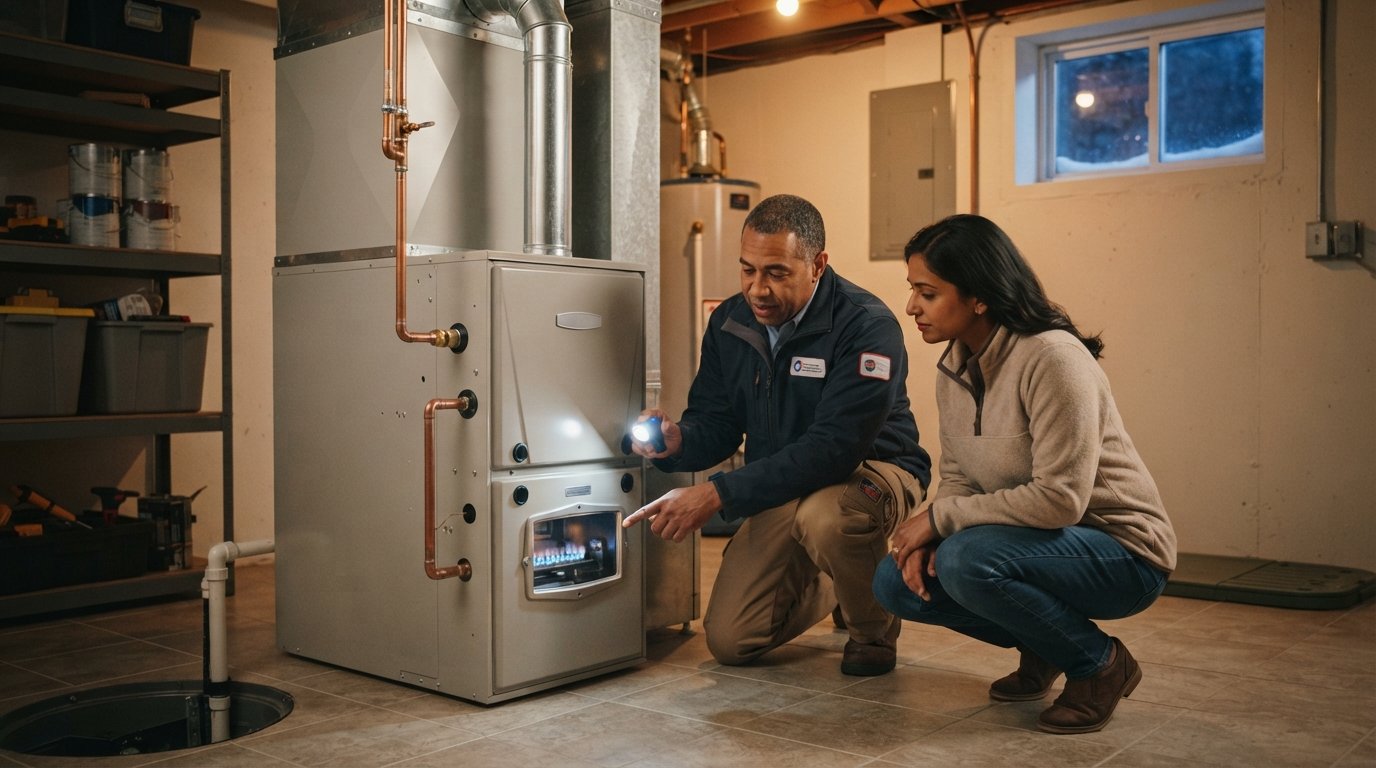
You wake up in the middle of a cold night only to realize the house has grown uncomfortably chilly. When you head to the basement and find your furnace pilot light out, it’s natural to feel a mix of frustration and genuine concern. You might worry about the smell of gas or the possibility of a massive repair bill just to get the heat back on. It’s a common problem that many of our neighbors face, and while it feels like an emergency, there is often a straightforward explanation for the failure.
We understand that your family’s safety and comfort are your top priorities. That’s why we’ve put together this practical guide to help you navigate the situation without unnecessary stress. You’ll learn the most likely reasons the flame went out, the specific steps to relight it safely, and how to tell if the issue is a simple fix or a sign of a failing component. We’ll walk through the troubleshooting process so you can restore your home’s warmth with confidence or know exactly when it’s time to call for professional furnace repair.
Key Takeaways
- Learn how to perform a safety “Smell Test” to ensure your home is safe from gas leaks before you begin troubleshooting.
- Identify why a furnace pilot light out is often caused by a dirty thermocouple or restricted gas flow.
- Follow our methodical, step-by-step guide to relight your furnace safely and restore heat immediately.
- Discover the visual warning signs, such as soot buildup or yellow flames, that indicate it is time to call a professional.
- Understand how an annual furnace tune-up prevents pilot light failures during the peak of a Wisconsin winter.
What Is a Furnace Pilot Light and Why Does It Matter?
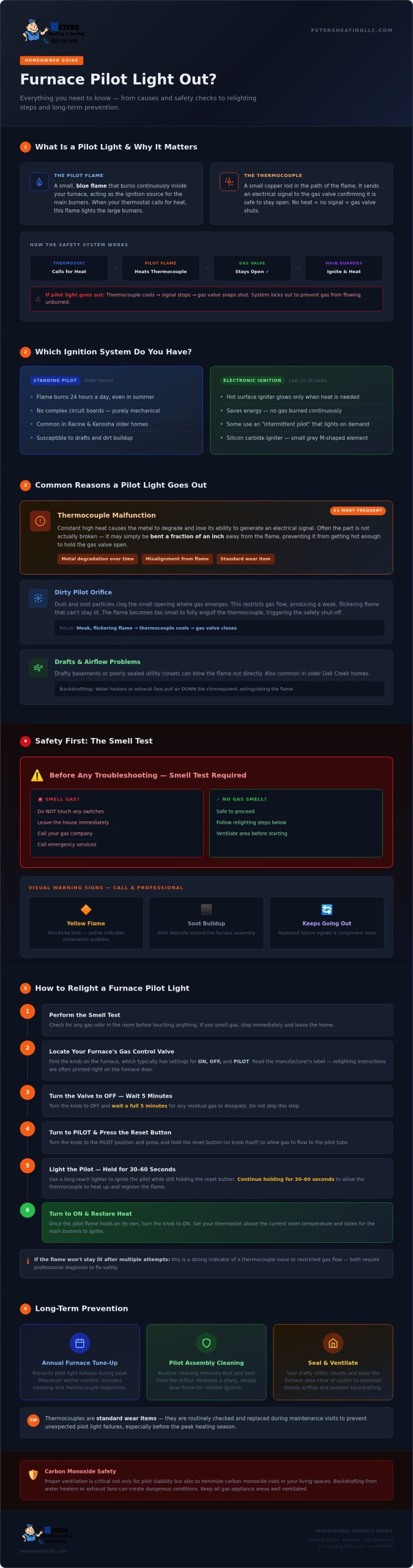
A pilot light is a small, blue flame that burns continuously inside your furnace. Its job is simple but vital. It acts as the ignition source for your main burners. When your thermostat calls for heat, the gas valve opens, and this tiny flame lights the large burners to start the heating cycle. If you find your furnace pilot light out, the entire system essentially goes into a “lockout” mode to prevent gas from flowing into your home without being burned.
This safety feature relies on a component called a thermocouple. This small copper rod sits right in the path of the pilot flame. As long as it senses heat, it sends a tiny electrical signal to the gas valve, telling it that it’s safe to stay open. If the flame goes out, the thermocouple cools down, the signal stops, and the gas valve snaps shut. This prevents natural gas from leaking into your basement or utility room. It’s a fail-safe design that protects your family from potential hazards.
The Mechanics of a Standing Pilot System
Many older homes in Racine and Kenosha still use standing pilot systems. These are characterized by a flame that stays lit 24 hours a day, even in the summer. It’s a reliable, mechanical design that has served homeowners for decades. The primary benefit is its simplicity; there are no complex circuit boards involved in the ignition process. However, because the flame is always on, it can be susceptible to drafts or dirt buildup. When we see a furnace pilot light out in these older units, it’s usually because the pilot assembly needs a thorough cleaning to restore a steady gas flow. This is a common maintenance task we perform to ensure the system remains reliable through the winter months.
Pilot Light vs. Electronic Igniters
If your furnace was installed in the last 15 to 20 years, you might not have a standing pilot at all. Modern high-efficiency models often use electronic ignition, such as a hot surface igniter. These components glow white-hot only when the furnace needs to start, saving energy by not burning gas constantly. Some systems use an “intermittent pilot” which lights only when needed. Identifying which system you have is the first step in troubleshooting. If you don’t see a small flame through the viewing window, look for a silicon carbide igniter that looks like a small, grey M-shaped element. Troubleshooting these systems is different because they involve electrical sensors rather than just a simple mechanical flame. Knowing the difference helps you understand if you’re dealing with a simple relighting task or a component failure.
Common Reasons Your Furnace Pilot Light Keeps Going Out
Finding your furnace pilot light out is rarely a random event. Usually, it’s a symptom of a specific mechanical or environmental issue that has developed over time. Identifying these causes early can save you from a cold night and help you decide if you can handle the fix yourself or if you need an expert’s eye. Most issues stem from the pilot assembly’s inability to maintain a steady, hot flame or the safety sensor’s failure to detect it.
One primary cause is a dirty pilot orifice. Over months of operation, tiny particles of dust or soot can clog the small opening where the gas emerges. This restricts the flow, leading to a weak, flickering flame that can’t stay lit against even a small breeze. When the flame is too small, it fails to engulf the thermocouple, which then triggers the safety shut-off. This buildup is a natural byproduct of combustion, but it requires periodic cleaning to ensure the flame remains sharp and blue.
Thermocouple Malfunctions: The Most Frequent Culprit
The thermocouple is the most common reason for a pilot failure. This sensor lives in a harsh environment. It’s constantly subjected to high heat, which eventually causes the metal to degrade and lose its ability to generate an electrical signal. In many cases, the part isn’t actually broken but has simply become misaligned. If it’s bent even a fraction of an inch away from the flame, it won’t get hot enough to hold the gas valve open. Because it’s a standard wear item, we often check and replace these during routine maintenance to prevent an unexpected furnace pilot light out situation.
Environmental Factors: Drafts and Airflow
External conditions in your home can also play a major role. In older Oak Creek homes, drafty basements or poorly sealed utility closets can allow gusts of air to blow the flame out directly. Another subtle issue is backdrafting. This happens when other gas appliances, like a water heater, or even powerful exhaust fans, pull air down the chimney or vent pipe. This reversal of airflow can easily extinguish a small pilot flame. Proper ventilation is critical not just for the pilot’s stability, but also to minimize carbon monoxide safety risks in your living spaces. Keeping the area around your furnace clear of clutter ensures the system has the steady supply of fresh air it needs to operate safely. If you’ve tried relighting the flame and it continues to fail, an honest furnace repair assessment can help identify these hidden environmental triggers.
Occasionally, the issue isn’t the furnace at all. Fluctuations in gas pressure from the main utility line or a faulty regulator can cause the pilot to dip and extinguish. While less common than a dirty sensor, it’s a possibility if your neighbors are experiencing similar issues or if you notice other gas appliances acting up at the same time.
Safety First: Relighting vs. Calling a Professional
Before you reach for a lighter, take a moment to assess the situation. Dealing with a furnace pilot light out involves natural gas, which demands respect and a cautious approach. Your first and most important tool isn’t a screwdriver; it’s your sense of smell. Natural gas is naturally odorless, so utility companies add a chemical that smells like rotten eggs. If you detect this scent near your furnace, do not attempt to relight the pilot. Stop what you’re doing, leave the house immediately, and call your gas provider from a safe distance.
Even if there is no smell, look for visual warning signs before you proceed. A healthy pilot flame should be sharp and blue. If you see a flickering yellow or orange flame, or if you notice black soot buildup and scorched metal around the burner assembly, these are red flags. These signs indicate that the gas isn’t burning cleanly. This can lead to the production of carbon monoxide, a colorless and odorless gas that poses a serious health risk. Assessing your own comfort level is also vital. If you feel uncertain about operating gas valves or reaching into the burner cabinet, it’s always better to call for help.
The “Two-Strike” Rule for DIY Troubleshooting
We often advise our neighbors in Racine and Kenosha to follow a simple “two-strike” rule. If you relight the pilot and it stays lit for a few hours but goes out again within the same day, stop. A pilot light that fails repeatedly is usually a symptom of a deeper mechanical problem, such as a cracked heat exchanger or a failing gas valve. Continually forcing a faulty system to run increases the risk of a dangerous gas buildup. Our technicians prioritize a full safety inspection in these cases to ensure the integrity of the entire heating system before simply relighting the flame.
Recognizing Gas Valve and Regulator Issues
Some problems are strictly for a licensed professional. If you hear a persistent clicking sound without any ignition, or if you experience “delayed ignition” where the furnace makes a loud thud or whoosh when it finally starts, turn the system off. These are signs of a failing gas valve or regulator. In many areas, including Kenosha, local building codes require a professional to handle these specific repairs to ensure the work meets safety standards. Taking a DIY approach to a complex gas valve issue isn’t just difficult; it can be genuinely dangerous for your household. We focus on providing honest advice, and sometimes that means telling you that a simple relight won’t solve the underlying safety issue.
How to Relight a Furnace Pilot Light: A Step-by-Step DIY Guide
If you’ve confirmed there are no gas odors or visual red flags, you can attempt to relight the burner yourself. It’s a precise task that requires following each step in order to ensure the safety mechanisms engage correctly. Dealing with a furnace pilot light out can be stressful, but these instructions are designed to get your heat back on safely without unnecessary risks.
Essential Tools and Preparation
Before you begin, grab a long-reach BBQ lighter. You should never use a short match or a cigarette lighter; these require you to put your hand too close to the burner assembly, which can lead to accidental burns if the gas ignites quickly. Locate the access panel on the front of your furnace and remove it to find the pilot assembly. If you aren’t sure where the gas valve is, it’s usually a small knob with “On,” “Off,” and “Pilot” markings located near the bottom of the unit.
Follow these steps methodically:
- Set the thermostat: Turn your thermostat to the “Off” position to ensure the furnace doesn’t try to engage the main burners while you’re working.
- Shut off the gas: Rotate the furnace gas valve to the “Off” position.
- The five-minute rule: Wait exactly five minutes. This step is critical because it allows any residual gas to dissipate safely from the combustion chamber.
- Engage the pilot: After the wait, turn the knob to the “Pilot” position.
- Ignite: Depress the reset button (or the knob itself) and hold your lighter to the pilot burner.
- Heat the sensor: Once the flame ignites, continue holding the button for 30 to 60 seconds. This gives the thermocouple enough time to heat up and signal the valve to stay open.
- Finalize: Slowly release the button. If the flame stays lit, rotate the valve to the “On” position.
Troubleshooting a Flame That Won’t Stay Lit
If the flame dies as soon as you let go of the button, the thermocouple might not have a solid connection. Check the back of the gas valve to see if the small copper nut holding the thermocouple lead is loose; sometimes a simple half-turn with a wrench is all it takes to restore the electrical signal. For homeowners with newer high-efficiency systems, you won’t find a standing flame to relight. Modern units use flame rectification, which is an electronic process where a sensor rod confirms a flame is present before allowing the gas valve to remain open. If these steps don’t restore your heat, it’s time to contact our team for professional furnace repair to identify and replace any failing internal components.
Long-Term Solutions to Prevent Pilot Light Issues
A furnace pilot light out doesn’t have to be a recurring winter tradition. While relighting the flame provides an immediate fix, the best way to ensure your home stays warm during a Wisconsin cold snap is through proactive care. Most pilot failures are the result of gradual wear or dirt accumulation that could have been identified months before the first frost. By addressing these small issues early, you avoid the stress of a sudden heating failure when temperatures drop.
A key part of this prevention is the proactive replacement of the thermocouple. We typically recommend replacing this sensor every 3 to 5 years, even if it hasn’t failed yet. Because it sits directly in the flame, the metal naturally thins and becomes less reliable over time. Replacing it during a scheduled visit is far more convenient and cost-effective than dealing with a midnight outage. We also focus on cleaning the burner tubes and the pilot assembly to ensure the flame remains sharp and efficient.
The Value of Seasonal HVAC Maintenance
A professional cleaning is the most effective way to keep your pilot assembly functioning correctly. During a maintenance visit, our technicians don’t just look at the flame; we carefully clean the pilot orifice and the burner tubes to remove soot and dust. This ensures the gas flows freely and burns with the steady, blue flame required for efficiency. For local Kenosha homeowners, scheduling these inspections in the early fall provides peace of mind before the heavy heating season begins. You can read more about the value of a seasonal HVAC maintenance visit to see how these small steps protect your equipment and your budget.
When to Consider a Furnace Upgrade
Sometimes, a recurring pilot issue is a sign that an older system is reaching the end of its functional lifespan. Older furnaces with standing pilots are inherently less efficient than modern units equipped with electronic ignition. These newer systems eliminate the pilot light entirely, using a hot surface igniter that only engages when needed. In the Racine climate, the ROI of a high-efficiency furnace installation can be significant, often leading to lower monthly utility bills and improved reliability.
We believe in providing grounded, honest advice. If your current unit is still safe and serviceable, we’ll tell you. But if repairs are becoming frequent and costly, we’ll help you explore your options for a new system without any high-pressure sales tactics. Our goal is your long-term comfort, whether that means a simple repair or a new furnace installation. We’ve been serving this region since 2009, and we value the trust our neighbors place in our technical expertise and our integrity.
Restoring Comfort and Safety to Your Home
Dealing with a furnace pilot light out can be a stressful experience during a cold Wisconsin night. By understanding the role of the thermocouple and following safe relighting procedures, you can often restore your home’s warmth quickly. Remember to always prioritize safety by performing a smell test for gas and checking for visual warning signs like yellow flames or soot. If your pilot continues to fail after a few attempts, it’s a clear signal that a mechanical component needs professional attention to ensure your system remains reliable.
Peters Heating & Cooling has been providing transparent, neighborly service to families in Kenosha, Racine, Oak Creek, and Winthrop Harbor since 2009. Our licensed and insured technicians are continuously trained to handle everything from simple pilot cleanings to complex gas valve diagnostics. We believe in providing honest advice so you can make the best decision for your home without high-pressure sales. Heating system acting up? Contact Peters Heating & Cooling for honest furnace repair in Kenosha and Racine. We’re here to help you keep your home warm and your family safe all winter long.
Frequently Asked Questions
Is it dangerous if my furnace pilot light goes out?
It is not immediately dangerous because your furnace has a built-in safety sensor called a thermocouple. This part detects the heat of the flame and shuts off the gas supply if the flame disappears. While the system is designed to fail safely, you should still be cautious. If you find your furnace pilot light out, check for any gas odors before attempting a relight. If everything smells normal, the risk is minimal.
How much does it cost to have a pro relight a furnace pilot?
We provide transparent pricing for all diagnostic visits in the Kenosha and Racine areas. While we don’t list specific flat rates for a simple relight, the cost typically covers a professional inspection of the pilot assembly and thermocouple. Our technicians ensure there isn’t an underlying safety issue, such as a cracked heat exchanger. This diagnostic fee provides peace of mind that your system is operating efficiently and safely for your family.
Why does my pilot light keep going out when the wind blows?
Strong drafts or poor ventilation in your basement are the most common reasons a flame blows out. In older homes in Oak Creek or Winthrop Harbor, wind can occasionally blow down the chimney or vent pipe. This “backdrafting” can easily extinguish a small pilot flame. If this happens frequently, it may indicate a problem with your home’s air pressure or a need for a protective chimney cap to shield the venting system.
Can I use a regular lighter to light my furnace pilot?
You should always use a long-reach BBQ lighter rather than a standard cigarette lighter or a short match. Using a short lighter requires you to place your hand too close to the gas burners, which can lead to accidental burns if the gas ignites quickly. A long-reach tool allows you to maintain a safe distance from the pilot assembly while providing a steady flame for the relighting process. Safety is our main priority.
What does a yellow pilot flame mean compared to a blue one?
A yellow flame indicates incomplete combustion, which is often caused by dirt or a lack of oxygen. A healthy pilot flame should be sharp and blue. A yellow or flickering orange flame is less hot and may not satisfy the thermocouple, leading to your furnace pilot light out issues. More importantly, yellow flames can produce carbon monoxide. If you see this discoloration, your pilot assembly likely needs a professional cleaning to restore safe operation.
How do I know if my thermocouple is bad?
If the flame ignites but goes out the moment you release the reset button, your thermocouple is likely failing. This sensor must generate a small electrical signal to hold the gas valve open. After holding the button for 60 seconds, a healthy sensor should take over. If it doesn’t, or if the copper rod looks heavily oxidized or burnt, it’s time for a replacement. This is a standard wear item we replace during routine maintenance.
What happens if I smell gas near my furnace?
If you smell a rotten egg odor near your furnace, leave your home immediately and call your gas utility provider. Do not light any matches, turn on lights, or use your phone inside the house, as these can create a spark. Once you are at a safe distance, you can also contact a professional for a furnace repair assessment. Your family’s safety is more important than restoring heat, so always treat gas smells as an emergency.
Do newer furnaces even have pilot lights?
Most modern, high-efficiency furnaces manufactured in the last 20 years do not use a standing pilot light. Instead, they rely on electronic ignition systems like hot surface igniters or intermittent pilots that only light when the thermostat calls for heat. These systems are more energy-efficient and reliable because they don’t waste gas burning a flame 24/7. If you don’t see a small flame through your furnace’s viewing window, you likely have one of these newer ignition styles.