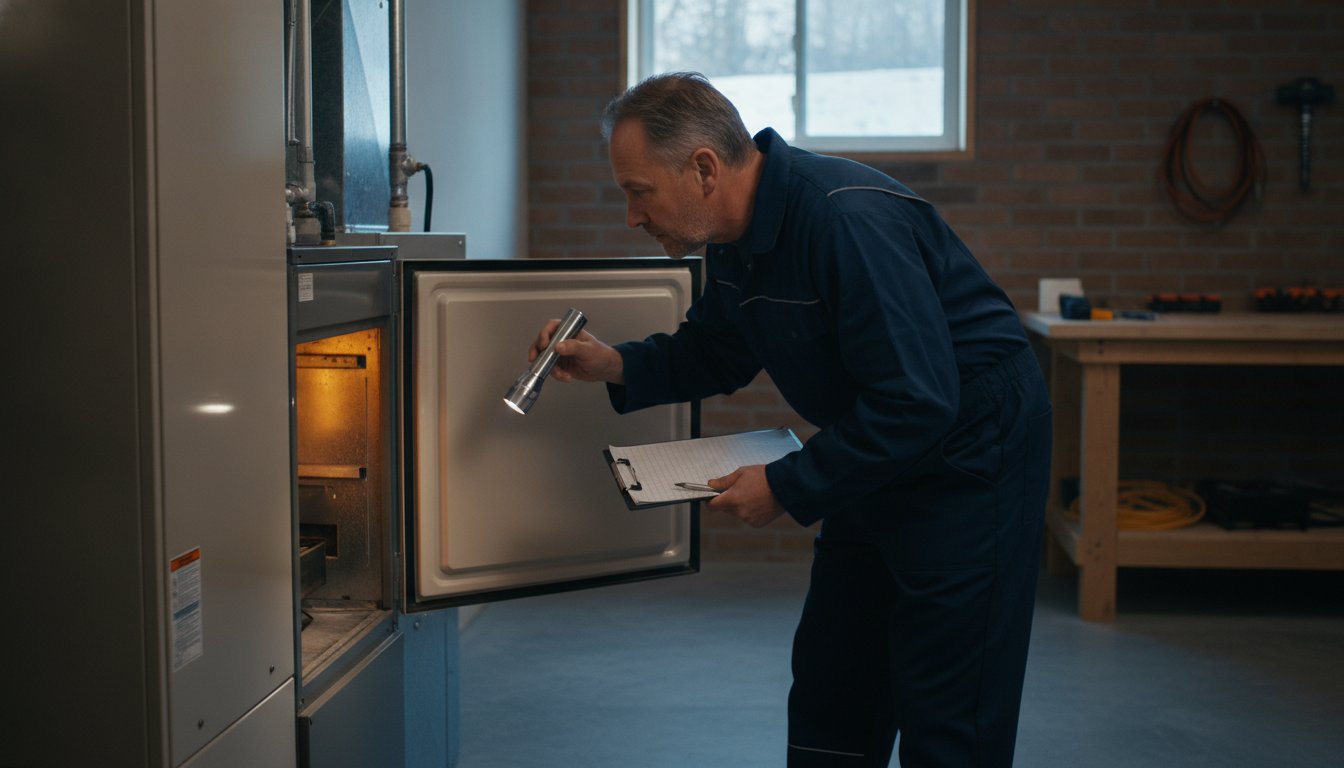
A running furnace isn’t necessarily a safe furnace. Just because your vents are blowing warm air doesn’t mean your heating system is operating without risk. Many of the most dangerous equipment failures remain completely invisible during daily use, only revealing themselves once they’ve become a serious threat. A professional furnace safety inspection is essentially a diagnostic of these “invisible failures” that a standard tune-up might miss. It’s the most reliable way to identify hidden hazards like cracked heat exchangers or venting issues before they compromise your family’s safety or lead to a sudden winter breakdown.
We know that inviting a technician into your home can feel stressful, especially if you’re worried about pushy sales tactics or unexpected costs. You deserve transparency and a clear understanding of what’s happening behind the service panel. This guide explains exactly what a technician should look for and why it matters for your home’s protection. We’ll provide a straightforward checklist to help you verify the work being done, giving you the peace of mind that comes from knowing your system is truly secure. You’ll learn how to spot potential risks and ensure your heating system is ready for the coldest months ahead without the stress of the unknown.
Key Takeaways
- Distinguish between a standard tune-up and a dedicated furnace safety inspection to ensure your equipment is free from hidden hazards.
- Get a detailed look at the 20-point checklist professional technicians use to verify the mechanical integrity of your heating system.
- Understand the critical role of the heat exchanger as a safety barrier and how to identify the “invisible” failures that threaten your air quality.
- Learn the best window for scheduling service in SE Wisconsin to protect your home from winter breakdowns and lake-effect venting issues.
- Recognize the red flags of high-pressure sales tactics so you can choose a trustworthy local expert who provides an honest assessment.
What is a Furnace Safety Inspection and Why is it Essential?
Many homeowners assume that if their house stays warm, their heating system is working perfectly. That isn’t always the case. A furnace safety inspection is a specialized technical audit focused on identifying hazards that have nothing to do with daily heating performance. Its core purpose is to find “invisible” failures, such as gas leaks or structural cracks, before they become a threat to your family. Licensed HVAC technicians perform these diagnostics because they use specific tools and training to see what the naked eye cannot. They check for signs of wear that are easy to miss, like improper venting or compromised electrical wiring.
Beyond the immediate safety of your household, these inspections serve as a necessary legal and financial safeguard. Most manufacturers require documented annual maintenance by a professional to keep your equipment warranty valid. If a claim is ever made, having a record of a professional furnace safety inspection can be critical. Your homeowner’s insurance provider may also look for proof of regular professional care in the event of a mechanical fire or system-related damage. Keeping these records ensures you aren’t left footing the bill for a major repair that should have been covered by a warranty.
Safety Inspection vs. Seasonal Maintenance
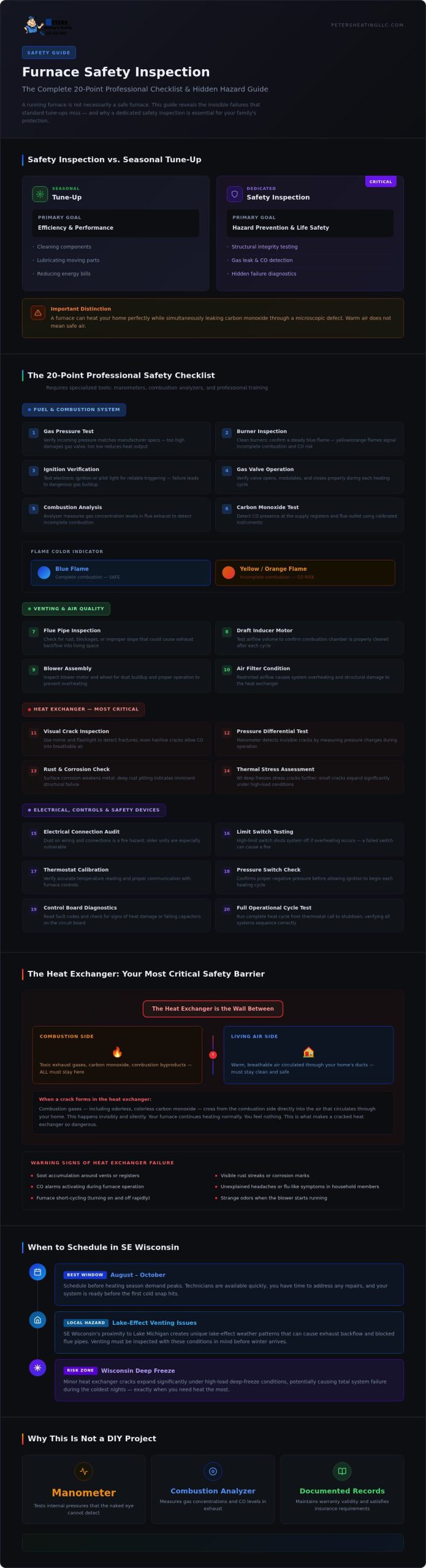
While people often use the terms interchangeably, a safety inspection is quite different from a standard seasonal tune-up. A tune-up focuses on efficiency; it involves cleaning components and lubricating moving parts to keep your energy bills low. A safety inspection prioritizes hazard prevention over performance. A furnace can heat a home perfectly while simultaneously leaking carbon monoxide into the ductwork through a microscopic defect. While maintenance involves mechanical cleaning, a safety check involves structural integrity testing. A furnace safety inspection is a preventative audit of life-safety components.
The Consequences of Skipping an Inspection
Skipping these annual checks can lead to serious risks that go unnoticed until they become emergencies. Dust accumulation on electrical connections or burners can create fire hazards, especially in older units that haven’t been serviced in years. In modern, tightly sealed homes in Kenosha or Oak Creek, even a small carbon monoxide leak becomes trapped inside, increasing the risk of poisoning. Minor cracks in a heat exchanger can expand during the heavy stress of a Wisconsin deep freeze, leading to a total system failure when you need heat the most. Undetected issues don’t fix themselves; they only grow more expensive and dangerous over time.
The Comprehensive Furnace Safety Checklist
A thorough furnace safety inspection covers more than 20 distinct points. It’s vital to understand that this is not a DIY project for the average weekend. While you can certainly change a filter, a real furnace safety inspection requires specialized equipment, such as manometers and combustion analyzers, to test internal pressures and gas concentrations. Having documented results from each visit provides a “health history” for your heating system. This documentation makes it easier to track wear and tear over the years and proves to insurance companies or future home buyers that the equipment has been professionally maintained.
Fuel and Combustion System Checks
The heart of your furnace is where gas meets flame, and this area requires precise calibration. A technician tests the incoming gas pressure to ensure it matches the manufacturer’s exact specifications. If the pressure is too high, it can damage the gas valve; if it’s too low, the furnace won’t heat effectively. We also clean and inspect the burners to look for a steady, crisp blue flame. A flickering yellow or orange flame often indicates incomplete combustion, which is a primary source of carbon monoxide. Finally, we verify that the electronic ignition or pilot light triggers reliably every time to prevent gas buildup.
Venting and Air Quality Verification
Proper venting ensures that toxic byproducts leave your home safely rather than lingering in your living space. Technicians examine the flue pipe for any signs of rust, blockages, or improper sloping that could cause exhaust to back up. The draft inducer motor is tested to ensure it’s moving the correct volume of air to clear the combustion chamber. We also look at the blower assembly and air filter. Restricted airflow doesn’t just make the furnace work harder; it can cause the entire system to overheat, leading to structural damage. If you’re concerned about your system’s output, scheduling HVAC preventative maintenance is a proactive way to catch these issues before they escalate.
Safety Controls and Electrical Components
Modern furnaces have built-in fail-safes designed to shut the system down if conditions become dangerous. We test the limit switch, which is the component that turns the furnace off if it detects overheating. The flame sensor is another critical part that must detect a flame within milliseconds of the gas valve opening. If it’s dirty or failing, the furnace might dump unburned gas into your home. We also inspect all electrical connections. Vibration over the years can loosen wires, leading to arcing or heat damage that poses a fire risk. Each of these checks ensures that your furnace’s “brain” is responding correctly to every command.
The Heat Exchanger: The Most Critical Safety Check
The heat exchanger is arguably the most vital part of any furnace safety inspection. It’s a series of metal tubes or coils that separates the combustion process from the air circulating through your home. Think of it as a protective barrier. Inside these tubes, fuel is burned, creating heat and toxic byproducts like carbon monoxide. Outside the tubes, the blower fan pushes clean air across the hot metal. If that metal barrier remains intact, the fumes stay inside and vent safely outdoors. When a crack develops, those toxic gases can seep directly into the air your family breathes.
Many homeowners feel frustrated when a unit that’s only ten years old shows signs of failure. Metal expands when it gets hot and contracts when it cools. Over thousands of heating cycles, this constant movement causes metal fatigue. If a system was improperly sized or had restricted airflow, the metal can overheat and stress even faster. This is why a regular furnace safety inspection is non-negotiable regardless of the equipment’s age. Problems don’t always wait for a system to reach its 20th birthday to appear.
How Technicians Identify a Cracked Heat Exchanger
Technicians use several methods to find defects that aren’t visible from the outside. We often use specialized infrared cameras or flexible borescopes to peer into the tightest curves of the exchanger. We also watch for “flame rollout” or erratic burner behavior during the startup cycle. When the blower fan kicks on, the change in air pressure can push the burner flames around if there’s a hole in the exchanger. Even a hairline fracture can leak lethal levels of CO into your living space, making these technical checks essential for your protection.
What to Do if a Crack is Found
Finding a crack is a serious situation that requires immediate action to keep your household safe. Many local codes in areas like Kenosha require a technician to “red-tag” the unit. This means the gas must be shut off because the furnace is no longer safe to operate. While this sounds alarming, it’s a standard safety protocol designed to prevent a tragedy. A cracked exchanger isn’t something that can be patched; it must be replaced to restore the safety of the system.
Replacing just the heat exchanger is often as expensive as installing a new furnace because of the intensive labor involved. At Peters Heating & Cooling, we take a straight-shooting approach to these findings. We won’t just tell you there’s a problem; we’ll show you the camera footage or the physical evidence so you can see the risk for yourself. We prioritize your safety over a quick sale, providing you with the honest facts you need to make the right decision for your home and budget. For Lake County homeowners facing this situation, our furnace installation Zion IL service offers a transparent, no-pressure path to a safer and more efficient heating system.
When to Schedule Your Inspection in SE Wisconsin
Timing is everything when you live in the Great Lakes region. We recommend scheduling your furnace safety inspection during the late summer or early fall. Waiting until the first “deep freeze” usually leads to unnecessary stress and longer wait times for a technician. By handling the inspection while the weather is still mild, you ensure your system is ready for the heavy workload ahead. This is also the perfect time to test your carbon monoxide detectors and replace their batteries. Since your furnace will be running almost constantly for several months, having those secondary safety layers in place is vital for your peace of mind.
Local Climate Factors in Kenosha and Racine
Homes in Kenosha, Racine, and Oak Creek face unique challenges due to our proximity to the lake. High-efficiency furnaces often use PVC intake and exhaust pipes that exit through the side of the house. During heavy lake-effect snow, these vents can easily become blocked; this causes the system to shut down or leak exhaust back into the basement. Additionally, the extreme temperature swings common in SE Wisconsin cause metal components to expand and contract rapidly. This mechanical stress can accelerate wear on the heat exchanger. For residents in Winthrop Harbor and surrounding areas, moisture buildup in vents from high humidity can lead to corrosion if not checked annually. A professional furnace safety inspection identifies these risks before the snow starts to pile up.
Preparing Your Home for the Inspection
You can help the process go smoothly by doing a little bit of prep work before we arrive. Clear at least a three-foot safety zone around your furnace so the technician has plenty of room to work safely. It’s also helpful to replace your air filter beforehand. This allows the pro to focus entirely on the technical safety diagnostics rather than routine maintenance tasks. If you noticed any odd noises, such as whistling or banging, or faint metallic smells during the previous winter, make a quick list. Sharing these details helps us pinpoint potential issues faster. If you haven’t had your system checked in over a year, now is the time to schedule HVAC preventative maintenance to keep your family safe and warm.
Choosing a Trustworthy Expert for Your Safety Inspection
Not all contractors treat a furnace safety inspection with the same level of care. Some companies use these visits as a “foot in the door” for aggressive sales tactics rather than a technical audit. A major red flag to watch for is a rushed visit. A proper safety check involves technical measurements that take time to perform correctly. If a technician is in and out of your basement in fifteen minutes, they haven’t performed a thorough diagnostic of your system’s life-safety components. Another warning sign is immediate, high-pressure tactics to replace your entire system before they’ve even finished the testing or explained the data.
A reliable expert should hold NATE certification and proper local licensing to ensure they’re up to date on current safety codes. They should also be willing to provide a written report of all safety readings. This documentation should include specific data like gas pressure levels, carbon monoxide parts-per-million (PPM) in the flue, and flame sensor response times. Having this data in writing protects you and creates a baseline for future service visits. Local, owner-operated businesses often provide better accountability because their reputation is tied directly to the community they serve every day.
The Peters Heating & Cooling Difference
At Peters Heating & Cooling, we operate with the neighborly care you expect from a local business. Mike and Don take a grounded approach to every service call, focusing on what your system actually needs to stay safe. We’ve served Kenosha, Racine, and Winthrop Harbor since 2009 with a commitment to honest recommendations. We don’t believe in upselling parts or services that aren’t necessary for your comfort or safety. Our goal is to be the straight-shooting craftsmen you can trust to keep your home comfortable without the drama of high-pressure sales or hidden fees.
Next Steps: Booking Your Peace of Mind
Building a long-term relationship with a local HVAC partner is the best way to ensure your system’s longevity. When the same team visits your home year after year, they become familiar with your specific equipment and its unique history. This consistency makes it easier to spot subtle changes in performance before they turn into hazards. Taking this small step in the fall saves you from the anxiety of a mid-winter emergency later. A professional audit is an investment in your family’s safety that pays off in reliability and peace of mind. Schedule your furnace safety inspection with Peters Heating & Cooling today.
Prepare Your Home for a Worry-Free Winter
A reliable heating system is essential for navigating the extreme temperature swings of the Great Lakes region. By prioritizing a furnace safety inspection, you move beyond basic maintenance to ensure every technical component is operating without risk. From identifying hairline fractures in the heat exchanger to verifying that safety switches respond in milliseconds, these professional checks provide the security your family deserves before the first deep freeze arrives. Taking this step early helps you avoid the stress of sudden breakdowns and the uncertainty of invisible hazards.
Peters Heating & Cooling has served SE Wisconsin and NE Illinois since 2009. Our licensed and insured technicians are committed to transparent pricing and honest recommendations, treating your home with the same care we’d give our own neighbors. We focus on technical accuracy and long-term reliability rather than high-pressure sales tactics. Building a relationship with a local partner you trust is the best way to keep your equipment running safely for years to come.
Ensure your home is safe this winter—book your furnace inspection now. Taking this proactive step today means you can rest easy knowing your comfort and safety are in expert hands.
Frequently Asked Questions
Is a furnace safety inspection really necessary every year?
Yes, an annual check is vital for identifying wear that happens during Kenosha’s long heating seasons. Even if the unit seems to run fine, internal components like the heat exchanger or gas valves can develop small defects that compromise safety. Regular checks ensure that these “invisible” issues are caught before they become dangerous. Most homeowners find that a yearly furnace safety inspection provides the peace of mind needed to face the winter months without anxiety.
What is the average cost of a furnace safety inspection in Kenosha?
Pricing for professional safety diagnostics typically follows a flat-rate structure for maintenance visits. At Peters Heating & Cooling, we believe in transparent, non-pushy pricing that reflects the technical expertise required for a thorough audit. Instead of focusing on a single number, homeowners should look for a provider who offers a detailed breakdown of the services included. This approach ensures you aren’t hit with hidden fees or high-pressure upselling during the visit.
How long does a professional furnace safety inspection take?
A professional visit generally takes between 60 and 90 minutes to complete properly. This duration allows the technician enough time to perform technical testing on the gas pressure, combustion levels, and electrical safety controls. If a visit is significantly shorter, it’s likely that the technician skipped essential diagnostic steps. We take a methodical approach to ensure every component on the checklist is verified according to manufacturer specifications and local safety codes.
Can a furnace safety inspection detect carbon monoxide leaks?
Yes, detecting carbon monoxide risks is a primary goal of the inspection. Technicians use specialized combustion analyzers to measure the gases leaving your system and verify that they aren’t leaking into your home’s air supply. By checking the structural integrity of the heat exchanger and the efficiency of the venting pipes, we can identify potential CO hazards before they reach dangerous levels. This technical process is much more accurate than relying solely on a standard wall-mounted detector.
Will a safety inspection prevent my furnace from breaking down in winter?
While no service can guarantee a breakdown-free winter, an inspection identifies the most common causes of system failure before they happen. We look for worn-out components like the igniter, flame sensor, and blower motor that often fail during extreme cold snaps. By catching these issues in the fall, you avoid the stress of a mid-winter repair. This proactive care is especially important in SE Wisconsin, where lake-effect weather puts extra strain on heating equipment.
What is a “red tag” and what happens if my furnace gets one?
A “red tag” is a formal notification that your furnace is unsafe to operate and must be shut off immediately. This usually happens if a technician finds a major safety hazard, such as a cracked heat exchanger or a significant gas leak. While it’s a stressful situation, the tag is a legal safety requirement designed to protect your family from fire or poisoning. We provide honest recommendations and clear evidence of the failure to help you decide on the best repair or replacement path.
Do I need a safety inspection if my furnace is still under warranty?
Yes, annual inspections are often a requirement of the manufacturer’s warranty. If your furnace fails and you cannot provide proof of professional maintenance, the manufacturer may deny your claim for replacement parts. Beyond protecting your warranty, an annual furnace safety inspection ensures that the unit was installed and is operating correctly. Even new systems can develop issues due to venting obstructions or electrical surges, making regular professional oversight a smart investment for any homeowner.