Does your air conditioner sound like a jet engine taking off while your upstairs bedrooms still feel like a sauna? It’s a common frustration for many homeowners in Kenosha and Racine, especially when those loud, clunky units are followed by a staggering utility bill. You might feel like you’re paying more every year for less actual comfort. It’s easy to wonder if the latest high efficiency AC units are truly worth the investment or if they’re just another marketing gimmick designed to get you to spend more.
We believe you deserve honest answers about your home’s mechanical systems. Modern cooling technology has improved significantly, and we’re here to help you cut through the noise. This guide explores how upgrading to high efficiency AC units can stabilize your indoor temperatures and lower your monthly overhead. We’ll break down the 2026 SEER2 standards, explain why the incentive landscape has shifted toward local Wisconsin programs like Focus on Energy, and show you how to achieve quiet, reliable comfort that stands up to our Great Lakes humidity.
Key Takeaways
- Learn how 2026 SEER2 standards and variable-speed technology provide more consistent cooling than traditional “on/off” systems.
- Explore how high efficiency AC units manage the specific humidity challenges of the Kenosha and Racine region for better indoor air quality.
- Understand the financial impact of local rebates, such as Wisconsin’s Focus on Energy, on your total project payback period.
- Discover why a professional Manual J Load Calculation is the only way to ensure your new system is sized correctly for your specific home layout.
What Defines High-Efficiency AC Units in 2026?
In 2026, defining a high-efficiency system requires looking beyond a single sticker. The industry has moved toward more rigorous testing to ensure that the performance listed on the equipment matches the comfort you feel in your living room. High efficiency AC units today are engineered to do more than just blow cold air. They are precision tools designed to manage humidity and airflow with a level of accuracy that older models simply cannot match. This shift is primarily driven by the transition to SEER2 standards, which offer a more realistic view of how a unit performs once it’s actually installed in your home.
Understanding SEER2 Ratings
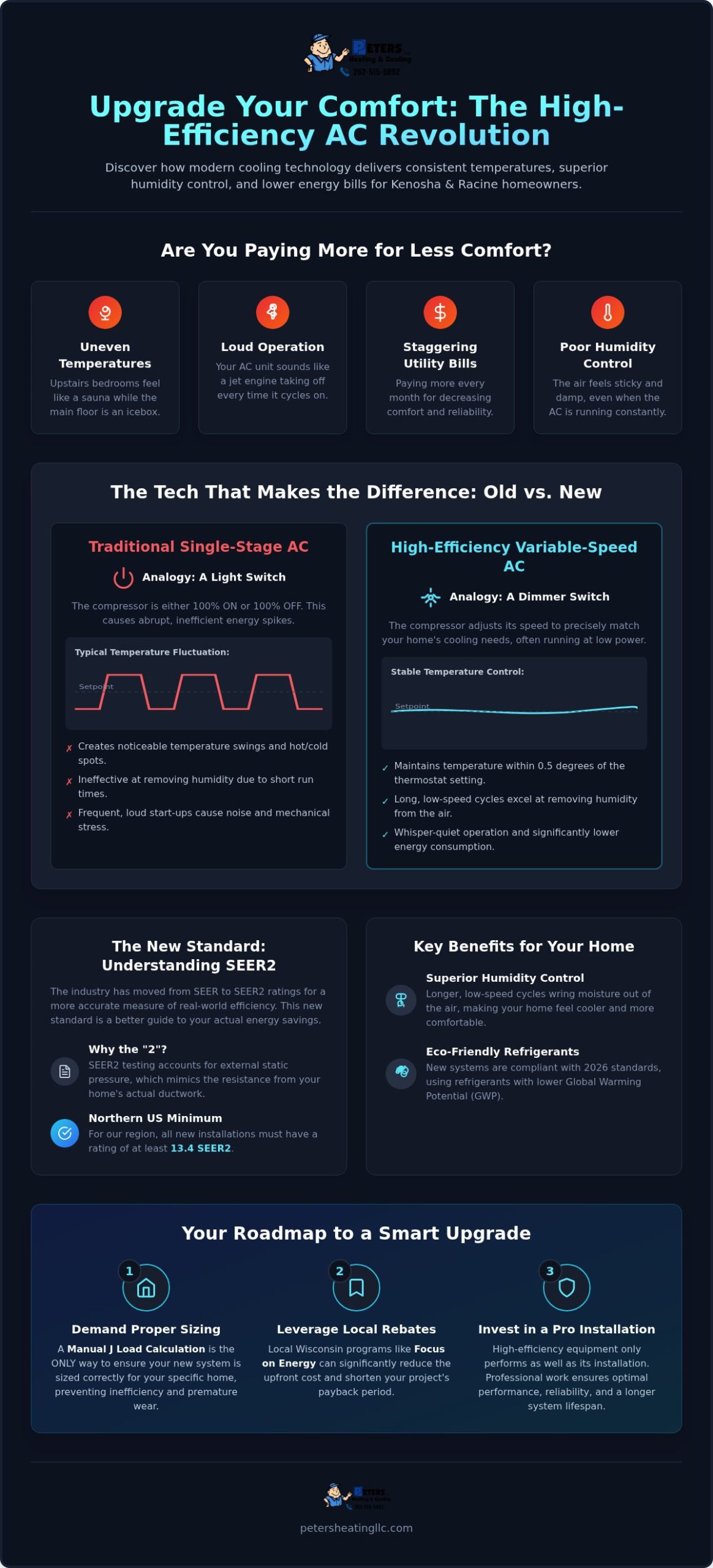
The Seasonal Energy Efficiency Ratio (SEER) has been the standard for measuring cooling performance for decades. However, the updated SEER2 metric is now the required benchmark for all new equipment. The “2” in SEER2 is important because the testing process now accounts for external static pressure. This represents the resistance created by your home’s ductwork, which was often ignored in older testing models. For our region in the Northern US, the minimum requirement for new installations is 13.4 SEER2. Systems that significantly exceed this number are often awarded the Energy Star label, helping you identify equipment that provides the best balance of performance and lower utility costs.
Standard vs. High-Efficiency: The Core Differences
The most significant difference between a standard unit and high efficiency AC units lies in the compressor technology. A traditional single-stage unit operates like a light switch; it’s either 100% on or completely off. This creates a massive energy spike every time the system starts up. In contrast, high-efficiency models use multi-stage or variable-capacity compressors. These systems act more like a dimmer switch, adjusting their speed to match the exact cooling needs of your home at any given moment. By running at lower speeds for longer periods, they maintain a more consistent temperature and remove more humidity from the air.
Beyond the compressor, high-efficiency systems often feature advanced blower motors and improved coil designs. These components allow the system to move air more quietly and transfer heat more effectively. These technical improvements don’t just save money on your monthly bill. They also reduce the mechanical stress on your system, which can lead to a longer lifespan and fewer unexpected repairs over time. We believe in being transparent about these differences so you can make a choice that fits your home’s specific needs without any high-pressure sales tactics.
The Technology Behind Modern Cooling Efficiency
Understanding the internal mechanics of high efficiency AC units helps demystify why they provide superior comfort compared to older models. While standard units rely on simple mechanical switches, modern systems use sophisticated sensors to manage every drop of refrigerant. One critical component is the Thermal Expansion Valve (TXV). This part acts like a precision nozzle, constantly adjusting the flow of refrigerant into the cooling coil based on the exact temperature of the air. By regulating this flow, the system avoids wasting energy and prevents the coils from freezing during heavy use.
Variable-Speed Compressors: The Efficiency Engine
Traditional air conditioners are either fully on or fully off. This creates a cycle where your home receives a sudden blast of cold air followed by a long period of silence while the temperature slowly climbs back up. Variable-speed technology is the cruise control of HVAC. Instead of shutting down completely, the compressor slows down to a fraction of its total power to maintain a steady temperature. These longer, lower-speed cycles prevent the energy-heavy start-up phase and keep your home within half a degree of your thermostat setting at all times.
Advanced Humidity Control
In the Kenosha and Racine area, summer humidity is often more uncomfortable than the actual heat. High efficiency AC units are significantly better at moisture removal because they run for longer durations at lower speeds. As air passes over the cold evaporator coil for a longer period, more water vapor condenses and drains away. Drier air feels cooler on the skin, which often allows you to set your thermostat a few degrees higher without losing any comfort. This synergy between temperature and humidity control is why modern systems feel different than the ice box effect of older units.
Modern efficiency also relies on communication. High-efficiency air handlers and smart thermostats now share data in real-time, allowing the system to anticipate cooling needs before your home gets too warm. Additionally, as of 2026, the industry has fully embraced new, eco-friendly refrigerants. Equipment manufactured after January 1, 2025, is restricted from using high-GWP refrigerants like R-410A. Choosing a modern system ensures your home remains compliant with these environmental standards while utilizing the most stable technology available. If you’re curious about how these components would fit into your current setup, our team can provide a clear air conditioning installation quote that explains the technical benefits for your specific floor plan.
Real-World Benefits for Kenosha and Racine Homeowners
Living near the shore of Lake Michigan brings a specific kind of summer challenge. While the breeze is welcome, it carries a heavy humidity that can make your home feel damp even when the air is cool. This clammy feeling is usually the result of an older, low-efficiency air conditioner that short-cycles. Short-cycling means the unit turns on and off too quickly to effectively remove moisture from the air. High efficiency AC units solve this by running longer, slower cycles that pull water vapor out of the air more consistently. When we size a system for a local home, we focus on this balance to ensure your living space feels crisp and dry rather than just cold.
Conquering Great Lakes Humidity
The mistake many contractors make is installing an oversized unit that cools the air too fast. In our humid climate, this leaves the moisture behind. We take a different approach by performing detailed calculations based on your specific home style and proximity to the lake. We prioritize a system that runs longer at a lower intensity. This consistent operation allows the evaporator coil to stay cold enough to wring out the humidity, which is the real secret to true comfort in Southeast Wisconsin. It’s the difference between a house that feels like an ice box and one that feels genuinely refreshed.
Noise Reduction and Neighborhood Comfort
In densely populated neighborhoods across Kenosha and Oak Creek, the sound of your air conditioner matters as much as its performance. Older units often hum or rattle loud enough to disrupt a quiet evening on the patio or keep you awake in a nearby bedroom. Modern high-efficiency cabinets are designed with noise reduction as a priority. They utilize insulated compressor blankets and swept-wing fan blades to dampen vibration and air turbulence. This engineering allows them to operate at significantly lower decibel levels, making them a better neighbor in our tightly-knit communities.
Uneven cooling is another frequent complaint we hear, especially in the historic homes of Racine. It’s common for the first floor to feel like a refrigerator while the upstairs bedrooms remain uncomfortably warm. High efficiency AC units help bridge this gap by maintaining a steady, low-intensity airflow that prevents heat from pooling in the upper levels of your house. For homeowners looking to maximize their indoor environment, these systems integrate seamlessly with whole-home air purifiers. This combination doesn’t just manage the temperature; it actively removes allergens and pollutants. It provides a level of air quality that matches the precision of the cooling itself, ensuring every room in your house is a place you actually want to spend time.
Evaluating ROI: Is a High-Efficiency Upgrade Worth It?
When you consider the cost of a new cooling system, it’s natural to focus on the initial price tag. However, a true return on investment (ROI) looks at the total cost of ownership over the next 15 to 20 years. High efficiency AC units typically require a larger upfront investment, but they are designed to pay for themselves through reduced operational costs and improved system longevity. For homeowners in the Kenosha and Racine area, where utility rates can fluctuate, these savings provide a level of financial predictability that older, standard-efficiency units can’t match.
The 2026 Incentive Landscape
The financial landscape for HVAC upgrades has changed significantly recently. As of 2026, the federal Energy Efficient Home Improvement Credit (Section 25C) has expired for air conditioning units placed in service after December 31, 2025. This means homeowners must now look toward state and local programs to offset their installation costs. In Wisconsin, the Focus on Energy program remains a primary source of savings, offering rebates that range from $400 to $700 for qualifying heat pumps. Additionally, the Inflation Reduction Act’s HEAR program provides income-qualified households with rebates up to $8,000 for high-efficiency heat pump installations. It’s essential to verify these incentives through official program websites before starting your project to ensure you meet all current efficiency requirements.
Long-Term Energy Savings vs. Upfront Investment
The gap in monthly operating costs between a minimum-standard 13.4 SEER2 unit and a high-efficiency model rated at 20 SEER2 or higher can be substantial. Because high-efficiency systems use variable-speed technology to avoid the energy-heavy startup phase, they consume significantly less electricity during our humid Wisconsin summers. We define ROI as the combination of lower monthly bills and avoided future repairs. If you plan to stay in your home for five years or more, the “break-even” point where energy savings cover the price difference of the upgrade is often reached much sooner than people expect.
Beyond the monthly bill, there is a hidden ROI in the form of reduced mechanical wear. High efficiency AC units run more consistent cycles, which puts less stress on the compressor and fan motors compared to the constant “on/off” hammering of a single-stage unit. This reliability often leads to a lower frequency of emergency service calls. Furthermore, a modern, high-efficiency system is a tangible asset that can increase your home’s resale value, as savvy buyers increasingly prioritize energy-efficient mechanicals. If you’re ready to see how the numbers look for your property, we can provide a transparent air conditioning installation quote that breaks down the long-term value of each efficiency tier.
Finding the Right High-Efficiency Solution for Your Home
Selecting the right high efficiency AC units involves more than just picking a model from a brochure. The most advanced system on the market will underperform if it isn’t perfectly matched to your home’s specific footprint. At Peters Heating & Cooling, we prioritize a thorough assessment over quick sales. We look at the mechanics of your home’s cooling needs to ensure the investment you make today delivers the comfort you expect for years to come. Our process is designed to be transparent, giving you the facts you need to make an informed decision without any high-pressure tactics.
The Importance of Proper Sizing
Many homeowners assume that a larger unit will cool a house faster, but bigger is rarely better. A Manual J Load Calculation is the professional standard we use to determine the exact cooling capacity your home requires. We evaluate your insulation levels, the quality of your windows, and even the direction your home faces. If high efficiency AC units are oversized, they will short-cycle. This means they turn on and off so frequently that they never reach their peak efficiency or properly dehumidify your space. This constant starting and stopping also places unnecessary mechanical stress on the compressor, potentially shortening the lifespan of your new equipment. Homeowners who want to understand the full replacement process before committing can find a detailed breakdown in our honest guide to air conditioning installation near you, which covers everything from sizing to what to expect on installation day.
Preparing Your Home for an Upgrade
Your ductwork acts as the lungs of your HVAC system. If your ducts are leaky, clogged, or undersized, a new unit will struggle to move air effectively to every room. We inspect your existing infrastructure before the installation begins to ensure it can handle the airflow requirements of modern equipment. We also evaluate your current thermostat. To unlock the full benefits of variable-speed technology, you often need a smart or communicating thermostat that can share data with the air handler in real-time. This coordination ensures that every component of your system is working toward maximum efficiency.
We believe in providing straightforward, project-based quotes that respect your budget and your home. Our technicians focus on craftsmanship and long-term reliability rather than upselling unnecessary features. When you are ready to explore your options, you can Request an honest installation quote from Peters Heating & Cooling. We will provide a clear evaluation of your home’s needs and help you choose a system that provides steady, quiet comfort for your family.
Investing in Your Home’s Long-Term Comfort
Upgrading your cooling system is a significant decision that impacts both your monthly budget and your daily quality of life. By choosing high efficiency AC units, you’re investing in a stable indoor environment that handles Great Lakes humidity with precision. We’ve explored how modern SEER2 standards and variable-speed technology provide consistent, quiet performance that older systems simply can’t match. Success depends on an honest assessment of your home’s unique needs and the integrity of your installation.
Since 2009, our licensed, insured, and continuously trained technicians have served Southeast Wisconsin and Northeast Illinois with transparent, project-based pricing and no hidden fees. We focus on doing the job right the first time, ensuring your ductwork and equipment work in harmony. When you’re ready to lower your utility bills and improve your home’s air quality, we’re here to provide the straight-shooting advice you deserve. Schedule your high-efficiency AC consultation with Peters Heating & Cooling and take the first step toward a cooler, more reliable summer.
Frequently Asked Questions
What is considered a high-efficiency AC unit in 2026?
In 2026, high-efficiency is defined by exceeding the regional minimum of 13.4 SEER2. Units with the Energy Star label are generally considered top-tier. Most high efficiency AC units on the market today fall in the 16 to 20+ SEER2 range. These systems utilize advanced compressors to provide better comfort than the baseline equipment required by law in the Northern US. We focus on equipment that balances performance with long-term reliability.
How much can I actually save on my energy bill with a high-efficiency AC?
Savings vary based on your home’s insulation and usage habits, but upgrading from an old 10 SEER unit to a modern high-efficiency system can reduce cooling costs significantly. Since high-efficiency models run longer cycles at lower power, they avoid the expensive energy spikes of frequent startups. Homeowners in the Racine and Kenosha area often see lower monthly utility bills during the peak humidity of July and August when systems run most often.
Do high-efficiency AC units qualify for federal tax credits?
As of 2026, the federal Energy Efficient Home Improvement Credit (Section 25C) has expired for air conditioning units placed in service after 2025. Instead, homeowners should look toward local Wisconsin programs for financial relief. The Focus on Energy program offers rebates between $400 and $700 for qualifying heat pumps. Additionally, income-qualified households may access rebates up to $8,000 through the state’s Inflation Reduction Act programs. We recommend verifying eligibility through official program websites.
Is a variable-speed AC unit better than a two-stage unit?
Variable-speed units offer the highest level of precision because they can adjust their output in small increments. A two-stage unit only has high and low settings. While both are improvements over traditional single-stage models, variable-speed technology provides more consistent temperatures and superior humidity removal. This makes it an excellent choice for homes in Oak Creek or Winthrop Harbor where summer moisture is a major comfort concern. It acts like cruise control for your home.
How long do high-efficiency air conditioners typically last?
Most high-efficiency systems are designed to last 15 to 20 years when properly maintained. Because these units use variable-speed technology, they experience less mechanical wear and tear than standard units that constantly cycle on and off at full power. Regular preventative maintenance is essential to reach this lifespan. Our licensed technicians provide thorough tune-ups to keep your system running reliably throughout its operational life, ensuring you get the full value from your investment.
Will a high-efficiency AC unit help with the humidity in my Kenosha home?
Yes, high efficiency AC units are specifically designed to manage humidity better than standard models. Because they run longer, lower-intensity cycles, the air spends more time passing over the cold evaporator coil. This allows the system to pull more moisture out of the air, which is critical for comfort near Lake Michigan. Drier air feels cooler on your skin, which often allows you to set your thermostat higher without losing any actual comfort.
Does a high-efficiency AC require more maintenance than a standard unit?
High-efficiency units don’t necessarily require more frequent maintenance, but the precision of that maintenance is more important. These systems contain advanced sensors and electronic controls that need to be checked by a trained professional. We recommend a flat-rate preventative maintenance visit once a year. This ensures that the complex components, like variable-speed motors and thermal expansion valves, are calibrated for maximum efficiency and long-term reliability. Keeping the coils clean is vital for performance.
Can I install a high-efficiency AC unit with my existing furnace?
It is possible, but it is often not recommended if you want to achieve the unit’s full efficiency rating. A high-efficiency air conditioner requires a compatible blower motor in the furnace to manage airflow correctly. If your furnace is older, it may not be able to communicate with the new AC components. We provide transparent, project-based quotes to help you decide if a full system replacement is the most practical and cost-effective choice for your home.