
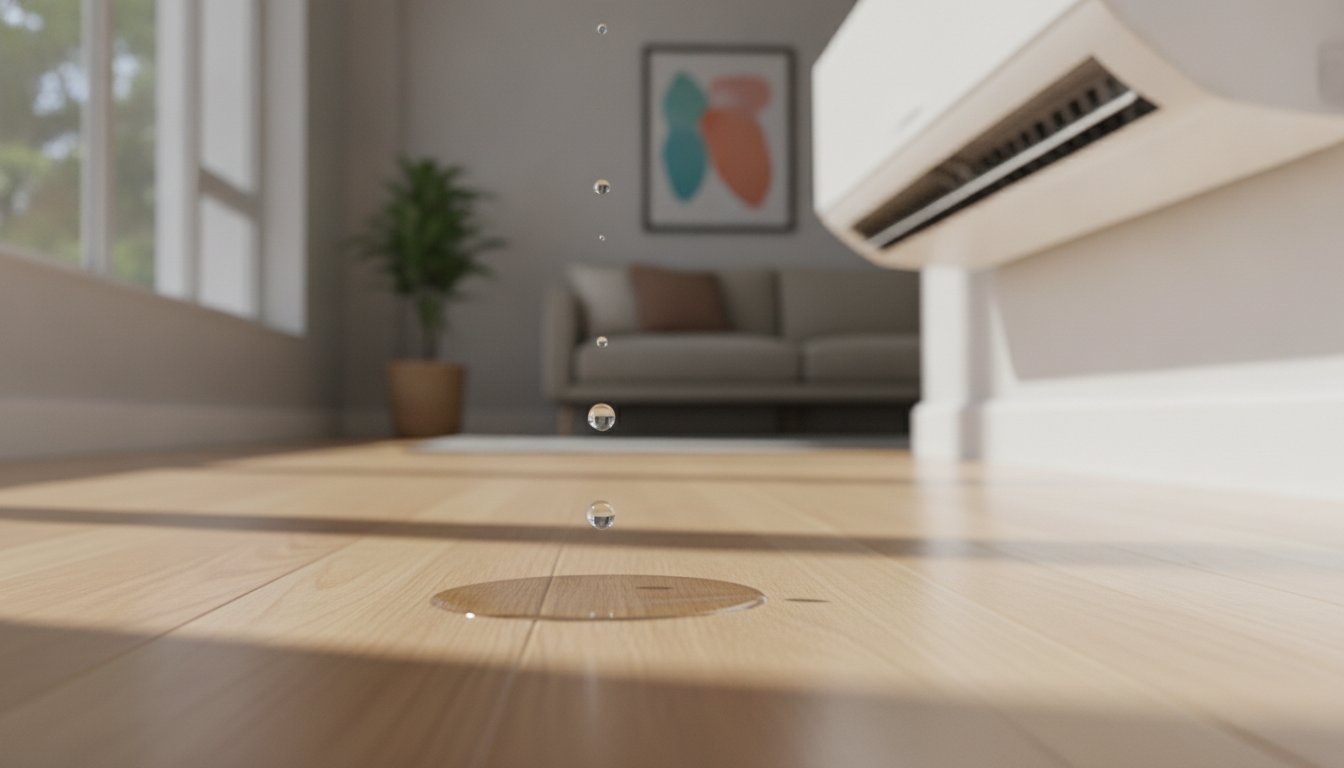
Imagine coming home after a sweltering July day in Kenosha, hoping for a cool breeze, only to find a growing puddle on your hardwood floor. It’s a stressful sight that immediately sparks worries about warped floorboards, mold, or an expensive system replacement. We understand the anxiety that comes with seeing water where it shouldn’t be, especially when you’re relying on your cooling system to stay comfortable. Finding an AC unit leaking water inside is a common frustration, but it doesn’t always mean you’re facing a total mechanical failure.
This guide will help you identify exactly where that moisture is coming from and what immediate steps you can take to protect your home from water damage. We believe in providing honest, practical advice to help you manage home maintenance without the stress of unnecessary drama. We will walk through the most frequent causes of indoor leaks, explain which ones you can handle yourself, and clarify when it’s time to bring in a professional technician to safely restore your home’s cooling.
Key Takeaways
- Shut down your system at the thermostat and breaker immediately to stop the flow of water and protect your home’s electrical components.
- Identify the most common culprits, such as a clogged condensate drain line or a frozen evaporator coil, to understand the scope of the problem.
- Learn why an AC unit leaking water inside is frequently a symptom of a maintenance gap and how simple fixes can often restore your cooling.
- Protect your property from expensive repairs by recognizing how water impacts drywall, insulation, and flooring when left unaddressed.
- Gain clarity on when a leak requires professional tools and expertise to ensure your system is repaired safely and efficiently.
Understanding Why Your AC Unit Is Leaking Water Inside
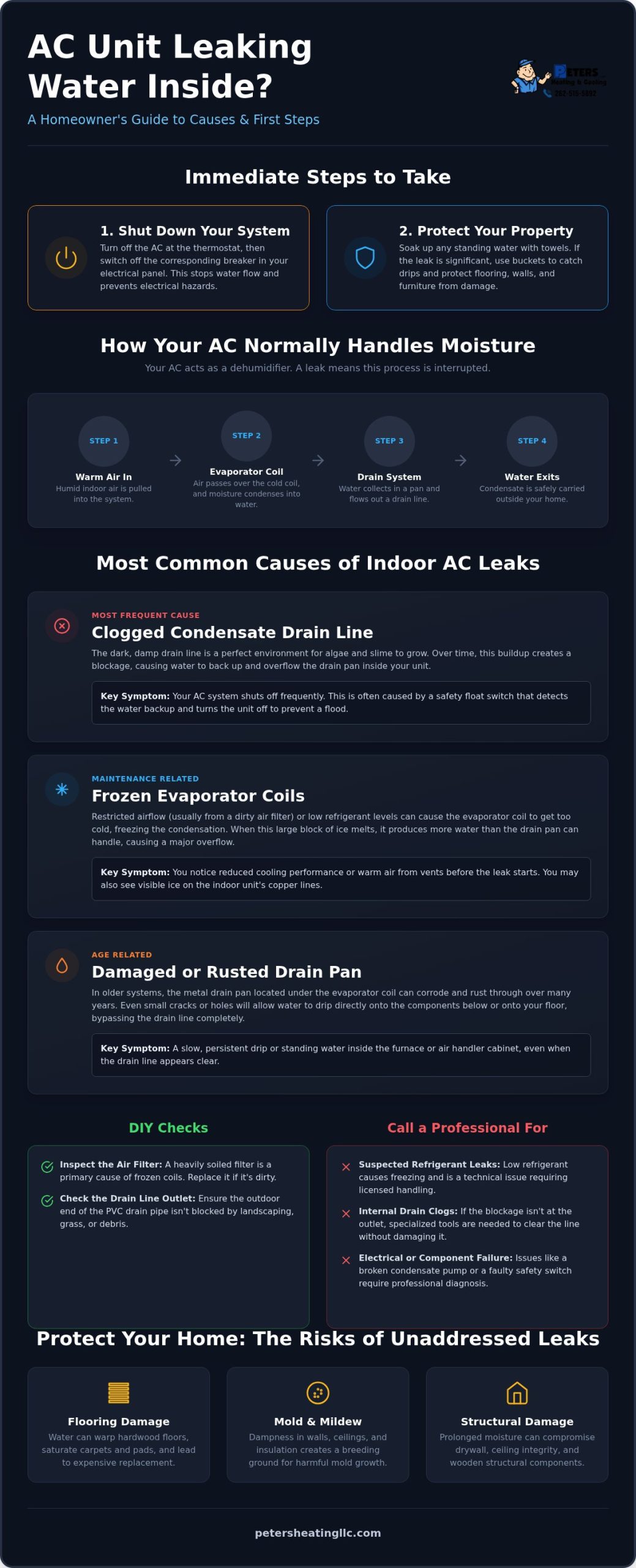
Finding an AC unit leaking water inside can feel like a disaster, but it is helpful to understand that water is actually a standard part of the cooling process. Your system does not just lower the temperature; it acts as a large-scale dehumidifier for your home. Understanding how air conditioners produce water helps demystify the process. As warm indoor air passes over the cold evaporator coil, moisture in the air condenses into liquid droplets, much like the beads of water that form on a cold glass of iced tea during a Kenosha summer.
These droplets fall into a primary drain pan located directly under the coil. From there, gravity pulls the water into a PVC drain line that carries it safely outside your home. In a healthy system, you will never see this water indoors. It remains contained within these specific components until it exits your house. Learning why you have an AC unit leaking water inside starts with recognizing that this water has simply missed its exit. Many homeowners worry that a leak signals the end of their system’s life, but in reality, most leaks are caused by simple maintenance gaps rather than terminal mechanical failure.
How Your AC Handles Moisture
The evaporator coil is the heart of the moisture removal process. It is usually located inside your furnace or air handler. As your blower motor pushes humid indoor air through the coil’s fins, the temperature drop causes water to wring out of the air. This liquid is guided by the shape of the coil into the drain pan. This pan is specifically pitched to ensure water flows toward the drain opening rather than sitting still. The PVC line then acts as a dedicated highway, moving that water away from your flooring and drywall to a safe drainage point outdoors.
When Does ‘Normal’ Condensation Become a Leak?
It is common to see a small amount of sweat or light moisture on the exterior of your HVAC cabinet during a humid Wisconsin summer. This is often just surface condensation. However, a true leak involves standing water, saturated carpets, or damp spots on the ceiling below your unit. In Kenosha and Racine, our proximity to Lake Michigan means we often deal with high outdoor humidity. This forces your AC to work harder to remove moisture, resulting in a higher volume of condensation. If the drain system is even slightly restricted, this extra water can quickly overflow. Musty smells or visible staining on nearby walls are clear indicators that the water is no longer following its intended path.
The 5 Most Common Causes of Indoor AC Leaks
Identifying the source of an AC unit leaking water inside is the first step toward a dry home. Most leaks stem from a handful of predictable mechanical issues that we see every summer. While some are simple maintenance tasks, others require a more technical eye to resolve safely. Understanding these five common culprits will help you decide if you can handle the fix or if you need professional assistance.
The Clogged Drain Line: Algae and Debris
The condensate drain line is the most frequent cause of water backups. Because this PVC pipe is always dark and damp, it becomes a perfect breeding ground for algae and “slime” buildup. Over time, this biological growth acts like a dam. It prevents water from exiting the house and forces it back into the unit. Many modern systems include a safety float switch. This small device shuts the system down if it detects a backup, which prevents a flood. If your system keeps turning off, a clogged line is often the reason. Regular HVAC preventative maintenance includes clearing these lines with specialized tools to prevent these messy overflows before they start.
Frozen Coils: Airflow and Refrigerant Issues
A frozen evaporator coil is another major cause of an AC unit leaking water inside. When airflow is restricted, usually by a heavily soiled air filter, the coil’s temperature drops below freezing. Moisture from the air turns into a thick block of ice on the coil’s surface. The real trouble starts when the system cycles off or the ice becomes too heavy. It begins to melt rapidly, producing a volume of water that the drain pan simply cannot handle. This leads to water spilling over the sides of the pan and into your furnace cabinet or onto your floor. Low refrigerant levels can also cause this icing effect, which is a more technical issue that requires a licensed technician to diagnose and repair.
- Damaged or Rusted Drain Pans: In many older Racine homes, original HVAC units may have metal drain pans. Over decades, these pans can rust through. This creates small holes that allow water to drip directly into the furnace cabinet rather than flowing into the drain line.
- Broken Condensate Pumps: If your unit is installed in a basement, it likely uses a mechanical pump to push water up and out of the house. If the pump motor fails or the internal float gets stuck, the reservoir will overflow instantly.
- Improper Installation: Sometimes the issue is as simple as a poorly pitched drain line. If the PVC pipe doesn’t have a consistent downward slope, water will sit in the pipe and eventually back up into the unit.
Assessing the Risk: Is a Leaking AC Unit an Emergency?
Finding an AC unit leaking water inside often triggers an immediate sense of panic. You might wonder if you need to call for help right this second or if it can wait until the next business day. While some leaks are minor inconveniences, others pose a genuine threat to your home’s structure and your family’s safety. We believe in being straight with our neighbors about these risks so you can make an informed decision without the pressure of a sales pitch.
Water Damage to Your Home Infrastructure
While a puddle on the floor is frustrating, an AC unit leaking water inside from an attic installation is a much more urgent situation. In these cases, secondary drain pans are your only line of defense. If that pan overflows or wasn’t installed correctly, water seeps directly into your ceiling drywall. This leads to sagging, staining, and eventually a ceiling collapse. Visible leaks are actually a blessing because you can see them. Hidden leaks behind walls are much more dangerous. They can rot wooden studs and ruin insulation for weeks before they’re discovered. You should also act fast because mold only needs 24 to 48 hours to begin growing in damp carpeting or drywall. Once mold takes root, a simple HVAC repair often turns into a much more expensive restoration project.
Electrical and Mechanical Safety
Safety is our top priority. Water and electricity are a volatile combination. If you see water dripping into your furnace cabinet or near the air handler wiring, don’t touch the unit. You should go straight to your electrical panel and cut the power at the breaker. Water can easily short circuit the control board or the blower motor. These components are sensitive and expensive to replace. Beyond the electrical risks, there’s a mechanical toll on your system. If the unit keeps cycling while the evaporator coil is frozen, you’re putting immense strain on the compressor. The compressor is the heart of your system. Replacing it is one of the most costly repairs in the industry. It’s much better to lose a few hours of cooling than to risk a total system failure.
A leaking system also hits your wallet through inefficiency. When water isn’t draining, the system struggles to dehumidify, which causes it to run longer cycles. This leads to a noticeable spike in your Kenosha utility bills. Finally, there’s the health aspect. Damp HVAC components are perfect breeding grounds for mildew. These spores can circulate through your ductwork, affecting the air quality in every room. Addressing the leak quickly keeps your home dry, your air clean, and your repair costs manageable.
Immediate Steps to Take When You Spot Water Leaking
Seeing an AC unit leaking water inside requires quick action to prevent property damage. Your first priority is to stop the flow of water at its source. This means shutting down the entire system immediately. Don’t just turn up the temperature on the thermostat. You need to ensure the cooling cycle stops completely to prevent more condensation from forming and potentially overflowing your drain pan.
How to Safely Shut Down Your HVAC
Start by switching your thermostat to the “off” position. Next, head to your electrical panel and flip the breaker dedicated to your AC or furnace. Most indoor air handlers also have a secondary service switch nearby that looks like a standard light switch. Flipping this provides an extra layer of safety while you inspect the unit. If you noticed ice on the system, let it thaw naturally. Never use a hair dryer or heat gun to speed up the process. Excessive heat can damage the sensitive fins on your evaporator coil or cause the drain pan to overflow even faster as the ice melts. A float switch is a safety device designed to cut power to your air conditioner if it detects a water backup.
Once the power is off, focus on moisture removal. Use a wet-dry shop-vac to clear standing water from the primary drain pan. This prevents water from sitting against the metal components of your furnace cabinet. Use heavy towels to soak up any moisture on the flooring or nearby drywall. The faster you dry these areas, the lower your risk of long-term mold growth or structural warping.
Simple DIY Troubleshooting
Check your air filter first. A clogged filter is a primary reason for an AC unit leaking water inside because it restricts airflow and causes the system to freeze. If the filter is dark or heavy with dust, replace it immediately. Next, step outside and find where your condensate line exits the house. It’s often a small PVC pipe near the outdoor compressor. Ensure it isn’t buried in mulch, clogged with dirt, or blocked by a bird’s nest. If you hear a gurgling sound coming from the drain line while the system is running, it usually indicates a partial clog that is struggling to pass water.
Stop your DIY efforts if the leak continues after you’ve changed the filter and cleared the outdoor exit. Poking tools into the internal drain lines can crack the PVC or damage the drain pan. If the cause isn’t obvious, it’s time for professional help. Our team provides honest air conditioning repair to get your home dry and cool again without the stress of a complicated fix.
Professional Solutions for AC Leaks in Kenosha and Racine
When DIY steps don’t stop an AC unit leaking water inside, you need a partner who understands the specific humidity challenges of Southeast Wisconsin. At Peters Heating & Cooling, we’ve served Kenosha and Racine since 2009. Our approach is simple: we look for the most practical fix first. We don’t believe in high-pressure sales or pushing for a full system replacement when a precise repair will do the job. Our technicians are licensed, insured, and locally based, which means we treat your home with the same care we’d give a neighbor.
Why Professional Diagnostics Matter
A professional diagnostic goes beyond just clearing a visible clog. Sometimes, the water is a symptom of a deeper mechanical issue. For example, a cracked primary drain pan or a leak in the evaporator coil requires technical expertise to identify and fix. We also check your system’s refrigerant levels. If the charge is low, your coils will continue to freeze regardless of how clean your filter is. We provide clear, transparent pricing before any work starts. You’ll know exactly what the solution is and what it costs, ensuring there’s no drama or hidden fees. This honesty is why our clients in Winthrop Harbor and Oak Creek trust us with their home comfort year after year.
Preventative Maintenance: Your Best Defense
The most effective way to avoid an AC unit leaking water inside is through regular, methodical care. We provide thorough HVAC preventative maintenance for homeowners across the region. During a seasonal tune-up, we don’t just glance at your unit. We use specialized tools to clear the condensate trap and drain line, removing the biological growth that leads to backups. Our team also inspects the electrical components and the blower motor to ensure everything is running at peak efficiency. This proactive approach saves you from the discomfort of a hot house and the expense of water damage. It’s the best way to extend the life of your equipment while keeping your utility bills predictable and low.
Schedule your reliable AC repair or maintenance visit today to keep your home comfortable and dry all summer long. Our locally owned team is ready to provide the straight-shooting advice and technical precision you deserve.
Restoring Your Home’s Comfort and Safety
Finding an AC unit leaking water inside is a stressful experience, but taking immediate action protects your home from costly structural damage and mold. By shutting down your system and checking simple components like the air filter, you can often identify the root cause before a minor issue becomes a major repair. Most leaks are manageable symptoms of maintenance needs rather than signs of a failing system. We are here to help you navigate these challenges with ease.
Since 2009, our team of licensed and insured experts has provided neighborly care to families throughout Kenosha and Racine. We focus on transparent, practical solutions and offer flat-rate diagnostic fees to ensure you never face unexpected surprises. If your troubleshooting steps haven’t solved the problem, our technicians can restore your cooling safely and efficiently. Contact Peters Heating & Cooling for honest AC repair in Kenosha and Racine. We look forward to helping you keep your home dry and comfortable all season long.
Frequently Asked Questions
Is it safe to run my AC if it’s leaking water inside?
It’s not safe to keep your system running if you have an AC unit leaking water inside. Water can quickly come into contact with electrical wiring or the control board in your furnace cabinet, which creates a risk of short circuits. Additionally, if the leak is caused by a frozen coil, continuing to run the unit puts immense strain on the compressor. Turning the system off immediately prevents expensive mechanical failures and property damage.
How much does it usually cost to fix a leaking AC unit?
The cost to repair a leak depends entirely on the root cause. A simple drain line clearing is generally affordable, while replacing a rusted drain pan or a failed condensate pump involves more labor and parts. We provide transparent, flat-rate diagnostic fees so you know exactly what the assessment costs upfront. Our technicians give you an honest recommendation and a clear quote before starting any work, ensuring there are no surprises.
Can I use a shop vac to clear a clogged AC drain line?
You can use a wet-dry shop vac to pull a clog from the exterior end of the condensate drain line. Locate the PVC pipe outside your home in Kenosha or Racine and create a tight seal with the vacuum hose. This method is effective for removing loose algae or debris. However, if the clog is deep inside the system or caused by a cracked pan, a vacuum won’t solve the underlying mechanical issue.
Why is my AC drain pan full of water even when the unit is off?
A full drain pan when the system is off usually indicates that a frozen evaporator coil is melting. When your AC is running, it may have formed a block of ice due to restricted airflow or low refrigerant. Once you turn the power off, that ice thaws rapidly and produces more water than the drain line can handle. It’s a common reason for finding an AC unit leaking water inside after the system has been shut down.
Will my homeowners insurance cover water damage from an AC leak?
Homeowners insurance coverage for water damage typically depends on whether the leak was sudden and accidental or the result of long term neglect. Most policies cover damage from a sudden pipe burst or mechanical failure but might deny claims if the leak was caused by a lack of regular maintenance. You should review your specific policy or speak with your agent in Oak Creek or Winthrop Harbor to understand your coverage limits.
How often should I clean my AC condensate drain line?
We recommend cleaning your condensate drain line at least once a year as part of your seasonal maintenance. In humid areas like Racine and Kenosha, algae and slime can grow quickly in the dark, damp environment of the PVC pipe. Regularly clearing the line prevents the thick backups that lead to indoor flooding. Including this step in your annual tune-up is the most reliable way to avoid unexpected water damage during the peak of summer.
What does it mean if my AC is leaking water and blowing warm air?
This combination usually points to a frozen evaporator coil. When the coil is encased in ice, it can’t absorb heat from your indoor air, which causes the vents to blow warm air. As that ice starts to melt or overflow the pan, you’ll see water leaking. This often happens because of a very dirty air filter or a refrigerant leak. Both issues require a professional inspection to prevent permanent damage to the compressor.
Why is water dripping from the ceiling near my AC vents?
Water dripping from ceiling vents is often caused by uninsulated ductwork sweating in a hot attic or a backup in an attic-mounted AC unit. If the secondary drain pan under an attic unit fails or the drain line clogs, water will seep through your ceiling drywall. High humidity in Southeast Wisconsin can also cause condensation to form on the outside of metal vents if they aren’t properly insulated against the attic heat.