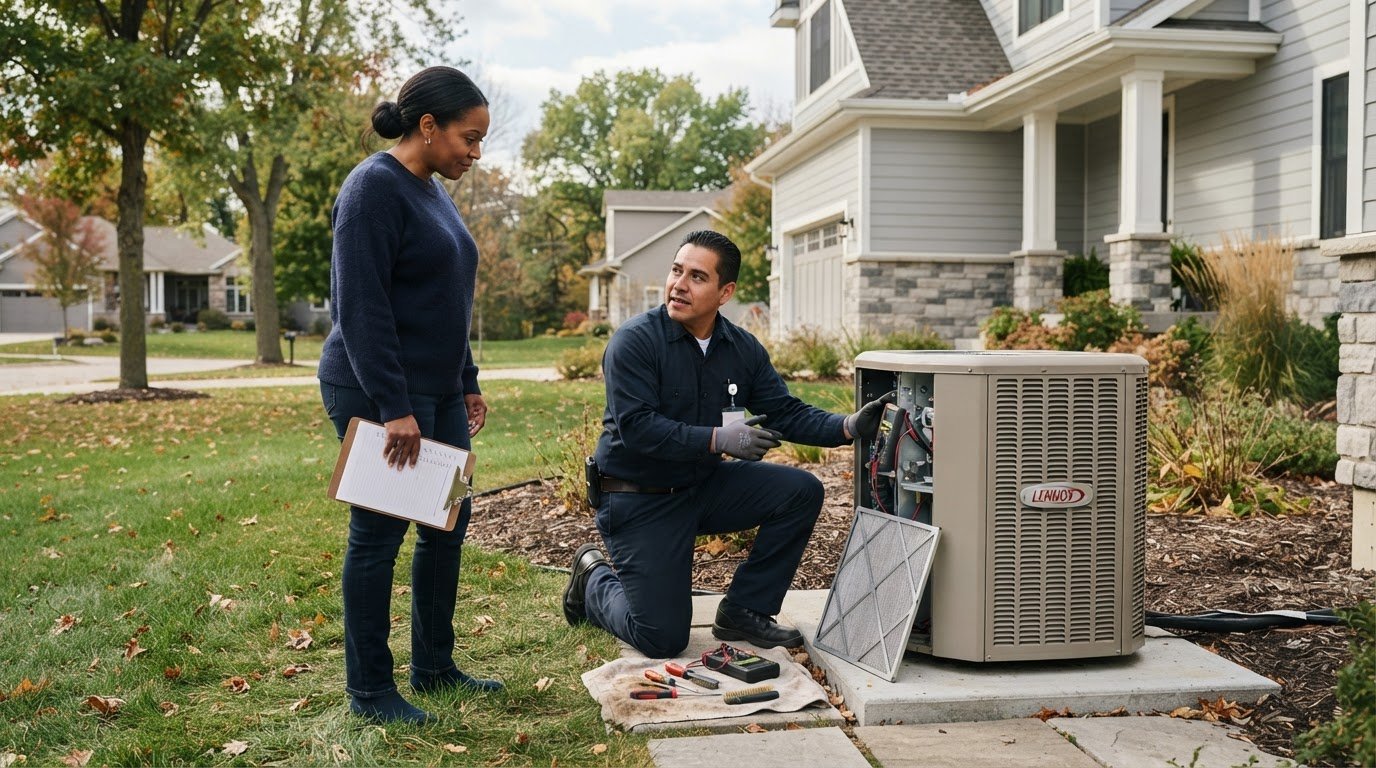
What if the goal of seasonal HVAC maintenance isn’t to prevent every breakdown, but to spot concerns before heating or cooling season puts your system to work? In Kenosha, Racine, Oak Creek, Winthrop Harbor, and nearby communities, changing weather makes it sensible to check equipment before relying on it for comfort.
It’s understandable to wonder which tasks matter, what you can safely handle yourself, and whether a tune-up will lead to costly repair recommendations. A useful routine starts with simple checks at home and a clear understanding of when a licensed HVAC technician can help. You don’t have to do every task yourself or automatically approve every recommendation.
This guide covers what to check before cooling and heating seasons, which basic tasks homeowners can manage, and what a professional tune-up may include. You’ll also learn when to schedule maintenance, what to ask about recommended work, and why routine service can support attentive system care without guaranteeing that equipment won’t fail.
Key Takeaways
- Plan seasonal HVAC maintenance around the shift between heating and cooling needs, and check your equipment’s manufacturer guidance.
- Inspect the filter and keep accessible vents clear. These simple checks can help you spot concerns without opening equipment.
- A system that seems to work normally may still benefit from a professional tune-up, but maintenance can’t guarantee it won’t break down.
- Before a tune-up, ask what the visit includes, what the technician finds, and which recommendations are optional.
- Note visible changes around indoor or outdoor equipment, and contact a trained technician when a concern needs assessment.
What Is Seasonal HVAC Maintenance, and Why Does Timing Matter?
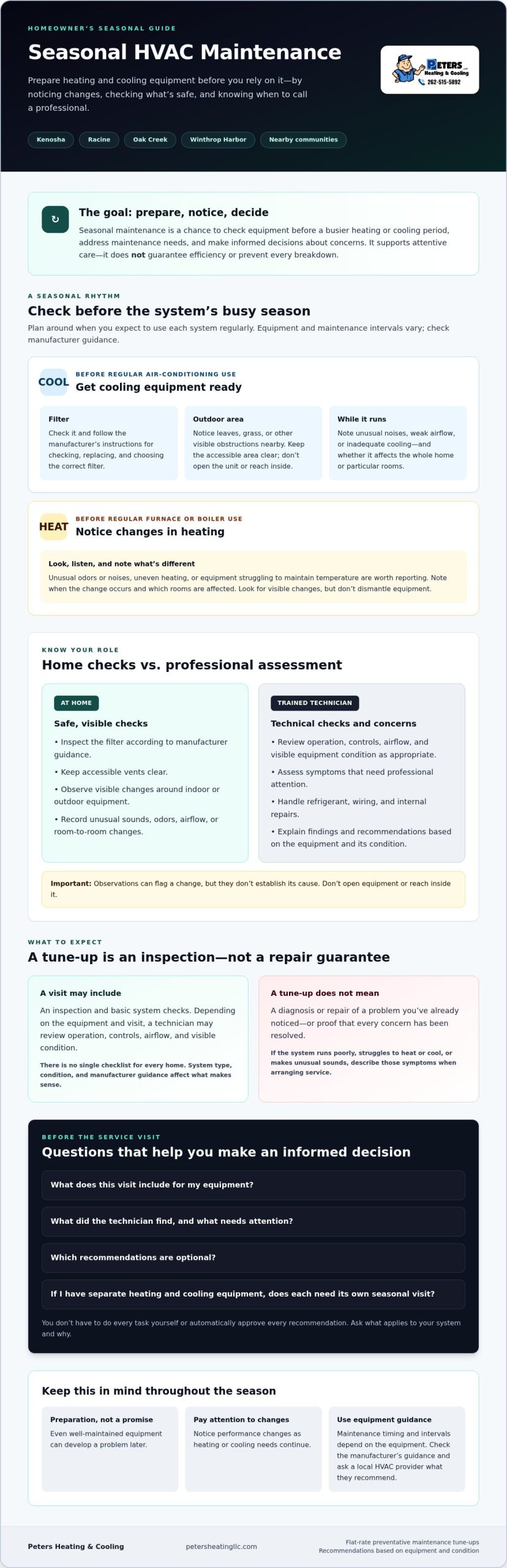
Seasonal HVAC maintenance combines homeowner checks with professional service timed around changing heating and cooling needs. The aim is to assess equipment before a period of heavier use, address maintenance needs, and make informed decisions about concerns. It supports attentive system care, but can’t guarantee a particular level of efficiency or prevent every breakdown.
Heating, ventilation, and air conditioning (HVAC) systems provide heating, cooling, and ventilation, but the equipment and suitable maintenance tasks vary by home. An air conditioner needs attention before regular cooling use; a furnace or boiler needs attention before regular heating use. Checking each system ahead of its busy season gives you time to ask questions or arrange service before relying on it every day.
What does a seasonal HVAC tune-up typically include?
A tune-up generally involves an inspection and basic system checks. Depending on the equipment and the visit, a technician may review operation, controls, airflow, and visible equipment condition. There isn’t one checklist that fits every home. System type, condition, and manufacturer guidance all affect what makes sense.
Preventive maintenance is different from diagnosing and repairing a problem you’ve already noticed. If a system is making unusual sounds, struggling to heat or cool, or not running properly, describe those symptoms when arranging service. A tune-up shouldn’t be treated as a repair or as proof that every concern has been resolved.
When should homeowners schedule HVAC maintenance?
Plan cooling-system maintenance before you expect to use air conditioning regularly. That gives you a chance to check the system before warm weather makes cooling a daily need. In the same way, schedule heating-system maintenance before you’ll rely on a furnace or boiler to keep your home comfortable.
Timing and maintenance intervals depend on the equipment. Check the manufacturer’s guidance and ask a local HVAC provider what they recommend for your system. If you have separate heating and cooling equipment, ask whether each needs its own seasonal visit. Peters Heating & Cooling offers HVAC preventative maintenance as flat-rate tune-ups, with recommendations based on the equipment and its condition.
Think of seasonal HVAC maintenance as preparation, not a promise. A professional visit can help identify issues that aren’t obvious during a basic homeowner check, while a clear explanation helps you decide what to address. Even well-maintained equipment can develop a problem later, so pay attention to changes in performance as the season progresses.
How Seasonal HVAC Maintenance Prepares Heating and Cooling Equipment
Each season puts different demands on HVAC equipment. Seasonal HVAC maintenance combines observations you can make around the home with technical checks best left to a trained technician. In Kenosha, Racine, Oak Creek, Winthrop Harbor, and nearby communities, preparing equipment before regular heating or cooling use gives you a chance to notice changes early. A checkup, however, can’t prevent every issue.
Cooling-season checks for air conditioning equipment
Before regular air conditioning use, start with what you can safely see and reach:
- Check the air filter. A dirty or clogged filter can restrict airflow. Follow the equipment manufacturer’s instructions for checking and replacing it, including any guidance on the correct filter.
- Look around the outdoor unit. Notice whether leaves, grass, or other visible obstructions have collected nearby. Keep the accessible area clear, but don’t open the equipment or reach inside it.
- Pay attention during operation. Unusual noises, weak airflow, or cooling that seems inadequate are reasons to contact a professional for assessment. Note when the problem occurs and whether it affects the whole home or particular rooms.
These observations can flag a change, but they don’t establish its cause. Leave refrigerant, wiring, and internal repairs to a qualified technician. If you’re unsure whether something needs attention, ask about HVAC preventative maintenance.
Heating-season checks for furnaces and boilers
Before relying on a furnace or boiler, notice how it runs and whether anything has changed. Unusual odors or noises, uneven heating, or equipment that struggles to maintain the temperature are worth reporting to a professional. Make a note of when the change occurs and which rooms are affected. Those details can help the technician understand the concern.
- Look, don’t dismantle. Check for visible changes around the equipment, such as an obstruction or signs of damage. Don’t remove panels or handle wiring.
- Keep safety checks professional. Combustion and electrical components require appropriate training and should be assessed by a qualified technician.
- Respond to suspected hazards. If you suspect an immediate safety issue, stop using the equipment if it’s safe to do so, leave the area when needed, and contact the appropriate emergency service or a professional. Don’t restart it until you’ve received guidance.
Homeowner checks help you spot and describe changes. A technician can assess the equipment and explain what, if anything, needs attention. That distinction keeps routine observation useful without turning it into a risky DIY repair.
Is Seasonal HVAC Maintenance Necessary If Your System Still Works?
A system that heats or cools your home normally may still have a maintenance concern that isn’t obvious during everyday use. That doesn’t mean you should expect a problem. It means normal operation alone can’t show the full condition of the equipment or answer every question about it.
Seasonal HVAC maintenance gives you a clearer picture before you rely on your system heavily. A technician can inspect accessible components, check operation, and explain visible concerns or changes that may need further attention. Findings depend on the equipment, its condition, and what the inspection covers.
What maintenance can help homeowners understand
A maintenance visit is a good time to ask practical questions: Does the equipment appear to be operating as expected? Was anything observed that needs follow-up? Is a recommendation urgent, or can it be monitored? Clear answers help you decide what to do next instead of guessing based on a single noise or change in comfort.
Inspection findings vary by system, and a tune-up may not uncover every hidden or developing issue. Ask the technician to explain what they checked, what they found, and how each recommendation relates to your equipment. If a concern needs diagnosis beyond routine maintenance, ask what further assessment involves before approving additional work.
What a tune-up cannot promise
A tune-up can’t guarantee that your HVAC system won’t break down later. Parts can wear or fail between visits, and an inspection reflects what could be assessed at that time. Maintenance also doesn’t guarantee a specific energy bill, efficiency level, or equipment lifespan. Treat claims of guaranteed outcomes with care, since a technician can’t fully control how equipment performs in the future.
A repair recommendation also isn’t automatic proof that the work is necessary. Ask what the technician observed, what may happen if you wait, and whether there are reasonable options. Request transparent pricing before authorizing a repair. Peters Heating & Cooling offers flat-rate maintenance tune-ups, which clarify the cost of the visit itself. Ask separately about pricing for any additional work.
Use the visit to make an informed choice, not to assume you must approve every suggestion. If an explanation is unclear, ask follow-up questions. A useful assessment should make the system’s condition easier to understand and leave you room to decide what fits your needs and budget.
What Can You Check Yourself Before Each HVAC Season?
A short walk-through before heating or cooling season can help you notice basic maintenance needs without opening equipment. Keep the manufacturer’s instructions nearby, and stop if a check requires tools, removing a panel, or technical knowledge. The goal is to observe, not repair.
Simple checks to make part of a seasonal routine
- Inspect the air filter. Follow the system instructions for checking it and replace it when appropriate. If you’re unsure which filter your equipment requires or how to replace it, consult the manual or ask a professional.
- Keep vents accessible. Make sure supply and return vents aren’t blocked by furniture, rugs, or stored belongings. Clear airflow paths help the system circulate air as designed.
- Look for visible changes. From outside the equipment, notice signs of damage, moisture, debris, or other changes around indoor and outdoor units. Don’t take equipment apart or reach inside to investigate.
- Pay attention to how the system runs. Note changes in comfort, airflow, sounds, or how often the system interrupts operation. These observations can help you describe a concern if you seek service.
For a step-by-step reference, consult Residential HVAC Maintenance: A Practical Checklist for Homeowners. Use your equipment’s own instructions for routine checks, since filter access and care can differ by system.
When a homeowner check should become a service call
Contact an HVAC professional if comfort problems persist, unusual sounds continue, or the system repeatedly stops or interrupts operation. Share what you noticed and when it happens. That information can help the technician assess the issue, but it doesn’t replace an inspection.
Don’t attempt electrical, refrigerant, combustion, or internal mechanical repairs. These tasks require training and can expose you to hazards or cause equipment damage. If a check isn’t clearly covered by the manufacturer’s instructions, leave it to a professional.
For cooling-season reading, see AC Tune-Up in Kenosha, WI. If your checks point to a need for professional attention, ask about HVAC preventative maintenance. A technician can explain what the visit covers and what they observe, helping you consider the next steps with clearer information.
When to Schedule Professional Seasonal HVAC Maintenance
Consider a professional tune-up before your heating or cooling equipment enters a season of heavier use. That gives you time to ask questions and address concerns before you depend on the system regularly. If you’ve noticed unusual sounds, uneven temperatures, or interruptions in operation, mention them when you book. A tune-up may not include diagnosis or repair of a specific problem, so describe symptoms clearly.
Use the equipment manufacturer’s guidance as a starting point, then confirm suitable timing with a local provider. If your home has separate cooling and heating equipment, ask whether each system needs its own appointment.
Questions to ask before booking a tune-up
Before booking, ask which checks are included for your specific system and how the technician will share findings. If a repair is recommended, ask what was observed, why the work is suggested, and whether it’s maintenance or a separate repair. You can also ask which recommendations are optional and what the next steps would be if you wait.
Confirm appointment details and pricing directly with the provider. Peters Heating & Cooling offers flat-rate maintenance tune-ups, but any additional work should be discussed separately. Clear answers make it easier to understand what you’re agreeing to and decide what fits your situation.
Finding local HVAC maintenance in Southeast Wisconsin and Northeast Illinois
Choose a provider who works with your type of equipment and can explain findings in plain language. Before scheduling, check that the technicians are licensed and insured, and ask about their experience with your furnace, boiler, or air conditioning system. Peters Heating & Cooling serves Southeast Wisconsin and Northeast Illinois, including Kenosha, Racine, Oak Creek, and Winthrop Harbor.
A maintenance visit can offer useful information, but it can’t promise that equipment won’t need repairs later. Ask questions, review recommendations, and make decisions based on clear explanations rather than pressure. If you’re considering a tune-up, contact Peters Heating & Cooling to ask about scheduling and what a visit may include for your system.
Make Your Next HVAC Season Easier to Prepare For
A sensible routine doesn’t need to be complicated. Check the filter and accessible vents, notice visible changes around your equipment, and arrange professional attention before you rely on heating or cooling heavily. These steps help you make informed decisions, but no tune-up can guarantee that a system won’t need repairs.
Seasonal HVAC maintenance works best as a partnership between safe homeowner checks and professional assessment when needed. Peters Heating & Cooling offers flat-rate maintenance tune-ups across Southeast Wisconsin and Northeast Illinois. Its licensed, insured, and continuously trained technicians can explain what they find and discuss recommendations clearly.
For questions about your equipment or what a seasonal tune-up may include, contact Peters Heating & Cooling about seasonal maintenance.
Frequently Asked Questions
What is seasonal HVAC maintenance?
Seasonal HVAC maintenance is routine inspection and care timed around your home’s heating and cooling seasons. A visit can help you understand the equipment’s observed condition and raise questions before heavier use. The exact checks depend on the system, its condition, and the provider. A tune-up is preventive care, not a repair for a known problem, and it can’t promise energy savings, a longer equipment life, or freedom from future breakdowns.
How often should HVAC maintenance be done?
Many homeowners plan checks around heating and cooling seasons, but there’s no single interval that fits every system. Equipment type, how it’s used, and manufacturer instructions can all affect the schedule. Check your owner’s manual, then ask a qualified local technician what makes sense for your equipment. Missing a visit doesn’t automatically mean damage has occurred, but following suitable maintenance guidance helps you make a considered care plan.
Is seasonal HVAC maintenance necessary if my system is working?
A system that appears to work normally may still have a concern that isn’t apparent during everyday use. A maintenance visit offers an opportunity for inspection and questions, but it can’t guarantee the system won’t need repairs later. Ask the technician to explain what they observed and why they recommend additional work. Request clear findings and pricing before deciding whether to authorize service beyond the tune-up.
What can I do myself before heating or cooling season?
Check the air filter according to the manufacturer’s instructions and replace it when appropriate. Keep accessible supply and return vents clear of furniture or belongings, and look for visible changes around indoor or outdoor equipment without dismantling it. Don’t handle electrical, refrigerant, or combustion components. If you notice unusual operation or a check feels unsafe, stop and contact a qualified HVAC technician instead of attempting a repair.
When should I schedule an air conditioning tune-up?
Homeowners commonly arrange a cooling-system check before regular air conditioner use, leaving time to discuss concerns before heavier demand. The right timing depends on the system’s condition, manufacturer guidance, and provider availability, so plan ahead and confirm what suits your equipment. If cooling is already poor or the system makes unusual noises, describe those symptoms when contacting a provider. That may call for diagnosis or repair, not just routine tune-up service.
Does HVAC maintenance prevent breakdowns?
No. Maintenance can’t guarantee that equipment won’t fail, and problems may develop between visits. An inspection may identify concerns or help a technician explain the system’s observed condition, but it’s not a promise of uninterrupted operation, specific energy savings, or a particular lifespan. Follow the manufacturer’s care guidance and respond to changes in performance. If the system starts behaving unusually, contact a qualified technician rather than waiting for the next routine visit.
What should I ask an HVAC technician during a tune-up?
Ask which components and checks the appointment includes, what the technician observed, and whether each recommendation is maintenance or a separate repair. Request a clear explanation and pricing before authorizing additional work. Choose a licensed and insured provider with experience in your equipment type. Homeowners in Kenosha, Racine, Oak Creek, and Winthrop Harbor can ask Peters Heating & Cooling about its flat-rate tune-ups and what a visit may cover.