
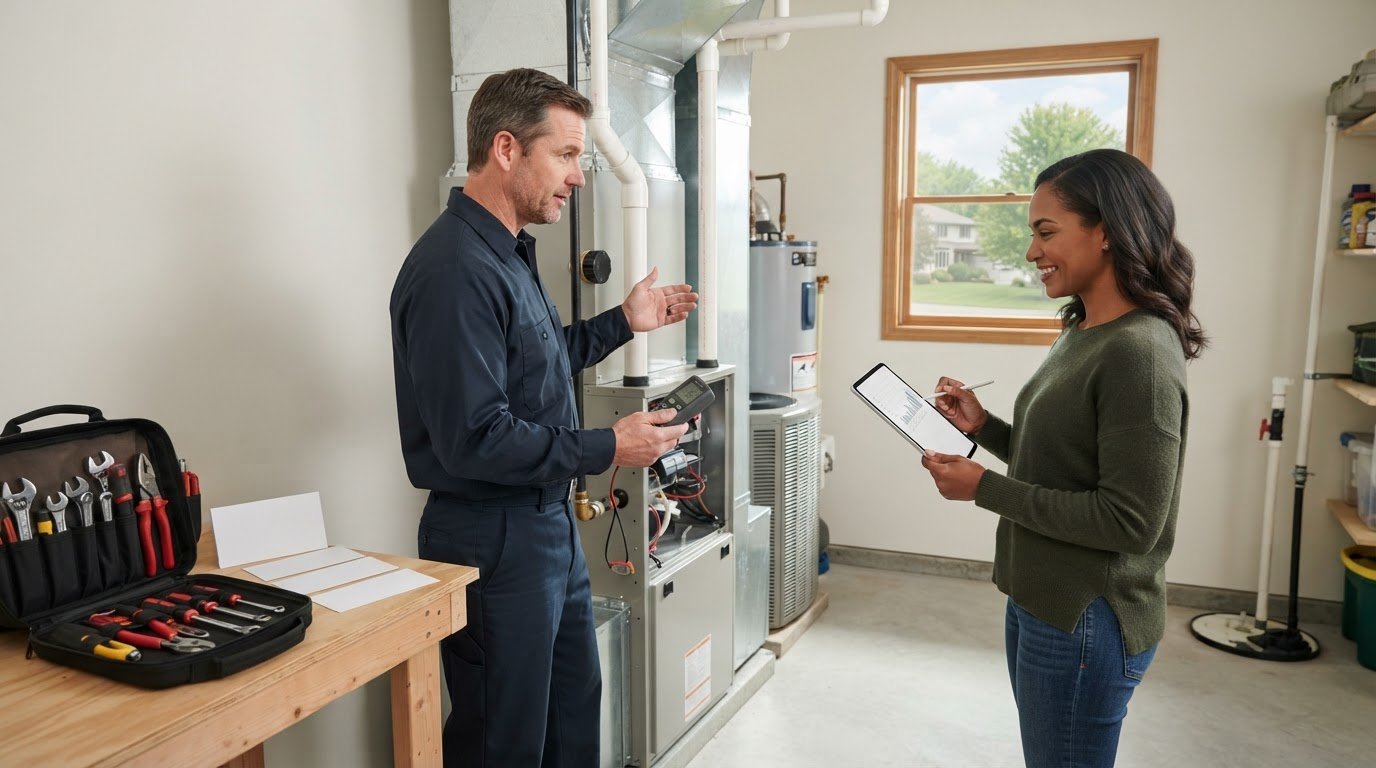
What if the biggest risk in an HVAC repair quote isn’t the price, but what it leaves unexplained? A transparent pricing HVAC repair quote should make clear what the technician found, what work is recommended, and how the charge is calculated. Without those details, it’s hard to tell whether diagnosis is billed separately, whether additional work could change the total, or whether two quotes cover the same repair.
It’s reasonable to want clarity before approving work, especially when your home’s comfort is on the line. Repair billing may be fixed-fee or hourly. The estimate should state which method applies, what the charge covers, and how the provider will handle any proposed change. If something isn’t clear, ask before work begins.
This article explains what a clear repair quote should include, what to ask about diagnosis, parts, labor, and changes in scope, and how to compare recommendations on equal terms. With those details, you can weigh your options with less guesswork.
Key Takeaways
- Look for a quote that explains the diagnosis, recommended repair, billing method, and approval process.
- With transparent pricing HVAC repair, you can understand what the quote covers and what may change before work begins.
- Compare repair recommendations and scope, not just the total, so you can assess quotes on equal terms.
- Ask whether billing is fixed-fee or hourly, and how additional work would be discussed before it proceeds.
- Repair charges and flat-rate maintenance tune-ups are separate offerings, so confirm which type of service the quote covers.
What transparent pricing for HVAC repair should tell you
An unfamiliar repair quote can be difficult to assess, especially when your home is uncomfortable and you want the system working again. Check whether you can follow the explanation from the problem found to the proposed work and charge. HVAC systems manage heating, ventilation, and air conditioning, as described in this overview of Heating, Ventilation, and Air Conditioning (HVAC), but a repair quote should focus on the specific issue identified in your equipment.
Transparent pricing HVAC repair means clearly explaining the diagnosis, recommended work, billing basis, and approval process before work proceeds. It doesn’t mean every repair costs the same. Different faults can require different parts and work, so a useful quote connects the proposed charge to the repair your system needs. If diagnosis is billed separately, ask for that to be stated clearly.
What should an HVAC repair estimate include?
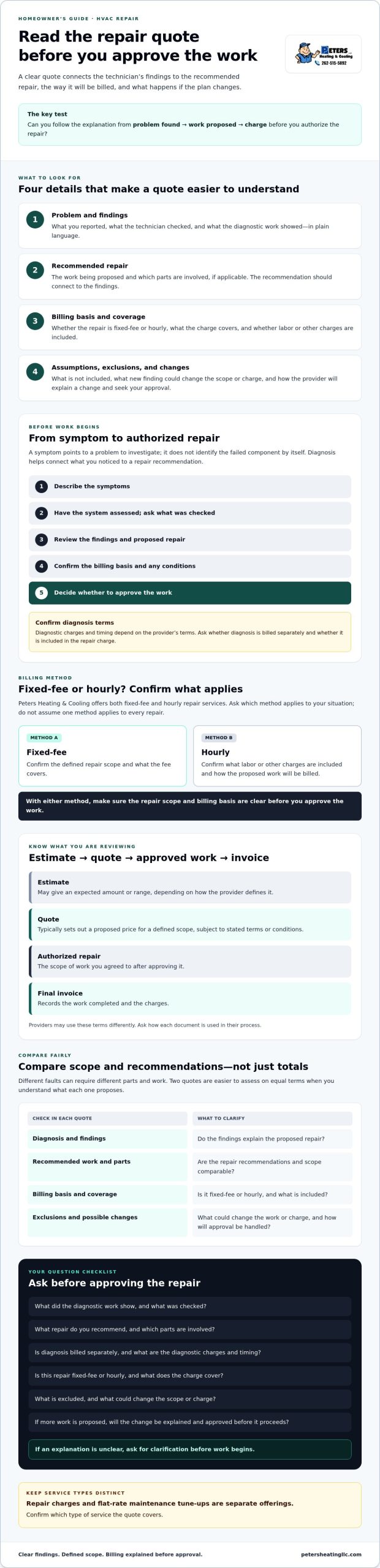
A clear estimate should explain the technician’s findings in plain language, rather than leaving you to interpret a part name or symptom on your own. Check that it identifies:
- The problem and findings: What you reported and what the diagnostic work showed.
- The recommended repair: What work is proposed and which parts are involved, if applicable.
- The billing basis: Whether the repair is fixed-fee or hourly, and what labor or other charges are included.
- Assumptions and exclusions: What isn’t included and what new finding could change the scope or charge.
If the explanation doesn’t make sense, ask the provider to clarify it before you approve the work. Peters Heating & Cooling offers both fixed-fee and hourly repair services, so confirm which billing method applies to your situation.
Estimate, quote, and invoice: how are they different?
Providers may use these terms differently, so ask how each document is used in their process. An estimate may give an expected amount or range, depending on the provider’s definition. A quote typically sets out a proposed price for a defined scope, subject to any stated terms or conditions. Once you approve the work, the authorized repair is the scope you agreed to; the final invoice records the completed work and charges.
An estimate forecasts the likely charge, a quote prices a defined scope, an authorized repair is the work you approve, and the final invoice records what was completed and charged. If the findings change or additional work is proposed, ask how the provider will explain the change and seek your approval before proceeding.
How HVAC repair charges are determined before work begins
A repair charge should follow an explanation of the problem and proposed work, not a guess based on a symptom alone. A furnace that won’t heat or an air conditioner that won’t cool describes what you’re experiencing, but it doesn’t identify which component has failed. Diagnosis helps the technician connect the reported issue to a repair recommendation.
The process is straightforward: describe the symptoms, have the system assessed, review the findings, discuss the proposed repair and billing basis, then decide whether to approve the work. Transparent pricing HVAC repair means you can understand that process before authorizing a repair. The repair scope and billing basis should be clear to you before you approve the work.
What happens during diagnosis?
A technician assesses the reported issue and relevant system operation to help determine what may be causing it. A furnace that isn’t producing heat, for example, may have a different cause than an air conditioner that runs but doesn’t cool the home. Symptoms guide the assessment, while the findings inform the recommendation. Ask what was checked and how those findings relate to the proposed work.
Diagnostic charges and timing depend on the provider’s terms, so confirm both instead of assuming they’re included in the repair. The Federal Trade Commission’s advice on avoiding a home improvement scam also encourages homeowners to get clear information from contractors before work begins.
How does diagnosis become a repair charge?
After explaining the findings, the provider should describe the recommended work and how it will be billed. Peters Heating & Cooling offers both fixed-fee and hourly HVAC repair services. With either approach, ask what the proposed scope covers and whether any conditions or exclusions could affect the charge. Don’t assume one billing method applies to every repair.
Once you understand the recommendation, you can decide whether to approve it. If you’re arranging a repair with Peters, you can review HVAC repair services and ask which billing basis applies to your situation.
When can the repair scope or estimate change?
Further findings during a repair may point to work beyond what the initial diagnosis revealed. If that happens, ask what changed, why the additional work is recommended, and exactly what the revised scope includes. Clarify how the change affects the expected charge and what approval is needed before work continues.
Don’t assume added work is automatically included or approved. A clear explanation of the new finding and proposed next step helps you make an informed decision without confusing the original recommendation with a changed scope.
Compare HVAC repair quotes: Apples to apples
A lower total doesn’t automatically mean better value. One provider may be pricing a narrower repair, excluding a part, or making a different assumption about the problem. Before comparing totals, check whether each recommendation addresses the same diagnosed issue and includes the same work. Transparent pricing HVAC repair lets you see what each proposed charge covers and where the differences lie.
Use this comparison as a starting point. If an item is unclear, ask the provider to explain it rather than assuming it’s included.
| Compare | What to check |
|---|---|
| Scope | Does each quote identify the same issue and recommend the same repair? |
| Parts | Are the parts needed for the repair identified, and are any parts excluded? |
| Labor basis | Is the charge fixed-fee or hourly? If hourly, what work does it cover? |
| Exclusions | Are assumptions, diagnostic charges, or possible extra work explained? |
| Next steps | What happens if the technician finds another problem or the scope needs to change? |
Which details should match across repair quotes?
Start with the issue each provider identified, then compare the specific repair recommended. Check whether the quotes describe relevant parts, labor, and follow-up work in comparable terms. If one includes work another excludes, or one relies on a different assumption, ask why. Different diagnoses may explain why the recommendations and totals don’t match.
Compare the diagnosis, repair scope, parts, labor basis, exclusions, and next steps before weighing the totals. This prevents a shorter quote from seeming like a bargain simply because it says less.
What questions help clarify a quote?
Ask what findings support the recommended repair and whether there are alternatives. Confirm how the charge is calculated, what it includes, and what could change the final invoice. If a provider recommends replacement instead of repair, ask why replacement is being proposed and whether repair remains a practical option for the diagnosed problem. You can also consult the Federal Trade Commission’s advice on how to avoid scams, including guidance on checking contractors and getting estimates in writing.
Once you’ve clarified the differences, compare each option against the same repair need, not just the total. If a provider can’t explain an important difference in scope or billing, ask for clarification before deciding.
Questions to ask before approving HVAC repair work
A few direct questions can help you understand what you’re authorizing. If there’s an immediate safety concern, address it promptly and follow appropriate safety guidance. Otherwise, ask for a plain-language explanation of the diagnosis and proposed work before deciding. Clear answers are a practical part of transparent pricing HVAC repair.
What to confirm before the technician starts
Use this checklist to make sure you understand the recommendation:
- What was found? Ask which system issue the diagnosis identified and how the findings support the recommendation.
- What work is proposed? Confirm the repair scope and which parts or labor are included.
- How is the repair billed? Ask whether the charge is fixed-fee or hourly, and what that basis covers.
- What could change? Find out what additional findings might lead to a revised recommendation or charge.
- How will I hear about changes? Ask who to contact with questions and how the provider will explain a changed scope before you decide on next steps.
Ask the technician to explain unfamiliar terms in everyday language. If an answer is unclear, repeat back what you understand and ask them to confirm or correct it. This helps you make a considered decision without assuming what the quote includes or how a change will be handled.
How maintenance differs from an HVAC repair visit
A repair visit addresses a fault or performance problem, such as equipment that isn’t heating or cooling as expected. A tune-up is planned maintenance to check and care for a system. Peters Heating & Cooling offers flat-rate tune-ups as a separate maintenance service. That billing description shouldn’t be assumed to apply to repair work, which may use fixed-fee or hourly billing.
For routine upkeep rather than a current fault, use the residential HVAC maintenance checklist to help distinguish planned checks from a repair need. The seasonal HVAC maintenance guidance can also help you consider routine checks and timing.
If you have questions about a repair recommendation or its billing basis, contact Peters Heating & Cooling about HVAC repair and ask what applies to your situation.
What transparent HVAC repair pricing looks like with a local provider
A clear repair experience starts with an honest recommendation and a straightforward explanation of the proposed work. Peters Heating & Cooling emphasizes honest recommendations and transparent pricing. Its HVAC repair services use both fixed-fee and hourly billing, so ask which method applies to your repair rather than assuming every job is priced the same way.
That distinction matters because fixed-fee and hourly billing cover work differently. Before approving a repair, ask what the selected method covers, how the diagnosis connects to the recommendation, and what the proposed scope includes. Also ask how the provider will handle questions if the situation changes.
What homeowners can expect from Peters Heating & Cooling
Peters provides residential and light-commercial HVAC diagnosis and repair, including furnace, air conditioning, and boiler repair. Its technicians are licensed, insured, and continuously trained. Alongside these details, consider how clearly the company explains its findings and repair recommendation.
Peters serves Southeast Wisconsin and Northeast Illinois, including Kenosha, Racine, Oak Creek, and Winthrop Harbor. Coverage doesn’t confirm a particular appointment time or availability, so contact the company to ask about your location and situation.
How to get a clear answer about your repair
A few details can make the conversation more specific. When you reach out, describe the system type, what it’s doing or not doing, and any changes you’ve noticed, such as when the problem began or whether performance has shifted. These details help explain the concern, though a technician’s diagnosis is needed to identify the cause.
Before work proceeds, ask which billing method applies, what the recommended repair includes, and how approval works if the findings or proposed scope change. Review the explanation and raise anything that isn’t clear. This approach to transparent pricing HVAC repair helps you understand the recommendation before deciding, without assuming a particular repair outcome, price, or timeline.
For a clear starting point, Contact Peters Heating & Cooling to discuss an HVAC repair question and ask what information would help clarify the next steps.
Make your next HVAC repair decision with clarity
A repair quote is easier to evaluate when it explains the diagnosis, proposed work, billing method, and what could change. Compare the scope, parts, and labor before weighing totals, and ask for clarification if anything is unclear. That’s the practical value of transparent pricing HVAC repair: you can understand what you’re considering before approving the work.
Peters Heating & Cooling has served homeowners since 2009, with licensed, insured, and continuously trained technicians. The company serves Southeast Wisconsin and Northeast Illinois and offers both fixed-fee and hourly repair services. Ask which billing method applies to your situation and review the proposed scope before deciding.
If you have questions about a furnace, air conditioning, or boiler repair, contact Peters Heating & Cooling to discuss your repair questions. A clear conversation can help you take the next step with greater confidence.
Frequently Asked Questions
What does transparent HVAC repair pricing mean?
Transparent HVAC repair pricing means you can understand the diagnosis, recommended repair, billing basis, and approval steps before work begins. A clear explanation connects the identified problem to the proposed work and describes what the charge covers. It also identifies assumptions or conditions that could change the scope. Transparent pricing HVAC repair doesn’t mean every repair has the same price; the work depends on what the system needs.
Should an HVAC technician explain the repair cost before starting work?
As a practical matter, ask the technician to explain the proposed repair and billing basis before authorizing the work. Confirm what the charge includes, whether diagnosis is billed separately, and how additional findings could affect the scope or final invoice. If anything is unclear, request a plain-language explanation. This helps you make an informed decision; it isn’t a statement about specific legal requirements, which can vary by location and situation.
Why can HVAC repair estimates differ between companies?
Estimates can differ because providers may identify different causes, recommend different repair scopes, or use different billing methods. One proposal may include a part or labor that another excludes, and diagnostic assumptions may also vary. Compare what each provider found and plans to do before judging the totals. Ask for an explanation if recommendations differ, especially if one quote proposes repair and another suggests replacement.
What should be included in an HVAC repair quote?
A useful quote should describe the reported issue and diagnostic findings in understandable language, identify the recommended repair, and explain the billing basis. Check whether relevant parts and labor are included, what’s excluded, and which assumptions could change the scope. It should also make clear how to ask questions or discuss a revised recommendation. If diagnostic charges are separate from repair charges, ask the provider to clarify that before approving work.
Can an HVAC repair estimate change after diagnosis?
Yes, the proposed scope or estimate may change if further findings reveal work beyond what was initially identified. Ask what changed, why the additional work is recommended, and what the revised scope includes. Clarify how the provider will explain the change and what approval steps apply before proceeding. Don’t assume additional work is included in the original estimate or that a change has been authorized without discussing it with the provider.
Does Peters Heating & Cooling use flat-rate or hourly HVAC repair pricing?
Peters Heating & Cooling offers both fixed-fee and hourly HVAC repair services, so the billing method depends on the repair. Ask which applies to your situation and what the proposed charge covers. Flat-rate tune-ups are a separate maintenance offering, not a billing description to assume for repair work. Peters serves customers in Kenosha, Racine, Oak Creek, and Winthrop Harbor, among other communities in Southeast Wisconsin and Northeast Illinois.
How can I compare HVAC repair quotes fairly?
Compare the diagnosis and proposed repair scope first, then review the totals. Check whether each quote addresses the same issue and whether parts, labor, exclusions, and possible follow-up work are described consistently. Confirm whether billing is fixed-fee or hourly, and ask what could change the final invoice. A lower total may reflect a narrower scope or different assumptions, so ask providers to explain meaningful differences before choosing.