A failing AC system doesn’t always mean a small business needs a replacement. Careful light commercial AC repair starts with identifying the cause, then weighing the proposed fix against the equipment’s condition and the business’s needs. When rooms are warm or temperatures vary, staff and customers notice, and daily operations can become harder to manage.
Acting quickly matters, but choosing work before there’s a clear diagnosis can lead to the wrong next step. This illustrative case study follows how a technician might investigate a cooling complaint, explain the findings, and compare practical repair options. It also shows what a business can share before a service visit and how to discuss scheduling around operating hours.
The shop scenario in this article is an example, not a report of a customer visit. For small businesses in Southeast Wisconsin and Northeast Illinois, Peters Heating & Cooling provides light commercial repair, installation, and maintenance. The right recommendation depends on the technician’s assessment of the actual system.
Key Takeaways
- See how recorded symptoms and diagnostic findings can guide a practical light commercial AC repair recommendation.
- Compare repair and replacement by considering the system’s documented condition, proposed work, and business needs.
- Prepare a concise service request with affected areas, symptom timing, operating hours, and known service history.
- Discuss site access and scheduling early so the business and contractor can plan the visit around daily routines.
- Understand why a real case study should distinguish reported symptoms from confirmed findings and documented outcomes.
Light Commercial AC Repair: Start With the Business Impact
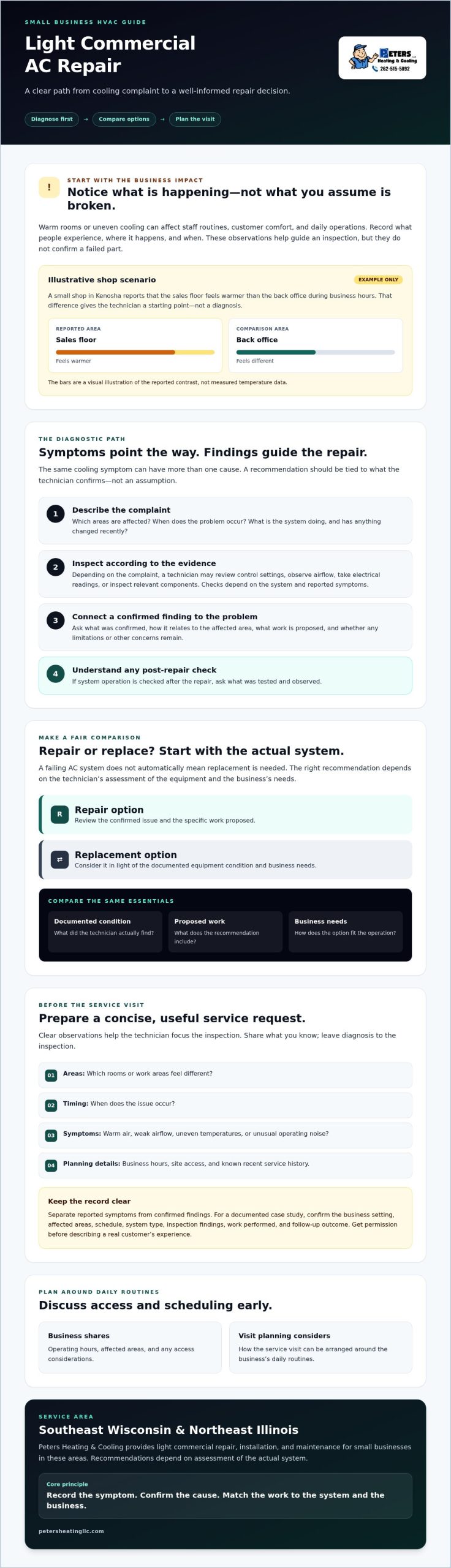
A warm front area, a stuffy workspace, or cooling that varies from room to room can complicate a small business’s day. Staff may need to adjust their routines, and customers may notice uncomfortable conditions. Start by recording what people are experiencing, where it happens, and when. These observations help a technician investigate, but they don’t confirm that a particular part has failed.
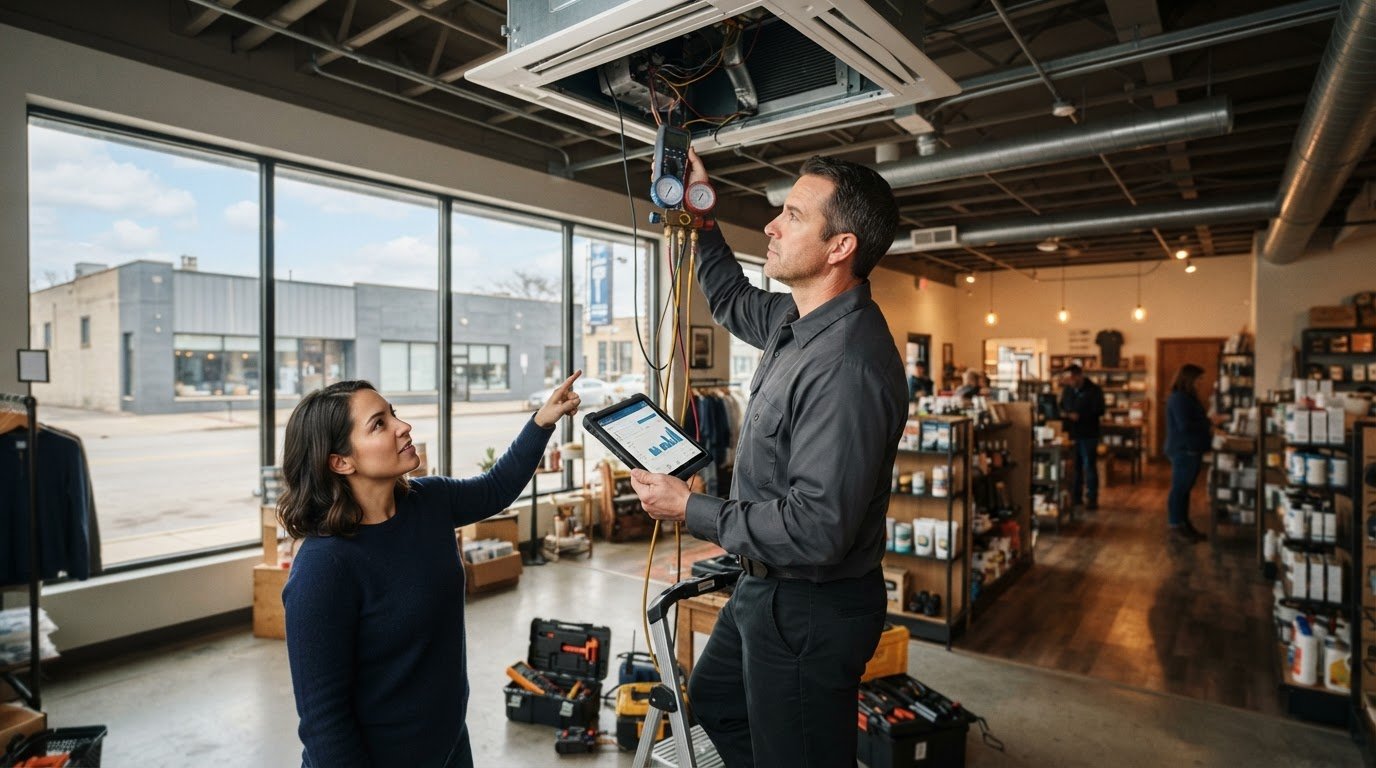
For example, imagine a small shop in Kenosha where the sales floor feels warmer than the back office during business hours. That difference gives a technician a useful starting point, but the cause still needs to be assessed. Light commercial AC repair means diagnosing and addressing cooling problems in smaller business settings, with recommendations based on the equipment’s condition and the business’s needs.
What AC symptoms can interrupt a small business?
Commonly reported concerns include warm air, uneven temperatures, weak airflow, or unusual operating noise. In the shop example, weak airflow in one area could help explain why some people notice a difference between rooms. An unfamiliar sound may also be a reason to request an inspection. These symptoms flag a concern, not a confirmed equipment failure. The technician’s findings determine what, if anything, needs repair.
Cooling is one part of the broader system that manages indoor conditions. For background on the principles involved, see Heating, ventilation, and air conditioning (HVAC). When arranging a repair visit, focus on what’s happening in the space and what an inspection finds.
What information makes a useful commercial repair case?
A reliable case study connects the business impact to verified details. Before describing a real customer’s experience, get permission and confirm the business setting, location, affected areas, operating schedule, system type, reported symptoms, inspection findings, work performed, and follow-up outcome. Keep reported symptoms separate from the technician’s diagnosis, and don’t imply that one business’s findings apply to every system.
For an initial service conversation, note:
- Which rooms or work areas feel different, and when the issue occurs.
- Whether the system blows warm air, has weak airflow, or makes an unusual noise.
- Business hours and any known recent service history.
These details explain the operational concern and help the technician focus the inspection. A documented repair story should report only what the technician confirmed and what the customer approved for publication.
How Light Commercial AC Repair Diagnosis Finds the Root Cause
The shop scenario is illustrative, not a documented customer case. It doesn’t establish which checks a technician performed or what fault was found. The steps below describe a general diagnostic approach; the actual inspection depends on the system and reported symptoms.
Diagnosis should come before a repair recommendation because the same cooling symptom can have more than one cause. A symptom helps direct an inspection, but a recommendation should be tied to what the technician confirms rather than an assumption about the cause.
What happens during a diagnostic visit?
The conversation is a useful starting point. A technician may ask which areas are affected, when the problem occurs, what the system is doing, and whether anything has changed recently. The business’s operating hours and the contrast between affected and comfortable areas can help focus the investigation.
Inspection checks should follow the evidence rather than a fixed list presented as guaranteed. Depending on the complaint, a technician may review control settings, observe airflow, take electrical readings, or inspect relevant components. These checks can help assess whether the system is responding to its controls, moving air as expected, operating within appropriate electrical conditions, or showing signs of a component problem. Ask which checks were made and what the results mean for your system.
How does the technician confirm the repair recommendation?
A useful recommendation connects a confirmed finding to the reported problem. If a technician verifies an issue affecting airflow, for example, they should explain how that finding relates to the affected space and what repair they propose. This is a general example, not a finding from the shop scenario. Ask what was confirmed, what the proposed work includes, and whether any limitations or other concerns remain. If the technician checks system operation after the repair, ask what was tested and observed.
Keeping service findings and repair details together can also help with later troubleshooting. FacilitiesNet’s discussion of Sustainable, High-performance Operation and Maintenance connects ongoing equipment care with building performance. For a business, a record of the reported symptoms, findings, and completed work gives useful context at a future visit.
For light commercial AC repair in Southeast Wisconsin and Northeast Illinois, Peters Heating & Cooling serves small businesses. Before scheduling, review the company’s light commercial AC repair service and ask how a visit can be coordinated around your operating schedule.
Repair or Replace? Compare Light Commercial AC Options Fairly
Once an inspection identifies what’s affecting cooling, compare the options against the system’s condition and the business’s needs. Age may be part of the discussion, but it doesn’t settle the decision by itself. A newer system can still need broader work, while an older one may have a specific fault that can be addressed. A repair or replacement recommendation should follow documented findings, not a quick assumption.
| Decision factor | Targeted repair | Replacement discussion |
|---|---|---|
| Confirmed condition | Inspection identifies a specific fault that can be addressed. | Documented condition or repair needs warrant reviewing a broader option. |
| Scope of work | The technician explains the identified issue and the proposed repair. | The business reviews the proposed replacement scope and what it includes. |
| Operational disruption | Discuss what access or interruption the repair may require. | Discuss how installation work could affect the space and business routines. |
| Decision factors | Consider recurring problems, component condition, and operating needs. | Compare the system’s documented condition, business priorities, and written scope. |
When may a targeted repair be practical?
A repair may be worth considering when the diagnosis points to a specific fault and the technician can clearly explain the proposed work. Ask whether similar problems have come up before, what the inspection found about the relevant parts, and how the work fits your operating schedule. This information helps you assess the recommendation, but only an evaluation of the actual equipment can determine whether repair is appropriate.
When should a business discuss replacement?
Replacement may enter the conversation when documented system condition or repair needs warrant a broader review. Ask for a written scope that explains what prompted the recommendation, what work is included, and what is excluded. For an installation quote, clarify whether removal of the old unit, equipment, labor, and necessary permits are included. Then consider the scope alongside your space, operating routines, and business plans. Don’t assume replacement will automatically prevent downtime or deliver a particular financial or energy outcome.
The shop example doesn’t establish which option a technician presented or why. For general contractor perspectives on HVAC practices, readers can visit the Air Conditioning Contractors of America (ACCA) blog.
For broader information about commercial service options, see the light commercial HVAC service guide.
Prepare Your Business for Light Commercial AC Repair
A little preparation can make a service visit easier to coordinate and help the technician understand the problem. You don’t need to diagnose the system yourself. Clear notes about the symptoms, affected spaces, and site access are more useful than a guess about the cause.
What should you note before contacting an HVAC contractor?
Before scheduling light commercial AC repair, gather the details you know and leave anything uncertain as a question. A concise record can help the contractor understand the concern and plan the conversation:
- Timing: When did the issue begin? Does it change at certain times or during particular operating hours?
- Affected areas: Note which rooms or zones feel warm, have weak airflow, or seem different from the rest of the space.
- Equipment details: If readily available, share the system’s identifying information and any recent service records. Don’t delay contacting a contractor because you can’t find them.
- Site access: Identify any access requirements for the equipment or affected areas, along with the best person to coordinate the visit.
- Business schedule: Explain your operating hours, occupied areas, and scheduling preferences so you can discuss the visit in the context of daily routines.
A note such as “the front room feels warmer in the afternoon, while the back office seems comfortable” gives useful context. It describes an observation without assuming what caused it.
How can a business plan around the service visit?
Discuss access, occupied areas, and timing with the contractor before the visit. The work required and any disruption depend on the site and what the inspection confirms, so don’t assume a repair duration or outcome in advance. Ask how the technician will explain the findings, what options are available, and what pricing details you’ll receive before deciding whether to approve the work.
Keep service notes and records together. If the issue has appeared before, mention when and what was done, if known. That history can provide helpful context, but it doesn’t prove that the current problem has the same cause.
Home upkeep follows a different checklist from coordinating service at a business. For a household-focused reference, see this residential HVAC maintenance checklist.
For businesses in Southeast Wisconsin and Northeast Illinois, Peters Heating & Cooling provides light commercial AC repair. Discuss a commercial AC service visit and share your symptoms, operating hours, and access needs when you reach out.
Light Commercial AC Repair in Southeast Wisconsin and Northeast Illinois
A useful case study should document what the technician confirmed, which options were presented, what the customer approved, and what happened afterward. The shop scenario here is illustrative, so it can’t establish a particular fault, completed repair, or cooling outcome. A real customer account should be published only after the business has given permission and the service details have been verified.
For local businesses, the practical takeaway is to connect recommendations to inspection findings and choose a next step that fits the site and business needs. Peters Heating & Cooling serves small businesses in Southeast Wisconsin and Northeast Illinois, including Kenosha, Racine, Oak Creek, and Winthrop Harbor. Its technicians are licensed, insured, and continuously trained. The company emphasizes honest recommendations and transparent pricing.
What should a business expect from a local repair conversation?
A clear conversation should explain what the technician found, what work is proposed, and what choices are available. Ask which observations or tests support the diagnosis, what the proposed repair includes, and whether any concerns fall outside that scope. If replacement is also under consideration, ask what documented system condition makes it worth discussing. These questions help keep the recommendation practical without assuming the same solution fits every business.
Scheduling and the work itself depend on site access, affected areas, operating needs, and the technician’s assessment. Share preferred timing and access requirements early. A contractor can discuss coordination, but confirm the appointment and expected work details rather than assuming a particular window or repair duration.
How can a business take the next step?
When contacting a contractor, share your business location, the symptoms you’ve noticed, which areas are affected, and any scheduling considerations. Mention relevant service history if it’s available. These details help start a focused conversation, but a diagnosis and repair recommendation require an assessment of the actual system.
For related information, review the light commercial HVAC service overview. If your business needs to discuss light commercial AC repair, contact Peters Heating & Cooling to talk through the symptoms, location, and service needs. Start by understanding the findings and options before deciding whether to approve work.
Make Your Next AC Decision With Confidence
Warm or uneven spaces are a reason to investigate, not proof that a particular part has failed. A careful light commercial AC repair process starts with clear notes about symptoms and affected areas, then connects confirmed findings to practical options. Comparing repair with replacement means considering the system’s condition and your business’s operating needs, not relying on age alone.
The shop discussed here is an illustrative scenario, not a verified customer case or repair outcome. For your own business, sharing operating hours, service history, and access requirements can help start a focused conversation and support planning for a visit.
Peters Heating & Cooling is locally owned and operated and has served the community since 2009. Its technicians are licensed, insured, and continuously trained. Service coverage includes Kenosha, Racine, Oak Creek, and Winthrop Harbor.
Discuss your light commercial AC repair needs with Peters Heating & Cooling. Share the symptoms and your operating needs to begin a clear conversation about possible next steps.
Frequently Asked Questions
What is considered light commercial AC repair?
Light commercial AC repair is the diagnosis and repair of air-conditioning systems serving small businesses and similar commercial spaces. It addresses reported cooling problems in occupied areas, with a technician assessing the actual system before recommending work. It doesn’t mean industrial HVAC service. Equipment and repair scope vary by site, so describe your business setting and symptoms when asking a contractor about service.
How do I know if my business needs commercial AC repair?
Warm air, uneven temperatures, weak airflow, or unusual operating noise are reasons to arrange an assessment. Note where symptoms occur and whether they change during business hours. These signs don’t confirm a failed part or identify the cause on their own. A technician can inspect the system and explain what the findings indicate. Sharing affected areas and symptom timing makes the initial service conversation more useful.
Can a light commercial AC system be repaired instead of replaced?
Repair may be an option if inspection identifies a specific fault that can be addressed, but an assessment is needed to determine what’s appropriate. A technician may discuss the confirmed condition, repair scope, recurring issues, and your business’s operating needs. Replacement can also be considered if documented system condition or repair needs warrant a broader review. Age alone doesn’t determine the right choice, and outcomes shouldn’t be assumed.
What happens during a light commercial AC repair visit?
A visit generally starts with a conversation about symptoms, affected areas, operating schedule, and known service history. The technician then assesses the system and decides which checks are relevant. The inspection depends on the equipment and complaint. Ask what was confirmed, how the findings relate to the cooling problem, what work is proposed, and what the scope and pricing details include before approving repairs.
How can I reduce business disruption during AC repairs?
Before the visit, share business hours, affected spaces, symptom timing, site access needs, and relevant service records if available. Identify a contact person who can coordinate access and discuss scheduling preferences with the contractor. The work required and any interruption depend on site conditions and confirmed findings, so ask what to expect before approving a repair. These steps support planning, but they can’t guarantee a specific duration or prevent all disruption.
Does Peters Heating & Cooling repair light commercial AC in Kenosha and nearby areas?
Yes. Peters Heating & Cooling provides light commercial air-conditioning repair for small businesses in Southeast Wisconsin and Northeast Illinois, including Kenosha, Racine, Oak Creek, and Winthrop Harbor. When you inquire, share your business location, symptoms, and scheduling considerations. The company can discuss the service request and how a visit may be coordinated based on the site and system’s needs.