What if a central AC that isn’t cooling needs a clear diagnosis, not an immediate replacement? When your home gets warm, it’s natural to wonder how serious the problem is, how long the discomfort will last, and whether repair is still a sensible option. Searching for central air repair Kenosha is a practical first step toward understanding what may be affecting your system.
Before a technician arrives, a few safe observations can help. Guessing at the cause or attempting electrical or refrigerant work, however, can make matters worse. A professional diagnosis can identify what’s affecting performance and explain the repair options, so you can make an informed decision.
This guide covers common central AC symptoms, sensible steps to take when cooling falters, and what to expect during a repair visit. You’ll also learn how Peters Heating & Cooling’s licensed, insured technicians approach diagnosis and recommendations. Locally owned and operated since 2009, Peters serves homeowners in Kenosha and nearby communities with practical advice and HVAC service.
Key Takeaways
- Notice changes such as weak airflow, unusual sounds, unexpected shutdowns, or indoor moisture, and record when they happen.
- Similar AC symptoms can have different causes, so a technician’s inspection and tests help clarify what needs attention.
- Compare repair and replacement based on the system’s condition, repair history, comfort needs, and how long you expect to use it.
- Before central air repair Kenosha service, note the problem’s timing and pattern, and clear access to the equipment.
- Learn how Peters Heating & Cooling approaches residential and light-commercial AC repair, from hearing your concern to discussing practical options.
Central Air Repair in Kenosha: Which Symptoms Deserve Attention?
A central AC that sounds different, cools unevenly, or stops without warning can make a Kenosha home uncomfortable and leave you unsure what to do next. A symptom is useful information, but it doesn’t identify the failed part by itself. Similar changes can come from different components or operating conditions, so don’t diagnose the problem by sound or guess at a repair.
Central AC repair means diagnosing and correcting faults that keep the cooling system from operating as it should. Understanding the basics can make a technician’s explanation easier to follow; Air Conditioning Systems Explained offers a general overview of air-conditioning systems and how they operate. For central air repair Kenosha homeowners can start by noting what changed and when, then leave equipment-level testing to a trained technician.
Which central AC warning signs should homeowners notice?
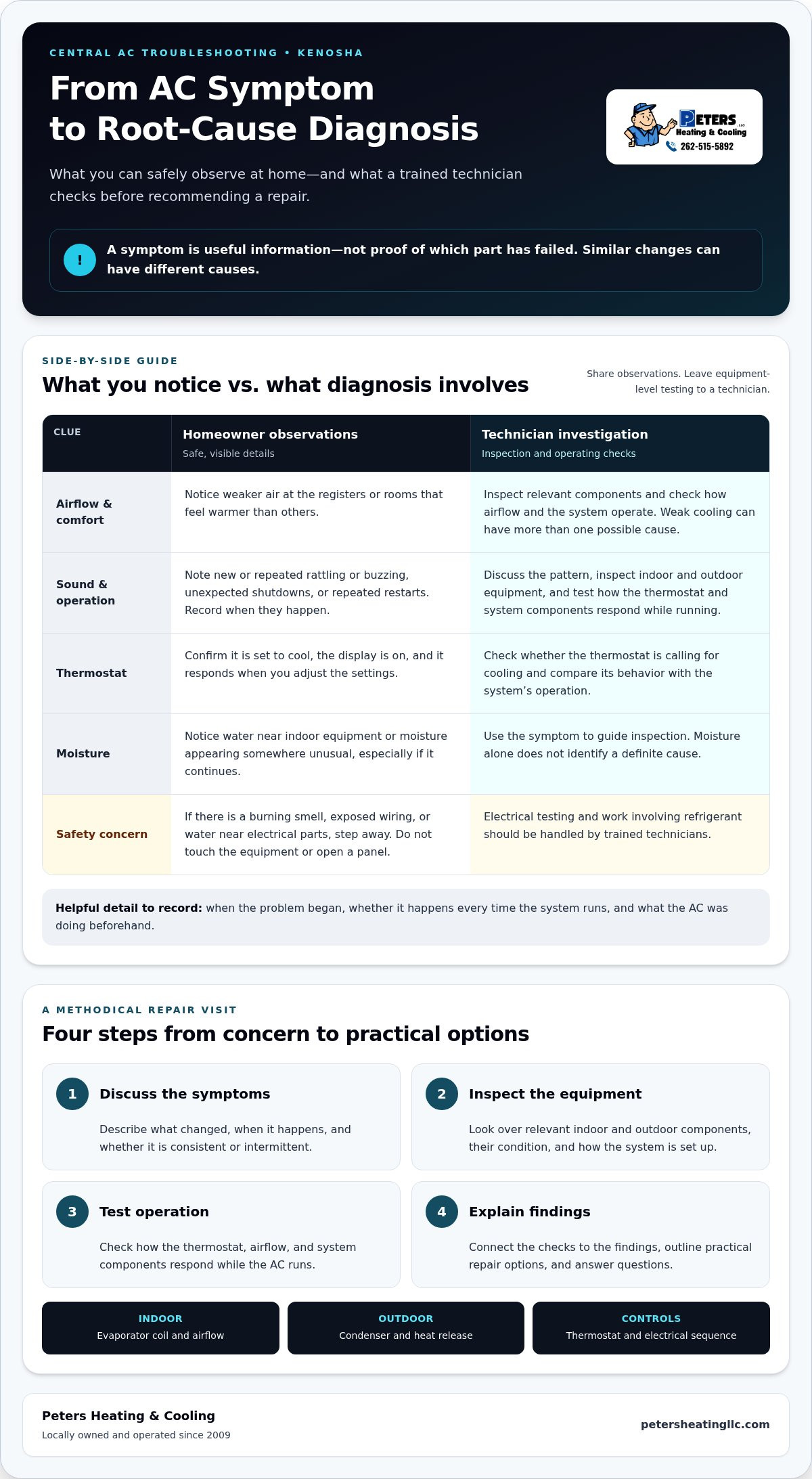
Pay attention to changes you can observe without opening the system. The AC may produce less air at the registers than usual, make a new rattling or buzzing sound, or leave some rooms warmer than others. Note whether the unit starts and stops unexpectedly, or whether you see moisture where it wasn’t present before.
- Airflow: Is the air weaker than usual, or does it feel different from room to room?
- Sound: Is there a new or repeated noise during startup or operation?
- Operation: Does the system shut down before the home feels comfortable or restart repeatedly?
- Moisture: Is water collecting near the indoor equipment or appearing in an unusual place?
Repeated shutdowns can interrupt cooling and signal that the system needs attention. Unusual moisture also deserves a closer look, especially if it continues or appears near electrical parts. Neither sign points to one definite cause. Record when the problem began, whether it happens every time the system runs, and what the AC was doing beforehand. Those details help the technician investigate the pattern rather than rely on a single observation.
What can you safely check before calling for service?
Stick to simple observations. Confirm that the thermostat is set to cool and its display is on. Check whether it responds when you adjust the settings. You can also look at the air filter in its normal access location without removing equipment panels. If it looks dirty, mention that to the technician.
Keep safety first. If you notice a burning smell, exposed wiring, or water near electrical parts, don’t touch the equipment or investigate behind a panel. Step away from the affected area and arrange professional attention. Avoid repeatedly restarting a system that keeps shutting down. Clear notes and basic observations help; electrical and mechanical testing belong to a technician.
How a Central Air Repair Technician Finds the Root Cause
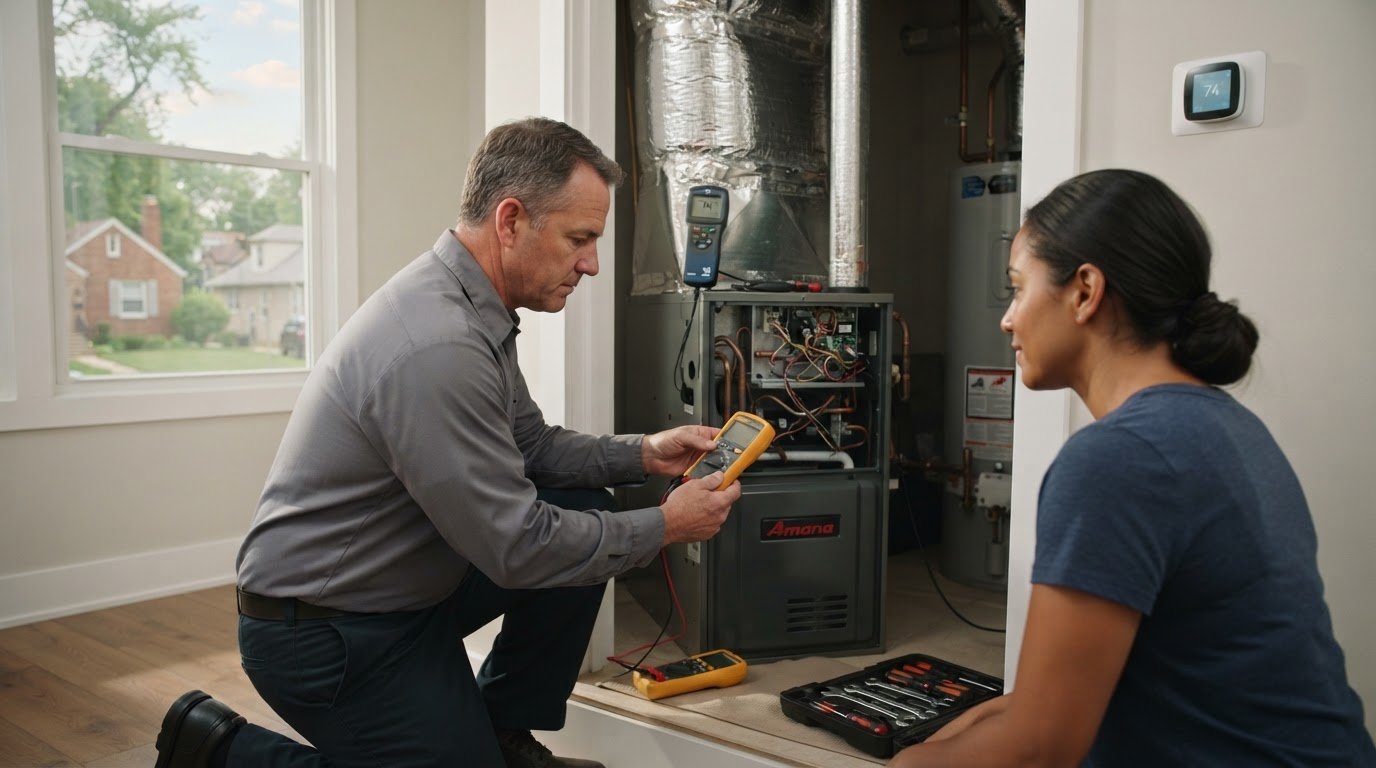
A useful repair visit is methodical. The technician starts with your description of the problem, then inspects the system and checks how it operates. That matters because weak cooling, for example, can involve different parts or conditions. The same symptom doesn’t always call for the same repair.
A repair recommendation should follow diagnosis, because testing helps connect the symptom to the underlying fault. The process may include these steps, adjusted to the equipment and what the technician finds:
- Discuss the symptoms. The technician asks what changed, when it happens, and whether the problem is consistent or intermittent. Your observations help focus the inspection.
- Inspect the equipment. The technician looks over relevant indoor and outdoor components, their condition, and how the system is set up.
- Test operation. Operating checks help show how the thermostat, airflow, and system components respond while the AC runs.
- Explain the findings. The technician describes what the checks indicate, outlines practical repair options, and answers questions before you decide how to proceed.
What does a technician inspect during central AC diagnostics?
The inspection is guided by the symptoms, not a one-size-fits-all checklist. A technician may consider whether the thermostat is calling for cooling, whether the indoor evaporator coil is allowing heat to move out of the air, and whether the outdoor condenser is releasing that heat. Electrical controls help the system’s parts operate in sequence. Airflow and thermostat behavior offer useful clues, but neither proves a specific fault on its own.
Checks vary depending on the equipment and what the initial inspection reveals. Electrical testing and work involving refrigerant should be handled by trained technicians, not attempted as a homeowner repair. These systems involve components and procedures that require appropriate technical knowledge and equipment.
Why can one AC symptom have several possible causes?
Weak cooling is a useful example. The home may not feel comfortable because of an airflow issue, a control problem, a condition affecting a coil or condenser, or a combination of factors. Outdoor conditions and the way the system is operating can also influence what a technician observes. A symptom describes what you notice; it doesn’t reveal which component is responsible.
Testing helps separate those possibilities. If the thermostat responds but the system’s operation doesn’t match its setting, the technician can use further checks to narrow the investigation. If airflow differs between rooms, that observation helps frame the next step, but it still needs to be considered alongside the equipment’s condition. An accurate central air repair Kenosha visit moves from observations to inspection and tests before settling on a repair recommendation.
Clear explanations make it easier to weigh the findings. Peters Heating & Cooling provides air-conditioning repair in Kenosha, with recommendations based on the technician’s assessment.
Central AC Repair or Replacement: How to Weigh the Decision
Once a technician has identified the problem, the next question is whether repair or replacement makes more sense for your home. No single age cutoff or rule decides the right option for every system. The choice depends on the diagnosed issue, the AC’s overall condition, how it has performed over time, and what you need from it going forward.
A clear recommendation should help you compare options, not make you feel pushed toward a larger decision. Use the findings as a starting point, then consider how each option fits your household and plans.
| Factor | What to consider |
|---|---|
| System condition | Does the diagnosis point to a specific repair, or are there broader condition concerns? |
| Repair history | Have repairs been occasional, or have problems returned and disrupted cooling repeatedly? |
| Comfort needs | Does the system meet your household’s needs across the rooms you use? |
| Expected continued use | How long do you expect to stay in the home, and what role does reliable cooling play in that plan? |
Which details help make a repair-versus-replacement decision?
Start with the diagnosed fault and the condition of the system as a whole. A focused repair may be a reasonable option when the technician identifies a specific issue and the rest of the equipment is in suitable condition. If the system has recurring problems or struggles to meet your comfort needs, replacement may be worth discussing as an alternative. Your plans for the property matter, too. A technician can explain the practical options, but no recommendation can guarantee how long equipment will perform in the future.
How can a homeowner assess an AC repair recommendation?
Ask for a plain-language explanation of what the technician found, what work is proposed, and how that work addresses the problem. Make sure you understand the alternatives and pricing before making a decision. Peters Heating & Cooling emphasizes honest recommendations and transparent pricing, so you can consider the findings without pressure or guesswork. The Kenosha HVAC repair guide also explains how a thoughtful repair approach can support an informed decision.
For central air repair Kenosha homeowners should weigh the diagnosis alongside repair history, comfort priorities, and future plans. A practical recommendation explains what can be done and why it fits the system’s condition. Repair and replacement are options to compare, not automatic conclusions based on one symptom or a rigid rule.
What to Do Before Central Air Repair Service in Kenosha
A little preparation can make an AC service visit more focused. You don’t need to identify the fault yourself. Gather observations, make the equipment accessible, and leave electrical or refrigerant work to a technician. For central air repair Kenosha homeowners can use these steps to share useful context without taking on risky repairs.
What information should you have ready for the technician?
Think about when you first noticed the problem and what was happening at the time. Note whether it occurs every time the system runs or only under certain conditions, such as after the AC has been on for a while. These details help the technician understand the timing and pattern rather than rely on a brief snapshot.
- Write down the thermostat setting and any change you made before the issue began.
- Describe unusual sounds or smells, and note where you saw visible moisture.
- Share any prior service or repair information you can readily find.
Keep the notes simple. A short description such as “the system stopped twice in the afternoon” is more useful than a guess about which part might be responsible.
How can you make the service visit easier?
Clear a path to the indoor equipment and outdoor unit so the technician can reach them safely. Move stored items away from access points, and keep children and pets out of the work area during service. You don’t need to clean or disassemble anything. The goal is simply to make the equipment reachable and the work area less crowded.
Prepare questions before the visit, especially if you want to understand the diagnosis and choices clearly.
- What did the inspection and testing identify?
- What repair is being recommended, and how does it address the problem?
- What is included in the transparent pricing for the proposed work?
These questions keep the conversation practical and help you understand the recommendation before deciding how to proceed.
Leave equipment panels closed. Don’t attempt electrical or refrigerant repairs, even if the system appears easy to reach. If you notice exposed wiring, a burning smell, or water near electrical parts, avoid touching the equipment and tell the technician. Share what you observed from a safe distance. Your notes are helpful; opening the system or testing internal components isn’t necessary preparation.
Routine upkeep is separate from diagnosing a current fault. For general care between repair visits, Peters Heating & Cooling’s residential HVAC maintenance checklist offers additional homeowner guidance.
With your observations ready and access cleared, you can focus on understanding the findings and weighing the next step. Learn about central air repair service from Peters Heating & Cooling for your Kenosha home.
Central Air Repair in Kenosha: What Peters Heating & Cooling Can Help With
A central AC problem can disrupt daily routines, especially when you’re unsure whether the system needs a focused repair or a more involved solution. Peters Heating & Cooling provides residential and light-commercial air-conditioning repair in Kenosha. The process starts by understanding your concern, diagnosing the system, and explaining the findings so you can consider practical next steps.
The visit follows a clear progression. You share what you’ve noticed, the technician assesses the equipment, and the findings guide a discussion of repair options. Because a familiar symptom can have different causes, recommendations should reflect the system’s actual condition rather than assumptions.
- Hear the concern: Share the changes in cooling or operation that prompted you to seek service.
- Diagnose the system: A technician examines the equipment and evaluates its operation.
- Explain the findings: You receive a clear account of what the assessment indicates.
- Discuss options: Review suggested work and its pricing before deciding how to proceed.
What can homeowners expect from a repair recommendation?
A useful recommendation explains the diagnosed issue in plain language, identifies the suggested work, and connects that work to the findings. If the assessment points to more than one practical option, understanding the differences can help you decide what fits your needs. Peters Heating & Cooling emphasizes honest recommendations and transparent pricing, without relying on pressure or making promises about future system performance.
The appropriate repair depends on what the technician finds. Ask questions about the proposed work and take time to understand the explanation. Clear communication helps you make a decision based on the condition of your AC, not just the urgency of a warm home.
How do Kenosha homeowners take the next step?
To begin a service conversation, share the symptoms you’ve observed, when they started, and whether they happen consistently. Details like these give the team useful context before assessing the equipment. Peters Heating & Cooling is locally owned and operated, serving Kenosha and the broader Southeast Wisconsin and Northeast Illinois region, including Racine, Oak Creek, and Winthrop Harbor.
The company’s technicians are licensed and insured and receive ongoing training. They listen to your concern, investigate the system, and explain the recommendation clearly.
If your AC isn’t operating normally, you don’t have to guess at the cause or decide on replacement before a diagnosis. Request central air repair service in Kenosha from Peters Heating & Cooling.
Make Your Next AC Decision With Confidence
A repair conversation can help you make a plan, not just respond to an uncomfortable day. Before arranging central air repair Kenosha service, consider what matters most to your household: dependable comfort in the rooms you use, a clear understanding of the recommended work, or time to weigh repair options carefully. Knowing your priorities can make the discussion more useful.
You don’t need to decide on repair or replacement before the system has been assessed. Let the findings guide the conversation, and make sure you understand what the proposed work addresses and what choices are available. A sound next step should feel clear, practical, and suited to your home, not rushed.
When you’re ready to discuss the AC issue, contact Peters Heating & Cooling about central air repair in Kenosha. The team can help you move from uncertainty toward an informed decision.
Frequently Asked Questions About Central Air Repair
How long does central air repair usually take?
There isn’t a reliable fixed timeframe; the duration depends on what testing reveals, the work involved, and whether any needed parts are available. A straightforward adjustment may take less time than diagnosing an intermittent fault or completing a more involved repair. Homeowners in Kenosha, Racine, Oak Creek, and Winthrop Harbor can ask the technician to explain the expected work after assessing the system.
Can a central air conditioner freeze up even when it is hot outside?
Yes. Ice can form on indoor AC components even during hot weather, since outdoor heat doesn’t rule out a problem with the system’s operation. If you see ice, turn cooling off and let a technician assess it rather than chipping at the buildup or continuing to run the AC. As the ice melts, watch for water around the equipment and mention what you observed when arranging service.
Is it safe to run central AC if the outdoor unit is not working?
It’s best to switch the cooling system off if the outdoor unit isn’t operating normally. The indoor fan may still move air, but that doesn’t mean the system is cooling as intended, and continuing to run it may add strain. Check the thermostat display for any message and note whether the indoor unit is still running. Don’t open the outdoor unit or attempt electrical checks; have a technician assess the system.
Can a clogged condensate drain stop a central air conditioner from working?
Yes, a blocked drain can cause some systems to shut down if a safety switch detects backed-up water. You might also notice water near the indoor unit or a drain outlet that isn’t clearing as expected. Don’t assume every shutdown is caused by a clog, and avoid opening equipment panels to investigate. If water is close to electrical components, stay clear and arrange professional attention.
Does homeowners insurance cover central air conditioning repairs?
Coverage depends on your policy and what caused the damage. Review your policy’s language about mechanical equipment, exclusions, and any covered events, then contact your insurer to ask how it applies to your situation. A repair diagnosis can describe the system condition, but the insurer determines coverage under your policy. Keep any service records and documents related to the issue together in case they’re useful during that conversation.
How can I tell whether an AC refrigerant leak needs professional repair?
You can’t reliably confirm a refrigerant leak from a symptom alone. Reduced cooling, ice on components, or an unusual sound may have other explanations, so a trained technician needs to assess the system and determine whether refrigerant is involved. Don’t handle refrigerant, try to locate a leak by opening equipment, or add refrigerant yourself. Share the symptoms you’ve noticed and let the technician investigate safely.