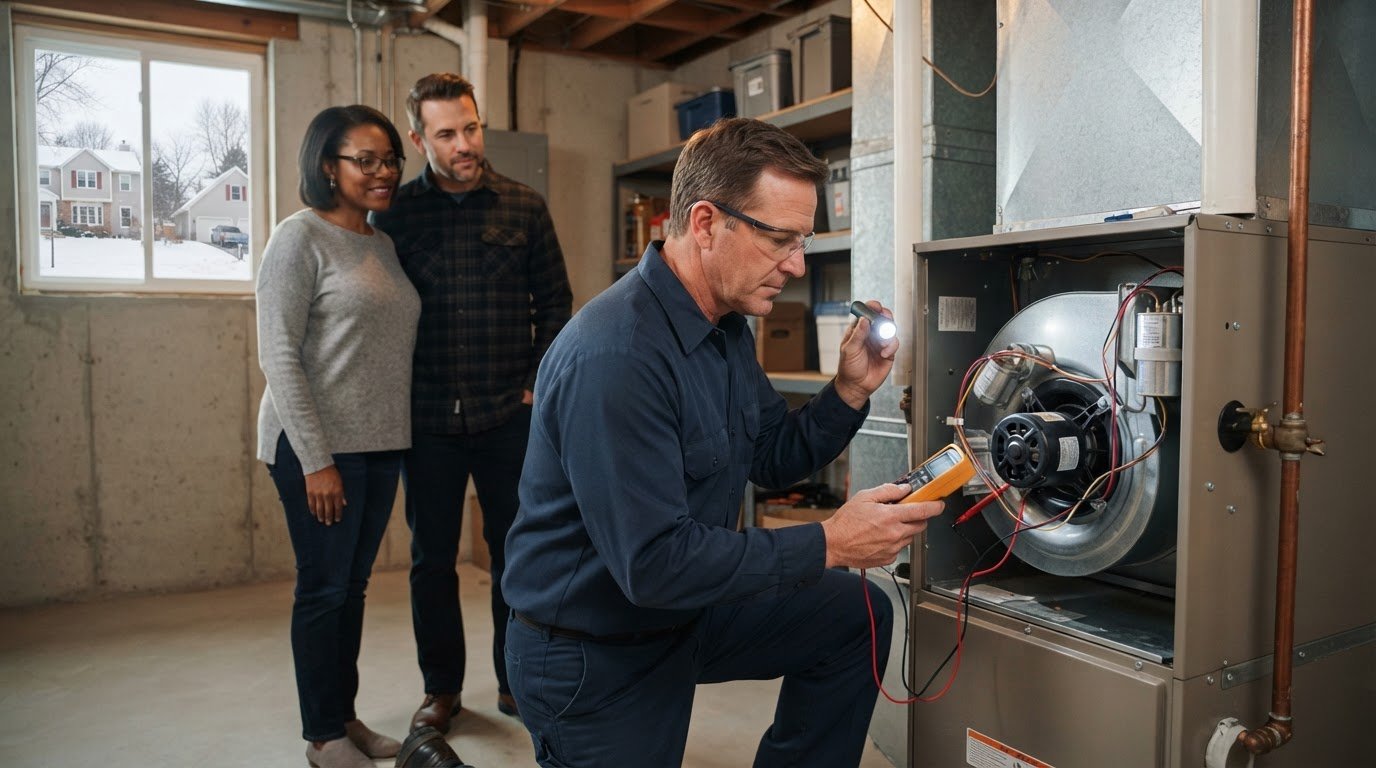
What if the biggest factor in your furnace blower motor repair cost isn’t the motor itself, but whether it has actually failed? Weak airflow, unusual noises, or a furnace that won’t start can point to a blower problem, but other faults can cause similar symptoms. Replacing parts before identifying the cause can add work your furnace may not need.
It’s reasonable to want a clear explanation before approving a repair. Motor type, parts, labor, and applicable warranty coverage can all affect the recommendation. A careful diagnosis connects the estimate to your furnace’s condition instead of relying on a generic online average.
This guide explains what shapes a blower motor estimate, how technicians distinguish motor trouble from other furnace faults, and what a clear estimate should explain about parts, labor, and diagnostic fees. You’ll also learn what to ask about motor type and warranty status before work begins. Peters Heating & Cooling repairs furnaces in Kenosha and nearby communities, with recommendations based on diagnosis and transparent pricing.
Key Takeaways
- Furnace blower motor repair cost depends on the system’s condition, recommended parts, labor, and applicable coverage. A generic online figure may not fit your home.
- Weak airflow or unusual sounds are reasons to investigate, not proof that the motor needs replacement.
- A useful estimate explains the diagnosis and proposed work, including related parts and how coverage affects the recommendation.
- Before approving work, note when symptoms began, share your furnace model details if readily available, and make sure you understand the repair scope.
- In Southeast Wisconsin, Peters Heating & Cooling technicians diagnose furnace issues before recommending repairs, with transparent pricing and honest recommendations.
Furnace Blower Motor Repair Cost: Why One Online Price Cannot Fit Every Home
A furnace problem is stressful enough without having to guess what a repair should cost. Online figures can’t account for your furnace’s design, the fault a technician finds, or the work needed to access and repair the equipment. A useful estimate explains the work proposed for your system, rather than simply matching a generic number.
Furnace blower motor repair cost is the case-specific total for diagnosing an airflow problem and completing the recommended work, including applicable parts, labor, and coverage. A repair estimate and a replacement estimate may describe different jobs. A repair may address a fault without installing a new motor; replacement involves removing the existing motor and fitting a compatible one. The diagnosis determines which scope makes sense.
What does a furnace blower motor do?
The blower motor powers a fan that moves heated air from the furnace through your home’s ductwork. In some heating and cooling systems, the same indoor blower also circulates air during air-conditioning operation. It’s separate from the outdoor AC fan motor, which moves air across the outdoor unit. Identifying which component is involved helps keep the diagnosis and estimate focused on the right equipment. For a general overview of furnace parts, see Understanding Furnace Components.
Why does the same repair lead to different estimates?
Motor design is one factor, but it isn’t the whole story. The furnace layout can affect access, and the replacement part must be compatible with the equipment. Diagnostic findings determine whether the motor, a related component, or another issue needs attention. The system’s age and overall condition can also affect what work is practical. Two furnaces with similar symptoms may need different repairs.
Consider two homes where the blower stops moving air. In one, testing may point to a motor fault. In the other, the motor may be working, with the cause elsewhere in the system. Replacing a motor before identifying the cause risks paying for work that doesn’t solve the problem. An accurate estimate follows inspection and testing, not symptoms alone.
Before approving work, look for a clear explanation of the diagnosis, proposed repair or replacement, parts, labor, and applicable coverage. If the recommendation is to replace the motor, the estimate should identify the motor type and explain why it fits the furnace. A transparent breakdown helps you understand what the total covers.
Blower Motor Symptoms Are Clues, Not a Diagnosis
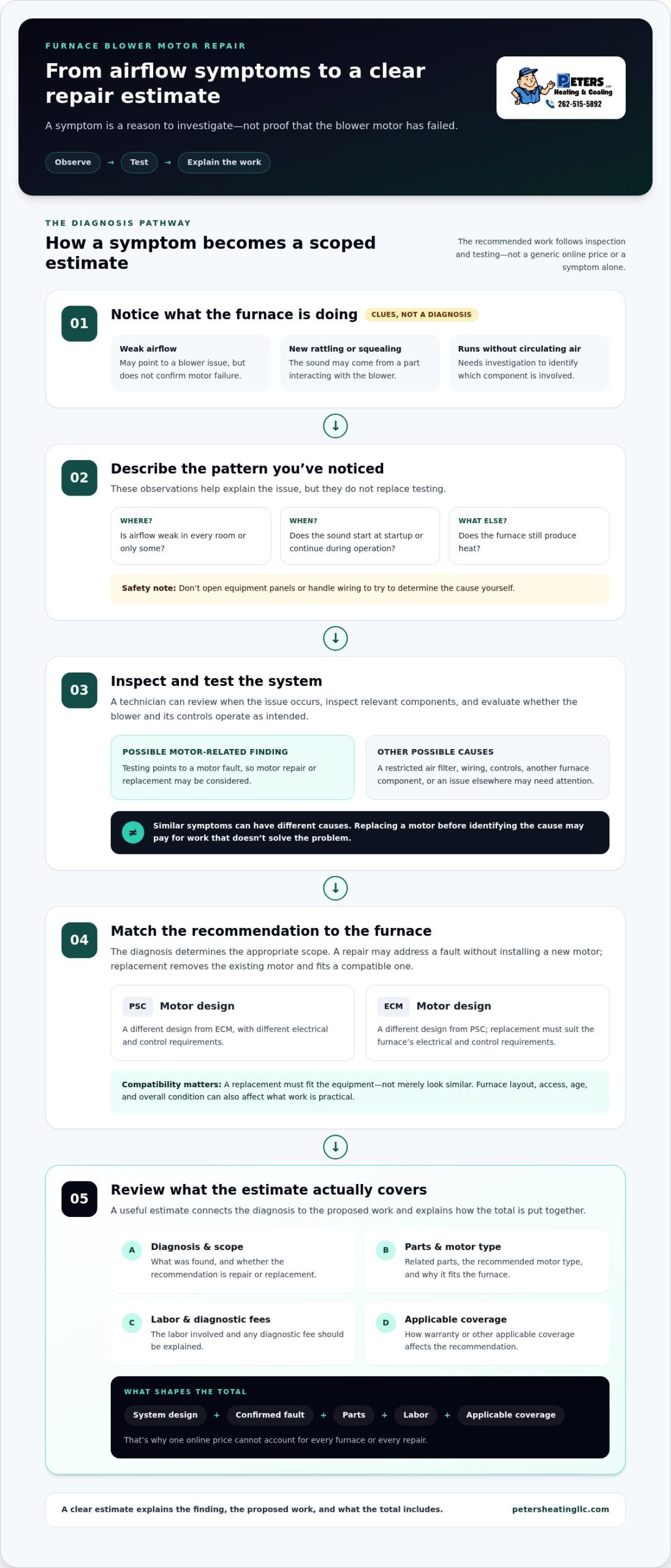
Weak airflow, a new rattling or squealing sound, or a furnace that runs without circulating air deserves attention. These signs can point to a blower problem, but they don’t prove the motor has failed. A symptom is a reason to investigate, not a parts list.
A furnace symptom describes what you notice; testing is needed to confirm whether the blower motor is the failed component. That distinction matters because furnace blower motor repair cost depends on the cause and the work needed to address it, not just on how the problem sounds or feels.
A technician’s assessment generally moves from observation to testing: review when the issue occurs, inspect relevant system components, and evaluate whether the blower and its controls are operating as intended. The findings help distinguish a motor fault from a problem elsewhere. This system-wide approach aligns with the emphasis on sound HVAC practice reflected in HVAC Industry Standards. Homeowners shouldn’t open equipment panels or handle wiring to try to determine the cause themselves.
How PSC and ECM motor designs can affect the repair
PSC and ECM describe different motor designs and ways of managing operation. Because their electrical and control requirements differ, a replacement must be compatible with the furnace, not merely similar in appearance. Cost guides, including Filterbuy’s discussion of motor types, can help explain why categories matter, but they aren’t a universal price guide or a diagnosis. The specific system and confirmed fault determine the appropriate work.
What else can cause weak airflow or a noisy furnace?
A restricted air filter can contribute to reduced airflow, but it isn’t automatically the cause. Wiring, controls, or other furnace components may also need inspection. A noise could come from a part interacting with the blower rather than from the motor itself. Checking the complete system helps prevent a guess based on one symptom from leading to an unnecessary replacement.
Useful details to note include whether airflow is weak in every room or only some, whether the sound starts at startup or continues during operation, and whether the furnace still produces heat. These observations describe the pattern, but they don’t replace testing. A technician can compare what you’ve noticed with the furnace’s operation and explain which findings support the recommended repair.
If your furnace is showing these signs, an assessment can clarify what’s happening before work is recommended. Peters Heating & Cooling provides furnace repair in Southeast Wisconsin, with diagnosis and recommendations based on the system’s condition.
What a Furnace Blower Motor Repair Estimate Should Include
A useful estimate tells you what the technician found, what work is proposed, and how the total is put together. No single dollar amount applies to every furnace. The system’s design, confirmed fault, parts, labor, and applicable coverage affect the scope, so a number without those details can be misleading.
Use this comparison table to review whether the estimate explains the main parts of the work:
| Estimate item | What it should explain |
|---|---|
| Diagnosis | The issue identified and how it relates to the reported symptoms. |
| Motor or related parts | Which component will be repaired or replaced, and why that work is recommended. |
| Labor | The work included, such as access, removal, installation, or related adjustments. |
| Applicable coverage | Whether equipment or parts coverage applies and how it affects the proposed work. |
A motor replacement and a repair to a related fault are different scopes. Replacing a motor means installing a compatible motor; addressing a separate electrical, control, or airflow issue may involve different parts and labor. The estimate should make clear what work is included and what the recommendation is intended to fix.
How motor type, parts, and labor shape the total
Compatible motors can differ in design and in their requirements for the furnace’s controls. The right part must suit the specific system, not simply fit physically. Labor can also vary depending on access to the blower assembly, wiring, and the diagnostic work needed to pinpoint the fault. Estimates should reflect the findings and task, rather than assume every furnace needs the same replacement.
How warranty coverage and furnace age affect the decision
Review any applicable equipment or parts coverage alongside the estimate. Coverage terms can affect which expenses are included, while the furnace’s age and condition help frame whether a repair is practical. A clear estimate distinguishes the proposed repair from any coverage that may apply, rather than leaving you to infer the difference.
If inspection confirms a motor fault, compare the recommended work with the furnace’s overall condition and expected remaining service life. Full-system replacement is relevant only if the furnace’s condition and repair needs make it a genuine option. If you’re weighing that choice, the furnace installation homeowner guide offers context for considering installation alongside repair.
For homeowners in Kenosha, a clear estimate connects each proposed task to a finding from the system. Peters Heating & Cooling explains its repair recommendations and pricing transparently. Learn more about expert HVAC repair in Kenosha.
How to Review a Blower Motor Quote Without Guessing
A quote is easier to assess when you can connect it to what happened, what the technician found, and what the proposed work covers. You don’t need to diagnose the furnace yourself. Use this sequence to make sure the estimate tells a clear story.
- Record the symptoms. Note whether airflow changed, when the noise or shutdown occurs, and whether the issue is constant or intermittent.
- Review the findings. Look for the diagnosed fault and the evidence that supports it, rather than relying on a symptom alone.
- Understand the scope. Check which motor or related parts are included, what labor covers, and whether the recommendation is a repair or replacement.
- Then decide. Consider the furnace’s condition, applicable coverage, and the explanation of the recommended next step.
Before a service visit, locate the furnace model information if it’s easy to access, and share when the symptoms began and how they change. Those details can help the technician understand the problem’s pattern. Don’t open equipment panels or handle wiring to find information.
Questions that make an estimate easier to understand
As you review the estimate, make sure you can identify the diagnosed fault and the findings behind it. Check which parts and labor are included, whether the work addresses the motor or a related component, and whether applicable warranty coverage changes the scope. Finally, make sure the proposed next step is clear. A straightforward explanation helps you see how the recommendation relates to the furnace’s condition.
Routine filter care supports airflow, but it can’t guarantee a blower motor’s longevity or prevent every furnace problem. Use the filter type and replacement guidance suited to your system, and don’t treat a clean filter as proof that the motor is healthy. For broader preventive-care context, review this residential HVAC maintenance guidance.
When repair-versus-replacement deserves a closer look
There’s no single age cutoff that determines whether to repair a motor or replace a furnace. Consider the equipment’s age and overall condition alongside the repair scope and how reliably the system has been operating. A focused repair may make sense for one furnace, while recurring problems or broader condition concerns may call for a wider discussion. The recommendation should explain why the proposed option fits your system.
Understanding the diagnosis and scope is the best starting point for evaluating furnace blower motor repair cost. For a clear assessment and help with your furnace repair, contact Peters Heating & Cooling.
Get a Clear Furnace Blower Motor Diagnosis in Southeast Wisconsin
A blower problem can leave you unsure whether the motor has failed, another part is involved, or the furnace needs a different repair. Peters Heating & Cooling diagnoses furnace issues before recommending work, so the proposed service is based on the equipment’s condition rather than symptoms alone. That gives you a clearer basis for understanding the recommended scope and furnace blower motor repair cost.
During a service visit, share what you’ve noticed and when it happens. Changes in airflow, sounds during startup, or interruptions in heating can help the technician understand the pattern. Peters Heating & Cooling’s licensed, insured, continuously trained technicians assess the furnace and explain their findings and recommendations. Transparent pricing means explaining the work involved, including parts and labor, rather than relying on a generic online figure.
What homeowners can expect from a local service visit
An inspection focuses on identifying the cause of the problem and determining which work, if any, is appropriate. The technician can explain whether the recommendation involves the motor or another part, what the proposed scope includes, and whether applicable coverage affects the estimate. Recommendations are grounded in the furnace’s condition and your comfort needs, so you can understand the reasoning before deciding how to proceed.
For a more useful visit, have the furnace model details available if you can access them safely. Note when the issue began, whether it happens consistently, and what changes you’ve observed. These details don’t replace inspection, but they can help the technician connect your observations with the system’s operation.
When to arrange a furnace inspection
Arrange service if weak or changing airflow, unusual sounds, or interruptions in heating persist. Don’t assume the motor is the cause, and don’t try to inspect internal wiring or components yourself. If the furnace appears to be operating unsafely, stop using it and seek professional help. An assessment can clarify the issue and appropriate next step without assuming in advance that a specific part needs replacement.
Peters Heating & Cooling provides furnace repair across Southeast Wisconsin, including Kenosha, Racine, and Oak Creek, as well as Winthrop Harbor and nearby communities in Northeast Illinois. The goal is a clear explanation of the furnace’s condition and a transparent repair recommendation, not a promised outcome before the system is assessed.
If your furnace is showing persistent airflow or heating problems, schedule furnace repair service with Peters Heating & Cooling.
Take the Next Step With Confidence
A furnace repair decision doesn’t have to come down to choosing the lowest number on a page. Take the time to understand the recommendation and how it fits your home. A written estimate can also serve as a useful record of the work discussed and help you track the furnace’s service history.
Furnace blower motor repair cost depends on the confirmed problem and the work your system needs. Clear information makes it easier to decide what to approve and plan for your home’s comfort without guessing.
If your furnace needs attention, Peters Heating & Cooling can help with the next step. Schedule furnace repair with Peters Heating & Cooling for a clear assessment of the issue. A well-informed decision starts with understanding what your furnace needs.
Frequently Asked Questions
How much does it cost to repair a furnace blower motor?
There’s no reliable single figure for every home. Furnace blower motor repair cost depends on the motor design, the fault found, compatible parts, labor, access to the equipment, and applicable warranty coverage. A motor replacement and a repair to a control issue, for example, are different jobs. Ask for the diagnosis and a clear description of the proposed work so you can understand what the estimate covers.
What are the signs of a bad furnace blower motor?
Weak or inconsistent airflow, unusual sounds, or warm air that isn’t circulating properly can be signs of a blower problem, but they don’t confirm motor failure. Notice whether the issue affects the whole home or only certain rooms, and whether a sound starts with the furnace or continues during operation. Share those observations during service. A technician can assess the equipment and determine whether the motor or another component is involved.
Can a furnace blower motor be repaired instead of replaced?
Sometimes the problem can be addressed without replacing the motor, depending on the inspection findings. A sound or operating issue may have a cause elsewhere, while a failed motor may need replacement if repair isn’t suitable. Ask the technician to explain what testing identified and why the proposed fix addresses that finding. You can also ask what the next step would be if the problem remains after the recommended work.
Does homeowners insurance cover furnace blower motor repair?
It depends on your policy, what caused the damage, and the circumstances involved. Your insurer can explain how your specific policy treats the situation. If you’re considering a claim, keep the estimate and any records describing the furnace’s condition and repair findings. An HVAC technician can document what they observe and the work they recommend, but only your insurer can determine whether your policy provides coverage.
Is it worth replacing a furnace blower motor on an older furnace?
It can be, but age alone doesn’t settle the decision. Consider the furnace’s overall condition, how reliably it has operated, the diagnosed repair, and whether other significant work may be needed soon. A furnace with one isolated fault may call for a different decision than a system with recurring problems. Review the technician’s findings alongside the repair scope before deciding whether to continue repairing or consider replacement.
Can I replace a furnace blower motor myself?
Motor replacement is best left to a qualified technician because it involves electrical components, safe access to the furnace, and selecting a part compatible with the system. Incorrect installation or wiring can damage equipment or create a safety risk. You can safely note changes in airflow or sounds and look for an obviously restricted filter, but don’t remove panels or attempt electrical work. Peters Heating & Cooling serves homeowners in Kenosha and nearby communities.
Why is my furnace blower running but not blowing warm air?
The blower can circulate air even when a separate heating-system issue prevents the air from warming properly. A control problem or airflow restriction may also affect what you feel at the vents. Note whether the air stays cool throughout the cycle, whether the thermostat is calling for heat, and whether the furnace stops and restarts. Those details can help a technician distinguish a heating fault from a blower-related problem.