An HVAC contractor can help with heating and cooling, from furnace installation to air conditioning work. If you’re searching for residential furnace installation near me, look for a service that considers how a new system will fit your home and work with its existing equipment.
Choosing a furnace involves more than selecting a unit. The right approach considers your home’s heating needs, the installation area, and whether repair or replacement makes more sense.
This guide explains what to consider when choosing a furnace, what happens during installation or replacement, and how to plan for heating and cooling together. You’ll also learn what can affect installation costs and how professional planning can clarify the work from the start.
Key Takeaways
- Choose a furnace based on your home’s heating needs, system efficiency, and how well the equipment can support indoor comfort.
- Consider how ductwork and indoor air quality affect the performance of a heating system, not just the furnace itself.
- Weigh the furnace’s condition and repair needs against replacement when deciding what to do next.
- Plan for an installation that leaves suitable access around the equipment and accounts for your home’s existing setup.
- An HVAC contractor can help coordinate furnace and air conditioning installation or repair to address both heating and cooling needs.
Heating system efficiency and indoor air quality
Heating efficiency depends on the equipment and how well it suits your home. Indoor air quality also depends on airflow, filtration, and the condition of connected ductwork.
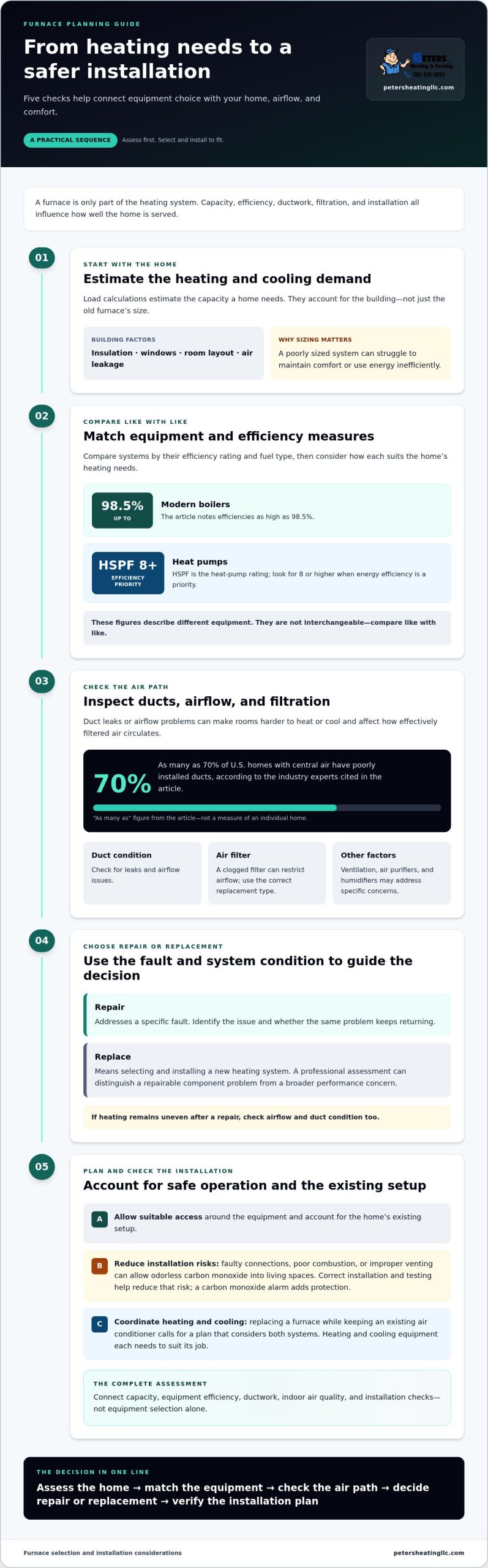
Compare systems by efficiency rating and fuel type, then consider how each suits your home’s heating needs. Modern boilers can reach efficiencies as high as 98.5%, while heat pumps use a different rating: HSPF. When energy efficiency is a priority, look for a heat pump with an HSPF of 8 or higher. These figures describe different equipment, so compare like with like rather than treating them as interchangeable.
Ductwork matters, too. Industry experts estimate that as many as 70% of U.S. homes with central air have poorly installed ducts. Leaks or airflow problems can make rooms harder to heat or cool and affect how effectively filtered air circulates. A thorough system assessment should consider the ducts alongside the furnace, not treat equipment selection as a stand-alone decision.
To improve indoor air quality, consider how air moves through your home and what your system can filter. A clogged filter, for example, can restrict airflow; replacing it with the correct type is a practical first step. Air purifiers and humidifiers may address specific concerns, while ventilation and duct conditions also affect system performance.
Repairing or Replacing a Furnace
Furnace repair addresses a specific fault, while replacement means selecting and installing a new heating system. Start by identifying the issue, the furnace’s condition, and whether the same problem keeps returning. A professional assessment can distinguish a repairable component problem from a broader performance concern. If heating remains uneven after a repair, check airflow and duct condition, too.
Load Calculations and Installation Risks
Heating and cooling load calculations estimate how much capacity a home needs. The assessment considers insulation, windows, room layout, and air leakage, helping match equipment to actual demand instead of guessing from the old furnace. A poorly sized system can struggle to maintain comfort or use energy inefficiently.
Improper furnace installation can create safety risks. Faulty connections, poor combustion, or improper venting can allow carbon monoxide, an odorless gas, to enter living spaces. Correct installation and testing help reduce that risk, and a carbon monoxide alarm provides an additional layer of protection.
For heating and cooling work in Kenosha, Racine, Oak Creek, or Winthrop Harbor, consider the process as well as the equipment. A qualified HVAC professional should assess your heating and cooling needs, explain the load calculation, and account for ductwork and indoor air quality. Ask for a clear explanation of the recommended work and how the installation will be checked. That makes it easier to understand the plan and how equipment choices fit your home.
Can an HVAC contractor help with both heating and cooling needs?
Yes. An HVAC contractor can plan heating and cooling work together, helping you understand how equipment, controls, and household needs fit. For example, replacing a furnace while keeping an existing air conditioner calls for a plan that considers both systems, not just the new heating equipment.
Coordinated planning can clarify installation decisions. A contractor can assess whether you need furnace installation, air conditioning installation, or both, then explain how each option fits your home. If the cooling system needs repair rather than replacement, that distinction can shape the overall plan. Heating and cooling still require equipment suited to each job; one system doesn’t automatically replace the other.
Technicians’ qualifications matter because installation and repair involve electrical connections, fuel or refrigerant systems, airflow, and equipment controls. Look for technicians who are licensed, insured, and continuously trained. Ask for a plain-language explanation of the proposed work and how it addresses the heating or cooling issue. A clear scope also distinguishes HVAC work from plumbing, which involves different systems and tasks.
Financing options can help homeowners plan for HVAC installation, but don’t confuse financing terms with equipment performance. Review the offer’s annual percentage rate, repayment term, fees, and total amount due. A monthly payment alone doesn’t show the full cost of borrowing. Compare the written terms with your household budget before agreeing to a financing plan.
Promotional financing offers may include conditions that affect the final amount paid. For example, a deferred-interest offer may require payment within a stated promotional period to avoid additional interest. Read the offer documents for eligibility rules, payment dates, and what happens when the promotion ends. Don’t treat an advertised payment as the total cost.
Financing doesn’t determine whether a system is the right fit. Equipment ratings describe performance, while load calculations and your home’s existing setup help determine suitable capacity. An assessment connects those details with the proposed work, keeping the decision focused on comfort and efficient operation, not just a payment schedule.
Before approving work, use this short review:
- Confirm whether the plan covers heating, cooling, or both.
- Ask for the recommended work and its purpose in writing.
- Review financing terms, including rates, fees, and payment dates.
- Make sure the proposal separates equipment work from unrelated plumbing needs.
This process gives you a practical basis for comparing an installation plan with a repair option. It also helps you understand what financing covers and how the proposed heating and cooling work fits together.
Furnace installation and system selection
Choose equipment for your home’s actual heating demand, not simply the size of the old unit. A sound recommendation considers capacity, energy efficiency, system condition, and installation requirements.
System Recommendations and Sizing
Ask how the HVAC recommendation accounts for your home’s layout, insulation, windows, and airflow. These details influence how much heating or cooling capacity each space needs. A load calculation helps match equipment to demand; the old furnace’s size alone doesn’t establish the right replacement. Compare models by fuel type, efficiency rating, and compatibility with your home’s ductwork.
Before choosing a furnace, have the existing system and accessible ductwork inspected. Cleaning or correcting airflow problems can help new equipment operate as intended. For example, a larger furnace won’t fix a cold room if restricted airflow is the real issue. Consider energy efficiency alongside purchase and operating needs, rather than choosing by model name alone.
System Lifespan and Replacement
Most U.S. heating and air conditioning systems last 10 to 20 years, while furnaces can work properly for 15 to 30 years. Consider replacement when a system reaches 10 or more years, especially if performance, comfort, or repair needs are changing. Age is one factor, not an automatic instruction to replace functioning equipment.
Warranty coverage depends on the written terms for parts, labor, and registration. Keep installation records and follow the manufacturer’s maintenance schedule. Annual heating-system service, ideally before cold weather, is a practical step after installation.
Permits and Building Codes
Permit and building-code requirements vary by local jurisdiction and project scope. A furnace replacement may involve different requirements from work that changes venting, fuel connections, or equipment placement. The applicable local building department sets the rules for the address and type of work; the installation plan should account for them before work begins.
Ask the project scope to clarify who handles permits and any required inspection. Keep permit documents and inspection records with the furnace’s model and warranty paperwork. These records can be useful if you sell your home or need future service.
Installation details also affect long-term performance. A replacement plan should account for equipment access, venting, electrical connections, and how the furnace connects to existing ductwork. For example, changing equipment without considering return-air pathways can leave some rooms uncomfortable. Review the proposed model, capacity, and work scope together rather than treating the furnace as a stand-alone purchase.
Plan maintenance before the first heating season. Replace filters according to the equipment instructions, keep the area around the furnace clear, and arrange annual service before cold weather. A technician can inspect system operation and identify issues that routine filter changes can’t address. These steps help protect airflow and keep maintenance records aligned with warranty terms.
When deciding whether to replace a furnace, consider the current unit’s age, repair history, comfort, and operating performance. Then weigh the new model’s capacity and efficiency against your home’s heating needs. This practical review helps distinguish repair from replacement without relying on age alone.
Furnace installation and replacement
Furnace replacement involves more than removing an old unit and setting a new one in place. A clear plan covers the equipment, installation area, connections, and final checks. Before approving the work, review the written estimate for the proposed scope, included tasks, and any assumptions about existing ductwork or access.
Start with a walkthrough of the furnace location. Note narrow doorways, stairs, storage, and nearby appliances, such as a water heater. The installation space needs room for technicians to work and for future service. According to the U.S. Environmental Protection Agency, equipment should have adequate space around it for maintenance and service. Keep stored boxes and household items away from the work area.
Next, the HVAC contractor removes the existing furnace and prepares the connections for the replacement. The condition of the duct transition, venting, electrical supply, and thermostat can affect the work. For example, a replacement may require adjustments where the new unit meets an older duct connection. The estimate should clearly describe those planned tasks before installation begins.
Timing matters, too. A furnace that stops running during winter can make replacement more urgent, while an early assessment gives you time to review the equipment and work scope. If you’re a homeowner in Kenosha, prepare by clearing the furnace area, noting comfort problems, and sharing those details during the home assessment. This helps the contractor understand your household’s priorities.
On installation day, keep the route to the equipment clear and secure pets away from the work area. Point out the thermostat, unusual room temperature patterns, and any past problems with the existing system. These details give the installer useful context. If the furnace shares a utility room with a water heater, identify access needs for both appliances so the new equipment doesn’t block routine service.
After the furnace is installed, ask for a walkthrough of its setup and operation. Have the installer show you the thermostat and filter location and explain the manufacturer’s maintenance instructions. Find out which documents to keep, including the model information, warranty paperwork, and completed installation records. Knowing where the filter fits makes routine upkeep easier, and saved documents help future technicians understand what was installed.
A final review should compare the completed work with the agreed estimate. Confirm that the equipment model matches the proposal, the work area is clean, and access panels can open for future maintenance. Before the crew leaves, ask them to explain the startup checks and how to operate the system. A careful handoff gives you a useful reference when the first heating cycle begins.
Furnace installation process
Prepare by clearing the route to the furnace and the space around it. Before installation day, move stored items, secure pets, and note thermostat or access details for the installer.
A well-organized installation follows a clear sequence, from protecting the work area to checking the new furnace. Understanding these steps helps you follow the work and know what to review before the technician leaves.
- Clear access. Move boxes, furniture, and other obstructions from the path to the furnace. If the unit sits in a utility room, keep access to nearby equipment, such as a water heater.
- Share useful details. Point out the thermostat, rooms that feel uncomfortable, and any issues with the old system. For example, mention if one bedroom stays cold while others feel warm.
- Protect the work area. Remove fragile items near the installation space and keep children and pets away from tools. A clear route also helps technicians bring in equipment without moving household belongings.
- Review the setup. The installer removes the existing furnace and prepares the connections for the replacement. The work may involve the duct connection, venting, electrical supply, and thermostat, depending on the home and selected equipment.
- Walk through operation. Before the technician leaves, locate the filter, review thermostat use, and ask where to find the manufacturer’s maintenance instructions. Keep the model and installation records together for future service.
Room around the furnace matters after installation, too. According to the Office of the Federal Register, National Archives and Records Administration, clearances around heat-producing appliances must be at least those specified in the appliance’s listing. Don’t assume the old unit’s spacing automatically suits the replacement. Keep storage away from the furnace, and preserve access for routine maintenance.
During the final walkthrough, compare the installed equipment with the written work plan. Ask the technician to explain the startup checks, show how the thermostat controls heating, and identify any operating instructions. If your home also has air conditioning, clarify which system the new controls operate. These practical details help prevent confusion when switching between heating and cooling.
Choose a licensed, insured, and continuously trained professional for installation work involving electrical connections and heating equipment. Before work starts, review the agreed scope and make sure the work area is ready. For help planning a new furnace installation, schedule furnace installation service.
Peters Heating & Cooling: Furnace Repair
Peters Heating & Cooling can help when your furnace needs repair, replacement, or installation. If the system runs inconsistently, struggles to heat rooms, or needs repeated attention, furnace repair can identify the issue and help determine a practical next step. When replacement makes more sense, furnace installation provides a path to a new heating system suited to your home.
Heating and cooling needs can overlap. Peters Heating & Cooling also handles air conditioning repair and installation, so homeowners can address comfort concerns across both systems. A clear description of the problem, including which rooms are affected and how the equipment behaves, helps identify the service you need.
For help with furnace repair or installation, contact Peters Heating & Cooling or visit petersheatingllc.com.
Make Your Next Heating Decision With Confidence
Before choosing a heating solution, decide what matters most in your home: dependable warmth, better coordination with cooling, or a clear path from an aging furnace to its replacement. That priority gives a conversation with an HVAC professional a useful starting point. If you’re searching for residential furnace installation near me, focus on finding an option that fits your home and your comfort needs, not simply the first equipment recommendation.
Peters Heating & Cooling offers furnace repair and installation, as well as air conditioning repair. You can discuss a furnace concern or cooling issue in the context of your home’s comfort needs. A straightforward conversation can help you understand which service fits the problem and what the next step involves.
When you’re ready to discuss your heating needs, contact Peters Heating & Cooling. A practical plan starts with your questions, and you can move forward at a pace that feels right for your home.
Frequently Asked Questions
Do I need to have my ductwork replaced?
Not automatically. Ductwork needs replacement only when its condition or layout prevents proper airflow. Disconnected sections, crushed ducts, or rooms that remain uncomfortable despite open vents are reasons to have it inspected. A technician can assess accessible duct sections, connections, and airflow to distinguish a repair need from replacement. Consider the furnace and ductwork separately: replacing one doesn’t automatically mean replacing the other.
How much do HVAC companies typically charge?
HVAC companies don’t use one standard charge for every job. The amount depends on whether you need repair, maintenance, or a full system installation, along with equipment, labor, parts, and project scope. A job-specific price is provided after a quote request. Repair and replacement are different kinds of work, so compare quotes that describe the same service.
How much does residential furnace installation cost near me?
The price depends on the installation and is provided after a quote request. Key factors include the selected furnace, labor, removal of the existing unit, and any required permits or adjustments to existing connections. For a useful estimate, describe the current system and access to the furnace area. Review the written scope to understand which installation tasks are included and which work is separate.
What furnace installation companies serve my area?
Peters Heating & Cooling serves homeowners in Kenosha, Racine, Oak Creek, and Winthrop Harbor. If you’re searching for residential furnace installation near me, use your city or ZIP code to narrow results to providers serving your area, then compare the stated service and installation scope. For example, a homeowner in Racine can search specifically for furnace installation rather than assume every heating contractor handles replacement work.
How do I choose a licensed and insured furnace installer near me?
Choose an installer who is licensed, insured, and trained for furnace work. Ask for a written scope identifying the equipment and installation tasks, then check that it matches your discussion. Peters Heating & Cooling’s technicians are licensed, insured, and continuously trained. Keep the proposal and installation paperwork together so you can refer to them for future questions or service.
What furnace size and efficiency rating does my home need?
The right furnace size depends on your home’s heating demand, not simply the old unit’s model or capacity. Ask how the recommendation accounts for room layout, insulation, windows, and existing airflow. Compare efficiency ratings within the same equipment type, since ratings don’t translate directly across different systems. A clear recommendation connects the proposed capacity and rating to your home’s specific needs.
What types of residential furnaces are available, and how do they compare?
Residential furnaces use fuel types such as natural gas, propane, oil, and electricity. Suitability depends on the fuel already available at your home, existing connections, and the equipment’s installation requirements. Compare models by fuel source, efficiency rating, and compatibility with your setup. For example, changing fuel types requires accounting for the new system’s connections and venting, not just the furnace itself.
What is included in a furnace installation quote?
A furnace installation quote should clearly describe the equipment, labor, removal of the old unit, installation work, and necessary permits. Peters Heating & Cooling provides comprehensive furnace installation quotes, with pricing that includes equipment, labor, and necessary permits. Review the stated scope to see what the proposed work covers. If your home needs work beyond that scope, ask for it to be explained separately.