
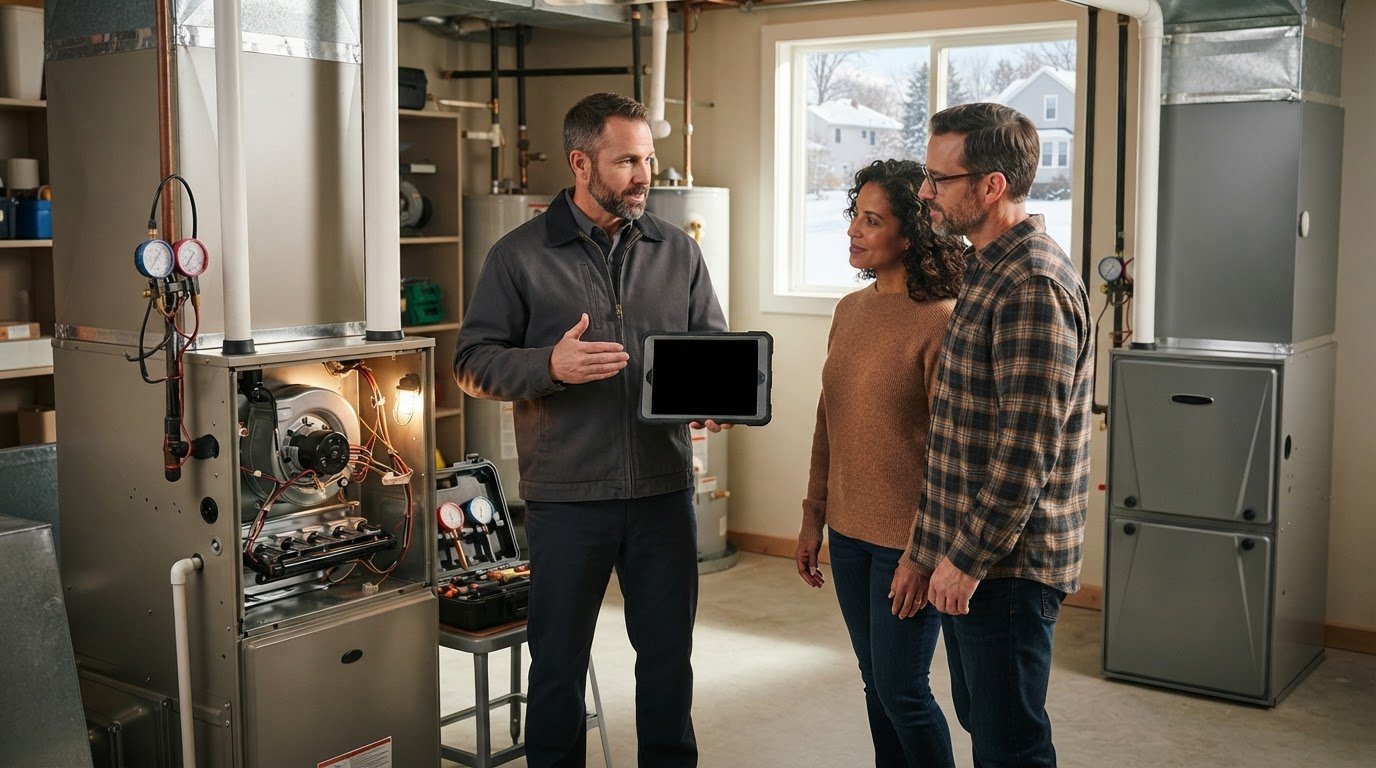
Replacing a furnace isn’t automatically the better choice, and repairing it isn’t always practical. A furnace repair company in Oak Creek, WI can assess the system’s condition and the fault to determine whether repair can restore dependable heat or replacement deserves consideration.
When your home isn’t staying warm, it’s reasonable to want a clear answer before deciding what to do next. Age matters, but it isn’t the whole story. The type of fault, the furnace’s overall condition, and whether problems keep returning all help shape the decision.
This guide explains how to compare heating and cooling contractors serving Oak Creek and weigh repair against replacement. Learn what to look for in an evaluation, which signs may point toward either option, and what information can help you make a sound decision without pressure.
Key Takeaways
- Compare repair and replacement by looking at the furnace’s condition, the fault, and whether problems keep returning, not age alone.
- Use ratings and review counts as context, then look for specific feedback about diagnosis, communication, and completed work.
- Years in business can offer useful context, but a clear explanation of the work and its rationale matters when weighing a contractor.
- For a replacement evaluation, understand what the assessment covers and how the proposed system fits your home’s heating needs.
- Learn what furnace repair and installation involve so you can choose a practical next step with Peters Heating & Cooling.
Need a pro for your heating and air conditioning service project in Oak Creek, WI?
Start by identifying the equipment, symptoms, and whether the problem affects heating or indoor air. A 24-hour emergency furnace repair option is company-specific; furnace repair alone doesn’t mean service is available around the clock.
Furnace permit and code requirements can differ between incorporated and unincorporated areas. The rules depend on the project and property address, particularly for installation or replacement work.
Contractor Licensing and Insurance
When choosing a licensed and insured HVAC contractor in Oak Creek, focus on credentials relevant to the work, such as furnace repair or installation. Clear documentation helps you understand who is responsible and what protections apply. Wisconsin licensing requirements depend on the type of work, so distinguish routine troubleshooting from larger equipment changes.
Before installation, establish which permit and inspection rules apply to the property address. Location can affect the requirements. For repair work, describe the furnace model and symptoms clearly, then review the proposed scope before work begins.
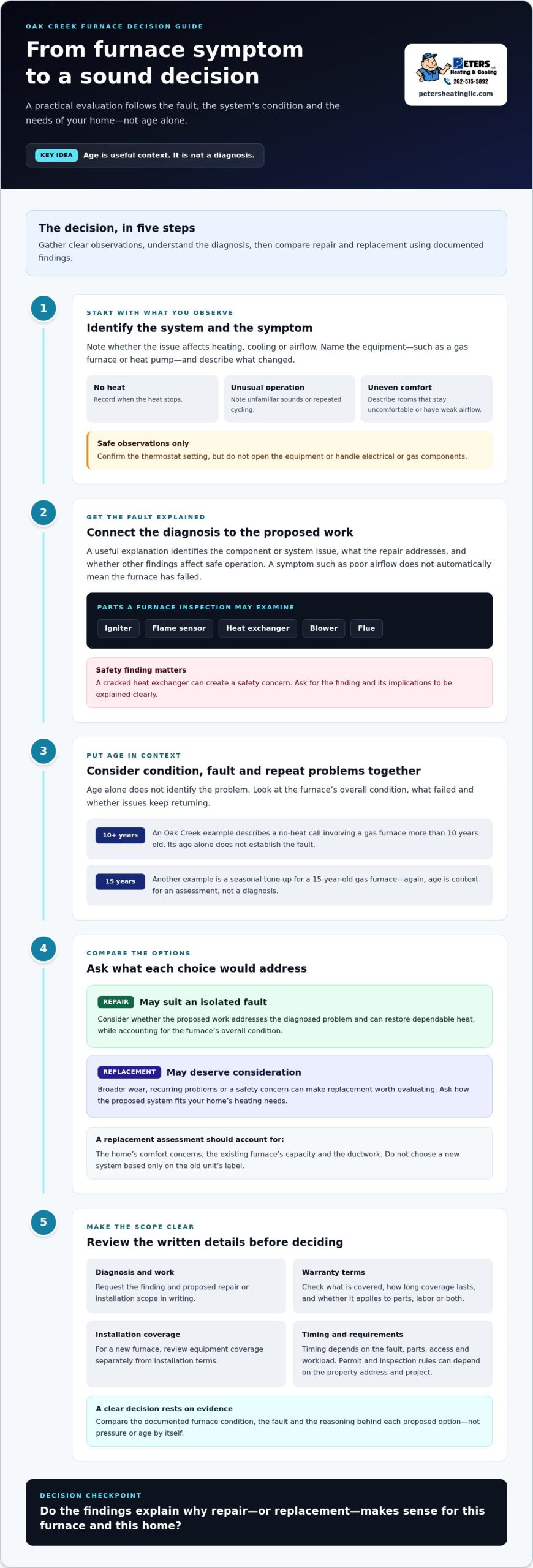
Useful troubleshooting starts with simple observations: confirm the thermostat setting, note unusual sounds or cycling, and record when the heat stops. Don’t open the equipment or handle electrical or gas components. These details give a technician a helpful starting point without risking damage or injury.
Winter Furnace Problems and Repair Timelines
In winter, a furnace may stop producing heat, cycle repeatedly, make unfamiliar noises, or leave rooms unevenly warm. Diagnosis and repair time depend on the fault, parts needed, access to the equipment, and the workload at the time. Once the problem is identified, ask about next steps and timing rather than relying on a general estimate.
Oak Creek examples include a no-heat call involving a gas furnace described as more than 10 years old, and a seasonal tune-up for a 15-year-old gas furnace. Age alone doesn’t identify the fault. A tune-up can examine parts such as the igniter, flame sensor, heat exchanger, blower, and flue.
For a heat pump, report whether it provides heating, cooling, or neither. Heat pumps move heat, so their symptoms and service needs differ from those of a gas furnace. Name the system type when describing the issue.
Repair Warranties and Guarantees
Furnace repair warranties and guarantees vary by company and written terms. Review what the coverage applies to, how long it lasts, and whether it covers parts, labor, or both. Repair coverage is separate from any manufacturer warranty on the equipment.
Ask for the diagnosis, repair scope, and warranty terms in writing. For a new furnace installation, review the equipment coverage and installation terms separately. If a contractor recommends replacement after a repair, compare the documented furnace condition and proposed work before deciding.
Replacement is not automatically the right answer. A 1960s Oak Creek home’s furnace heat exchanger should be checked for cracks because damage can create a safety concern. For any system, a useful evaluation explains the finding, the repair option, and why replacement may or may not make sense.
Heating and cooling repairs and replacements
Start by identifying whether the issue affects heating, cooling, or airflow. The equipment type and symptoms help narrow down the problem and guide the repair-or-replacement decision.
Furnace and Forced-Air Repairs
With forced-air heating, the furnace warms air that travels through ducts and vents. Describe what has changed, such as weak airflow, uneven room temperatures, unusual cycling, or a system that won’t start. A technician can then inspect the furnace and airflow path instead of assuming every symptom means the furnace has failed.
A useful repair explanation links the diagnosed fault to the proposed work. Ask which component caused the problem, what the repair will address, and whether other findings affect safe operation. For example, a furnace may run while airflow remains poor because the issue lies elsewhere in the system.
Heating and Ventilation Repairs
Heating and ventilation work involves both the equipment and airflow through the home. If one room stays uncomfortable while others heat normally, note which vents have weak airflow and whether the pattern changes while the system runs. Duct pressure testing and leakage mapping can help locate escaping conditioned air.
A replacement decision should account for equipment condition, the diagnosed problem, and how the system serves the home. Repair may address an isolated fault, while broader wear or recurring problems can make replacement worth considering. The recommendation should explain the reasoning for each option.
Cooling systems need their own assessment. Most central air conditioners last 15-20 years with proper annual maintenance. That lifespan is context, not a diagnosis: the system’s condition, repair needs, and operating performance still matter. For a cooling problem, an evaluation can consider the evaporator coil, condenser, refrigerant charge, capacitor, and airflow through the duct system.
Heat pumps provide heating and cooling, so explain which mode is affected and when the problem occurs. A system that struggles in one mode may need a different assessment from one that fails in both. The equipment type, home layout, and existing system all shape heat pump repair or installation work.
A replacement assessment should clarify how the proposed equipment fits the home’s heating or cooling needs. An existing furnace’s capacity is one part of the evaluation, along with the ductwork and the home’s comfort concerns. Don’t choose a new system based only on the old unit’s label.
For a persistent heating fault, furnace repair can address the equipment problem; replacement can be considered when the findings support it. Compare the diagnosis, recommended work, and expected effect on system operation before choosing a path.
Contractor ratings and review counts
Oak Creek homeowners rate heating and air conditioning service professionals an average of 4.7 on Angi. That broad rating gives a quick snapshot, but it doesn’t tell you whether reviews describe furnace repair, air conditioner installation, or another job. Match each review to the service you need before comparing contractors.
For gas furnace and forced-air heating repair in Oak Creek, professionals have a 4.6 rating across more than 1,600 reviews. Central air conditioning installation professionals have a 4.6 rating across more than 1,500 reviews. Those figures describe different service categories, so use the one that best fits your project.
Review counts add context to an average. A rating supported by more than 1,600 reviews represents a larger pool of customer feedback than one based on fewer reviews. Still, a high count cannot show whether the contractor handled your specific residential system, such as a ductless unit or a gas heater.
Read reviews for practical details. Look for examples that describe the original problem, the work completed, and how the contractor communicated. A heating repair review may say whether the technician explained the fault; an air conditioning review may describe the installation process or how the system performed afterward.
Compare reviews using the same simple checklist:
- Check whether the reviewer describes the same service you need, such as furnace repair or cooling installation.
- Look for specific comments about diagnosis, work quality, and communication.
- Notice whether feedback discusses the result, not only the initial appointment.
- Compare comments across several reviews rather than relying on one detailed account.
Ratings can help distinguish heating and cooling experience from general customer impressions. A review about an air conditioner, for example, doesn’t directly show how a contractor handles a furnace. Feedback about a ductless system may offer insight into communication, but it may not describe work on ducted equipment.
Use the 4.7 Angi average as a starting point, then narrow your comparison by project type. If you need gas furnace service, the 4.6 rating across more than 1,600 reviews is more directly relevant. For central air conditioning installation, the 4.6 rating across more than 1,500 reviews better matches that work. Specific review details help make those numbers more useful.
Review volume is most useful when it stays tied to the job category. Gas furnace and forced-air heating repair service pros in Oak Creek have a 4.6 rating across 1.6k+ reviews. That gives you a focused comparison point, but the average alone cannot explain what happened during an individual visit. Check whether reviewers describe the concern they brought in, the work completed, and whether the outcome was clear to them.
When comparing contractors, give more weight to feedback that matches your service needs than to broad praise that could apply to any appointment. Look for specific comments about diagnosis, communication, and completed work, and notice whether reviewers describe similar strengths or concerns. Ratings can inform your decision, but they don’t guarantee the experience you’ll have.
Years in business
A contractor’s years in business offer useful context, but they don’t prove how well a specific job will go. In Oak Creek, one customer review describes using the same heating and cooling company since building a house 23 years earlier. That account signals a long customer relationship, not a guarantee of identical experience for every homeowner.
Business records provide a different kind of timeline. An Oak Creek heating and cooling business lists October 21, 2009, as its start date, while its Better Business Bureau file opened April 30, 2010. Those dates measure separate milestones. A BBB file-opening date is not the same as a business’s founding date, and neither date alone demonstrates repair quality.
Use a contractor’s operating history as one comparison point, then focus on evidence relevant to your project. A long history may reflect experience with many equipment types, but your decision should still rest on the specific diagnosis, proposed work, and explanation. A furnace repair assessment, for example, should identify the fault and explain how the recommended repair addresses it.
Match experience to the equipment and work involved. An Oak Creek homeowner comparing boiler service should look for relevant boiler examples, while a furnace replacement requires an assessment of the home’s heating needs. If indoor air quality is also a concern, consider it separately from the equipment’s age and repair history. A company’s history alone can’t answer these technical questions.
Your property matters, too. Homes in Oak Creek, Kenosha, and Racine can have different system layouts and conditions. Ask how the proposed work applies to your home, whether it addresses the stated problem, and what the next steps involve. For thermostat concerns, note the settings and symptoms before the visit. This can help distinguish a control issue from an equipment fault.
Use a practical comparison:
- Record the business start date separately from review or directory dates.
- Look for examples matching your equipment, such as a boiler or furnace.
- Compare the written diagnosis and recommended work, not tenure alone.
- Check whether the explanation addresses your home’s actual comfort concern.
For heat pump installation or other equipment work, relevant project experience matters more than a general claim of longevity. Treat operating history as background, then weigh the contractor’s explanation, scope, and fit for your system. A clear recommendation specific to your project is more useful than a date alone.
Furnace repair versus replacement evaluations
A sound decision starts with the diagnosed fault, the furnace’s overall condition, and the scope of work required. An Oak Creek replacement evaluation involved an existing 80,000 BTU gas furnace, showing why an assessment should examine the actual equipment rather than rely on age alone.
Ask for a clear explanation of what failed and whether the fault is isolated or part of broader wear. A repair recommendation should connect the problem to the proposed work. A replacement recommendation should explain why continued repairs are less practical for that system and what the new equipment is intended to address.
The heat exchanger deserves close attention during an evaluation. In a 1960s Oak Creek home, a furnace heat exchanger should be checked for cracks because they can pose a safety issue. A crack changes the decision from routine cleaning or minor repair to a finding that requires a clear explanation and careful consideration.
Use the assessment to compare options side by side:
- Fault: Identify the part or condition causing the heating problem.
- Repair scope: Understand which components the work addresses and what it leaves unchanged.
- System condition: Consider findings beyond the immediate fault, including the heat exchanger.
- Replacement fit: Review how the proposed furnace meets the home’s heating needs.
Cleaning and tune-ups can address maintenance needs, but they don’t replace diagnosis of a damaged component. A furnace tune-up may cover the igniter, flame sensor, heat exchanger, blower, and flue. Ask which findings came from inspection and which work is preventive, so you can distinguish maintenance from a needed repair.
Comfort concerns can also inform the decision. If rooms remain uncomfortable while the furnace runs, include those symptoms in the evaluation. The issue could involve airflow or duct leakage rather than a furnace that needs replacement. Separating equipment faults from distribution problems helps clarify which work addresses the cause.
If the heat goes out, focus first on the immediate diagnosis and recommended next step. Don’t let urgency blur the difference between restoring heat and deciding on long-term replacement. Ask for the repair and replacement reasoning in plain language, including how each option addresses the identified problem.
For a furnace assessment, request a furnace evaluation that explains the findings and the practical options.
Peters Heating & Cooling: Furnace Repair
Peters Heating & Cooling can help when your furnace stops heating properly, needs repair, or may require replacement. Furnace repair addresses equipment problems, while furnace installation offers a way forward when an evaluation supports replacing the system.
For cooling concerns, Peters Heating & Cooling also provides air conditioning repair and installation. Share the symptoms and relevant equipment details. The company emphasizes honest recommendations and transparent pricing, helping you understand the proposed work before choosing a next step.
If you’re weighing furnace repair against replacement in Oak Creek, contact Peters Heating & Cooling to discuss your heating needs, or visit petersheatingllc.com.
Make Your Next Heating Decision With Confidence
Before arranging service, write down what the furnace is doing, when the issue began, and which rooms feel uncomfortable. Note any recent thermostat changes or previous repairs. These details give a furnace repair company in Oak Creek, WI a useful starting point and keep the conversation focused on your home’s symptoms.
Decide what you need clarified: the diagnosis, the proposed work, or whether replacement deserves consideration. A direct explanation helps you weigh the options against your priorities, including reliable heat and a system that suits your home. Peters Heating & Cooling provides furnace repair, air conditioning repair, and furnace installation to help homeowners make these decisions.
When you’re ready to discuss your heating needs, contact Peters Heating & Cooling. A clear next step can make a stressful furnace problem easier to handle.
Frequently Asked Questions
Which furnace repair companies serve Oak Creek, WI?
Peters Heating & Cooling provides furnace repair and installation for homeowners in Oak Creek, Kenosha, and Racine. Share the furnace’s symptoms, model information, and any changes in its operation to focus the discussion on your heating issue. When comparing a furnace repair company in Oak Creek, WI, look for an explanation that connects the symptoms to the proposed work and clarifies whether repair or installation fits the situation.
How should I compare top-rated furnace repair contractors near Oak Creek, WI?
Compare contractors by how clearly they explain the diagnosis and next steps, not by star ratings alone. Look for reviews describing similar problems, such as a furnace that shuts off unexpectedly, and whether the reviewer mentions follow-up. For a useful comparison, write down each contractor’s explanation of the cause and proposed solution. That makes differences in recommendations easier to understand.
How do furnace repair and replacement costs compare, and how long does a furnace last?
Repair and replacement costs depend on the fault, required parts and labor, equipment, and installation scope; pricing is provided after a quote request. Peters Heating & Cooling states that a typical furnace lifespan is 15-20 years. Age is only one consideration: condition, efficiency, and repair history also inform the choice. For example, a newer furnace with a specific repair need may call for a different evaluation than an older system with recurring problems.
24-hour emergency furnace repair Oak Creek WI
The company is available every day from 9:00 AM to 8:30 PM for service in Oak Creek, but this is not 24-hour coverage.