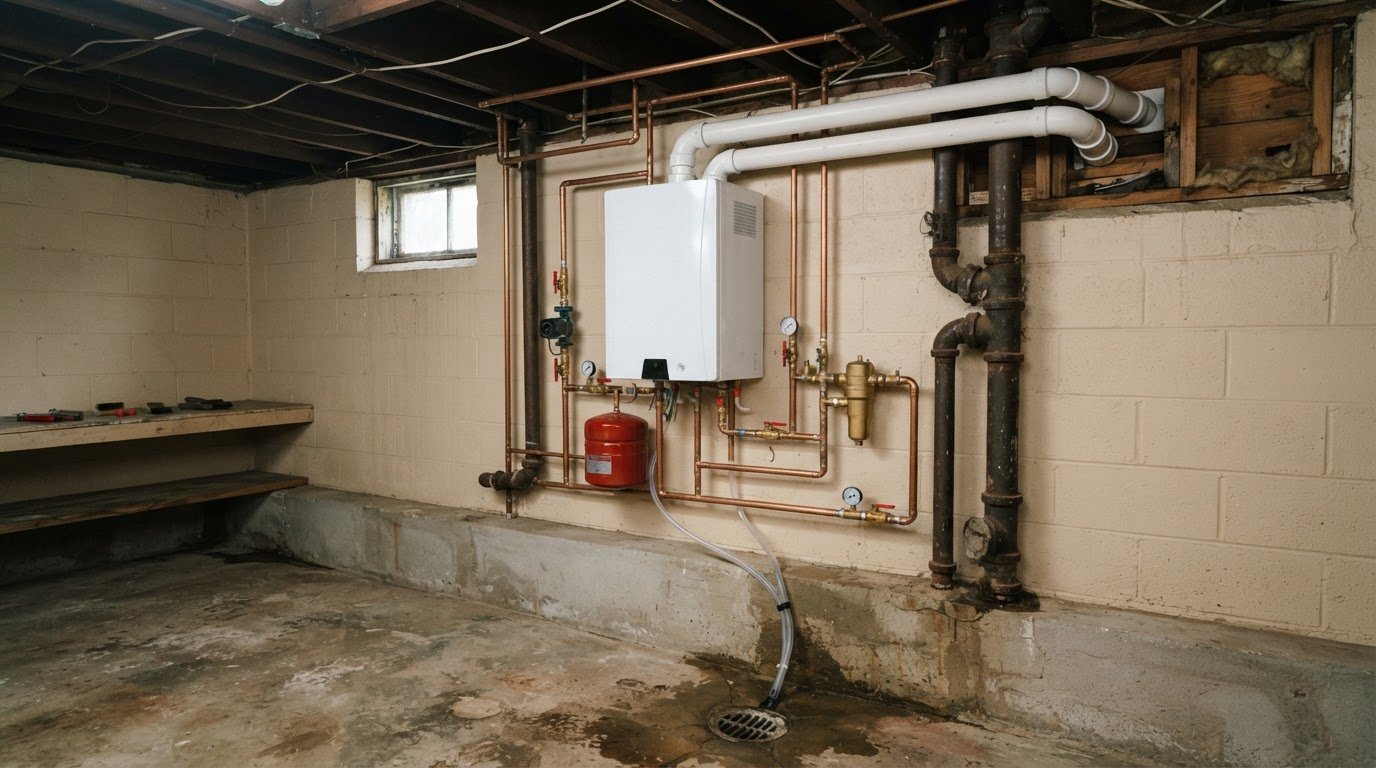
The boiler installation cost in Racine, WI, depends on the equipment and the work involved; on the market, installation typically falls between $5,000 and $5,600. A standard installation typically takes 6 to 10 hours, while a boiler replacement in Racine typically takes one to three days.
The difference often comes down to what needs to change. Replacing a similar boiler may be more straightforward than adapting piping, venting, or controls for a different system. The boiler itself is only part of the total, and the condition and layout of the existing setup affect the labor involved.
If you’re planning a replacement, it helps to understand which project details can affect the estimate and schedule. This article explains how boiler type and efficiency, equipment, labor, removal, and system changes factor into the overall cost. It also covers what happens during installation and why a straightforward replacement may take less time than a project involving extra modifications. Knowing these factors can help you understand a boiler installation estimate for your home.
Key Takeaways
- Installation time depends on whether the project is a straightforward replacement or needs changes to the existing system, with inspections also affecting the schedule.
- Replacing a boiler with a similar model may involve less work than adding a system where none existed before.
- Equipment type, efficiency, removal, piping, venting, and other system modifications can all influence the final estimate.
- Separating equipment costs from labor helps clarify what an installation estimate covers and why project requirements matter.
How long does a typical boiler installation take?
A typical boiler installation takes 6 to 10 hours. A boiler replacement in Racine typically takes one to three days. The difference depends on the project scope: a direct replacement may be simpler than changing connections, adapting the heating system, or addressing installation complications.
The work includes removing old equipment, positioning and connecting the new boiler, and testing its components. Technicians also assess electrical connections, venting, and how the boiler serves radiators or other heating equipment. A changed layout or additional work can extend the schedule. Testing helps confirm the system operates as intended and supports comfort when heating demand rises.
Boiler installations in Racine require a local building-code inspection and sign-off. These steps add to the project timeline alongside installation and testing. Removing an old boiler also takes time, especially when the unit or nearby connections are difficult to access. Treating removal, installation, and inspection as connected stages gives homeowners a clearer picture of the schedule.
Local permit requirements and inspections can affect a project’s timing. In Racine, the building-code inspection and sign-off are important schedule considerations. The project plan needs to allow time for the work and its review, rather than treating equipment installation as the only stage. The replacement scope and any system changes also affect coordination.
Wisconsin rebates and incentives depend on program eligibility and the equipment selected. An energy-efficiency rating alone doesn’t establish that a boiler qualifies. Review current program criteria before choosing equipment, and compare the manufacturer’s specifications with those requirements. This keeps incentive planning separate from installation timing and helps avoid assumptions when selecting equipment.
For a useful timeline, account for installation, changes to electrical connections or radiators, old boiler removal, and Racine’s inspection and sign-off. A straightforward replacement involves fewer stages than a project requiring system changes. The manufacturer’s installation requirements also guide setup and testing, which technicians complete before the boiler is ready for regular use.
Boiler installation and replacement in Racine, WI
Replacing a boiler involves more than selecting equipment. The existing heating components, fuel type, and project scope shape the work and schedule.
Boiler Replacement Considerations
Boiler replacement means removing an existing unit and installing equipment suited to the home’s heating system. For a gas boiler installation, technicians account for the gas connection, venting, electrical setup, and existing radiators. Replacing a similar model can cost less than installing a boiler where none existed before. Efficiency also matters: older atmospheric boilers often operate at roughly 50% to 70% efficiency, while modern ENERGY STAR® certified boilers can reach 95% AFUE.
Replacement Versus Repair
Repair restores a faulty component, while replacement installs a new boiler and may address broader system needs. The decision depends on the boiler’s age, condition, heating performance, and the scope of needed repairs. Boilers typically last 15 to 25 years with proper maintenance. If recurring issues affect an aging system, comparing repair needs with replacement needs can help clarify which option better supports dependable heating.
Comparing Installation Costs
Boiler, furnace, and heat pump installations involve different equipment and work, so their costs aren’t directly comparable. A boiler project may involve radiators and existing piping, while furnace or heat pump work follows different system requirements. The price depends on the project and is provided in a quote; factors include equipment, labor, removal, and required system changes. This comparison helps clarify the project scope, not just the equipment choice.
Warranties and Financing Options
Warranty terms describe coverage for equipment or installation, while financing helps spread project payments over time. Terms vary, so the written warranty should state what it covers and for how long. Peters Heating & Cooling offers financing options. Considering both can help Racine homeowners understand the overall commitment alongside equipment selection, labor, and planned upgrades.
Factors affecting boiler installation costs
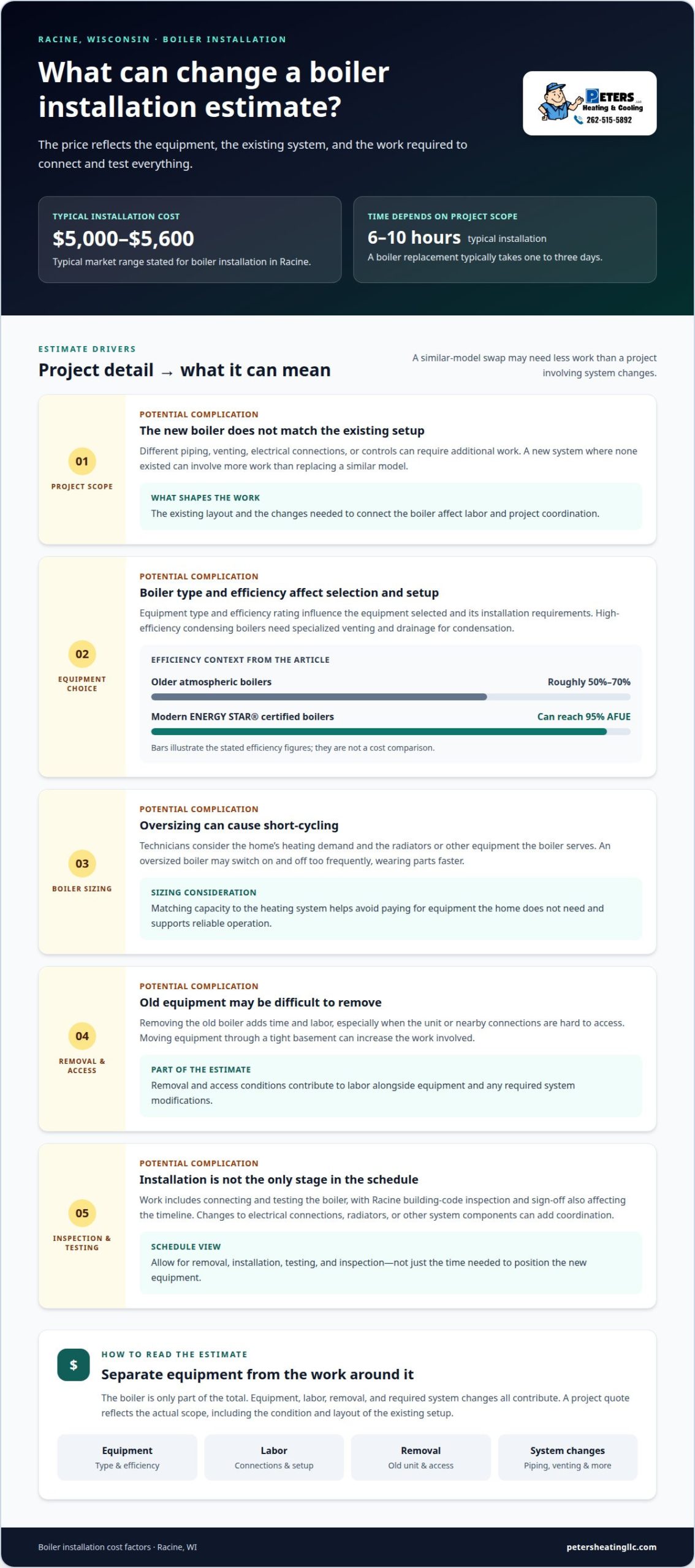
The final estimate reflects the boiler, the home’s existing heating system, and the work needed to connect them. A similar replacement may require fewer modifications than a new installation. Existing piping, venting, electrical connections, and access to the boiler all affect labor. For example, a new unit that needs different venting may require additional work.
Boiler size matters too. Technicians consider the home’s heating demand and the radiators or other equipment the boiler serves. An oversized boiler can short-cycle, switching on and off too frequently and wearing parts faster. Matching capacity to the system helps avoid paying for equipment the home doesn’t need and supports reliable operation.
- Equipment and efficiency: Boiler type and efficiency rating influence equipment selection and the installation requirements.
- System changes: Replacing piping, adding zone controls, or updating radiators adds work beyond a direct swap.
- Removal and access: Taking out an old unit and moving equipment through a tight basement can increase labor.
High-efficiency condensing boilers need specialized venting and drainage for the condensation they produce. Installing one can be more involved than connecting a boiler to compatible existing components. Boilers can also serve radiant floor heating, baseboard heating, or forced-air systems, and each setup affects the connections and labor required.
Installation quality matters beyond the initial estimate. Poor boiler installation can reduce efficiency by 25%, making correct sizing and careful setup important for ongoing energy use. Homeowners can also consider the equipment’s warranty terms when comparing options. The rating describes efficiency, while warranty terms explain the coverage that comes with the equipment.
For homeowners comparing boiler installation cost in Racine, WI, the most useful estimate separates the boiler from removal, labor, and system changes. Boiler installation cost in Racine, WI, also depends on whether compatible piping and controls can stay in place or whether venting or radiators need updates. These project conditions, rather than boiler size alone, determine the work involved.
Boiler equipment and installation labor costs
On the market, boiler installation in Racine typically falls between $5,000 and $5,600. That range is a market estimate, not a project-specific quote. The installed total combines equipment with labor and any work needed to connect the boiler to the home’s heating system.
The equipment portion depends on the boiler type, fuel, capacity, and efficiency rating. A gas, oil, electric, or propane model has no single universal installed cost. Fuel type alone doesn’t determine the total; existing connections, venting, electrical work, and system changes also shape the project. A higher-efficiency model may need different installation components than a standard model.
Labor reflects the tasks involved, not simply the time spent positioning the unit. A technician may need to remove old equipment, adapt connections, install compatible venting, and test system operation. For example, replacing a boiler while retaining suitable piping involves different work from changing the system layout. Electrical modifications can add another installation task.
A useful estimate separates the main parts of the work, so homeowners can see what drives the total:
- Equipment: Boiler type, capacity, and efficiency rating.
- Installation labor: Positioning, connections, setup, and testing.
- Project changes: Removal, electrical work, venting, or piping adjustments.
Ask for an estimate that describes the equipment model and included labor. This makes it easier to understand whether two proposals cover the same work. A consultation can also clarify how your home’s current system affects equipment selection, without treating the boiler’s purchase price as the full installation cost.
For a Racine installation, compare the scope, not just the equipment line. The work should account for the selected model and its connection requirements. Peters Heating & Cooling assesses boiler installation needs and explains the work involved, helping you understand the estimate before moving ahead.
A typical boiler installation in Racine is estimated at $5,000-$5,600 overall. Gas, oil, electric, and propane boilers have no fixed type-specific installed price; the total depends on the equipment and the connections, venting, electrical work, or system changes required.
Peters Heating & Cooling: Furnace Installation
Peters Heating & Cooling installs furnaces for homeowners considering a different type of heating system. If you’re weighing a boiler replacement against a furnace, the right fit depends on your home’s existing setup, heating needs, and the work each system requires. Furnace installation is an option when you’re planning to move from boiler-based heating to a furnace system.
For an existing furnace, repair may address a specific fault, while replacement involves installing new equipment. Peters Heating & Cooling also provides furnace repair, air conditioning installation, and air conditioning repair. These services address distinct heating and cooling needs, so the next step depends on which system you want serviced.
Contact Peters Heating & Cooling to discuss furnace installation for your home.
Make a Clear Plan for Your Home’s Heating
Before choosing a system, consider how you want your home to feel through Racine’s heating season. A boiler replacement can also be an opportunity to reconsider whether your current setup still suits your household and comfort priorities. Boiler installation cost in Racine, WI, is most useful as a planning guide when paired with a clear description of the work your home needs.
Bring your questions about the existing system, replacement options, and installation scope to the conversation. Peters Heating & Cooling can help homeowners consider boiler installation or, when a different heating approach makes sense, furnace installation. The right direction starts with the home’s needs, not pressure to choose a larger project.
Contact Peters Heating & Cooling to discuss your heating plans and take a considered next step toward a more comfortable home.
Frequently Asked Questions
How do I know if I need to replace my boiler or just repair it?
Consider replacement when the boiler’s age, condition, efficiency, and repair history suggest broader concerns rather than one isolated fault. A single repair may make sense for a specific malfunction, while repeated issues can make a full system assessment more useful. For example, a Racine homeowner can discuss the boiler’s symptoms and past repairs with a technician to weigh repair against replacement.
How long do boilers typically last?
Boilers typically last 15 to 25 years with proper maintenance. The actual lifespan depends on the unit’s condition and how well it has been maintained. As a boiler ages, homeowners can pay attention to changes in heating performance and recurring repair needs. Those details help put the boiler’s age in context rather than treating a particular birthday as an automatic replacement deadline.
How much is a boiler for a 2000 sq ft house?
A home’s floor area alone can’t determine the price of a boiler or the complete installation. The estimate also depends on the home’s heating demand, the boiler type and capacity, and how it connects to existing equipment. For a 2,000-square-foot home, the system layout and required work matter alongside square footage. A project quote should reflect the selected equipment and installation scope.
Is It Worth Upgrading Your Boiler?
An upgrade can be worth considering if the existing boiler’s efficiency, condition, or repair history no longer suits the home. Modern ENERGY STAR® certified boilers can reach efficiency ratings as high as 95% AFUE. That rating can help homeowners compare equipment, but the right choice also depends on system compatibility and the work needed for installation. An upgrade isn’t automatically the best option for every home.
What is the expected lifespan of a new boiler?
A new boiler can typically last 15 to 25 years with proper maintenance. Its eventual lifespan depends on its condition over time and the care it receives. Keep records of service and repairs, since those details can help show how the system is holding up. If performance changes as the boiler ages, its history can help inform a repair or replacement decision.
Will a new boiler really lower my heating bills?
A new boiler may use energy more efficiently than an older unit, particularly when replacing an older atmospheric boiler that operates at roughly 50% to 70% efficiency. Modern ENERGY STAR® certified boilers can reach ratings as high as 95% AFUE. Actual energy use also depends on the home’s heating demand and system setup, so an efficiency rating alone can’t predict a household’s bill.