
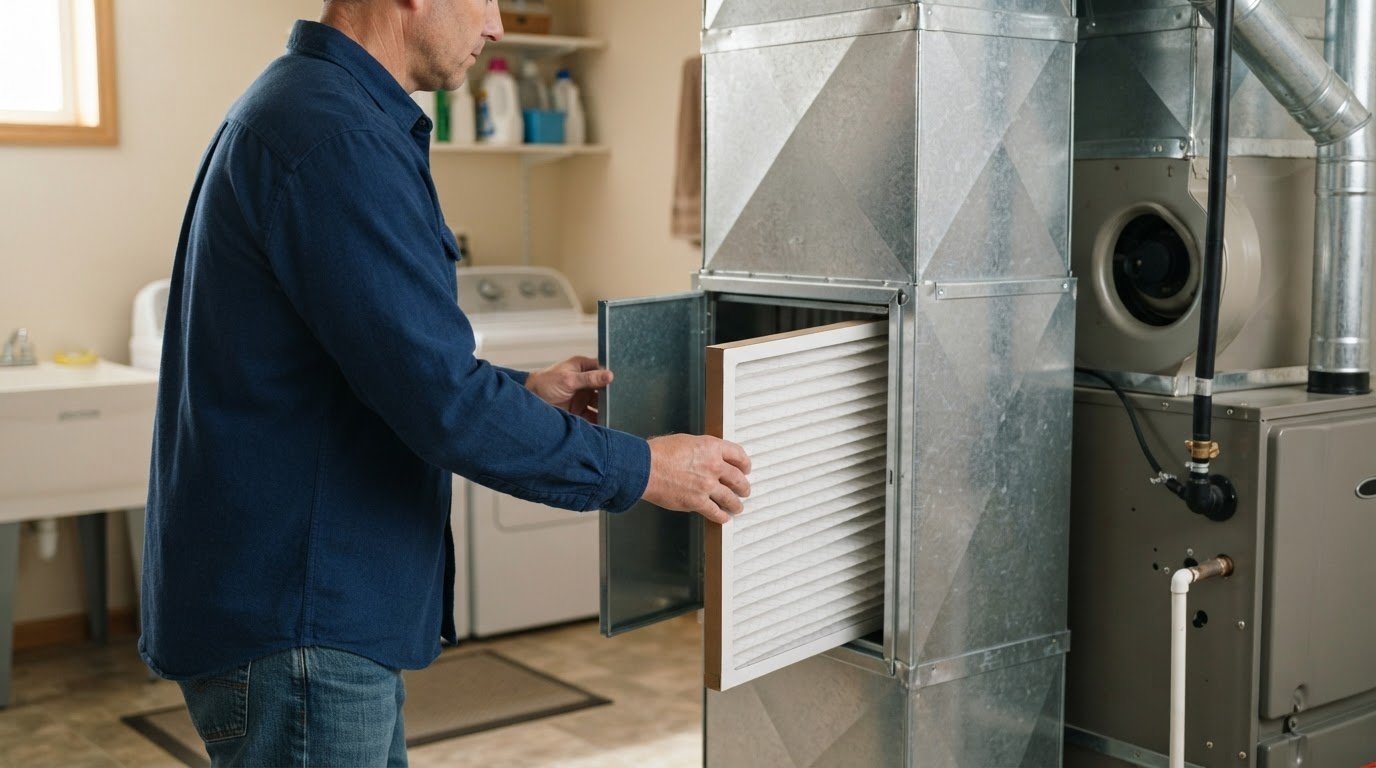
Cleaner indoor air starts with choosing a purifier that fits your home and HVAC system. The cost of whole-house air purifier installation in Kenosha, WI depends on the equipment and the installation work your system needs, with pricing provided after a quote request. A whole-house unit is installed in the HVAC system, where it treats air as it circulates.
Dust, pollen, and other airborne particles can be frustrating, especially when they keep returning. An air purifier can filter particles such as dust and pollen, but the right option depends on your concerns, your home, and how your heating and cooling system is configured.
This article explains what affects installation cost, where a purifier fits in your HVAC system, and how it may help reduce airborne dust, pollen, and allergens. You’ll also learn when a whole-house system may make sense and what to consider before choosing one.
Key Takeaways
- Consider your indoor air concerns and HVAC setup to judge whether a whole-home purifier may suit your needs.
- Learn where a purifier fits in the heating and cooling system and how placement affects air treatment.
- Understand how filtration can help capture dust and pollen, and what that may mean for allergens at home.
- See which installation factors shape the work and when local air-quality service may be a practical next step.
Are HVAC Air Purifiers Worth the Cost?
For Kenosha homeowners, value depends on which airborne particles concern you and how your HVAC system operates. A whole-home purifier treats circulating air, while portable units focus on individual rooms.
Whole-Home and Portable Purifier Comparison
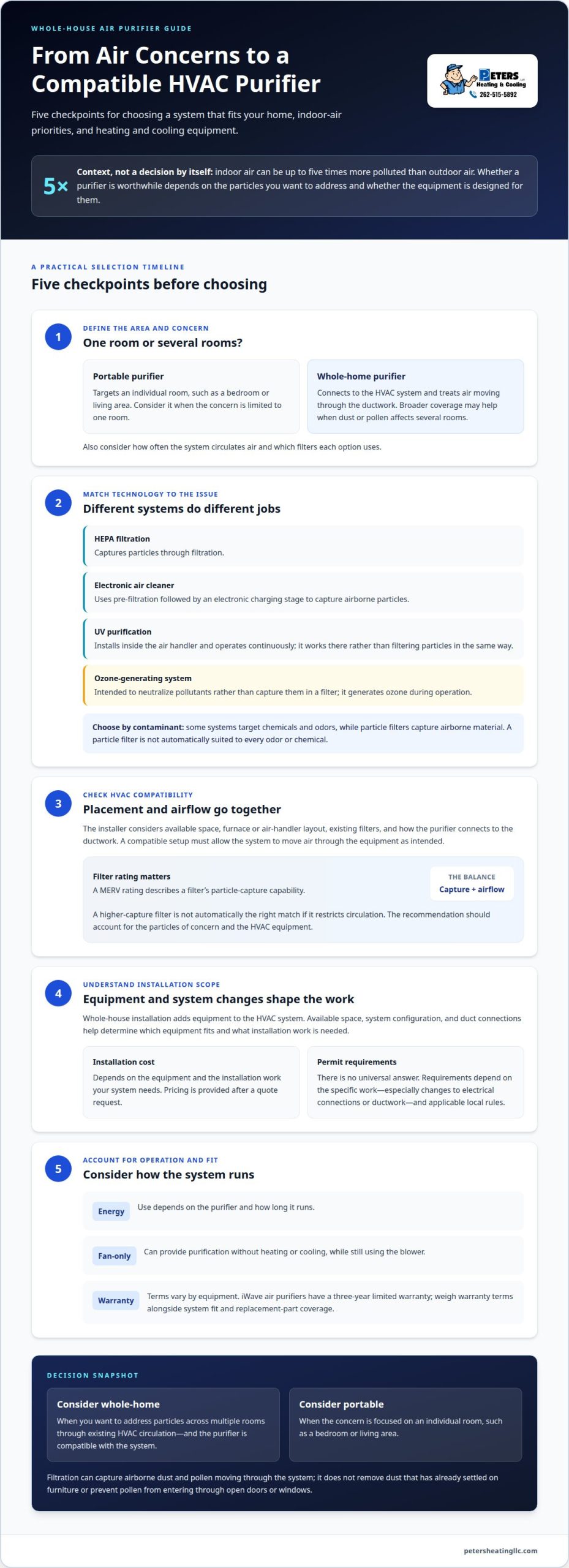
A portable purifier can target a bedroom or living area, making it suitable when the concern is limited to one room. A whole-home unit connects to the HVAC system and treats air as it moves through the ductwork. That broader coverage may help when dust or pollen affects several rooms. Compare the areas you want to address, how often the system circulates air, and the filters each option uses.
Indoor air can be up to five times more polluted than outdoor air. That figure alone doesn’t determine whether a purifier is worthwhile. The practical question is whether the particles you want to reduce circulate through your home and whether the chosen equipment is designed to address them.
HVAC Integration and Installation
Whole-home purifier installation adds equipment to the HVAC system to treat air moving through the home. The installer considers available space, system configuration, and how the purifier connects to existing ductwork. These details help determine which equipment fits and whether the system can move air through it as intended.
Airflow matters. Filters can create resistance, so equipment must suit the heating and cooling system. A poorly matched setup can affect circulation; a compatible installation supports cleaner air while accounting for how the HVAC system operates.
Do Kenosha or Wisconsin rules require a permit? There isn’t one universal permit answer for purifier installation. The scope matters, especially if the work changes electrical connections or ductwork, so requirements depend on the specific installation and applicable local rules.
What about energy use and airflow? Energy use depends on the purifier and how long it runs. HVAC-connected units treat air as the system circulates it. Fan-only operation can provide purification without heating or cooling, while still using the blower.
A whole-home system may be worth considering when you want to address particles across multiple rooms through existing HVAC circulation. A portable unit may be a better fit for a single-room concern. The right choice depends on the area you want treated, the filters involved, and compatibility with your heating and cooling equipment.
Whole-house purifier placement in HVAC systems
A whole-house purifier connects to the HVAC system and treats air as it circulates. Placement depends on the equipment type and the furnace or air-handler layout. UV purification systems install inside the air handler and operate continuously. This placement lets the device work with system airflow instead of treating only one room.
HEPA filters capture particles through filtration. Electronic air cleaners use pre-filtration followed by an electronic charging stage to capture airborne particles. UV systems work inside the air handler rather than filtering particles in the same way. The best type depends on whether your main concern is particles, odors, or another indoor-air issue.
Ozone-generating systems are intended to neutralize pollutants rather than capture them in a filter. Their tradeoff is that they generate ozone during operation. This differs from particle filtration, which traps particles in a filter. Consider the technology’s purpose and how it fits your household’s air-quality priorities.
For Kenosha homes, dust and pollen can help guide filtration choices. A MERV rating describes a filter’s particle-capture capability, but the rating must also suit the HVAC system’s airflow. A higher-capture filter isn’t automatically the right match if it restricts circulation. Recommendations should account for the contaminants of concern and the furnace or air handler.
A tailored recommendation considers the HVAC layout, existing filters, and household priorities. A residential system should fit the equipment and the home’s air-treatment goals. Whole-home purification treats circulating air through connected ductwork, so compatibility is central to choosing a system.
Warranty terms vary by equipment. iWave air purifiers have a three-year limited warranty, which homeowners can weigh alongside system fit and replacement-part coverage. Choosing a technology and placement suited to the home helps make indoor-air improvements practical.
Dust, pollen, and allergen reduction
Whole-home filtration treats particles carried through the HVAC system. What it captures depends on the device’s filter and how air moves through the home.
Dust and Pollen Reduction
Dust from floors and pollen brought in through doors can become airborne. As the HVAC system circulates indoor air, a compatible purifier can capture some particles in its filter. This may reduce airborne dust and pollen moving through connected rooms, but it won’t remove dust that has already settled on shelves or furniture.
For example, pollen tracked inside on clothing may later circulate through the home. Filtration targets particles moving with the air, while routine cleaning addresses settled dust. The filter’s rating and the system’s ability to move air through it both matter. A filter that doesn’t suit the equipment can interfere with airflow.
Allergen and Pollutant Removal
Allergens include airborne particles such as pollen and dust. A whole-home purifier can capture these as air passes through its filtration system, helping reduce particles circulating around the house. This may support more comfortable indoor air for people concerned about seasonal allergies, but it won’t prevent pollen from entering through open windows or doors.
Air purification systems can also address pollutants beyond visible dust. Some systems target chemicals and odors, while particle filters capture airborne material. The type of contaminant matters: a filter designed for particles isn’t automatically suited to every odor or chemical. Matching the technology to the concern is a practical first step.
To assess the issue, consider where symptoms or visible dust occur. If pollen is most noticeable in bedrooms, note whether the HVAC system supplies those rooms. If dust returns soon after cleaning, consider whether particles are circulating through shared ductwork. These observations can help distinguish an indoor-air concern from a need for more frequent surface cleaning.
Air conditioning may circulate indoor air even when cooling demand is low, depending on how the system operates. A purifier works as air passes through its treatment area. Maintain filters according to their type, since accumulated material can affect filtration and airflow. Clean surfaces and a well-maintained HVAC system address different parts of the same indoor-air concern.
Air quality service in Kenosha and Racine
Indoor-air concerns vary from one Kenosha or Racine home to another. You may notice recurring dust, seasonal pollen, or odors that linger after cleaning. These signs help clarify what an air-purification system should address. Start with the concern, then consider how air moves through your home’s heating and cooling equipment.
Whole-house air purifier installation in Kenosha, WI starts with understanding your existing HVAC setup. A technician considers the furnace or air handler, duct connections, available space, and the air-quality concern. A home with issues across several rooms, for example, may need a different approach from one with a concern isolated to a single room.
Equipment should match the issue. Particle filtration can address airborne dust and pollen, while odors or chemicals may call for another technology. The filter must also suit the system’s airflow. For whole-house air purifier installation in Kenosha, WI, these factors help shape a recommendation for your home rather than a one-size-fits-all choice.
Repair needs can affect the next step. If a furnace or air-conditioning system isn’t circulating air properly, that issue may need attention before adding equipment that relies on airflow. For instance, uneven circulation in a room could point to an HVAC concern to address alongside air purification.
Before an assessment, note where the issue occurs, when it’s most noticeable, and whether it affects one room or several. Seasonal pollen near bedrooms, for example, provides useful context. These details help connect the system recommendation to your household’s concerns and the way your HVAC equipment operates.
For a Kenosha or Racine home with persistent indoor air concerns, discuss whole-home air purifier options as part of an HVAC assessment. Peters Heating & Cooling can help you consider a suitable next step for fresher air throughout connected rooms.
Peters Heating & Cooling: Air Purifiers
Peters Heating & Cooling offers air purifiers for homeowners considering a whole-home approach to indoor air. If dust, pollen, or other airborne particles concern you, the next step is to match an air purifier to your home’s HVAC setup and the issue you want to address.
A furnace or air-conditioning problem can also affect how air circulates. Peters Heating & Cooling provides furnace and air-conditioning repair, along with furnace installation, when your HVAC equipment needs attention. Addressing the system’s condition helps ensure an air-purifier recommendation reflects how your home actually operates.
Share what you’ve noticed, such as recurring dust or pollen concerns across several rooms. Peters Heating & Cooling can help you consider air-purifier options alongside your heating and cooling needs. Contact Peters Heating & Cooling to discuss air purifiers for your home.
Plan Your Next Step With Confidence
Use your air-quality concerns to shape a practical plan instead of choosing equipment by name alone. Note whether your priority is airborne particles, odors, or broader coverage, and consider how the HVAC system serves the rooms you use most. These details help focus the conversation on a solution suited to your home and daily needs.
For whole-house air purifier installation in Kenosha, WI, the price depends on the purifier selected, HVAC configuration, and installation work. Pricing is provided after a quote request. A clear discussion of your priorities and system setup can help you understand the proposed work before deciding how to proceed.
If you’re ready to talk through your home’s air-quality needs, contact Peters Heating & Cooling. A thoughtful next step can make choosing an air-purification approach feel straightforward.
Frequently Asked Questions
What are the best whole-house air purifier systems for homes in Kenosha, WI?
The best fit depends on the air-quality concern and your home’s HVAC setup. A household focused on airborne particles, for example, may prioritize particle filtration, while concerns about odors call for a system suited to that issue. Consider whole-home coverage, filter care, and compatibility with your furnace or air handler. A system assessment can help narrow the options for a Kenosha home.
How do I choose the right whole-house air purifier for my HVAC system size?
Choose a purifier designed to work with your specific HVAC equipment, not just your home’s square footage. The furnace or air handler, duct layout, and airflow all affect compatibility. A filter that adds too much resistance, for example, can interfere with air circulation. An HVAC assessment can evaluate these factors and help match equipment to your system’s capacity and your home’s air-treatment goals.
What is the whole-house air purifier installation process, and how long does it take?
Installation generally starts with assessing the HVAC equipment and selecting a suitable connection point. The installer then fits the purifier into the system and checks how it operates with the heating or cooling equipment. The time required depends on access, system layout, and whether duct or electrical adjustments are needed. A straightforward connection involves different work from a setup requiring changes to existing equipment.
Kenosha WI indoor air quality concerns and recommended filtration ratings
For Kenosha homes, dust and pollen can guide filtration choices, and filters can capture airborne particles such as these. Choose a MERV rating suited to your HVAC system’s airflow; a higher-capture filter may restrict circulation if it isn’t compatible.