
The final bill depends less on the word “service” than on what the technician finds. Air conditioning service cost varies with your system, the condition of its components, and whether the visit involves routine maintenance or a repair.
It’s reasonable to want a clear picture of the work before approving it. A routine visit may include an inspection, cleaning, and checks of system operation. If the technician finds a problem, diagnosis, replacement parts, or extra labor can expand the scope of work.
The price depends on the system and the work required, and is provided after a quote request. Key factors include system type, parts, and labor. This article explains what an air conditioning service typically involves, which issues can add work or charges, and how maintenance plans compare with one-time visits. You’ll get a clearer idea of what the service covers and why the final price can vary.
Key Takeaways
- Separate routine maintenance from repairs when considering a service estimate; the work required is a major factor in the final charge.
- Learn what a typical service visit may cover, from system inspection to checking how components operate.
- Spot charges that can add to a visit, such as diagnostic work, replacement parts, or additional labor.
- Compare what a maintenance plan covers with what you may need from a one-time visit to choose the option that fits your system.
HVAC Maintenance Cost Factors: What Affects the Price?
Service charges depend on the system type, the work identified, and the time required. Routine maintenance and component repairs involve different tasks, so the estimate reflects the diagnosis and scope of work.
Technician Labor and Inspection Costs
Labor and inspection charges cover the technician’s time diagnosing and servicing the AC. The time needed matters: a straightforward thermostat issue differs from tracing an intermittent shutdown.
Homeowners commonly schedule AC maintenance once a year, often before cooling season. A system that blows warm air, leaks, or repeatedly shuts off needs a repair diagnosis, not just routine maintenance. For example, a technician investigating warm airflow may need to assess how the system is operating before recommending work.
Component and System Type Costs
Repair work varies by component, while maintenance tasks depend on the equipment. This helps explain why estimates differ between homes in Kenosha, Racine, Oak Creek, and Winthrop Harbor.
A thermostat or capacitor fault calls for different work than a compressor or evaporator coil problem. A refrigerant concern may require finding a leak before addressing the charge. Central AC, mini-split, and packaged systems also have different layouts and components, which affect inspection and repair scope.
Seasonal Repair Cost Changes
Seasonal demand can affect appointment timing and how quickly a technician can assess a failure. That matters when an AC stops cooling during hot weather.
An inspection before cooling season may identify wear before the system is in regular use. During peak demand, a failed fan motor can leave a home without cooling and make the repair more urgent. The season does not change which part failed, but it can affect scheduling and how urgently service is needed.
Maintenance Plans and One-Time Service
A maintenance plan arranges scheduled system care, while a one-time visit addresses a specific concern. The better fit depends on whether you want recurring inspections or need a diagnosis for a current problem.
Plan terms define scheduled visits and included tasks; repairs or parts may be separate. Homeowners insurance and home warranties follow their policy or contract terms. Coverage depends on the cause of the failure, exclusions, and whether labor or parts are covered. For example, a failed thermostat may be treated differently from damage caused by another event.
What an air conditioning service includes
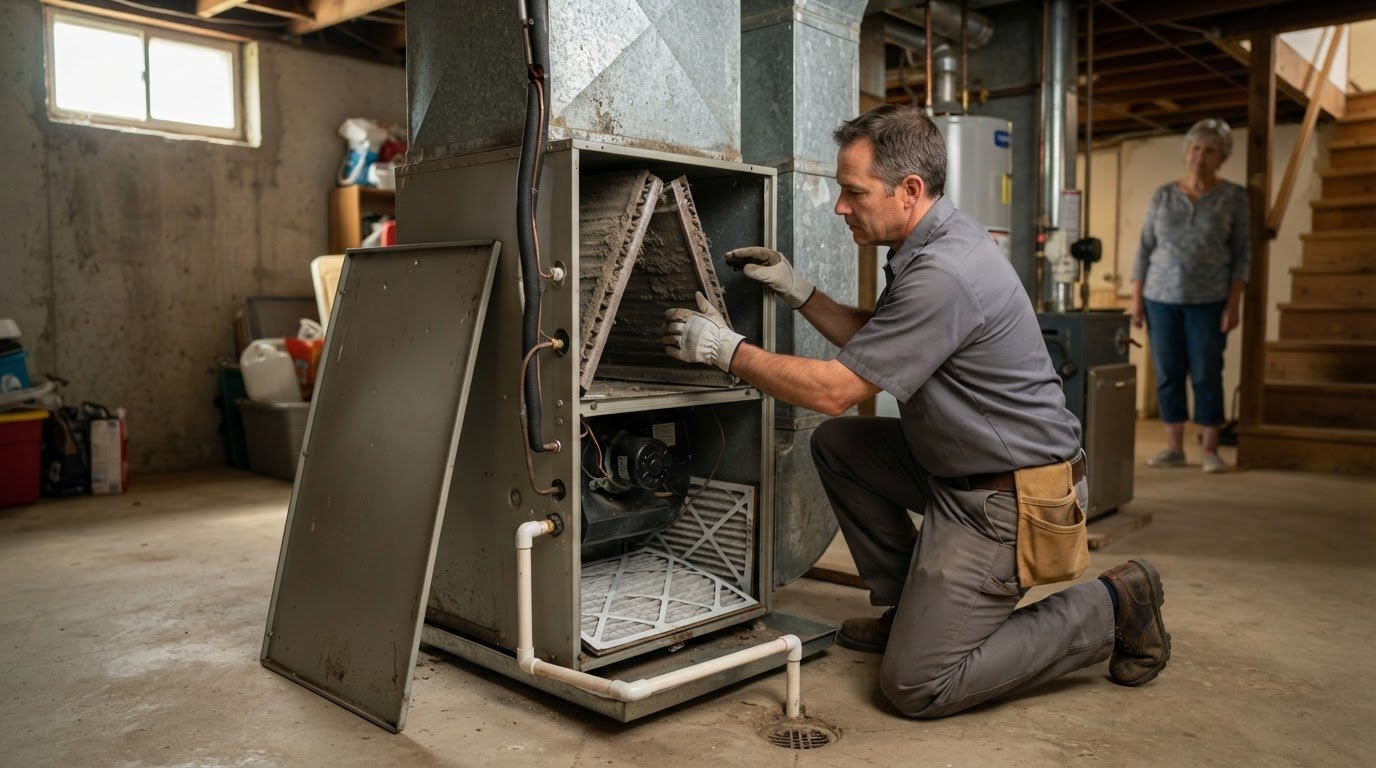
A standard air conditioning service combines inspection, cleaning, and operating checks. The technician reviews the system’s condition, notes visible concerns, and explains whether routine care or repair is needed. The exact work depends on the equipment and reason for the visit. A scheduled tune-up and a visit for weak cooling may therefore involve different checks.
For a central AC system, the technician may inspect the air filter, thermostat, indoor and outdoor components, and condensate drain. A clogged filter can restrict airflow, while a blocked drain can interfere with condensate removal. The technician may clean accessible components and check airflow and system operation. Air filters should be replaced at least six times a year.
Cleaning and inspection are not the same as repair. If a check reveals a worn electrical component, damaged wiring, or a refrigerant concern, the technician can explain the finding and the repair it may require. Refrigerant issues call for diagnosis, not simply adding refrigerant; the system’s operating problem needs to be understood first. A repair estimate should distinguish diagnostic work, parts, and labor from routine maintenance.
Before work begins, the technician can explain which checks are included in the visit and which findings would require additional work. That distinction helps you understand what the service covers and why a repair may expand the scope. If cooling remains uneven after cleaning and inspection, airflow, thermostat operation, or a component fault may need further diagnosis. A written explanation of the findings also gives you a clear basis for deciding what happens next.
For a clear assessment of an AC problem, consider professional air conditioning service. A technician can assess the system, explain the work needed, and separate routine maintenance from repair recommendations.
Additional and hidden charges
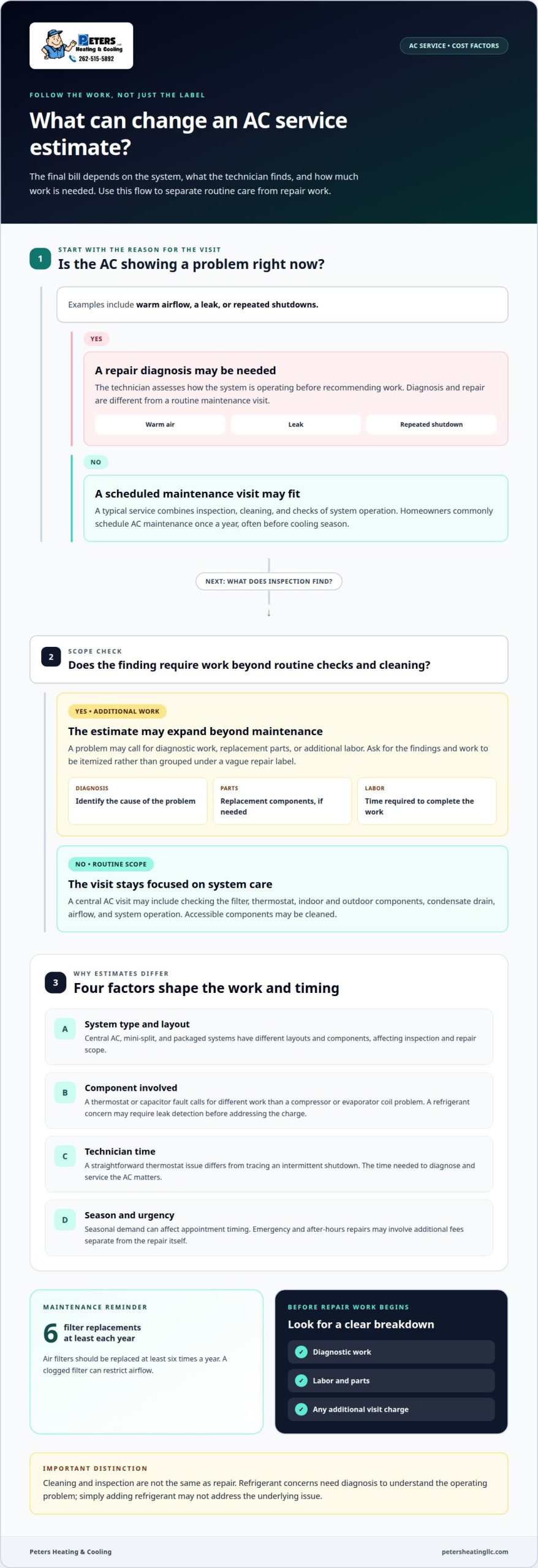
A service estimate can include more than the repair itself. Diagnostic work, a separate service-call fee, replacement parts, and labor may appear as distinct items. Air conditioning service cost can rise if diagnosis reveals another fault or the work extends beyond the original visit. An itemized estimate makes the reason for each charge easier to understand.
Diagnosis matters when an AC is not cooling properly. A refrigerant concern, for example, may require leak detection and repair before recharging the system. Adding refrigerant alone may not address the underlying issue. If an evaporator coil needs replacement, that is a separate repair from routine cleaning or inspection, with its own parts and labor.
Timing can affect the bill, too. Emergency and after-hours AC repairs may involve additional fees. These charges are separate from the cost of repairing a failed part. A visit during regular hours and an urgent visit can therefore have different line items, even when the reported symptom is similar.
Ask for an itemized estimate before repairs begin. It should distinguish diagnosis, labor, parts, and any additional visit charge. If the technician finds a failed capacitor and a refrigerant leak, for example, the estimate should explain both findings rather than group them under a vague repair label. That breakdown helps you see which work addresses the immediate problem.
Warranty terms can also affect what you pay directly. HVAC manufacturer warranties typically do not cover labor costs, which homeowners pay for on an hourly basis. A covered part may therefore still leave labor as a separate expense. Review the warranty terms alongside the repair estimate, especially when a replacement component is involved.
How do AC maintenance plan prices compare with one-time service costs?
An AC maintenance plan is a recurring agreement for scheduled system care. A one-time service visit addresses a specific need, such as an inspection or a reported cooling problem. The difference is how work is arranged and covered, not simply how often you pay.
Plan terms determine which visits and tasks are included. One agreement might cover a seasonal inspection, while another may specify different maintenance tasks. Review the written scope, visit schedule, renewal terms, and exclusions. For example, a plan focused on inspection may not include a repair if the technician finds a failed component.
A one-time visit can suit a homeowner who needs a single assessment or has an immediate concern. It lets the technician focus on that issue without committing to recurring maintenance. If the system needs several repairs over time, separate visits can add up, but a plan helps only if its scheduled work matches your needs.
Compare the options by listing the work your system needs, then matching it against the plan’s actual coverage. Consider the system’s age, recent breakdowns, and whether scheduled upkeep matters to you. A newer system with no current symptoms may call for a different decision than an older unit that has needed repeated attention. Neither option replaces repair work required after a fault appears.
The price depends on the system, inspection scope, and any repairs or parts needed, and is provided after a quote request. Ask for a clear description of included visits and tasks, along with any work billed separately. This makes it easier to compare a recurring agreement with a one-time service on equal terms.
For scheduled system care, schedule HVAC preventative maintenance to discuss the work your AC needs.
Peters Heating & Cooling
Peters Heating & Cooling helps homeowners understand the work behind an air conditioning service estimate. When a system needs attention, its technicians assess the issue, explain the recommended work, and distinguish routine maintenance from a repair or installation need. The scope depends on the system’s condition, the fault, and any parts or labor involved.
A clear breakdown helps you understand what affects the total and which work addresses the problem. If your AC isn’t cooling properly, makes unusual noises, or has stopped working, professional diagnosis can identify the next step. Peters Heating & Cooling provides air conditioning repair and installation, with recommendations focused on your system’s needs.
For help understanding what your system needs, contact Peters Heating & Cooling.
Make your next service decision with confidence
A useful next step is to describe the problem clearly: what the system is doing, when you first noticed it, and whether it happens constantly or occasionally. Those details help focus the service visit on your concern instead of treating every AC problem the same way. Air conditioning service cost makes more sense when the recommended work is tied to a specific finding and explained in plain language.
For a repair or installation concern, Peters Heating & Cooling can assess the system and explain practical options. You can discuss what the technician found, which work addresses the immediate issue, and what decision comes next. A clear conversation helps you move forward without guessing about your equipment or the scope of work.
Contact Peters Heating & Cooling to talk through your air conditioning needs and decide on a sensible next step.
Frequently Asked Questions
How Can I Avoid Unexpected AC Repair Costs?
Schedule HVAC maintenance twice per year, once before cooling season and once before heating season. Peters Heating & Cooling recommends this schedule to catch developing issues during planned visits. If system performance changes between appointments, arrange an assessment before the problem worsens. Keep service records and warranty information together so the technician can consider previous work and applicable coverage.
How Much Does AC Repair Cost?
There isn’t one fixed repair price because the total depends on the fault, parts, labor, and diagnostic work. A thermostat issue and a compressor problem require different work. Peters Heating & Cooling provides pricing after a quote request, based on the specific repair. Ask for an estimate that separates diagnosis, labor, and parts, so you can understand what the recommended work addresses.
How much does a home or office air con service cost?
The cost depends on the property’s equipment and the service required. A home with central air conditioning may need different work from a small business with another system configuration. Peters Heating & Cooling serves residential and light-commercial HVAC needs in Kenosha, Racine, Oak Creek, and Winthrop Harbor. Pricing depends on the case and is provided after a quote request.
Is an air con service worth it?
Routine service can identify maintenance needs before the next cooling season and give a technician a chance to assess system operation. Peters Heating & Cooling recommends maintenance twice per year, before cooling and heating seasons. It can be especially useful if your system has uneven cooling, unusual operating changes, or a history of breakdowns. Maintenance supports system care, but does not replace repairs when a fault is found.
What affects the cost of an air conditioner service?
The main factors are the system type, the reason for the visit, and the work needed after diagnosis. A maintenance inspection differs from a visit requiring a replacement component or extended repair. Parts and labor also affect the estimate. For example, a system with a control fault calls for different work than one with a damaged coil.
What does an air conditioning unit service include?
A maintenance visit may include a seasonal tune-up, system inspection, filter change, and efficiency check. The technician’s findings determine whether the visit remains routine or reveals a repair need. Peters Heating & Cooling provides these preventative maintenance services for HVAC systems. If an inspection finds a component problem, the technician can explain the issue and the repair required.