
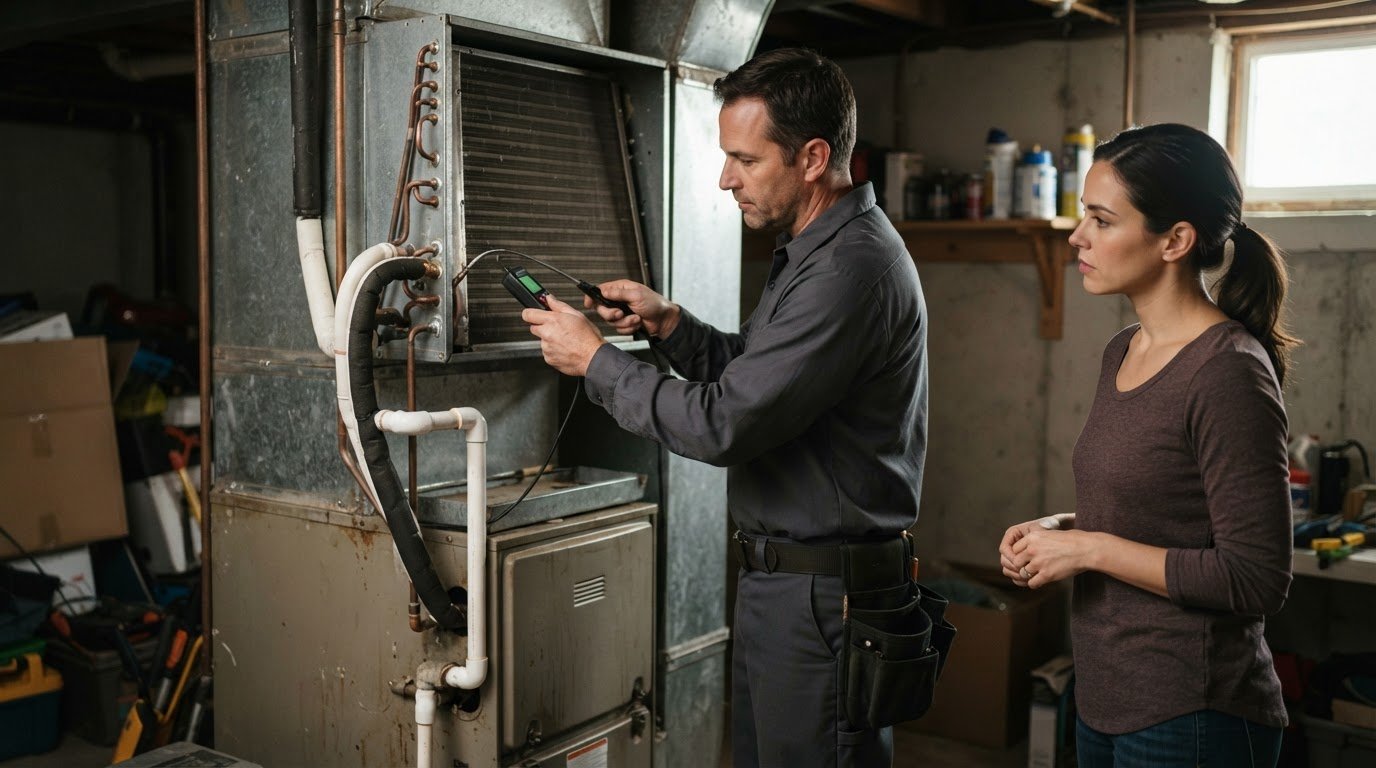
A radiator leak doesn’t automatically mean the entire cooling system needs replacing. Some damage can be repaired, but a leak from the core or a crack in the plastic tank of most modern radiators generally means replacing the radiator itself.
That distinction matters when you’re arranging cooling system repair in Winthrop Harbor, IL. The right recommendation depends on where the coolant is escaping and which part has failed. A professional diagnosis can distinguish a repairable hose, clamp, or thermostat problem from radiator damage that calls for replacement. This guide explains what commonly fails, when radiator repair may be an option, and how professionals assess related parts such as hoses, clamps, and thermostats. It also covers warning signs that need prompt attention, including overheating, which can damage the engine if you keep driving. You’ll get a clearer picture of what to expect before deciding on your next step.
Key Takeaways
- A radiator leak doesn’t always mean the same fix: the damaged area and material help determine whether repair or replacement makes sense.
- Hoses, clamps, and thermostats can each disrupt coolant flow, so identifying the failed part is key to choosing the right repair.
- Water pump and cooling fan problems can contribute to overheating; understanding their role helps make sense of common cooling system failures.
- Learn which warning signs point to a cooling system issue and what a professional diagnosis considers before recommending the next step.
Hoses, clamps, and thermostat replacement
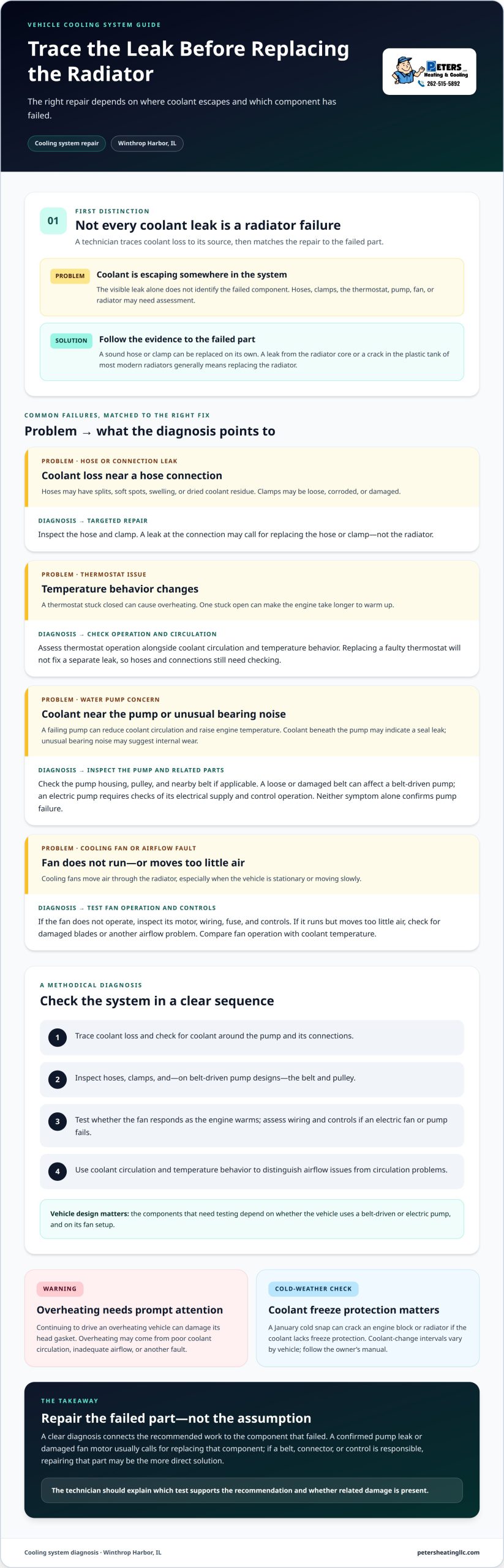
A cooling-system inspection starts by tracing coolant loss to its source. A technician checks radiator hoses for splits, soft spots, swelling, and dried coolant residue. Clamps are examined for looseness, corrosion, or damage that could prevent a tight seal. A leak at a hose connection may call for replacing the hose or clamp rather than the radiator.
The thermostat controls coolant flow between the engine and radiator. If it sticks closed, the engine can overheat; if it sticks open, the engine may take longer to warm up. A technician can assess thermostat operation along with coolant circulation and temperature behavior. Replacing a faulty thermostat won’t fix a separate leak, so the diagnosis should include hoses and connections.
Continuing to drive an overheating vehicle can damage its head gasket. A January cold snap can also crack an engine block or radiator if the coolant lacks freeze protection. Coolant-change intervals vary by vehicle, so follow the owner’s manual. These checks help distinguish an isolated hose failure from a broader cooling-system problem.
For HVAC work, choose a licensed and insured company. Compare air-conditioner repair and replacement by considering the diagnosed fault, equipment condition, expected efficiency, and scope of work, rather than price alone. Permit and code requirements for Illinois AC work depend on the project and local jurisdiction, so identify the applicable requirements before replacement begins.
HVAC warranty coverage depends on the written terms for parts and labor, and a service guarantee should clearly state what it covers. Technician response times depend on scheduling and urgency, so no single arrival window applies to every call. Before recommending AC repair, a technician can inspect thermostat settings, airflow, filters, and system components, then explain how the test results support the proposed fix.
For vehicle repairs, the decision depends on the specific fault: a sound hose or clamp can be replaced on its own, while a cracked plastic radiator tank generally means replacing the radiator. A clear diagnosis ties the recommended work to the failed part.
The U.S. Environmental Protection Agency says to consider replacing heating and cooling equipment that is more than 10 years old with newer, more efficient equipment.
Water pumps and cooling fans
The water pump moves coolant through the engine and radiator. A failing pump can reduce circulation and cause engine temperature to rise. Coolant beneath the pump may indicate a seal leak, while unusual bearing noise can suggest internal wear. Neither symptom alone confirms pump failure; a technician checks the source and how the system is operating.
During diagnosis, the technician inspects the pump housing, pulley, and nearby belt, if applicable. A loose or damaged belt can affect a belt-driven pump, so replacing the pump alone may not address the cause. Some vehicles use an electric pump, which requires checking its electrical supply and control operation. The vehicle’s design determines which components need testing.
Cooling fans move air through the radiator, especially when the vehicle is stationary or moving slowly. If a fan doesn’t operate, the technician can inspect its motor, wiring, fuse, and controls. A fan that runs but moves too little air may have damaged blades or another airflow problem. Checking fan operation alongside coolant temperature helps distinguish fan faults from circulation issues.
Water pump and fan symptoms can overlap. An overheating engine, for example, may result from poor coolant circulation, inadequate airflow, or another fault. A methodical diagnosis follows the evidence:
- Check for coolant traces around the pump and its connections.
- Inspect the belt and pulley on belt-driven pump designs.
- Test whether the fan responds as the engine warms.
- Assess wiring and controls if an electric fan or pump fails.
A confirmed pump leak or damaged fan motor usually calls for replacing the failed component. If a belt, connector, or control is responsible, repairing that part may be the more direct solution. The technician should explain which test supports the recommendation and whether related damage is present. This keeps the repair specific to the vehicle instead of treating every rise in temperature as a pump failure.
Best-rated air conditioning repair companies near Winthrop Harbor IL
Home air-conditioning repair and vehicle cooling-system repair are different services. A household HVAC technician works on equipment that cools indoor spaces. A vehicle technician diagnoses radiators, water pumps, and engine cooling fans. A household AC rating doesn’t show whether a business repairs car radiators. Match the service provider’s work to the equipment that needs attention.
The BBB directory showed 5,824 heating and air conditioning results near Winthrop Harbor, Illinois. That result count covers a broad category, not a ranking of vehicle cooling-system specialists. It also doesn’t establish which household AC company is best rated. Ratings apply to the business and service being reviewed, so consider the type of repair behind each review.
For a household AC problem, look for reviews that describe the same symptom. Feedback about weak airflow speaks to a different issue than a report about a system that won’t start. Consider whether the repair company explains its diagnosis and connects the recommended work to the observed fault. Clear explanations help you understand why a particular repair is proposed.
- Match the provider to the equipment: home AC or vehicle radiator.
- Read reviews for similar problems, such as poor cooling or weak airflow.
- Look for a diagnosis that explains the failed component.
- Assess whether the recommended repair addresses the reported symptom.
For example, a household AC technician may assess indoor airflow and cooling performance. A vehicle cooling-system technician evaluates engine coolant circulation and radiator-related components. Those skills and review histories aren’t interchangeable. Keep the distinction clear before using an online rating to guide a repair decision.
If the problem is a home air conditioner, focus on repair feedback about household systems near Winthrop Harbor. If your vehicle is overheating or leaking coolant, seek automotive cooling-system expertise. Choose a provider whose work and reviews relate directly to the equipment and fault involved.
Common air conditioner problems and repair options
A central air conditioner can fail in several ways. A thermostat issue may prevent the system from starting or cause uneven temperature control. A technician checks the settings, electrical connection, and system response before recommending thermostat repair or replacement. Weak airflow points to other possible causes, such as a clogged filter, blocked return, or blower problem.
Warm air from the vents can also signal trouble with the outdoor unit or refrigerant circuit. The technician checks whether the condenser runs, inspects accessible components, and looks for signs of a refrigerant leak. A refrigerant issue needs a qualified diagnosis, not an assumption based only on warm air. The repair depends on the cause, such as a leak or a component that no longer works correctly.
Water near an indoor unit may indicate a blocked condensate drain or another drainage problem. A technician traces the water’s path and checks the drain and condensate pan. If the air conditioner makes unusual sounds, the source matters: a loose panel is different from a failing motor or another internal fault. Pinpointing the sound helps avoid replacing unrelated parts.
- System won’t start: assess thermostat operation and electrical components.
- Weak airflow: inspect the filter, return path, and blower.
- Warm air: evaluate outdoor-unit operation and refrigerant-circuit symptoms.
- Water or noise: trace drainage or identify the component producing the sound.
Repair makes sense when testing identifies a specific fault and the rest of the equipment works as intended. Repeated breakdowns, poor performance across multiple components, or an older system may make replacement worth discussing. Compare the diagnosed repair with the equipment’s condition and expected efficiency, rather than relying on age alone.
For a household cooling problem, schedule air conditioning repair to have the system assessed and the repair options explained.
Peters Heating & Cooling
Peters Heating & Cooling helps homeowners with heating and air-conditioning problems, including AC repairs and equipment replacement. Its technicians can assess a home system, explain the diagnosed issue, and outline a practical repair or installation option. This is the right next step when your concern involves indoor comfort, such as an air conditioner that isn’t cooling properly.
A vehicle radiator, water pump, or engine cooling fan needs automotive service, not residential HVAC work. Household air conditioning and a car’s engine cooling system perform different jobs and require different repairs. For a home comfort issue, Peters Heating & Cooling can explain your HVAC options. Contact Peters Heating & Cooling about your home heating or air-conditioning concern.
Choose the right next step for your system
Before arranging a repair, identify whether the problem involves a vehicle or your home’s HVAC system. Cooling system repair in Winthrop Harbor, IL for a car concerns engine components, while residential air conditioning maintains indoor comfort. Peters Heating & Cooling works on home heating and cooling equipment, not vehicle radiators or engine fans. Matching the service to the equipment keeps the next step clear.
For a home comfort issue, Peters Heating & Cooling can help with air-conditioning repair, furnace repair, or furnace installation when replacement is the practical option. Describe the indoor problem to start a focused conversation about the right HVAC service.
Contact Peters Heating & Cooling to discuss a home heating or cooling concern and take the next step with confidence.
Frequently Asked Questions
What HVAC cooling system repair services are available in Winthrop Harbor, IL?
For home cooling system repair in Winthrop Harbor, IL, Peters Heating & Cooling provides air-conditioning diagnosis and repair. If the system’s condition makes replacement the practical choice, the company also installs air conditioners. Its HVAC services cover residential and light-commercial equipment, not vehicle radiators or engine cooling systems. Describe the indoor comfort issue and system type to start a focused service conversation.
How quickly can local HVAC technicians respond in Winthrop Harbor IL
Response timing depends on scheduling and urgency; there is no fixed arrival window for every call.