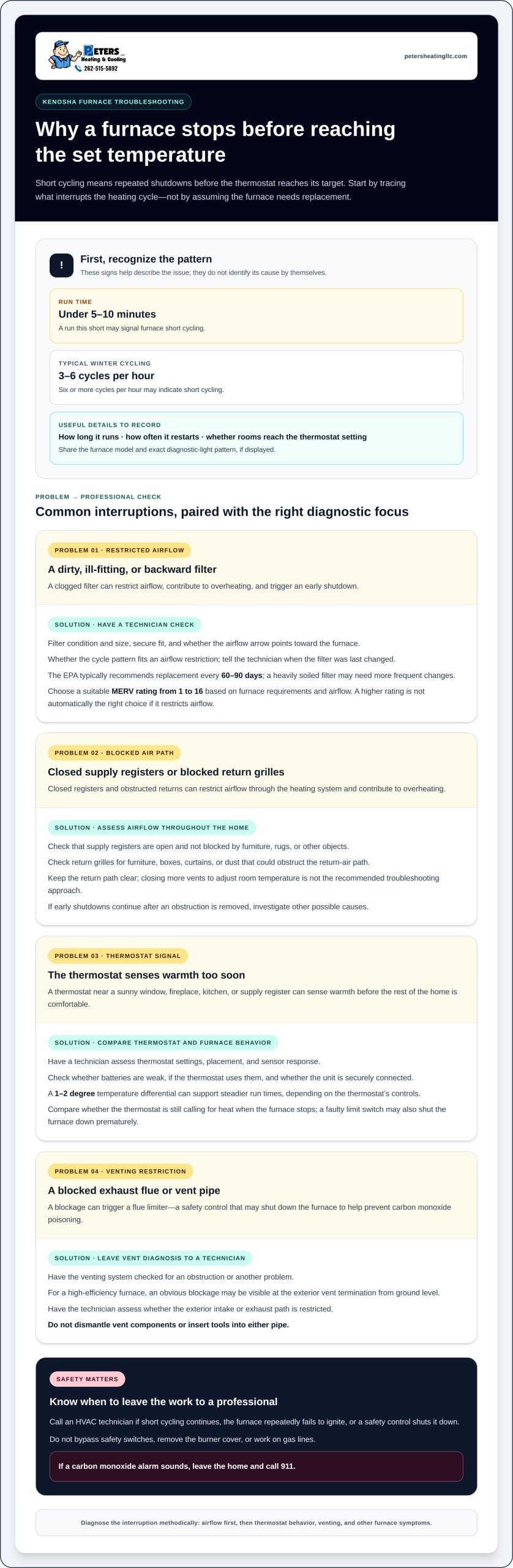
A furnace that repeatedly shuts off before reaching the thermostat’s set temperature may be short cycling. If it runs for less than 5 to 10 minutes at a time, Kenosha furnace short cycling troubleshooting starts by finding what is interrupting the heating cycle, not by assuming the furnace needs replacement.
Frequent starts and stops can leave rooms uncomfortable and put extra strain on furnace components. A technician can trace the cause methodically, starting with airflow before assessing ignition, fuel, and venting. This guide explains how a blocked filter, vent, or return grille can affect operation, what a professional diagnosis involves, and how to describe the pattern. If your furnace starts but shuts down again within seconds, those details help the technician narrow down the problem.
Key Takeaways
- A filter’s condition, fit, and airflow direction can help explain why a furnace stops before completing a heating cycle.
- Thermostat placement and settings can affect when the furnace starts and stops, so they belong in a careful diagnosis.
- Open supply registers and clear return grilles support airflow; blocked venting can also interrupt furnace operation.
- Ignition, fuel, and venting symptoms help a technician narrow down the cause, while safety controls and gas lines should be left to a professional.
Can a dirty filter cause a furnace to short cycle?
Yes. A dirty filter can restrict airflow, cause the furnace to overheat, and trigger an early shutdown. An HVAC technician can inspect the filter safely without bypassing safety switches, removing the burner cover, or working on gas lines.
Filter diagnosis is separate from questions about Wisconsin or Kenosha permits, rebates, and energy programs. Whether those apply depends on the work involved, such as whether it goes beyond filter service to furnace repair or replacement.
-
Have an HVAC Technician Check the Air Filter
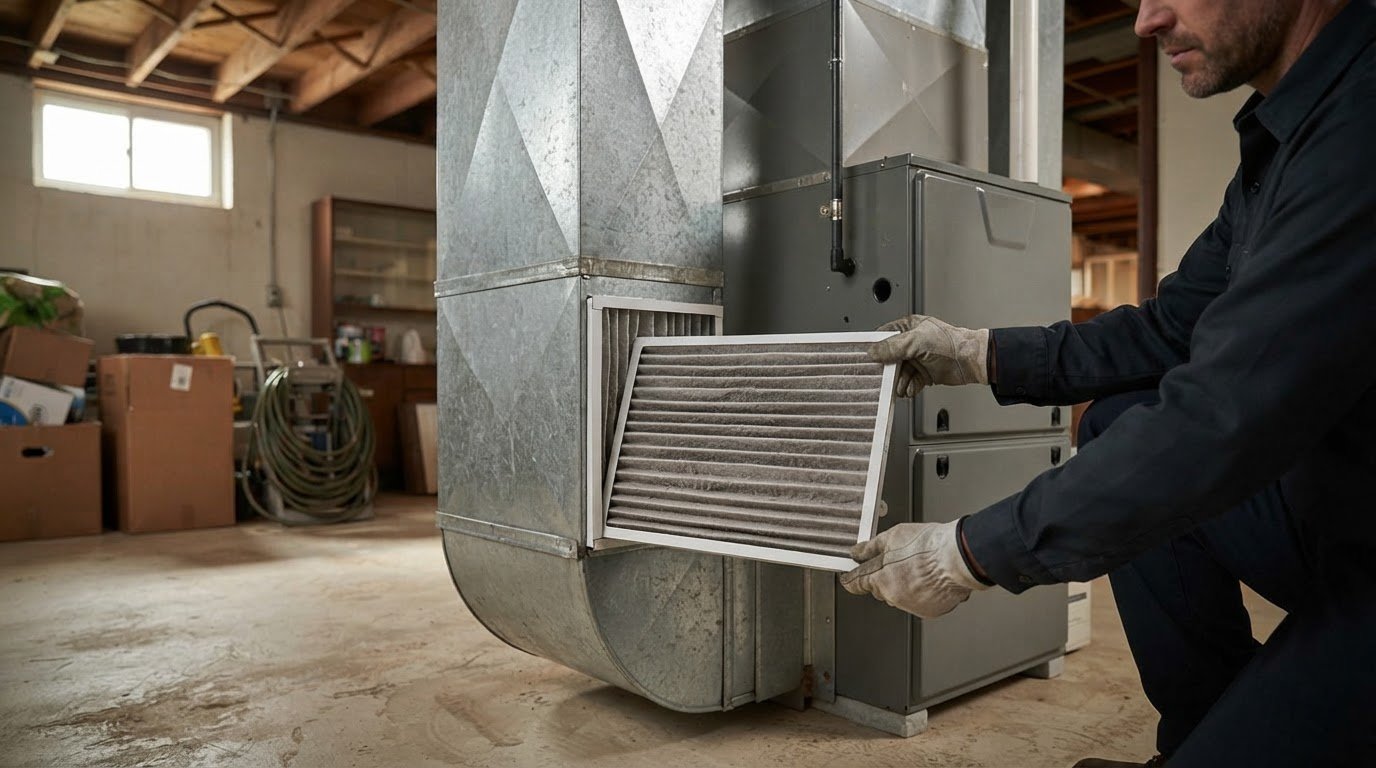
Ask the technician to check whether dirt on the filter is restricting airflow. A clogged filter can reduce airflow through the furnace, causing overheating and an early shutdown. The technician can check the filter’s size and condition, and confirm that its airflow arrow points toward the furnace. They can also consider whether the symptoms fit, such as heating that stops after a few minutes. Tell them when the filter was last changed.
-
Have an HVAC Technician Replace the Dirty Filter
Have the technician replace a dirty or incorrectly fitted filter, then confirm the new one fits the slot and faces the right direction. According to the U.S. Environmental Protection Agency, furnace filter replacement is typically recommended every 60 to 90 days, and a heavily soiled filter may need more frequent changes. The technician selects a suitable MERV rating, from 1 to 16, based on furnace requirements and airflow. A higher rating isn’t automatically the right choice if it restricts airflow.
-
Include Professional Filter Changes in Furnace Maintenance
Include a filter inspection in professional furnace maintenance, especially if short cycling returns after you replace the filter. The technician can check that the filter fits securely, assess airflow, and look for other restrictions that may contribute to overheating. Maintenance can also cover burners, safety controls, venting, blower performance, and airflow. Replacing a filter won’t fix a blocked return grille or faulty control, so the technician will consider the cycling pattern and thermostat setting before recommending further repairs.
What is Furnace Short Cycling?
A furnace short cycles when it repeatedly turns off before the thermostat reaches its set temperature. Runs lasting under 5 to 10 minutes may signal the problem. Many furnaces cycle three to six times per hour in typical winter weather, while six or more cycles per hour may indicate short cycling.
Diagnostic lights and error codes vary by furnace model. A technician can match the displayed pattern to the unit’s diagnostic information, then compare it with the heating sequence and symptoms.
Call an HVAC technician if short cycling continues, the furnace repeatedly fails to ignite, or a safety control shuts it down. If a carbon monoxide alarm sounds, leave the home and call 911.
- Record the cycle pattern. Note how long the furnace runs, how often it restarts, and whether rooms reach the thermostat setting. For example, repeated shutdowns after only a few minutes give the technician a useful starting point.
- Have the thermostat checked. A technician assesses its settings, sensor response, and placement. A thermostat near a sunny window, fireplace, kitchen, or supply register can sense warmth too soon and stop heating before the rest of the home is comfortable.
- Review batteries and connections. If the thermostat uses batteries, the technician checks whether they’re weak and whether the unit is securely connected. A one- to two-degree temperature differential can support steadier run times, depending on the thermostat’s controls.
- Compare the thermostat with furnace operation. The technician observes whether the thermostat is calling for heat when the furnace stops. A dirty filter can restrict airflow, while a faulty limit switch may shut the furnace down prematurely.
- Share any displayed code. Provide the technician with the furnace model and the exact diagnostic-light pattern. They interpret that information alongside cycle timing, thermostat behavior, and other symptoms instead of treating one code as a complete diagnosis.
Closed vents and blocked return grilles
- Have the technician assess supply airflow. The technician checks whether supply registers are open and whether furniture, rugs, or other objects obstruct them. Closed registers can restrict airflow through the heating system, even when other rooms feel warm. Kenosha furnace short cycling troubleshooting should include a whole-home airflow assessment, rather than closing more vents to adjust room temperature. Restricted airflow can contribute to overheating and interrupt a normal heating cycle.
- Ask for return-grille clearance checks. A return grille draws air back toward the furnace. The technician checks for furniture, boxes, curtains, or dust blocking the grille, then assesses whether air can circulate freely. A clear return path helps the equipment move air through the system. If the furnace still shuts down early after an obstruction is removed, Kenosha furnace short cycling troubleshooting calls for investigating other possible causes.
- Have the furnace exhaust inspected. A blocked exhaust flue or vent pipe can trigger a safety control called a flue limiter. That control may shut down the furnace to help prevent carbon monoxide poisoning. The technician examines the venting system for an obstruction or other problem instead of treating each shutdown as a thermostat issue. Don’t dismantle vent components or try to clear a pipe yourself.
- Ask the technician to assess exterior intake and exhaust openings. For a high-efficiency furnace, an obvious blockage may be visible at the exterior vent termination from ground level. The technician can evaluate whether the intake or exhaust path is restricted and whether that could be disrupting operation. Don’t insert tools into either pipe or disassemble venting components. A clear opening doesn’t rule out a problem farther inside the vent system.
Fuel, ignition, and venting problems
Common causes include ignition faults, fuel-supply problems, restricted venting, and faulty controls. A dirty flame sensor may shut the furnace down within three to seven seconds. Thermostat, pressure-switch, and limit-switch problems can also interrupt heating.
-
Have an HVAC Technician Check Fuel and Ignition Problems
Ask a technician to assess the fuel supply and ignition sequence if the furnace repeatedly tries to start or won’t stay lit. They can inspect the pressure switch, which helps confirm proper venting, and assess blower motor and capacitor operation. A weak blower or failing capacitor can affect airflow and performance. Don’t work on gas lines, remove the burner cover, or repeatedly restart a furnace that fails to fire.
-
Have an HVAC Technician Inspect the Flame Sensor
Tell the technician if the burner lights briefly, then shuts off within seconds. A dirty flame sensor may fail to register the burner flame, prompting the furnace controls to stop operation. The technician can inspect the sensor and determine whether cleaning or repair is appropriate. A sensor signal is typically about 2 to 6 microamps, though the threshold varies by model and control board. Avoid removing the sensor or handling furnace components yourself.
-
Have an HVAC Technician Check the Condensate Drain and Venting
Ask the technician to inspect the condensate drain and vent pipes if a high-efficiency furnace stops during operation. A clogged drain can interfere with operation, and blocked exhaust venting can activate a safety control. The technician can assess the vent path and drain to find out whether either is interrupting the heating cycle. Don’t insert tools into vent pipes or take them apart. If you smell gas, leave the area and avoid switches or flames.
For repeated ignition or control problems, schedule furnace repair to have the causes assessed and the appropriate fix determined.
Peters Heating & Cooling
Peters Heating & Cooling diagnoses furnaces that repeatedly shut down before completing a heating cycle. A technician assesses the pattern and checks airflow, thermostat operation, ignition, safety controls, and venting to find the cause. This helps distinguish a repairable fault from a problem that needs a broader solution, without assuming every short-cycling furnace needs replacement.
Get professional help if the furnace keeps cycling after basic airflow issues are addressed, fails to ignite reliably, or shuts down on a safety control. Share how long it runs, how often it restarts, and any diagnostic light pattern you’ve noticed. These details give the technician a useful starting point for furnace repair or, if the system’s condition calls for it, a discussion about furnace installation.
Contact Peters Heating & Cooling to discuss your furnace’s short cycling and arrange the next step.
Choose a Clear Next Step for Your Furnace
Repeated shutdowns can make it tempting to keep changing thermostat settings or restarting the furnace. Instead, use the symptoms to guide a professional diagnosis and avoid adjustments that won’t address the underlying cause. Effective Kenosha furnace short cycling troubleshooting starts by finding the fault before deciding what work is appropriate.
A technician’s findings can help you understand whether the issue calls for a repair or a broader conversation about the system’s condition. You can then make a decision based on the diagnosis rather than guesswork. If the furnace is still starting and stopping unexpectedly, contact Peters Heating & Cooling to discuss your next step. A clear assessment can help you move forward with confidence and restore a steadier heating routine.
Frequently Asked Questions
Can a thermostat cause short cycling?
Yes. A thermostat can end a heating call too soon if its temperature reading is inaccurate, its settings are unsuitable, or its connection is unreliable. A technician can compare the displayed temperature with the room temperature and check whether the furnace stops while the thermostat is still calling for heat. For a clearer diagnosis, note whether the reading changes unexpectedly or the screen goes blank.
Why does my furnace keep shutting off before reaching temperature?
A furnace may stop early because a safety control detects a condition that needs attention, or because its controls end the heating call. Note whether the whole home stays cool or only rooms farther from the thermostat do. This helps a technician distinguish a system-wide interruption from uneven heat delivery and focus on the relevant controls or equipment.
Why does my furnace turn off after a few seconds?
A shutdown soon after startup can point to a problem with ignition or flame detection. The furnace may light, then stop because its controls don’t detect reliable operation. Don’t repeatedly restart a unit that fails to fire correctly or reset it after repeated failed starts. Tell the technician what happens at startup, including whether you hear ignition and whether warm air reaches the vents.
Why is my furnace turning on and off so quickly?
Repeated starts and stops can happen when a heating call ends early or a safety control interrupts operation. The key clue is the sequence: note whether the blower starts, whether the burner ignites, and which stops first. Share these observations, along with any changes in room comfort, with the technician. Avoid bypassing safety switches or repeatedly resetting the circuit breaker.
What is furnace short cycling, and what symptoms should homeowners look for?
Furnace short cycling means repeated heating interruptions before the home reaches the thermostat’s setting. Watch for frequent starts, brief bursts of warm air, rooms that stay uncomfortable, or a thermostat reading that never reaches its target. Note when the pattern occurs and which rooms feel cold. These details can help the technician distinguish a recurring fault from occasional changes in operation.
Can a dirty air filter, blocked vents, or closed registers cause furnace short cycling?
Yes. A dirty filter or restricted supply and return airflow can interfere with heat removal, while closed registers can limit circulation. These issues may contribute to a furnace shutting down before the home feels warm. Note which registers are closed and whether furniture blocks return grilles. If cycling continues after you address airflow obstructions, a technician can investigate other causes rather than assume the filter was the only problem.