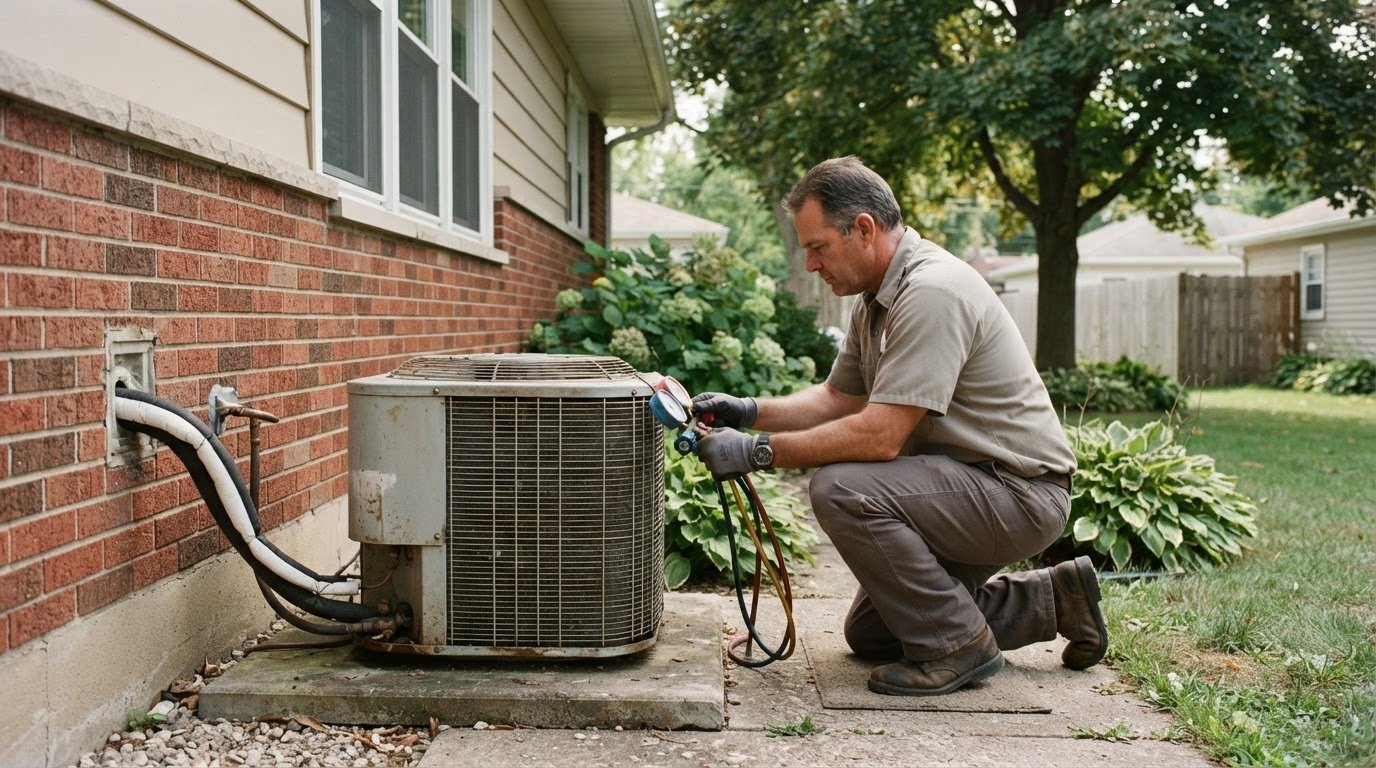
An A/C check is about more than whether cool air comes through the vents. An AC system check in Kenosha, WI, can include a visual inspection, electrical testing, and refrigerant-level checks to help assess performance and spot concerns. Annual professional HVAC service also lets a technician monitor component condition and recommend preventive replacements.
It makes sense to expect an inspection to explain what’s working, what may need attention, and why. If your home isn’t cooling evenly, the system is making unusual noises, or you’re concerned about low refrigerant, a clear diagnosis can help separate the likely cause from the symptoms.
This guide explains what A/C service may cover, how contractors investigate performance problems, and which signs can point to a refrigerant leak. You’ll also learn why regular maintenance matters and when an air-conditioning repair can be the practical next step.
Key Takeaways
- Low refrigerant can affect cooling, but symptoms like uneven temperatures or unusual sounds may have other causes.
- A thorough A/C check can include visual inspection, electrical testing, and refrigerant-level checks to help identify the problem.
- Annual professional service helps monitor component condition and spot maintenance needs before they grow.
- When a diagnosis points to an air-conditioning problem, repair can address the cause rather than just the symptoms.
Signs of low refrigerant
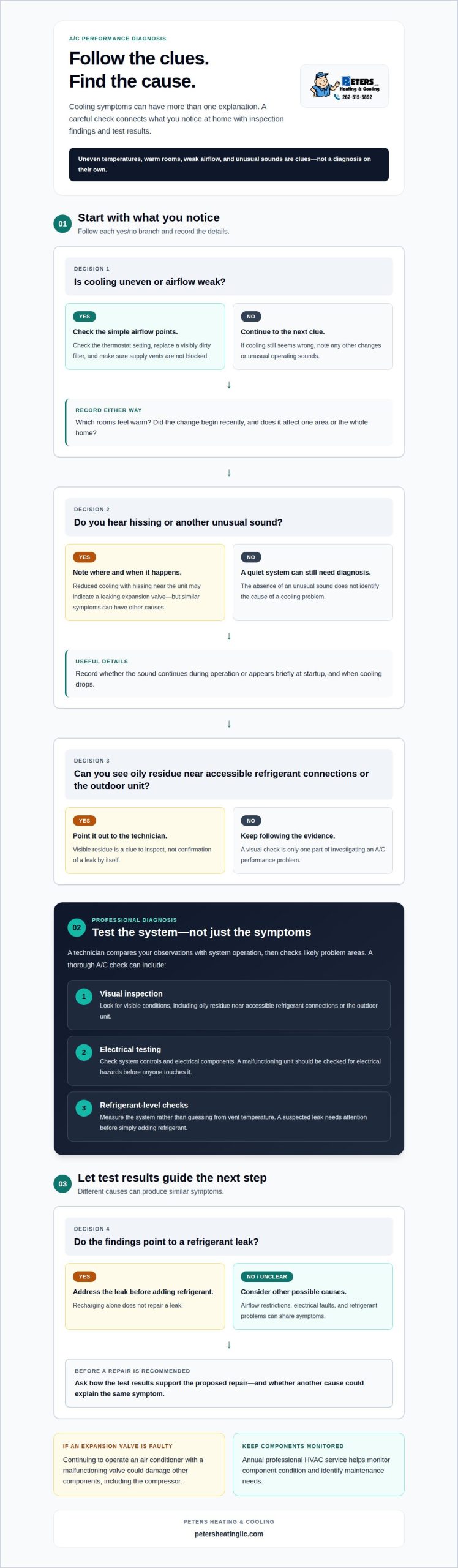
Low refrigerant can reduce cooling, but weak airflow or warm vents alone don’t prove a leak. Rising indoor temperatures, uneven cooling between rooms, or an air conditioner that runs without reaching its thermostat setting can have several causes. For an AC system check in Kenosha, WI, note when the change began and which rooms feel warm. Those details help a technician investigate possible refrigerant, airflow, or electrical issues.
A technician can investigate the cause through a sequence of checks:
- Visual inspection: Look for oily residue near accessible refrigerant connections or the outdoor unit. In a vehicle, greasy, filmy fluid beneath the car may point to a refrigerant leak.
- Electrical testing: Check system controls and electrical components. In a car, an A/C clutch that doesn’t engage can involve a broken clutch switch or insufficient refrigerant.
- Refrigerant checks: Measure the system rather than guessing from vent temperature. A leak needs attention before simply adding refrigerant.
Newer vehicles can lose refrigerant gradually. A new-model economy car loses about 0.41 ounces of refrigerant per year. That figure describes a specific vehicle category, not a household central air conditioner. If a car’s cooling weakens, unusual odors, noises, or visible leakage also deserve diagnosis; each symptom can have another cause.
A car A/C recharge restores refrigerant, but recharging alone won’t repair a leak. If a repair requires removing an expansion valve, the service involves recovering refrigerant, replacing the valve, and recharging the system. Accurate diagnosis helps determine whether that repair is appropriate.
Wisconsin rebates or utility incentives depend on the program and the work covered. Don’t assume routine maintenance qualifies for an incentive intended for equipment replacement. Review the program’s eligibility terms before deciding on maintenance or a new system.
Heating and air conditioning contractors serving Kenosha
Choose a contractor who can explain the inspection and connect findings to practical next steps. Before booking, consider local experience, service availability, and specific evidence from homeowner reviews.
Finding Kenosha AC Contractors
Start with contractors serving Kenosha who handle residential air conditioning systems like yours. Compare service descriptions, experience with your equipment type, and how clearly each contractor explains diagnostic steps. Reviews can add useful context when they describe a similar issue, such as rooms that stay warm or an outdoor unit that won’t start. Kenosha heating and air conditioning professionals have an average homeowner rating of 4.5.
Contractor Experience and Availability
Ask whether the contractor regularly diagnoses your type of system and what the check includes. A useful answer should describe the inspection process, how findings are explained, and how repair options are discussed. Also ask about appointment availability and what information helps prepare for the visit. These details clarify the process without assuming every performance problem needs the same repair.
What questions should I ask before booking? Ask what the A/C check covers, how the technician will explain the diagnosis, and whether repair options will be discussed. If you’ve noticed a particular noise or cooling pattern, ask whether to describe it when scheduling.
Look for verified reviews that mention clear explanations, punctual communication, and follow-through on the stated work. A specific account of a similar issue is more useful than a brief rating alone. Read several accounts for consistent details, rather than relying on one unusually positive or negative review.
Cooling problems can show up as warm rooms, uneven temperatures, weak airflow, or unusual operating sounds. Note where the issue occurs and whether it affects your air conditioner or heating system. Inside, a clogged filter or blocked supply vent can restrict airflow, so check those simple points before calling.
What should homeowners check before calling? Check the thermostat setting, replace a visibly dirty filter, and make sure supply vents aren’t blocked. Record the affected rooms and any unusual sounds; these observations help you describe the problem clearly.
Diagnosing AC performance problems
Uneven cooling or an unusual sound can point to a malfunctioning expansion valve, but neither symptom identifies one cause by itself. A technician considers the system’s behavior alongside visible conditions and test results. For example, reduced cooling with hissing near the unit may indicate a leaking expansion valve. Similar symptoms can also come from refrigerant leaks, electrical faults, or restricted airflow.
A careful inspection follows the clues instead of jumping straight to replacing a part. The technician can compare your reported symptoms with the air conditioner’s operation, then check likely problem areas. Useful observations include when cooling drops, whether a sound occurs at startup, and whether one part of the home feels warmer than others.
- Cooling pattern: Note whether the whole home feels warm or only certain rooms. Restricted airflow may affect some spaces differently from a system-wide fault.
- Sound and timing: Record whether hissing or another unusual noise continues during operation or appears briefly at startup.
- Electrical safety: A malfunctioning unit should be checked for electrical hazards before anyone touches it.
- Repair findings: Ask how test results support the proposed repair and whether another cause could explain the same symptom.
A suspected refrigerant leak or faulty expansion valve needs professional attention. Continuing to operate an air conditioner with a malfunctioning valve could damage other components, including the compressor. Diagnosis matters because replacing a valve won’t solve a separate airflow restriction or electrical problem. A clear explanation connects the observed symptoms to the findings.
If an expansion valve needs replacement, the process involves recovering refrigerant, removing the old valve, installing a new component, and recharging the system. A professional HVAC technician typically needs two to three hours for this repair. Accurate diagnosis helps address the faulty component rather than masking weak cooling with a temporary adjustment.
Annual HVAC system service
Annual professional HVAC service gives a technician a chance to monitor component condition and recommend preventive replacements. For a Kenosha homeowner, the practical takeaway is simple: schedule service annually, then use the findings to plan maintenance before cooling problems disrupt comfort. Regular air conditioner maintenance can extend equipment lifespan and save money over time.
Service is a useful time to discuss how the system performed during the previous cooling season. Mention uneven temperatures, longer cooling cycles, or unusual sounds. A technician can consider those details alongside the equipment’s condition and explain which observations need attention, which may warrant monitoring, and why.
Before the appointment, prepare details that can make the visit more useful:
- Write down rooms that feel warmer or less comfortable than others.
- Note when you first noticed a change in cooling or system operation.
- Gather prior service records and note any repairs or part replacements.
- Record thermostat settings associated with the concern.
After the inspection, ask which components were assessed and what condition they’re in. If a preventive replacement is recommended, ask what issue it addresses and how soon it needs attention. This keeps the discussion tied to the equipment’s observed condition, rather than treating every recommendation as an immediate repair.
Regular service can help clarify whether a recurring concern points toward maintenance, repair, or a larger equipment decision. For example, persistent comfort issues may need a closer assessment before considering installation. The appropriate next step depends on the technician’s findings and the condition of the existing equipment.
Keep service notes with your HVAC records. Comparing one visit with the next can make changes in component condition easier to understand and help you track completed replacements. The notes also give a technician useful context during a future visit, especially if the same cooling symptom returns.
Use the inspection findings to plan your next maintenance step. Arrange an annual HVAC system check and discuss any comfort changes you’ve noticed.
Peters Heating & Cooling: Furnace Repair
Peters Heating & Cooling provides Air Conditioning Repair when an inspection points to a repair rather than a routine adjustment. If your system still cools poorly, makes unusual sounds, or shows signs of a component problem, a technician can diagnose the issue and explain the recommended work. That information helps you understand the repair and decide on a practical next step.
If repeated repairs no longer suit the equipment’s condition, Air Conditioning Installation may be the more relevant conversation. For a separate heating concern, Peters Heating & Cooling also provides Furnace Repair and Furnace Installation. The right service depends on whether the problem involves cooling equipment, heating equipment, or a system that needs replacement.
Contact Peters Heating & Cooling to discuss an A/C concern and arrange the appropriate next step.
Take the Next Step Toward Reliable Comfort
Base your next decision on the equipment’s condition, not guesswork. An AC system check in Kenosha, WI, can help clarify whether a cooling concern calls for repair or a broader equipment decision. Keep the technician’s findings with your home records so you can refer to them when planning future service.
Peters Heating & Cooling provides Air Conditioning Repair for diagnosed cooling problems and Furnace Repair for heating concerns. If existing heating equipment needs replacement, Furnace Installation is also available. Discuss the issue and inspection findings with the team, then consider the service that fits your equipment.
For a straightforward conversation about your home’s heating or cooling needs, contact Peters Heating & Cooling. A clear starting point can help you move forward with confidence.
Frequently Asked Questions
What’s included in an A/C service?
An A/C service is a planned maintenance visit focused on equipment condition and operation. Peters Heating & Cooling’s preventative maintenance includes seasonal tune-ups, system inspections, filter changes, and efficiency checks. If cooling seems weaker than usual, mention that before the visit so the technician can consider it alongside the system’s condition. Service findings can also identify components that may need attention.
What does an AC system check include?
An AC system check assesses how the equipment is operating and whether components show signs of a problem. A useful check connects your concern to the technician’s observations, then explains whether the next step is monitoring, maintenance, or repair. For example, share your usual thermostat setting and how the home responds. That context helps relate the findings to your comfort concern.
Which HVAC companies offer AC system checks in Kenosha, WI?
Peters Heating & Cooling serves Kenosha and nearby Racine. Services include air-conditioning repair and installation, as well as preventative HVAC maintenance. When arranging service for a Kenosha home, share the equipment type and main concern. This gives the team a useful starting point for the visit.
Do Kenosha HVAC companies offer same-day or emergency AC checks?
Peters Heating & Cooling provides prompt service for unexpected HVAC problems, but same-day appointments and 24/7 coverage aren’t promised. If cooling stops or the system behaves unusually, explain whether it still runs and what changed. That distinction helps frame the request as an urgent repair concern or planned maintenance visit without assuming a particular appointment time.
What are typical signs an air conditioner needs a system check?
Consider an inspection if the thermostat reaches its setting but rooms remain uncomfortable, cooling changes from its usual pattern, or the system switches off unexpectedly. A symptom alone doesn’t identify the cause. Note whether the change persists and whether it affects the whole home. Mention any recent repairs too, since repair history can help put the concern in context.
How often should a home AC system be inspected?
Plan professional HVAC service twice per year: once before cooling season and once before heating season. Seasonal timing allows a technician to assess equipment before each major period of use. Between visits, check filters monthly; replacement timing ranges from every 1-3 months, depending on filter type, pets, allergies, and usage. Filter care supports upkeep but doesn’t replace a full system inspection.