What if a newer boiler isn’t automatically the right fix? If you’re researching “boiler system upgrade Racine WI,” start with your home’s heating needs, not the latest equipment feature. An aging system may be worth replacing, but age alone doesn’t settle the question.
If repairs are becoming a concern, it’s reasonable to wonder whether replacement will improve comfort, which system fits your home, and what the work involves. This guide explains how to weigh repair against an upgrade, which details shape boiler selection, and what to consider before planning the project.
Your boiler’s condition, your home’s heating needs, and the existing distribution system all inform a well-matched choice. Peters Heating & Cooling provides project-specific installation quotes that account for equipment, labor, and necessary permits, giving you a clear basis for discussing the work. The goal is a practical decision based on reliable heat and your home, not equipment hype.
Key Takeaways
- Age alone doesn’t determine whether replacement makes sense; consider the boiler’s condition, comfort, and repair history.
- Follow the heat path from boiler through the distribution system to your home’s heat emitters to understand what an upgrade may change.
- Compare a targeted repair with full replacement by looking at the system’s overall condition, recurring concerns, and scope of work.
- For a boiler system upgrade Racine WI homeowners should weigh home size, layout, insulation, existing heat distribution, and comfort needs.
- A clear installation plan starts with an assessment and defined project scope, supported by licensed, insured, and continuously trained technicians.
When Does a Boiler System Upgrade Make Sense for a Racine Home?
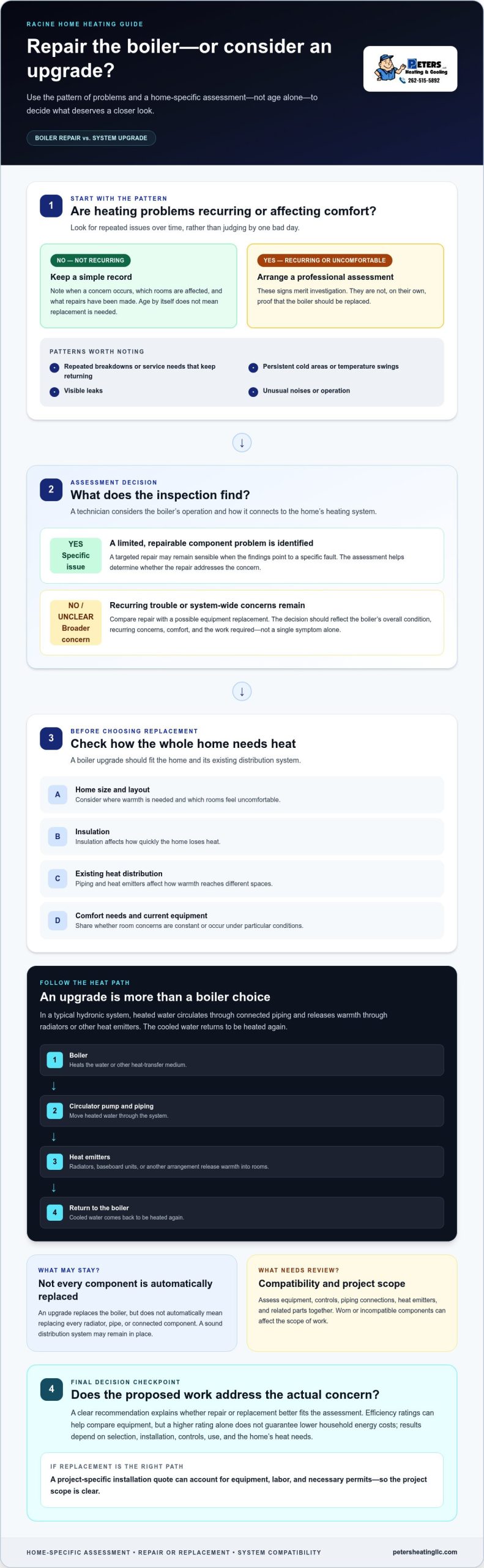
An older boiler or uneven heat can make the repair-or-replace decision stressful, especially when you’re keeping your home comfortable through Racine’s cold season. But age alone doesn’t mean it’s time for new equipment. A boiler repair addresses a specific problem or component; an upgrade replaces the equipment and may involve changes to how the system serves the home.
Repeated repairs, rooms that stay cold, or trouble maintaining comfortable temperatures are reasons to arrange a professional assessment, not automatic proof that replacement is needed. A technician can inspect the boiler and its operation, then consider how it connects to the home’s heating system. That helps determine whether a targeted repair remains sensible or a boiler system upgrade Racine WI homeowners are considering better addresses the problem.
Which boiler problems deserve a closer look?
Look for patterns rather than judging by one bad day. Repeated breakdowns, persistent cold areas, or temperature swings may point to an issue that deserves investigation. Visible leaks, unusual noises or operation, and service needs that keep returning also merit professional attention.
Keep a simple record of when problems occur, which rooms are affected, and what repairs have been made. This gives the technician useful context and can help distinguish a limited fault from broader reliability concerns. None of these signs alone confirms that the boiler should be replaced. A specific component issue may be repairable, while recurring trouble across the system may call for a closer look at the equipment as a whole.
Why Racine homes need a home-specific assessment
Dependable, even heat matters during the cold season, but the right solution depends on more than the boiler’s age or size. Insulation affects how quickly a home loses heat. Room layout shapes where warmth is needed, while the existing heat distribution system affects how it reaches different spaces. A replacement plan that ignores these conditions may not address the comfort problem that prompted the decision.
It also helps to distinguish a boiler concern from a problem elsewhere in the heating system. For background on how a boiler system works, see this overview. An on-site assessment can then relate the general principles to your home’s equipment and distribution setup.
Before recommending replacement, a technician should assess the existing boiler and consider the home’s layout, insulation, current equipment, and comfort needs. Share which rooms feel uncomfortable and whether the issue is constant or occurs under particular conditions. These details keep the assessment focused on the problem you actually experience, rather than equipment age alone.
A considered recommendation should explain whether repair or replacement better addresses the findings. Peters Heating & Cooling provides boiler repair and installation, with project-specific installation quotes that account for equipment, labor, and necessary permits when replacement is the right path.
How a Boiler System Works, and What Changes in an Upgrade
A boiler system heats water or another heat-transfer medium and moves that heat through a building. In a typical hydronic setup, the boiler warms water, a pump circulates it through connected piping, and radiators or other heat emitters release warmth into rooms. The cooled water then returns to be heated again. A hydronic heating system delivers warmth by circulating heated water through pipes to radiators or other heat emitters.
Understanding this path helps explain why an upgrade involves more than choosing a new piece of equipment. The boiler has to work with the home’s distribution system and heat emitters. The boiler industry standards information from the American Boiler Manufacturers Association provides broader context on boiler technology and efficiency, while a home-specific assessment focuses on how the connected parts work together.
The boiler components homeowners should recognize
The boiler heats the water or other medium. Inside it, the heat exchanger transfers heat from the fuel-burning process to that medium. A circulator pump moves heated water through the system, while controls help regulate when the boiler runs and how it responds to heating demand.
The distribution system includes the connected piping and heat emitters. Depending on the home, those emitters may be radiators, baseboard units, or another arrangement. Their condition and capacity can influence the replacement plan. Note what’s installed and which rooms feel comfortable or difficult to heat.
What may change when the boiler is upgraded?
An upgrade replaces the boiler, but it doesn’t automatically mean replacing every radiator, pipe, or connected component. The equipment, controls, piping connections, and related parts should be assessed together. A sound existing distribution system may remain in place, while worn or incompatible components could affect the project scope. The right plan depends on the actual setup, not a one-size-fits-all assumption.
Efficiency ratings can help compare equipment, but a higher rating alone doesn’t guarantee lower household energy costs. Actual results depend on how the system is selected, installed, controlled, and used, as well as the home’s heat needs. Treat the rating as one part of the comparison, alongside equipment compatibility and comfort goals.
Routine maintenance helps keep the system in view after installation. Peters Heating & Cooling’s residential HVAC maintenance checklist offers practical reminders for ongoing care. For a boiler system upgrade Racine WI homeowners can plan with clarity, Peters provides project-specific installation quotes that account for equipment, labor, and necessary permits. Reviewing boiler installation options is a practical next step when you’re ready to discuss your home’s setup.
Boiler Repair or System Upgrade in Racine: How to Compare the Options
It’s not always obvious whether a boiler needs a focused repair or a full replacement. A single malfunction may have a limited cause, while recurring problems can raise questions about the condition of the entire system. A technician should diagnose the boiler before recommending either path. The comparison should reflect what’s wrong, how the equipment is performing, and what your home needs.
Use this framework to organize the discussion. It isn’t a substitute for diagnosis, but it can help you understand what a repair or upgrade recommendation should address.
| Factor | Repair | System upgrade |
|---|---|---|
| System condition | A specific fault is identified, and the rest of the boiler appears suitable for continued use. | Assessment finds broader equipment concerns or a system that no longer suits the home’s needs. |
| Recurring concerns | The problem is limited, rather than part of a pattern of repeated service needs. | Breakdowns or comfort issues keep returning, prompting evaluation of the system as a whole. |
| Scope | Work focuses on the diagnosed issue or component. | Equipment is replaced, and connected components and system compatibility are reviewed. |
| Likely next step | Review the proposed repair alongside the boiler’s condition and service history. | Review a project-specific replacement quote and the work it covers. |
When a focused boiler repair may be the practical choice
If a technician identifies a limited fault and the boiler remains suitable for the home, repairing that issue may be a reasonable path. Consider the diagnosis alongside the equipment’s overall condition and service history. A repair isn’t automatically the least costly or longest-lasting choice, and replacement isn’t automatically necessary. The aim is to understand what the proposed work addresses and whether it fits the system’s broader condition.
When to compare repair with a full upgrade
Repeated service needs, ongoing comfort concerns, and problems with connected equipment deserve a broader review. Consider them together rather than treating each new issue in isolation. A replacement quote can clarify the scope by outlining equipment, labor, and necessary permits. That project-specific detail gives you a more useful basis for weighing replacement against another repair.
A Racine furnace installation guide covers another kind of heating-system replacement. Boiler and furnace projects differ, but both benefit from a clear understanding of the equipment and work involved.
For a boiler system upgrade Racine WI homeowners are considering, Peters Heating & Cooling can assess the boiler and provide repair and installation options based on the project. If you’re ready to discuss the system’s condition and possible next steps, discuss boiler repair or installation with Peters.
How to Choose a Boiler Upgrade for Your Racine Home
The right replacement starts with the home, not a guess based on the old boiler’s label or a quick comparison of equipment features. A well-matched system needs to serve the rooms you use, work with the existing heat distribution, and support the comfort you expect. Use this checklist to prepare for a project-specific assessment and focus on the choices that matter.
- 1. Start with home size, layout, insulation, and heat distribution. Note which areas are open or separated, where rooms tend to feel cooler, and what kind of heat emitters are installed. Insulation and other features that affect heat loss also shape the home’s needs.
- 2. Consider household comfort and daily use. Describe any rooms that are difficult to keep comfortable and how the home is typically occupied. These details connect equipment selection to the way the heating system is used.
- 3. Review the existing boiler and system capacity. A technician can assess the current equipment and connected components rather than assume the old setup is the right template for its replacement.
- 4. Discuss controls and practical operation. Consider how you want to manage heating and whether proposed controls suit your household’s routines. The goal is a system that’s understandable and practical to operate.
- 5. Check compatibility with existing components. Existing piping and heat emitters are part of the overall system. Their condition and connection to the new equipment can influence the installation plan.
- 6. Compare the project scope, not just equipment descriptions. Review what the quote covers, including equipment, labor, necessary permits, and any removal or connection work relevant to the installation.
What should shape boiler sizing and system fit?
Square footage matters, but it can’t determine boiler size on its own. Insulation, room layout, household use, and the type and condition of heat emitters all affect how the home needs to be heated. Boiler selection should reflect the home’s assessed heating load and distribution system. A technician’s evaluation is the basis for a home-specific capacity recommendation, not a rule of thumb.
What belongs in a clear upgrade quote?
A useful quote lays out the proposed equipment, labor, and necessary permits, along with project-specific removal or connection work. Peters Heating & Cooling prepares installation quotes based on the specific job, so you can understand the planned scope before deciding how to proceed. Financing options are available.
Bring clear information about your home and comfort priorities into the discussion. To review a boiler system upgrade Racine WI homeowners can tailor to their system and household needs, discuss a boiler upgrade with Peters.
What to Expect from a Boiler System Upgrade with Peters in Racine
A boiler replacement is a major home-comfort project, but the process can be clear and methodical. Peters Heating & Cooling considers what’s prompting the upgrade, assesses the existing system, and explains the project scope as installation planning begins. The plan reflects your home and the work involved.
From the first assessment to a project plan
Start by describing the concerns you’ve noticed, such as inconsistent temperatures, recurring boiler issues, or rooms that don’t feel comfortable. Details about when problems occur and which areas are affected help focus the assessment. Peters’ licensed, insured, and continuously trained technicians evaluate the existing equipment, connected components, and household heating needs before discussing a recommendation.
The review connects proposed work to the conditions in your home. If replacement is appropriate, the findings inform an equipment and installation plan, along with a comprehensive, project-specific quote. You can review what the work covers and raise questions about the scope before moving ahead.
Installation planning and the next step
Planning follows the agreed scope. Peters’ installation quote accounts for equipment, labor, and necessary permits for the project. The specific work and schedule depend on the home and installation plan, so the quote and discussion explain what’s included. Financing options are available as part of the planning conversation.
Peters serves Racine and the surrounding Southeast Wisconsin area, including Kenosha and Oak Creek, as well as Northeast Illinois communities such as Winthrop Harbor. A clear plan matters because dependable heat isn’t just about replacing equipment. It also means understanding how the proposed system fits the home, what work is included, and how the project will move forward. Peters’ technicians bring training and practical experience to the evaluation, with the aim of making the process understandable and suited to the home.
Before discussing an upgrade, gather your recent service history and a short list of comfort concerns. Note which rooms are affected and whether the issue is constant or comes and goes. These observations give the technician a useful starting point, while the on-site assessment provides the basis for recommendations. The result is a conversation grounded in your existing system and household priorities, not a one-size-fits-all replacement pitch.
If you’re considering a boiler system upgrade Racine WI homeowners can plan around their specific heating needs, request a project-specific boiler installation quote from Peters. Talk with Peters about a boiler upgrade and take the next step toward a clear project plan.
Take the Next Step Toward Steadier Home Comfort
A boiler system upgrade Racine WI homeowners are considering is a chance to make a deliberate choice about comfort, not simply react to the next heating problem. Before moving ahead, think about what you want daily heating to feel like: fewer temperature swings, more consistent warmth between rooms, or a system that better fits how your household uses the home. Keeping those priorities clear can make the next conversation more useful.
You don’t need to settle every equipment detail on your own. Bring your questions and the comfort changes you hope to address, then use the project discussion to decide on a practical path forward. A good decision should make sense for your home and leave you clear about the work ahead.
Talk with Peters Heating & Cooling about a boiler upgrade in Racine and take a confident next step toward dependable comfort.
Frequently Asked Questions
How long does a residential boiler usually last?
A residential boiler’s service life varies with its condition, maintenance history, use, and installation. There isn’t a single age that makes replacement necessary. A well-maintained boiler may still be suitable, while an older one with recurring faults may need closer evaluation. Keep records of service visits and note changes in operation or comfort. A technician can assess the equipment’s current condition and help you plan next steps.
Is it better to repair or replace an older boiler?
Neither option is automatically better; the right choice depends on the diagnosed problem and the boiler’s overall condition. A repair may make sense if the fault is limited and the rest of the system remains appropriate for your home. If problems keep returning or multiple parts raise concerns, compare repair with replacement. For homes in Racine, Kenosha, Oak Creek, and Winthrop Harbor, weigh service history and comfort alongside the technician’s findings.
How much does a boiler system upgrade cost in Racine, WI?
The cost depends on the equipment selected and the work required for your home, so a general figure may not reflect your project. Peters Heating & Cooling prepares installation quotes based on the specific job, including equipment, labor, and necessary permits. The assessment helps define the scope, such as connections or removal work. Financing options are available, and project details shape the quote.
Can I upgrade my boiler without replacing my radiators?
Often, a boiler can be replaced while existing radiators remain, provided they’re in suitable condition and work with the planned system. The piping, radiator condition, and the way heat reaches each room all matter. Persistent cold spots, for example, may need investigation before assuming the radiators need replacement. Have the connected equipment assessed as part of planning a boiler system upgrade in Racine, WI.
How long does a boiler replacement take?
There isn’t one reliable duration for every boiler replacement. The schedule depends on the home, the existing equipment, and the agreed project scope. Straightforward access and compatible connections can make for a different project than one requiring additional work. Peters plans installation around the specific job. Discuss the expected sequence and any details that could affect scheduling as part of the project planning.
Does a boiler upgrade require a permit in Racine, Wisconsin?
Wisconsin requires a permit for boiler replacements, including like-for-like replacements, according to the state requirements summarized in this guide. Permit and inspection details can depend on the project and local process. Peters includes necessary permits in its installation quote, helping homeowners understand that part of the project scope. If you’re planning work in Racine or nearby Kenosha, Oak Creek, or Winthrop Harbor, make permit arrangements part of the installation plan.
Will a new boiler lower my heating bills?
A new boiler may use energy differently, but lower bills aren’t guaranteed. Results depend on the equipment, installation, controls, home insulation, and how the heating system is used. Weather and household habits also affect energy use, so compare bills across similar periods rather than assuming a change comes from the boiler alone. Discuss efficiency as one factor in choosing equipment, alongside fit, operation, and your home’s comfort needs.