Commercial HVAC maintenance in Racine, WI is more than a seasonal tune-up. It can cover furnaces, boilers, air conditioners, and heat pumps, with tasks such as coil cleaning, filter changes, and electrical checks. Routine care also helps identify developing issues before they disrupt building comfort.
It helps to know what a maintenance visit includes and which equipment it can address. This article explains common systems and tasks, how inspections support reliable operation, and what to expect when arranging service. Use this overview of maintenance, cleaning, filter replacement, and electrical checks to understand how the work can meet your building’s needs.
Key Takeaways
- Understand which commercial heating and cooling systems can be covered by professional maintenance.
- See how coil cleaning, filter changes, and electrical inspections support dependable system operation.
- Learn what a thorough maintenance visit can reveal about wear, cleanliness, and developing equipment issues.
- Find out when preventative maintenance or repair and installation service may fit your building’s HVAC needs.
Need Commercial HVAC?
Commercial HVAC work can involve installation, repair, or routine maintenance, depending on the building and equipment. In Wisconsin, requirements vary with the work and building, so installation, alterations, and electrical work may be subject to different codes.
Air Conditioner Care
Commercial air conditioner maintenance and repair address equipment condition and operating problems. A technician can inspect components, clean coils, change filters, and check electrical connections. These steps help identify restricted airflow, dirt buildup, or worn parts that may affect performance. When considering a repair, the fault and the unit’s condition help determine whether repair or replacement is the practical option.
Installation is a separate decision. The building’s layout, existing equipment, and heating and cooling needs inform system selection and installation work. Restaurants may also have commercial refrigeration, which is separate from a building’s heating and cooling system. Identify the equipment that needs attention so the service scope is clear.
Signs Requiring Immediate Service
Some problems need prompt attention: a burning smell, smoke, unusual grinding, repeated electrical interruptions, or water around equipment. If a unit stops heating or cooling, note which area is affected and whether other equipment is still operating. Those details can help a technician narrow down the issue. Emergency service addresses urgent problems, though response schedules vary by provider.
Commercial HVAC repair addresses faults that interrupt normal operation, while routine maintenance helps identify developing issues before they worsen. A technician can inspect the affected furnace or air conditioner, diagnose the problem, and explain whether repair or replacement is appropriate. For urgent symptoms, prioritize safety and do not operate equipment that is smoking or producing a burning odor.
Service for furnaces, boilers, air conditioners, and heat pumps
Commercial heating and cooling service in Racine can include equipment maintenance, troubleshooting, and repairs. The right service plan depends on the building, its systems, and their operating condition.
Air Conditioner Service
Air conditioner service can address cooling problems, temperature changes, and equipment that struggles to maintain the set temperature. A technician assesses system operation and inspects relevant components, including electrical connections. If the building has separate heating and cooling equipment, report which areas are affected and when the issue occurs. This context helps focus the visit on the system’s symptoms.
Service for Small and Mid-Size Buildings
Small businesses and mid-size commercial buildings may use furnaces, boilers, air conditioners, or heat pumps. A service visit should account for each system’s role, the areas it serves, and how heating or cooling problems affect daily operations. For example, a furnace issue may leave occupied rooms cold while other parts of the building remain comfortable.
For a contractor selection, look for licensing and insurance relevant to the work, and clear communication about the inspection and repair scope. Documented service records help track recurring faults, completed work, and equipment condition. Regular maintenance also helps maintain a system’s warranty. Well-maintained commercial HVAC systems typically last around 15 years.
During service, a technician can assess temperature complaints alongside equipment performance. A unit that runs but cannot maintain its setting may need a different diagnosis than one that will not start. Electrical problems, unusual operation, or loss of heating or cooling may require prompt attention. When arranging service, explain the equipment failure and its effect on building operations.
Coil cleaning, filter changes, and electrical inspections
Coils, filters, and electrical components all affect how a commercial heating and cooling system operates. A maintenance visit can address these areas and identify problems that may affect comfort or normal operation.
Coil and Filter Maintenance
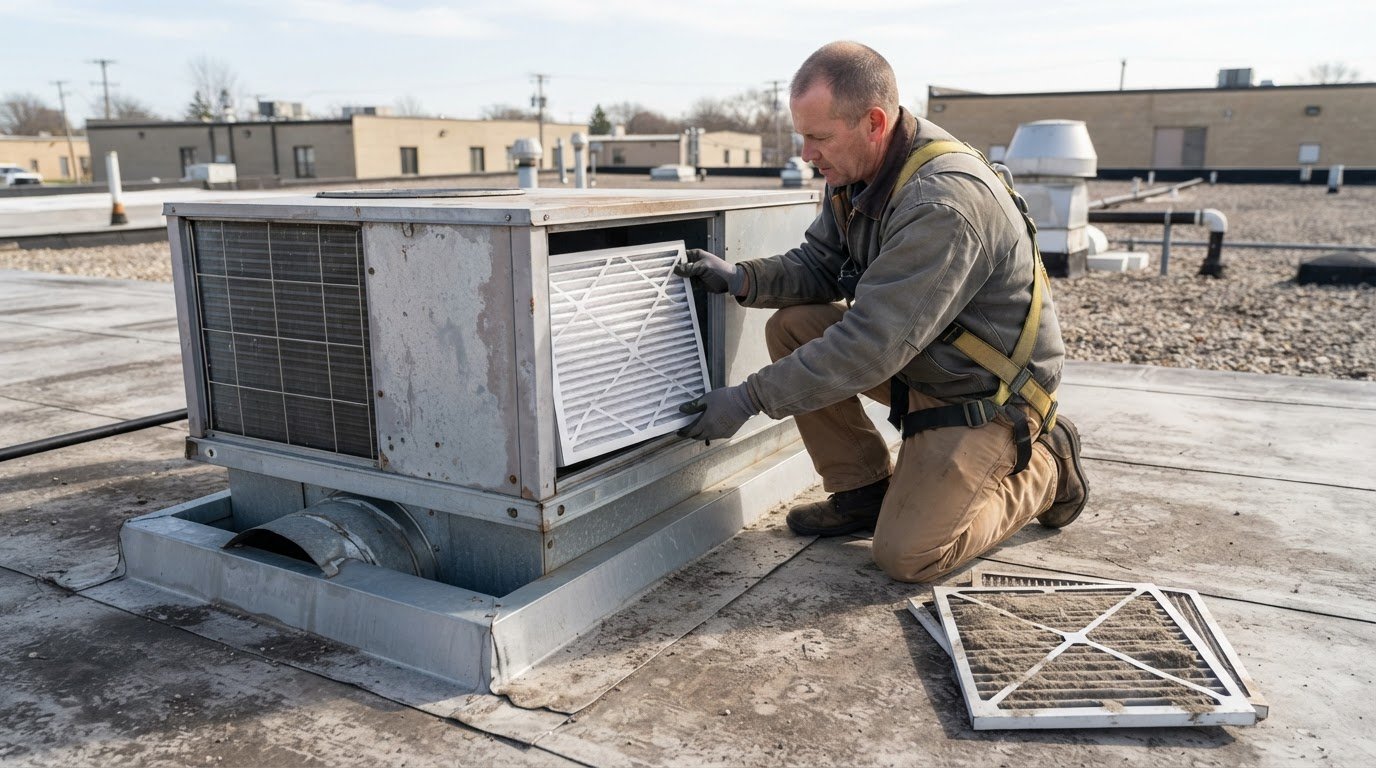
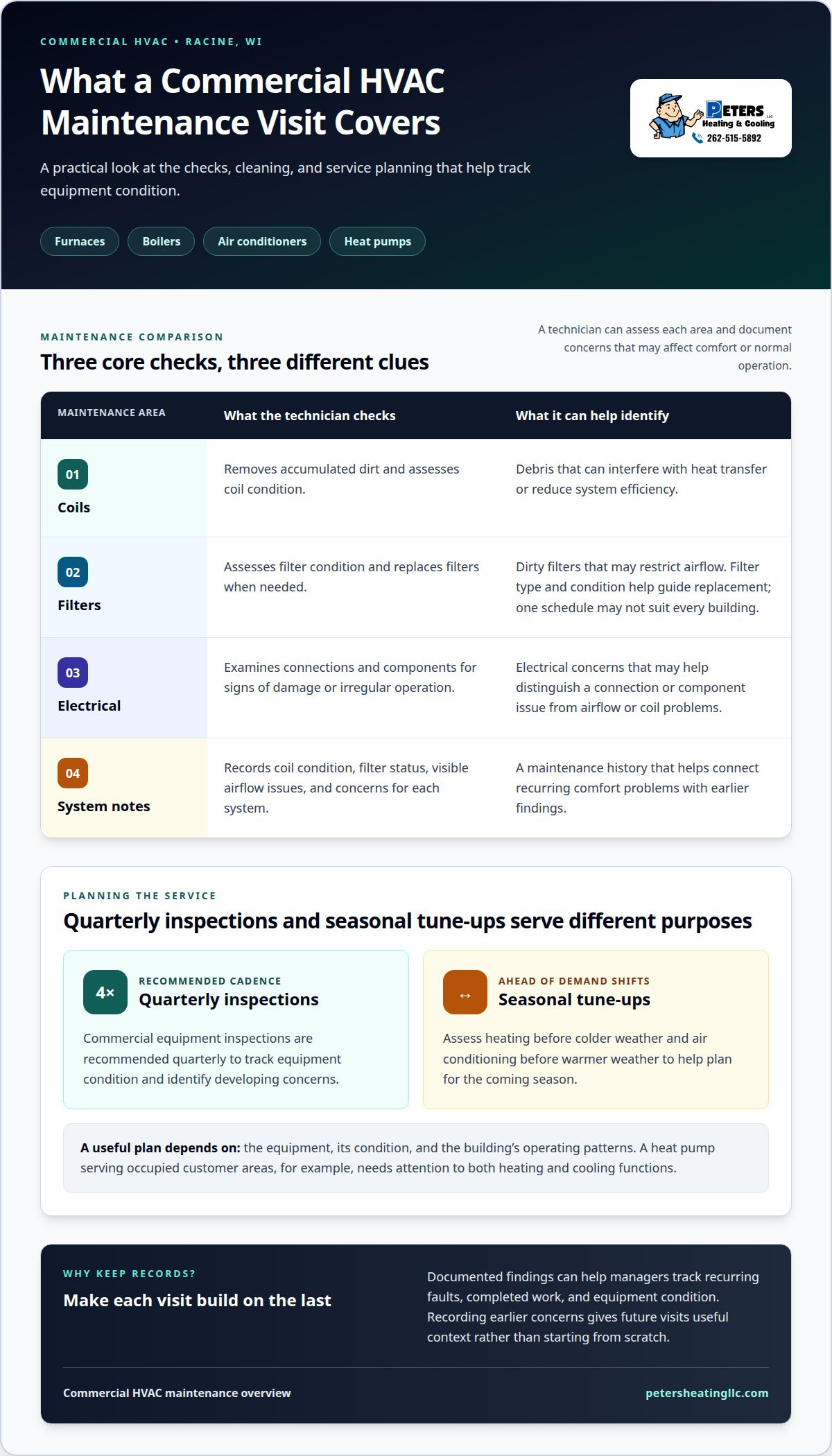
When cleaning coils, a technician removes accumulated dirt that can interfere with heat transfer. The technician also assesses filter condition and replaces filters when needed. Dirty filters can restrict airflow, while debris on coils can reduce system efficiency. Filter type and condition guide replacement, so the same schedule may not suit every building.
For an air conditioner or heat pump, a technician can record coil condition, filter status, and visible issues affecting airflow. These notes can help connect recurring comfort problems with the equipment’s maintenance history.
Quarterly Checks and Seasonal Tune-Ups
Commercial equipment inspections are recommended quarterly. Seasonal tune-ups give technicians a chance to assess heating before colder weather and air conditioning before warmer weather. An inspection can identify developing concerns and help determine the equipment’s next service needs.
Electrical inspection is another part of a maintenance visit. A technician examines connections and components for signs of damage or irregular operation, then documents concerns that need attention. This can help distinguish an electrical problem from an issue involving airflow or coil condition.
A practical maintenance plan considers the equipment, its condition, and the building’s operating patterns. For example, a heat pump serving occupied customer areas needs attention to both heating and cooling functions. A technician can record findings for each system so future visits account for earlier concerns rather than starting from scratch.
Quarterly inspections and seasonal tune-ups serve different planning needs. Routine inspections track equipment condition throughout the year, while seasonal service focuses on the coming change in heating or cooling demand. Together, they help organize maintenance and give building managers a clearer view of developing problems.
Commercial HVAC maintenance in Racine
For commercial HVAC maintenance in Racine, WI, the right service starts with the building’s equipment and operating needs. A furnace, boiler, air conditioner, or heat pump each calls for maintenance suited to its role. Routine inspections can support efficient operation and help identify developing problems before they interrupt heating or cooling.
Which companies serve Racine? Carrier dealers in Racine provide HVAC maintenance aimed at supporting efficiency and preventing unexpected breakdowns. Local providers may also service light-commercial systems, so consider the building type and equipment scope when arranging service.
A useful maintenance plan accounts for more than the equipment label. Technicians need to know which areas each system serves, how the building operates, and whether occupants report uneven temperatures. For example, a boiler serving occupied work areas may need different inspection attention than a seasonally used air conditioner. Service records connect current findings with past repairs and recurring issues.
Routine HVAC maintenance is important for peak system performance and energy efficiency. A service visit can include inspection, cleaning, and attention to potential problems. Technicians can document equipment condition, identify concerns, and explain which repairs need priority. This gives building managers a clearer basis for planning follow-up work instead of treating each repair as an isolated event.
Before arranging service, define the equipment involved and the problem staff have observed. Note whether the issue affects heating, cooling, or a particular area, and share relevant service records. Those details help clarify the visit’s scope. Residential and commercial systems aren’t automatically the same service category, so describing a small business or other commercial building helps match the work to its use. For help with a building’s HVAC needs, discuss your maintenance needs.
Peters Heating & Cooling: HVAC Preventative Maintenance
Peters Heating & Cooling provides preventative HVAC maintenance for light-commercial systems, helping businesses plan inspections around equipment condition and operating needs. Schedule routine service or request repair for a furnace or air conditioner. If an older unit needs replacement, furnace installation is also available.
During maintenance, technicians can inspect system operation, clean coils, change filters, and assess electrical components. These checks help identify developing concerns and clarify which repairs need attention. If your building has uneven temperatures, reduced airflow, or equipment that runs inconsistently, share those symptoms and relevant service history to help guide the visit.
For practical support with commercial HVAC maintenance in Racine, contact Peters Heating & Cooling.
Set a Clear Next Step for Your Building
Use your next service visit to turn equipment concerns into a practical plan. Before scheduling, gather the system types, affected areas, and recent service records. Note changes in comfort or operation, such as a furnace struggling to heat occupied rooms or an air conditioner that no longer cools consistently. These details help focus the conversation on your building’s needs.
For commercial HVAC maintenance in Racine, WI, Peters Heating & Cooling provides preventative maintenance and related heating and cooling services. These include furnace repair, air conditioning repair, and furnace installation. The right next step depends on whether your equipment needs routine attention, a repair, or replacement planning.
Start with the issue that most affects your building’s operation, then share the relevant details with the service team. A straightforward discussion can help clarify the work to consider and make planning easier. Contact Peters Heating & Cooling to discuss your commercial HVAC needs and take the next step with confidence.
Frequently Asked Questions
What are the advantages of professional HVAC maintenance?
Professional maintenance gives businesses a planned way to assess equipment condition and address developing issues. A technician can identify concerns before they disrupt occupied spaces, document system condition, and explain which repairs need attention first. Those records also help managers make informed decisions about future service and warranty care, rather than relying on memory when an issue returns.
What services are included in commercial HVAC maintenance plans in Racine?
A maintenance plan may cover system inspections, cleaning, filter replacement, coil care, and electrical checks. The equipment list matters: a Racine business with a furnace and a separate air conditioner needs service that accounts for both systems. Businesses in Kenosha, Oak Creek, and Winthrop Harbor can use an equipment inventory and previous service notes to clarify the scope of a maintenance visit.
How often should commercial HVAC systems be serviced in Wisconsin?
Commercial equipment inspections are recommended quarterly, while Peters Heating & Cooling recommends general HVAC maintenance twice per year, once before cooling season and once before heating season. These recommendations describe different schedules, so building managers can plan visits around system needs and the operating calendar. Seasonal appointments help assess equipment before the building relies on it for heating or cooling.
What do professionals typically include on a commercial HVAC maintenance checklist?
A useful checklist records which equipment was inspected, its condition, and the service completed. It can also note reported comfort issues, recurring faults, and recommended follow-up. For example, if staff report uneven temperatures in one area, the service record can connect that observation with the system serving the space. Clear notes make future maintenance easier to track and prioritize.
How can professional HVAC maintenance help businesses in Racine improve energy efficiency and reduce operating costs?
Maintenance can support efficient operation by addressing issues that interfere with airflow or equipment performance. For example, a technician may find a dirty coil or a filter that needs replacement during a scheduled visit. Identifying these conditions gives a business a practical basis for addressing avoidable strain and planning repairs. Better-informed maintenance decisions can help manage energy use and operating expenses without assuming a specific amount of savings.