When an electric furnace stops heating, the safest first step is to leave the equipment closed. A cold house can make you want to check inside, but electric furnace repair should start with simple observations, not opening the system or handling wiring.
It’s understandable to want a quick answer when the heat is out, especially when you’re unsure whether the cause is minor or points to a larger problem. You can check a few basic things without taking the furnace apart, then share what you noticed with a technician. Persistent trouble, unusual sounds, or signs of electrical damage call for professional attention rather than guesswork.
This guide explains what you can safely check, what common symptoms may indicate, and when to schedule a repair. It also covers what a technician may inspect to identify the cause before recommending work. Peters Heating & Cooling provides residential and light-commercial furnace repair in Southeast Wisconsin and Northeast Illinois, with honest recommendations and transparent pricing. Noting when the problem started and how the furnace behaves can help make the next step more straightforward.
Key Takeaways
- Electric furnace repair starts with identifying symptoms. A technician verifies the underlying cause before recommending work.
- Use a simple check sequence: thermostat, accessible filter, and breaker status. Follow the furnace instructions, and don’t repeatedly reset a tripping breaker.
- Weak airflow, no heat, or unusual operation can point to different system areas, but symptoms alone can’t confirm a fault.
- Note when the problem began and what the furnace is doing. Those details can help guide the repair visit.
- Recurring heat loss or repeated breaker trips are reasons to stop troubleshooting and schedule service in Kenosha, Racine, Oak Creek, or Winthrop Harbor.
Electric Furnace Repair: What Common Symptoms Can Tell You
A furnace that isn’t heating can make a home uncomfortable quickly, and it’s not always clear why the temperature has dropped. Electric furnace repair means finding and correcting faults in a system that uses electricity to produce heat. A residential furnace works as part of a central heating system, and electric models use resistance heating to warm air.
Pay attention to what the system is doing, but don’t treat a symptom as proof that a particular part has failed. No heat, weak airflow, unusual cycling, and unexpected sounds can each have more than one possible cause. A technician needs to inspect and test the equipment to identify the fault.
- No heat: Note whether the furnace runs without warming the air or doesn’t appear to start. Arrange an assessment if the loss of heat persists.
- Weak airflow: Record which rooms or vents seem affected and whether airflow has changed. The furnace itself may not be the only source.
- Unusual cycling: Note if the system turns on and off more often than usual or seems to run continuously. Share when you notice the pattern.
- Unexpected sounds: Describe sounds such as rattling, buzzing, or clicking, and when they occur. Don’t open the unit to investigate.
How to Describe Electric Furnace Symptoms Clearly
Good observations can help focus a service visit, though they can’t confirm a failed part. Note when the issue began and whether it happens all the time or comes and goes. Record the thermostat setting, any displayed alert, changes in airflow, and the type and timing of unusual sounds. Mention a recent power interruption or change in comfort, too. Keep these notes without opening the furnace or removing its panels.
When a Furnace Problem Needs Prompt Attention
Persistent loss of heat is a reason to arrange a professional assessment rather than continue guessing. Stop using the equipment if you notice a burning smell, smoke, or scorching. Don’t touch exposed wiring, internal components, or hot equipment, and don’t try to inspect the furnace from inside. A technician can assess the system and explain the findings before recommending a repair.
How an Electric Furnace Heats Your Home, and Where Problems Can Start
An electric furnace makes heat through electrical resistance. Electricity passes through heating elements, which warm the air moving through the system. A blower then pushes that air through ducts and into your rooms. Unlike a gas furnace, an electric furnace doesn’t burn fuel to create heat, so gas-pilot troubleshooting doesn’t apply.
Several parts have to work together. The thermostat signals that heat is needed, controls coordinate the cycle, heating elements provide warmth, and the blower moves air. Safety devices monitor operation and may interrupt the cycle if they detect a problem. Since these parts interact, the same symptom can have different possible sources. No heat, for example, doesn’t identify which part needs attention.
What Happens During a Normal Heating Cycle?
When the room temperature falls below the thermostat setting, the thermostat sends a call for heat. The furnace controls manage the heating cycle, including operation of the elements and blower. The elements warm the air, and the blower circulates it through the ductwork. The exact sequence can vary by equipment, but the basic process is electrical heat followed by air circulation.
Which Electric Furnace Components Can Affect Heating?
Heating elements are the source of warmth, but they aren’t the only parts that can affect heat delivery. A thermostat or control-board issue may interfere with the operating sequence. A blower problem may affect air movement, while a safety control may interrupt operation. These are possibilities for a technician to assess, not conclusions to draw from a symptom. Don’t open the unit or try to inspect the elements or controls yourself.
Protective controls are part of the system’s operation, not components to bypass. The U.S. Consumer Product Safety Commission’s guidance on home heating equipment hazards is a reminder to treat heating equipment cautiously. Leave internal checks and electrical testing to a qualified technician.
Understanding the basic cycle can help you describe what you observe, but it can’t confirm a failed component. If the furnace isn’t heating reliably, professional electric furnace repair can help identify the cause before work is recommended. Peters Heating & Cooling provides furnace repair service for homes and light-commercial properties.
Safe Electric Furnace Troubleshooting: Checks You Can Do Without Opening the Unit
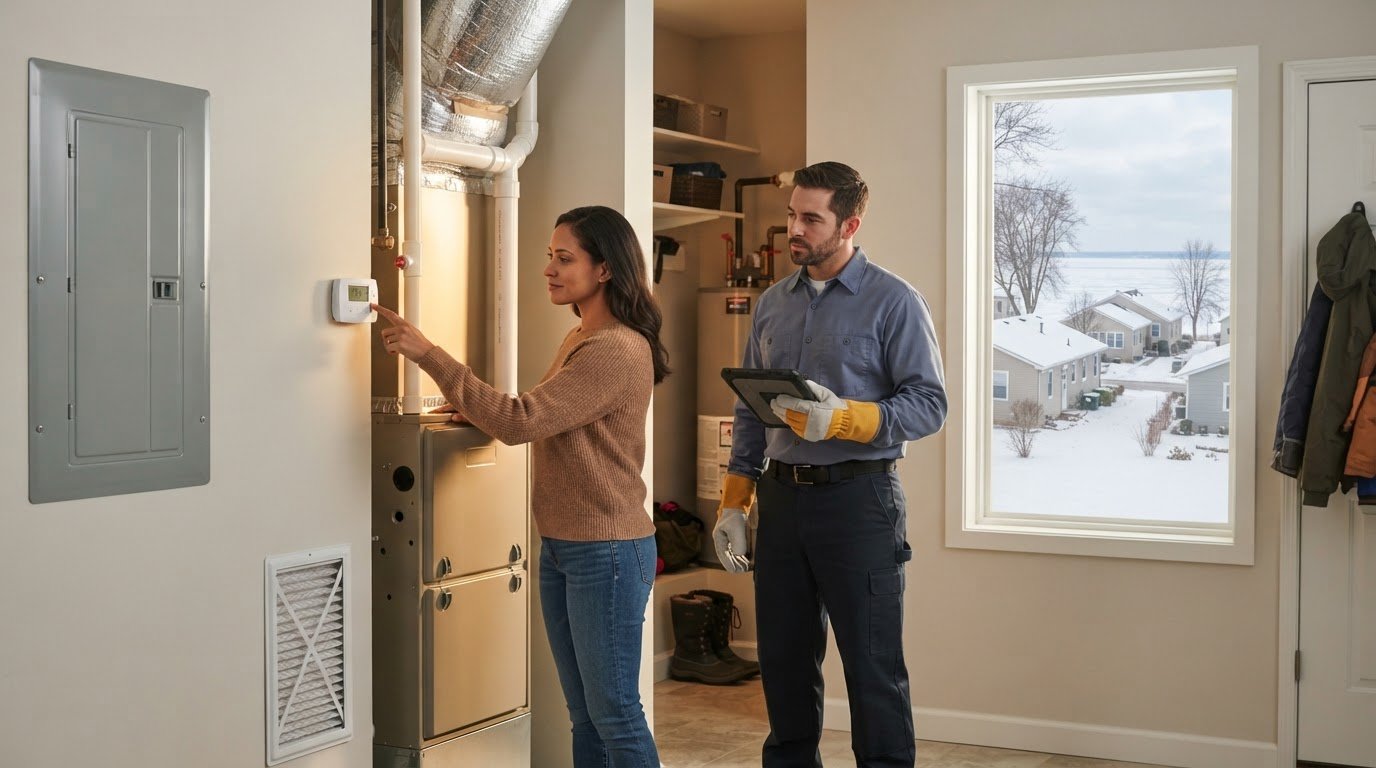
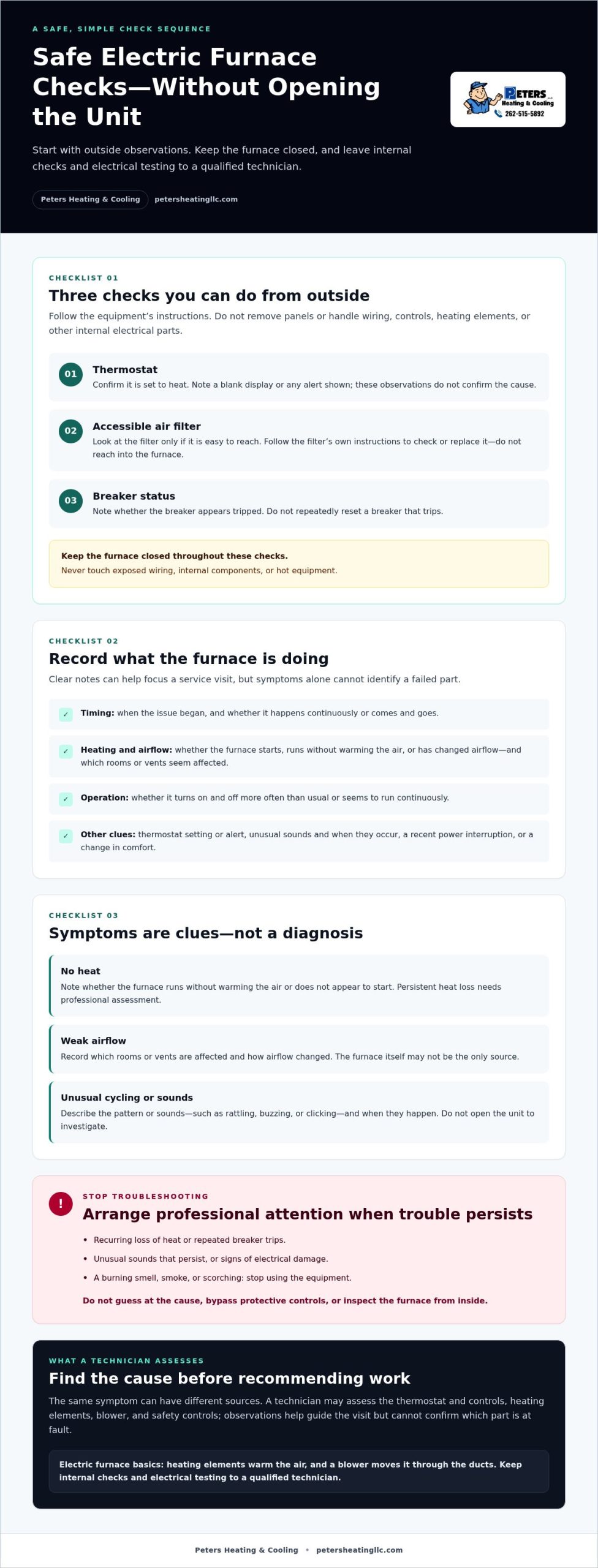
A few outside checks may help you spot a simple setting issue or give a technician useful information. Keep the furnace closed throughout. Follow the equipment’s instructions, and don’t remove panels or handle wiring, controls, heating elements, or other internal electrical parts. Those checks belong to a technician.
Check the Thermostat and Air Filter First
Start with the thermostat, then look at the filter only if it’s easy to reach. A blank display, alert, or airflow change is useful information, but it doesn’t confirm what’s wrong. Use the filter’s own instructions to check or replace it, and don’t reach into the furnace to access it.
- 1. Thermostat: Confirm it’s set to heat and the target temperature is higher than the room temperature. Note a blank display or any alert shown.
- 2. Accessible filter: Check for visible dirt or blockage if the filter is readily accessible. Replace it only according to the equipment and filter instructions.
Check Power Safely and Know When to Stop
Look at the breaker without removing the electrical-panel cover. If it appears tripped, note that, but don’t keep resetting it. A breaker that trips again needs professional diagnosis, not repeated attempts to restore power. Never open the furnace to inspect wiring or components.
- 3. Breaker status: Check whether the relevant breaker appears tripped, without touching internal panel parts or removing the cover.
- 4. Symptom notes: Record when the issue began, whether it’s constant or intermittent, and what you observe, such as weak airflow, alerts, or unusual sounds.
Stop troubleshooting if the problem persists, the breaker trips again, or you notice a concerning or burning smell. Stop using the furnace if there’s smoke or scorching. Don’t touch hot equipment or exposed wiring. These observations can help guide electric furnace repair, but they can’t establish the cause. A technician can inspect and test the system safely, then explain the findings before recommending work.
Common Electric Furnace Faults: What a Technician Diagnoses and Repairs
A symptom can point to several possible areas, so replacing a part based on a checklist alone can waste time and miss the actual fault. During electric furnace repair, a technician considers how the system behaves, inspects it safely, and tests relevant components. The possibilities below are starting points for diagnosis, not confirmed causes.
| What you notice | Possible area for a technician to verify |
|---|---|
| No heat or heat that comes and goes | Thermostat, controls, electrical supply, heating elements, or safety controls |
| Air moves, but doesn’t feel warm | Heating elements or controls, to be checked through appropriate testing |
| Weak airflow or uneven comfort | Airflow restrictions or blower operation |
| The furnace stops during operation | Safety controls, electrical supply, or another operating fault |
Even similar symptoms can come from different faults. No heat might involve the thermostat’s call for heat, a control issue, or a problem with the heating elements. Weak airflow may relate to a restriction or blower operation. Only inspection and test results can narrow down the cause.
How Technicians Narrow Down the Cause
The technician considers your notes about when the issue occurs alongside the furnace’s operation. They inspect the equipment safely and perform appropriate electrical tests on components as needed. A symptom can guide the investigation, but it doesn’t determine the repair. Test results help the technician explain what’s happening and which work, if any, is supported by the findings.
That process matters because a part shouldn’t be replaced just because its function seems related to a symptom. Honest recommendations connect proposed work to what the inspection and testing show. Transparent pricing helps you understand the recommended repair before deciding how to proceed.
Repair or Replacement: What Findings Matter?
The recommendation depends on the equipment’s condition and the verified fault. If diagnosis points to a specific correctable problem, repair may be appropriate. Broader system decisions call for weighing the furnace’s overall condition rather than assuming replacement is necessary because one component has failed. For more context, see the high-efficiency furnace installation guide.
Peters Heating & Cooling provides professional furnace repair and explains the findings before recommending work. A clear diagnosis helps you understand the next step without guessing at the cause.
When to Schedule Electric Furnace Repair in Southeast Wisconsin and Northeast Illinois
Stop troubleshooting and arrange service if the furnace repeatedly stops heating, a breaker trips again, or the system operates unusually. Repeatedly resetting a breaker or continuing to use equipment with concerning symptoms won’t identify the cause. A professional assessment can help determine what’s wrong and which repair, if any, is appropriate.
What to Have Ready When You Arrange a Repair Visit
A few details can help the technician understand the problem before inspecting the system. Note what you’ve observed, when it began, and whether it happens continuously or returns after the furnace runs. Share any thermostat alerts and whether you noticed a breaker trip. Mention recent service or a power interruption if you know of one. Don’t attempt internal repairs to gather more information.
Peters Heating & Cooling provides residential and light-commercial furnace repair in Southeast Wisconsin and Northeast Illinois, including Kenosha, Racine, Oak Creek, and Winthrop Harbor. Its licensed, insured, continuously trained technicians assess the equipment and explain their findings and recommendations before repair work proceeds. That way, the next step is based on the system’s condition, not a guess from symptoms alone.
Local Furnace Repair Without Guesswork
For a home or business, a clear account of what the furnace is doing can help the repair visit get off to a focused start. Peters Heating & Cooling emphasizes honest recommendations and transparent pricing, so you can understand the proposed work before deciding how to proceed. If your heating system serves a business, explore light-commercial HVAC service in the Kenosha area.
If recurring heat loss, repeated breaker trips, or abnormal operation has you unsure what to do next, contact Peters Heating & Cooling to arrange electric furnace repair. Share the symptoms and any alerts you’ve noted, and leave internal checks to the technician.
Take the Next Step Toward Reliable Heat
A few safe checks can help identify simple setting issues, but symptoms alone can’t confirm which furnace part needs attention. Check only accessible items, such as the thermostat and filter, and leave internal components and electrical testing to a technician. If heat loss keeps returning, the breaker trips repeatedly, or the furnace behaves abnormally, stop troubleshooting and arrange a professional assessment.
Peters Heating & Cooling is locally owned and operated. Its licensed, insured, continuously trained technicians provide residential and light-commercial furnace repair across Southeast Wisconsin and Northeast Illinois. During an electric furnace repair visit, they assess the system, explain their findings, and make honest recommendations with transparent pricing.
Schedule electric furnace repair with Peters Heating & Cooling and share what you’ve noticed. Clear information and a careful diagnosis can help put you on the path back to dependable comfort.
Frequently Asked Questions
Can I troubleshoot an electric furnace myself?
You can safely check a few items without opening the furnace. Confirm the thermostat is set to heat and above room temperature, inspect only an easily accessible filter according to its instructions, and note whether the relevant breaker appears tripped. Follow the equipment guidance. Don’t remove furnace or electrical-panel covers, touch wiring, or inspect internal parts. If these checks don’t restore heat, arrange professional diagnosis.
Why is my electric furnace running but not heating?
An electric furnace can run without producing heat for several reasons, including a thermostat or control issue, an electrical supply problem, a heating-element fault, an airflow restriction, or a safety control interrupting operation. These are possibilities, not a diagnosis. Air moving from the vents can’t identify the failed part. If thermostat and accessible-filter checks don’t help, schedule electric furnace repair so a technician can inspect and test the system.
What should I do if my electric furnace keeps tripping the breaker?
If the breaker trips again, stop resetting it and arrange professional diagnosis. Repeated resets won’t establish the cause and may leave an underlying electrical or equipment problem unresolved. Don’t remove the electrical-panel cover, open the furnace, or handle wiring or internal components. Note when the trip occurs and whether it follows an attempt to run the furnace. Share those details with the technician.
How do I know if my electric furnace heating element is bad?
You can’t confirm a failed heating element from symptoms alone. Weak heat, no warm air, or interrupted heating may have several possible causes, including controls, airflow, electrical supply, or a safety device. A technician must inspect and test the system, including the elements where appropriate, before identifying the fault. Don’t open the furnace or attempt to test or touch heating components yourself.
Is it safe to keep running an electric furnace that smells like burning?
No. Stop using the furnace if you notice a burning smell, provided you can do so without approaching hot or exposed components. Don’t touch the equipment, remove panels, or investigate inside. If you see smoke or scorching, keep clear of the unit and seek prompt professional guidance. Tell the technician what you noticed and when it began. A smell alone doesn’t identify the cause, but it warrants taking the equipment seriously.
How long does electric furnace repair take?
Repair timing depends on the fault a technician verifies and the work needed to correct it. A straightforward issue and a problem requiring additional inspection or component work may involve different steps, so symptoms alone can’t establish a reliable duration. After assessing the furnace, the technician can explain the findings, recommended repair, and expected next steps. The diagnosis helps set a realistic expectation for the work.
When should I repair or replace an electric furnace?
Repair or replacement depends on the furnace’s overall condition, the verified problem, and the repair it needs, not a single symptom or fixed rule. A technician can explain whether correcting a specific fault is practical or whether broader system decisions deserve consideration. Peters Heating & Cooling provides residential and light-commercial furnace repair in Kenosha, Racine, Oak Creek, and Winthrop Harbor, with honest recommendations and transparent pricing.