What if the furnace ignitor isn’t the reason your heat has stopped? A clicking furnace that won’t light can point to an ignitor problem, but other faults can cause similar symptoms. That’s why the furnace ignitor replacement cost is difficult to estimate accurately before the furnace is diagnosed.
It’s reasonable to want a clear explanation before approving a repair, especially when your home is getting cold. The estimate can depend on the ignitor type, how accessible it is, and what testing is needed to confirm the cause. A technician should inspect the furnace before recommending a replacement, so you understand what’s wrong and what the repair involves.
This guide explains what affects an ignitor replacement estimate, which symptoms warrant professional diagnosis, and why a familiar symptom doesn’t always mean the ignitor has failed. Peters Heating & Cooling provides furnace repair with transparent pricing and honest recommendations. Learn how to take a safe next step toward restoring heat without assuming the first suspected part is the problem.
Key Takeaways
- The furnace ignitor replacement cost depends on more than the part; an estimate may also reflect diagnosis, labor, access, and related repairs.
- A hot-surface ignitor helps light gas during a heating cycle, but furnaces can use different ignition designs.
- Clicking or failed ignition can have several causes, so diagnosis helps prevent replacing the wrong component.
- Before arranging furnace repair, note the symptoms, when they began, and your furnace’s make and model.
- Review the technician’s findings and repair scope so you can make an informed decision about restoring heat.
Furnace Ignitor Replacement Cost: What the Repair Estimate Covers
There isn’t one universal furnace ignitor replacement cost. A retail part price or a neighbor’s repair bill can’t account for differences in furnace design, diagnosis, access, and the work needed to restore operation. A useful estimate reflects the specific furnace and confirmed fault, not just the name of a component.
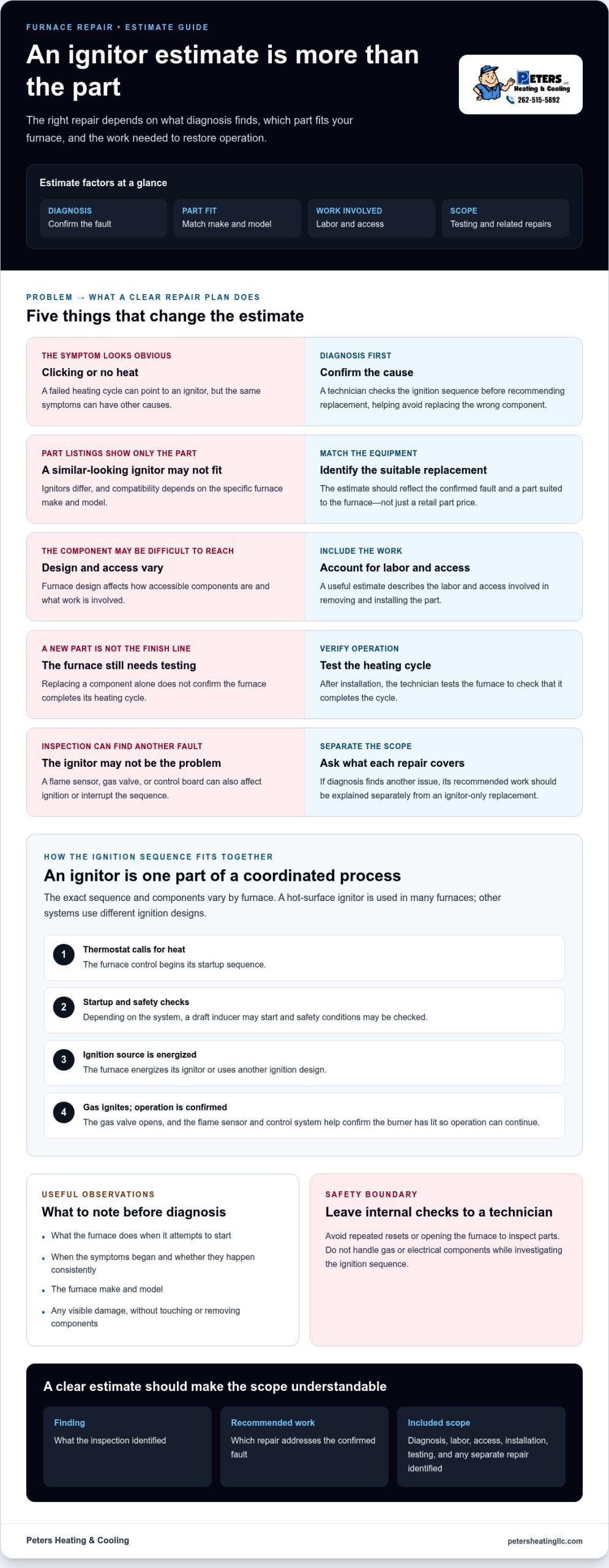
An ignitor replacement estimate depends on the diagnosis, compatible part, labor and access involved, and any additional repair identified during inspection. The technician should diagnose the furnace before recommending an ignitor, since a failed heating cycle doesn’t prove that this part is faulty.
What is included in an ignitor replacement estimate?
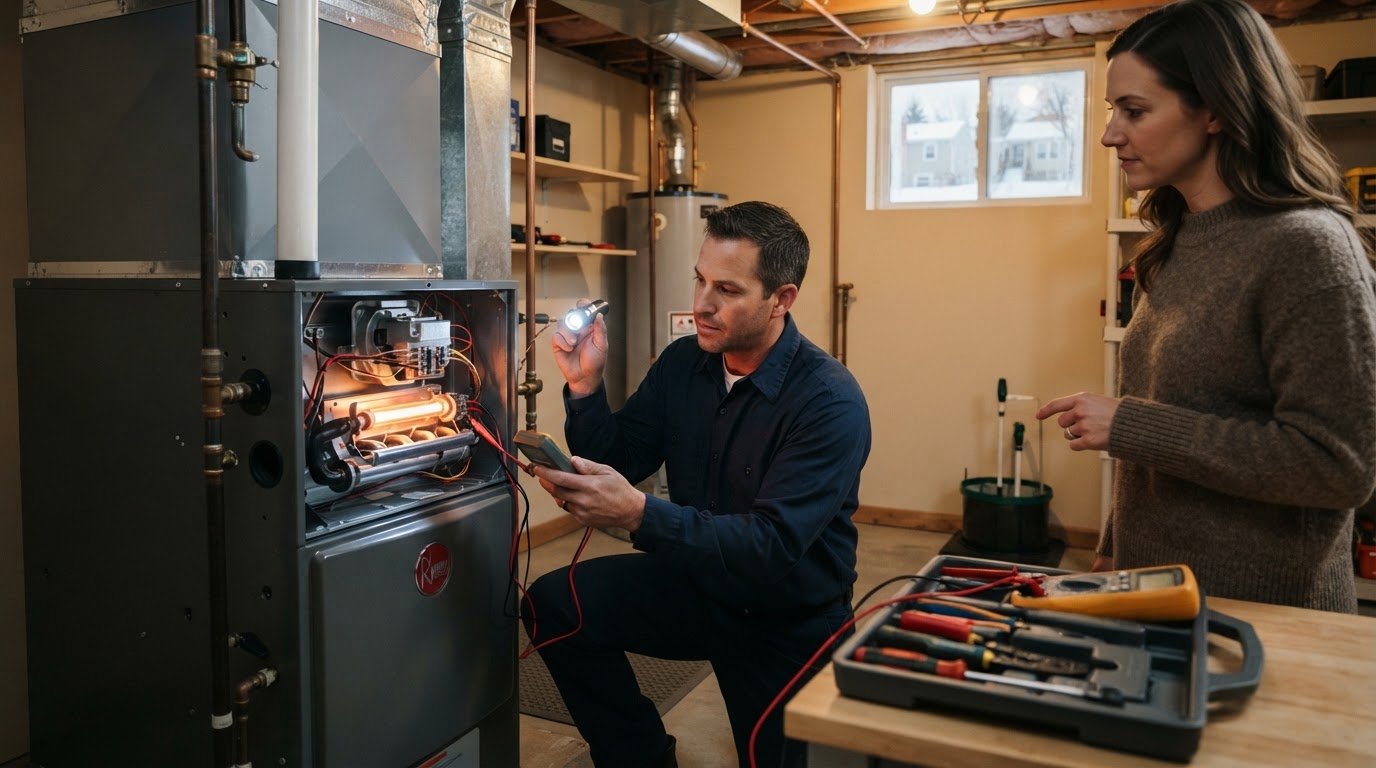
A professional repair typically involves more than fitting a new part. The technician examines the furnace and its ignition sequence, identifies a suitable replacement for the make and model, removes the faulty component if replacement is warranted, and installs the new one. The furnace is then tested to check that it completes the heating cycle.
The estimate may also include diagnostic work and labor. If diagnosis uncovers another fault, that work should be explained separately from an ignitor-only replacement. A clear estimate identifies the finding, the recommended work, and what the repair includes. That detail helps you understand the scope before deciding how to proceed.
Why online furnace ignitor prices do not tell the whole story
A product listing shows the price of a part, not the cost or scope of a completed repair. Ignitors differ, and a component that looks similar in a photo may not be compatible with your furnace. The right match depends on the equipment, and diagnosis and installation require additional work.
Online listings can help explain why parts vary, but they can’t establish what’s wrong with a particular furnace or how accessible its components are. A low listed price doesn’t account for labor, testing, or related repairs. A broad online estimate also can’t determine the cost for a local job, because the final scope depends on the furnace and the findings on site.
There’s also a terminology wrinkle: the Ignitron Wikipedia article describes a historical electrical device, not a typical modern furnace ignitor. The similar names can cause confusion, so use information about the specific furnace component when learning how your heating system works.
For a clear estimate, ask for the diagnosis and recommended work to be explained plainly. Peters Heating & Cooling technicians diagnose the furnace before recommending a replacement, with transparent pricing and honest recommendations. Knowing what the estimate covers helps you distinguish the necessary repair from any separate work identified during diagnosis.
How a Furnace Ignitor Works, and Why Diagnosis Matters
A furnace that starts but doesn’t produce heat may have an ignition problem, but that alone doesn’t identify the failed part. In many furnaces, a hot-surface ignitor heats up to help ignite gas during a call for heat. Other systems use different ignition designs, so the sequence and components vary by make and model.
A suspected ignitor fault is a clue, not a confirmed diagnosis. The full startup sequence must be checked to identify the cause. That distinction matters because replacing the ignitor won’t solve the problem if another component is preventing ignition or stopping the heating cycle.
What happens during a normal furnace ignition cycle?
When the thermostat calls for heat, the furnace control begins its startup sequence. Depending on the system, the furnace may start a draft inducer, check safety conditions, and then energize the ignitor. Once the ignition source is ready, the gas valve opens and the gas ignites. The flame sensor and control system help confirm that the burner has lit so the furnace can continue operating.
The ignitor plays one part in a coordinated process. Controls and safety components also affect whether the sequence starts, continues, or shuts down. A furnace may use a hot-surface ignitor or another ignition design, which is why identification and diagnosis should be specific to the equipment. Homeowners shouldn’t handle gas or electrical components to investigate the sequence.
Which symptoms can suggest an ignitor problem?
Repeated startup attempts, a furnace that fails to produce heat, or a visibly damaged ignitor element are reasons to arrange a professional diagnosis. These signs are useful observations, not proof. A furnace may click or make a brief startup attempt even when the ignitor isn’t the source of the fault.
- Repeated attempts: The furnace starts its sequence more than once but doesn’t sustain heat.
- No heat: The thermostat calls for heat, but the burners don’t light or the system stops before warm air reaches the home.
- Visible damage: An element appears cracked or otherwise damaged when seen without touching or removing components.
A technician may also consider the flame sensor, gas valve, or control board. For example, an ignitor may heat up while the furnace still fails to establish or maintain a flame. A control issue can also interrupt the sequence. The same symptom can therefore lead to different findings and repair recommendations.
Note what you observe, including whether the furnace attempts to start and whether the problem happens consistently. Avoid repeated resets or opening the furnace to inspect internal parts. A professional diagnosis can connect those observations to the system’s actual operation and help determine whether ignitor replacement is appropriate.
Once the fault is confirmed, the furnace ignitor replacement cost can be considered in light of the correct part and repair scope, rather than a symptom alone. Peters Heating & Cooling diagnoses furnaces before recommending repairs. If your system isn’t completing its heating cycle, furnace repair service can help identify the cause and clarify the next step.
What Changes Furnace Ignitor Replacement Cost?
The furnace ignitor replacement cost depends on the repair conditions, not just the age of the furnace or the price of a part. A newer furnace can still need a hard-to-access repair, while an older model may need only a straightforward component replacement. Age and model help identify the equipment, but neither alone determines the diagnosis, repair scope, or recommendation.
Use this comparison to understand what can shape an estimate. These are factors to discuss, not fixed charges or a guarantee of what your furnace needs.
| Repair condition | How it can affect the estimate |
|---|---|
| Part compatibility | The technician needs to identify a replacement suited to the furnace’s make, model, and ignition design. |
| Diagnostic findings | If testing confirms an ignitor fault, the recommendation may focus on replacement. A different fault can change the proposed work. |
| Labor and access | The time and care required to reach and install the component can vary with the furnace layout. |
| Additional repair | A separate issue may require its own explanation and estimate alongside the ignitor recommendation. |
How furnace model and part compatibility affect the estimate
Ignitors aren’t one-size-fits-all. A technician matches the replacement to the furnace’s make and model and checks that it suits the equipment’s ignition design. A broadly marketed universal part may fit some systems, but the label alone doesn’t establish compatibility with yours. Confirming the right component helps prevent a repair plan based only on appearance or a product listing.
How diagnosis, access, and related faults change repair scope
Diagnosis establishes whether the ignitor has failed or another issue is interrupting ignition. Access also matters: a component that’s easy to reach may take less installation time than one in a more confined arrangement. If testing points to a separate fault, the technician should explain it as distinct work, rather than implying it’s automatically part of replacing the ignitor.
Before approving a repair, look for a clear explanation of the finding and the work it supports. A useful estimate should distinguish the ignitor replacement from any additional recommendation. If another component is included, the explanation should connect that work to the diagnostic result. Peters Heating & Cooling diagnoses the furnace before recommending a repair, so you can understand the proposed scope and make an informed decision.
For an estimate tailored to your furnace, arrange furnace repair and share the equipment’s make and model along with the symptoms you’ve noticed. That information helps focus the diagnosis, but testing determines the appropriate repair.
Should You Replace a Furnace Ignitor Yourself or Call a Technician?
Replacing a furnace ignitor yourself may seem convenient, especially if you find a part listing that appears to match your equipment. But access to a replacement part doesn’t confirm that the ignitor is faulty or that the part is compatible. A wrong diagnosis can leave the furnace without heat, while incorrect work around gas or electrical components can create safety risks.
If you’re unsure what’s causing the failed startup, stop troubleshooting and arrange professional diagnosis. The goal isn’t simply to install a component. It’s to identify the fault and choose a repair that addresses it.
Why a failed startup does not always mean a bad ignitor
An ignitor problem can prevent a furnace from lighting, but a flame sensor, gas valve, control board, or another part of the ignition sequence can produce similar symptoms. A click or brief attempt to start doesn’t isolate the cause. Replacing the ignitor based on that clue alone may not restore heat and may add work without resolving the original fault.
When professional furnace diagnosis is the practical choice
Professional diagnosis is the sensible next step if the furnace repeatedly fails to start, you see possible component damage, or you suspect an issue involving ignition or gas-system parts. A technician can test the furnace, identify the cause, and explain the repair scope before recommending work. Peters Heating & Cooling technicians are licensed and insured and receive ongoing training.
Before arranging service, note what the furnace does during startup, when the issue began, and whether the behavior is consistent. You can also gather the furnace make and model from its identification label, without opening equipment or handling internal components. These details give the technician useful context, but they don’t replace testing.
Doing the work yourself may appear to reduce the furnace ignitor replacement cost, but the part price alone doesn’t account for confirming the fault, choosing the right component, or testing the furnace after repair. A professional assessment connects the symptoms to a specific finding and recommendation, rather than relying on guesswork.
For homeowners in Kenosha, expert HVAC repair in Kenosha can provide a practical path from a suspected ignition issue to a diagnosis and explained repair scope. If you’re ready to have the furnace assessed, schedule furnace repair with Peters Heating & Cooling.
Getting a Clear Furnace Ignitor Repair Estimate in Southeast Wisconsin
A useful estimate starts with good information, followed by diagnosis. If your furnace isn’t heating, a few simple notes can help the technician understand what you’re seeing and explain the recommended repair. You don’t need to identify the faulty part yourself or open the furnace.
- Note the symptoms. Record when the furnace stopped heating and what happens when it tries to start. Mention whether the issue is constant or comes and goes.
- Gather furnace details. If the identification label is easy to reach, note the make and model. Don’t remove panels or reach inside to find it.
- Schedule a diagnosis. Share your notes and any relevant recent changes, such as a problem that began after a power interruption or has returned more than once.
- Review the findings. Ask for a plain-language explanation of the diagnosis, recommended work, and any separate repair included in the estimate.
This sequence can help you move from a no-heat concern to a clearer repair decision without guessing that the ignitor is at fault. The furnace ignitor replacement cost depends on what testing confirms and what work the particular system needs.
What to have ready before requesting furnace service
Keep your observations specific. “The furnace stopped heating this morning” is more useful than “it seems broken.” Note whether you hear a startup attempt, whether warm air comes through the vents, and when the issue first appeared. If the problem has happened before, mention when and whether anything changed around the time it began. Share the make and model if readily accessible, but leave internal inspection to the technician.
How Peters Heating & Cooling approaches a repair recommendation
A technician diagnoses the furnace before recommending an ignitor replacement. Peters Heating & Cooling explains findings in straightforward language and provides honest recommendations with transparent pricing, so you can understand the proposed repair scope before work proceeds. If the diagnosis points to a different issue, the explanation should make clear how that finding affects the recommendation. Financing options are also available.
A clear estimate should answer practical questions: What did the diagnosis find? Is ignitor replacement the recommended repair? Does the scope include additional work? Understanding those points makes it easier to decide how to proceed, especially when the heat is out. Share your observations, hear the technician’s explanation, and review the recommendation before authorizing work.
Peters Heating & Cooling provides furnace repair in Kenosha, Racine, Oak Creek, and Winthrop Harbor. If your furnace isn’t keeping your home warm, local furnace repair can provide a diagnosis and a clear explanation of the next step.
Take the Next Step Toward Reliable Heat
Uncertainty about a furnace can make it tempting to focus on one suspected part. Instead, let the diagnosis guide the decision. A clear explanation of what’s preventing the furnace from heating can help you understand the recommended work and decide how to move forward.
The furnace ignitor replacement cost is meaningful only when it reflects the actual fault and repair scope in your home. If your furnace isn’t keeping you comfortable, Peters Heating & Cooling can provide a professional assessment and a straightforward path forward.
Schedule furnace repair with Peters Heating & Cooling and take a practical step toward restoring warmth.
Frequently Asked Questions
How much does furnace ignitor replacement cost?
There isn’t one reliable price for every furnace ignitor replacement. The estimate depends on the confirmed fault, compatible part, work involved, and whether diagnosis reveals a separate issue. Look for a clear description of the recommended repair and any additional work, rather than relying on a part listing alone. Peters Heating & Cooling diagnoses the furnace before recommending a repair.
Can a furnace run with a bad ignitor?
A furnace with a failed ignitor generally can’t light its burners, so it won’t provide heat through a normal heating cycle. Some systems may make startup attempts or stop after a safety control detects that ignition hasn’t occurred. If the furnace runs its fan but blows cool air, that doesn’t confirm an ignitor failure. Note what the system does and have the fault assessed instead of assuming it can keep operating normally.
How long does it take to replace a furnace ignitor?
The time needed varies with the furnace design, access to the component, and whether diagnosis finds another problem. A straightforward replacement differs from a visit that requires additional testing or repair. Ask for the expected work sequence after the technician identifies the fault. That gives you a more useful time estimate than a generic figure for a part swap without knowing your furnace’s condition.
Is a furnace ignitor the same as a flame sensor?
No. In a typical hot-surface ignition system, the ignitor helps light the gas, while the flame sensor detects whether a flame is present after ignition. They have different roles, even though a problem with either can interrupt heating. For example, a furnace may ignite briefly but shut down if the flame isn’t properly detected. A technician can distinguish these faults through diagnosis rather than replacing a part based on the symptom alone.
What happens if I keep resetting a furnace that will not ignite?
Repeated resets don’t identify or fix the cause, and they can make it harder to understand what the furnace is doing. If a reset doesn’t restore normal heat, stop repeating it and arrange a diagnosis. Don’t remove panels or handle ignition components to investigate. If you smell gas, leave the area and contact your gas utility or emergency services from a safe location rather than operating the furnace.
Does every furnace use the same replacement ignitor?
No. Furnaces can use different ignition designs, and the appropriate replacement depends on the equipment’s make, model, and component requirements. A part advertised as universal isn’t automatically suitable for every furnace. Before selecting a replacement, the technician can use the equipment details and diagnostic findings to identify a compatible part. Keep the furnace’s model information available if you can find it without opening or reaching inside the unit.
When should I call a furnace repair technician in Kenosha or Racine?
Arrange furnace repair if your system repeatedly fails to heat, stops during startup, or needs repeated resets to run. Call sooner if you notice unusual signs such as a gas smell; leave the area and contact the gas utility or emergency services from a safe location. In Kenosha or Racine, share when the issue began and what the furnace does. Peters Heating & Cooling can diagnose the system and explain the repair recommendation.