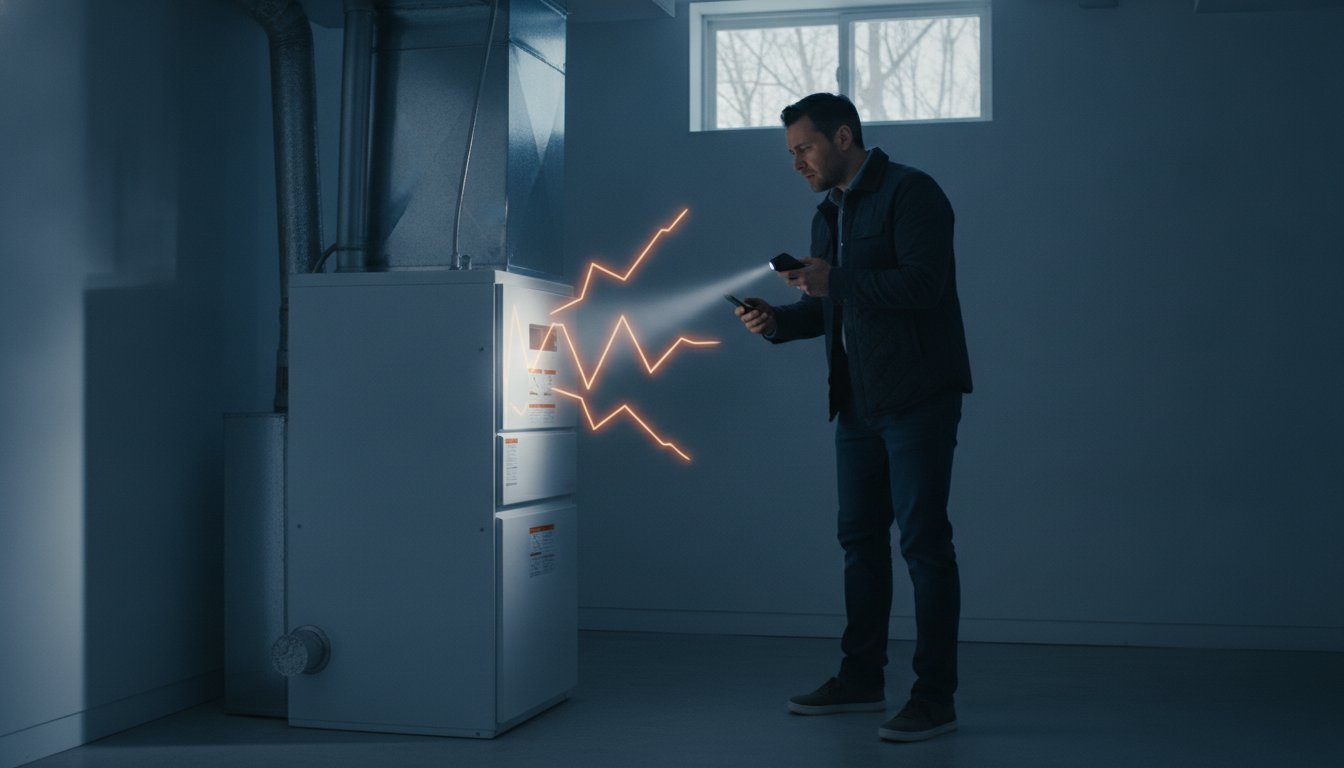
It’s 2:00 AM on a Tuesday in January, and instead of sleeping, you’re staring at the ceiling because your basement sounds like it’s hosting a construction crew. That sudden bang or persistent screeching isn’t just an annoyance. When you hear your furnace making loud noises, it’s actually your heating system trying to communicate its mechanical health to you.
We understand the immediate spike in anxiety that comes with these sounds. It’s natural to worry about a total system breakdown during a cold snap or the hidden danger of a carbon monoxide leak. You want a warm home and a safe family, not a high-pressure sales pitch for an unnecessary replacement when a simple repair would do the job. Our goal is to provide the honest, technical guidance you need to handle these situations with confidence.
This guide will help you identify exactly what those bangs, whistles, and rattles mean so you can regain your peace of mind. You’ll learn to distinguish between normal operational sounds and red flags that require professional attention to keep your system running efficiently and safely.
We’ll walk through the most common HVAC noises, explain the likely mechanical causes, and provide a clear framework for deciding when it’s time to call for a technician to restore your home’s comfort. By the end, you’ll know exactly how to keep your heating system quiet and your family secure.
Key Takeaways
- Differentiate between the normal hum of a healthy heating system and the mechanical changes that signal a need for maintenance.
- Identify the specific mechanical failures behind common sounds, such as why a furnace making loud noises like banging often points to delayed ignition or duct expansion.
- Learn to recognize “red alert” sounds that require an immediate system shutdown to protect your family from safety risks like carbon monoxide.
- Discover simple troubleshooting steps, including the “filter first” rule, that can resolve airflow-related whistling and rattling without a service call.
- Gain clarity on the professional diagnostic process and how to determine if a simple repair or a full system replacement is the most practical choice for your home.
Understanding the “Language” of Your Home Heating System
Your furnace is a complex piece of machinery that relies on a specific sequence of mechanical events to keep your home warm. When it’s operating correctly, you should hear a predictable set of sounds: a gentle hum from the motors, a crisp click as the ignition system engages, and the steady rush of air through your vents. However, a furnace making loud noises is often a mechanical symptom of internal component stress, signaling that one of these parts is working harder than it should.
As a system ages, the sounds it makes naturally change. Bearings lose their lubrication, belts stretch, and components that once moved silently begin to vibrate. Extreme cold also plays a significant role. When temperatures plummet, your furnace runs longer cycles, putting more strain on the motor and heat exchanger. You might also hear popping or banging in your walls; this is often just thermal expansion as the metal ductwork grows and shrinks in response to the sudden rush of hot air. Identifying a furnace making loud noises early can prevent a minor part failure from turning into a total system breakdown.
The Mechanics of a Modern Furnace
Understanding how your system starts can help you pinpoint where a sound is coming from. The process begins when the thermostat calls for heat. First, the inducer motor turns on to clear the combustion chamber. Next, the igniter warms up, the gas valve opens, and the burners light. Finally, the blower motor pushes the warmed air through your home. The first five minutes of this cycle are the most revealing. If your system is going to struggle with a mechanical issue, it usually happens during this startup phase. A healthy system moves through these stages with precision and minimal vibration.
Why Local Climate Matters for Your HVAC
Living near Lake Michigan brings unique challenges to home heating. In areas like Kenosha and Racine, the high humidity can lead to faster corrosion of metal components if a system isn’t properly maintained. Our local lakefront winds also force furnaces to work harder to overcome heat loss in older or poorly insulated homes. When we experience rapid temperature drops common in Wisconsin, the metal components in your furnace and ducts contract quickly. This makes “winter start-up” noises common, but they shouldn’t be ignored if they persist or grow louder over time. These environmental factors make regular check-ups essential for long-term reliability.
Decoding Common Furnace Noises: Rattles, Squeals, and Booms
When your furnace starts making loud noises, it can feel like your home’s comfort is at risk. While we’ve discussed how thermal expansion causes minor pops, other sounds are more specific mechanical warnings. Identifying these differences helps you decide when to monitor the situation and when to call for help.
The Danger of Delayed Ignition (The “Boom”)
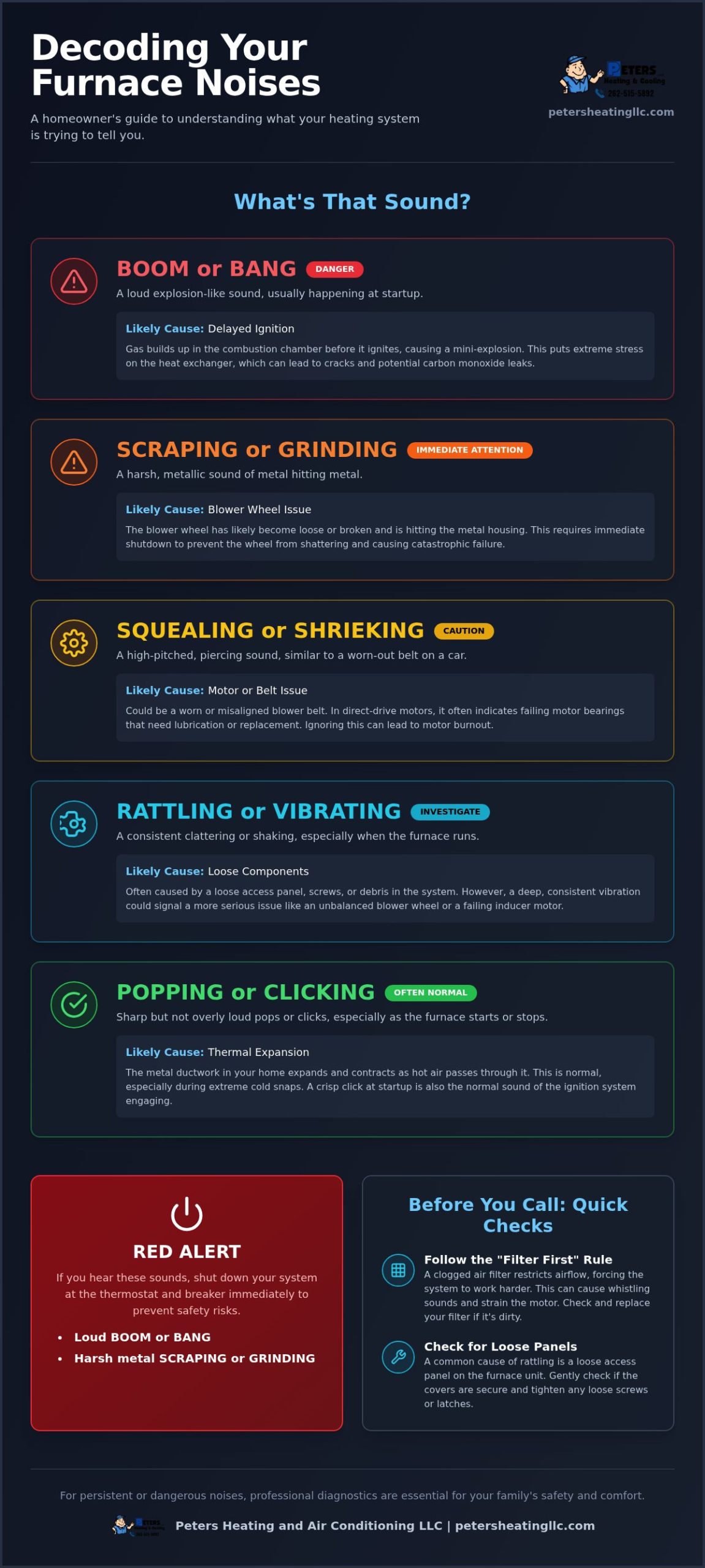
A loud boom or bang during startup is often the sound of delayed ignition. This happens when gas builds up in the combustion chamber before lighting. It’s essentially a mini-explosion that can put immense pressure on your heat exchanger. If left unaddressed, this pressure can lead to cracks, which are a serious safety concern. Keeping your burners clean is especially important in our local area, where dust and debris can settle during the off-season and block the ignition ports.
Blower Motor and Bearing Failures
A furnace making loud noises like high-pitched squealing usually points to the blower motor assembly. If your furnace uses a belt-driven motor, a loose or worn belt will shriek as it slips against the pulley. On more modern direct-drive systems, this sound typically signals that the motor bearings are drying out or failing. You might also hear a rhythmic chirping or a harsh scraping sound. This often means the blower wheel has shifted and is hitting the metal housing, which requires immediate attention to prevent the wheel from shattering.
Rattling or vibrating is frequently less severe but still worth investigating. Sometimes it’s just a loose access panel that needs tightening. However, if the vibration is deep and consistent, it could indicate an unbalanced blower wheel or a failing inducer motor. If these sounds are keeping you up at night, scheduling a professional furnace repair can identify the root cause before a small rattle becomes a major failure.
Many motor issues actually start with a restricted air filter. When the filter is clogged, the motor has to work harder to pull air through, which leads to overheating and premature bearing wear. We always prefer to perform a simple lubrication or belt adjustment rather than a full motor replacement. Our goal is to provide the most practical solution to restore your home’s quiet and keep your system running reliably through the winter.
Assessing the Risk: Is That Noise a Nuisance or a Danger?
Distinguishing between a minor annoyance and a safety hazard is the most important skill for a homeowner. While a furnace making loud noises can be startling, some sounds require a “Safety First” protocol. If you hear a noise that sounds like metal grinding on metal or a persistent, heavy thumping, your first step should be to turn the system off at the thermostat. Continuing to run a stressed system can lead to catastrophic component failure or, in some cases, serious safety risks for your family.
In our experience serving Racine and Oak Creek, we often find that homeowners worry about every small pop. If a sound only happens once when the heat turns on and then stops, it’s likely just the house settling or ducts expanding. However, if the sound is constant or changes in pitch, it’s a mechanical symptom. We take an honest approach to these diagnostics. If it’s a simple fix like a loose screw or a dirty filter, we’ll tell you exactly that. We value your long-term trust more than a one-time sale.
The Cracked Heat Exchanger Warning
One of the most serious sounds to listen for is a persistent rattling or a high-pitched whistling that occurs specifically while the burners are lit. This can indicate a crack in the heat exchanger, the component that keeps combustion gases separate from the air you breathe. A breach here is the primary cause of carbon monoxide leaks in residential systems. While your CO detectors are your final line of defense, the mechanical sound of the metal failing is often your first warning. If you suspect this issue, shut down the furnace and wait for a professional inspection.
Electrical Humming and Buzzing
Electrical components like transformers or relays can produce a low-frequency hum when they begin to fail. While some humming is normal for electrical equipment, a loud, angry buzz or a clicking sound that won’t stop is a red flag. This often points to a stuck contactor or a short circuit, both of which carry a potential fire risk. Never attempt to “jiggle” the wires or reset the breaker multiple times to stop the noise. These components handle high voltage, and persistent buzzing means the part is physically vibrating under electrical stress and needs a precise replacement.
Troubleshooting Steps You Can Take Before Calling a Pro
Finding your furnace making loud noises doesn’t always mean a costly repair is inevitable. Many sounds are actually the result of simple, external factors that you can address yourself. Before you schedule a service call, we recommend performing a few basic checks to see if the issue is something you can resolve without technical assistance. These steps focus on airflow and physical vibrations, which are the most common sources of non-critical noise.
The “Filter First” rule is our number one recommendation for any homeowner. A clogged air filter restricts the volume of air entering the system, which forces the blower motor to work significantly harder. This restriction often creates a high-pitched whistling sound as air is sucked through small gaps in the cabinet. It can also cause a loud “oil-canning” pop when the metal furnace cabinet flexes under the internal vacuum pressure. Simply replacing a dirty filter often restores the quiet immediately.
In Kenosha and Racine, our winters bring specific challenges like heavy snow and ice. If you have a high-efficiency furnace, check your external PVC vent pipes. Snow drifts or bird nests can partially block these pipes, causing the inducer motor to struggle and produce a vibrating or humming sound. Additionally, check for loose cabinet screws on the furnace itself. The constant vibration of the motors can loosen these over time, creating a rattling sound that is easily fixed with a screwdriver.
The Impact of Airflow on System Sound
Airflow is the lifeblood of your heating system. When you close too many register vents in unused rooms, you increase the static pressure within the ductwork. This extra pressure leads to loud popping or “booming” as the metal ducts expand and contract. To keep your system quiet, ensure at least 75 percent of your vents are open and that return air grilles are not blocked by furniture or heavy drapes. Unrestricted return air prevents the “vacuum” effect that stresses your blower motor.
Visual Inspection Checklist
A quick visual check can provide valuable clues about your system’s health. Safely look through the sight glass to check your burner flame color; a steady blue flame is ideal, while a flickering yellow or orange flame suggests a combustion issue. Look for soot or rust flakes around the base of the unit, as these indicate moisture or improper venting. Finally, check the visible ductwork in your basement for loose hangers or peeling duct tape. Securing a vibrating pipe with a new hanger is a simple way to eliminate a persistent rattle.
If these basic checks don’t silence the system, it’s likely that an internal component requires professional attention. Regular HVAC preventative maintenance is the best way to catch these small vibrations before they turn into a furnace making loud noises that require emergency repairs. Our team focuses on identifying these minor issues during a tune-up to ensure your home stays quiet and comfortable all season long.
Professional Diagnostics: How Peters Restores Your Quiet
When your own troubleshooting steps don’t resolve the issue, you need a professional who prioritizes your safety and comfort over a quick sale. Since 2009, we’ve helped homeowners across Southeast Wisconsin understand exactly what a furnace making loud noises is trying to say. Our diagnostic visits are methodical and transparent, designed to replace your anxiety with a clear plan for repair. We believe in doing the job right the first time, focusing on the most practical solutions rather than high-pressure upselling.
A furnace making loud noises is often the first sign of a system under stress, but it doesn’t always signal the end of your unit’s lifespan. We emphasize simple, honest repairs that extend the life of your equipment. Many of the mechanical issues we’ve discussed, such as failing bearings or loose belts, can be caught early through regular HVAC preventative maintenance. By identifying these sounds during a routine tune-up, we can prevent the stress of a total system breakdown during the coldest weeks of the year.
The Peters Diagnostic Process
We don’t rely on guesswork. Our technicians use precise instruments to measure the amp draw of your inducer and blower motors, which reveals if they’re operating within safe electrical limits. We also verify gas pressure to address the “booming” ignition issues mentioned earlier. To ensure your family’s safety, we use specialized cameras to inspect the internal surfaces of the heat exchanger for cracks or corrosion. After the inspection, you’ll get a straightforward, written explanation of the problem and a fair price for the solution.
Why Local Homeowners Trust Don and Mike
Peters Heating & Cooling is a family-owned operation deeply rooted in the Kenosha and Racine communities. We understand that a sudden heating failure is a financial and emotional burden, which is why we emphasize practical repairs over unnecessary replacements. We offer transparent pricing for every diagnostic visit and repair, ensuring you know exactly what to expect. If a repair is necessary to keep your home safe but wasn’t in the budget, we provide financing options to help you manage the cost without compromising on security.
Schedule your honest furnace diagnostic with Peters Heating & Cooling and let our team restore the quiet and reliability your home deserves. We’re here to provide the steady, professional guidance you need to keep your family warm and your heating system functional for years to come.
Restoring Peace and Warmth to Your Home
A furnace making loud noises doesn’t have to be a source of constant anxiety. By learning to distinguish between a simple duct pop and a serious mechanical warning like a failing blower motor, you’ve already taken the first step toward protecting your home. Remember that while a dirty filter is often the culprit, persistent sounds like electrical buzzing or delayed ignition booms require professional attention to ensure your family’s safety and the system’s longevity.
At Peters Heating & Cooling, we’ve been serving Kenosha, Racine, and Oak Creek as a locally owned family business since 2009. Our licensed and insured technicians are committed to providing transparent pricing and no-nonsense recommendations. We prioritize practical repairs that extend the life of your equipment over high-pressure replacements. You deserve a heating system that operates reliably and quietly throughout the Wisconsin winter.
Don’t let a mechanical sound turn into an expensive emergency. Get an Honest Diagnosis for Your Noisy Furnace Today and gain the peace of mind that comes from expert, neighborly care. We’re ready to help you keep your home warm and your family secure.
Frequently Asked Questions
Is it normal for my furnace to make a loud bang when it starts?
No, a loud bang is not part of normal operation. While minor pops from ductwork expansion are common, a significant bang often signals delayed ignition. This occurs when gas builds up in the combustion chamber before lighting. In Kenosha homes, this is usually caused by dirty burners or a weak igniter. Ignoring this can lead to heat exchanger damage. It is best to have a technician inspect the burner assembly to ensure safe operation.
Why is my furnace squealing like a tea kettle?
High pitched squealing usually points to a mechanical failure in the blower motor assembly. If your system is older, it might be a slipping or frayed fan belt. On newer direct-drive units, it often indicates that the motor bearings are drying out or failing. This sound is a warning that the motor is under high friction. Addressing it early with lubrication or a belt adjustment can prevent a total motor seizure during a Wisconsin cold snap.
Can a dirty air filter cause my furnace to make noise?
Yes, a clogged filter is one of the most common causes for a furnace making loud noises. When air is restricted, the blower motor works harder, creating a high pitched whistling or whining sound. You might also hear a loud thud when the system starts or stops as the metal cabinet flexes under pressure. Checking your filter every 30 to 90 days is the simplest way to maintain a quiet and efficient heating system.
What should I do if I hear a loud humming sound coming from the furnace?
A loud hum often indicates an electrical issue or a failing motor. It could be a vibrating transformer, a stuck relay, or a blower motor that is struggling to start. If the hum is accompanied by a burning smell, turn the system off immediately. These electrical components can overheat and create a potential fire risk. A professional diagnostic visit will pinpoint whether the part needs a simple adjustment or a precise replacement to restore safety.
Is a whistling furnace dangerous?
Whistling is usually a sign of restricted airflow rather than an immediate danger, but it shouldn’t be ignored. It often means air is being forced through a small gap in the ductwork or a clogged filter. However, if the whistle sounds more like a high pitched hiss near the burners, it could indicate a gas leak or a cracked heat exchanger. Always check your carbon monoxide detectors if you notice any unusual air movement sounds in your home.
How much does it typically cost to fix a noisy furnace in Kenosha?
Repair costs vary based on the specific part causing the noise. A simple fix like tightening a cabinet screw or replacing a belt is relatively inexpensive. More complex issues involving the blower motor or inducer assembly will require more in parts and labor. We provide transparent pricing for all diagnostics and repairs in Kenosha and Racine. We focus on offering the most practical repair option to restore your comfort without any unnecessary expenses or high pressure sales.
When is a noise a sign that I need a new furnace instead of a repair?
We recommend considering a replacement if the noise is caused by a cracked heat exchanger or if the cost of repairing an old motor exceeds 50 percent of the unit’s value. If your furnace making loud noises is over 15 years old and requires frequent service, a new installation might be more cost effective. Our team provides honest assessments, helping you weigh the long term reliability of a new system against the price of ongoing repairs.
Can I still run my furnace if it is making a rattling noise?
You can often run the system if the rattle is just a loose access panel or vibrating duct. However, if the rattling is coming from inside the unit, it could be a loose blower wheel or a failing inducer motor. Running a system with loose internal parts can cause secondary damage to other components. It is safer to turn the unit off and have a professional technician verify that the issue isn’t a safety hazard or a precursor to failure.