When your furnace stops heating, the safest first step isn’t opening the unit. A cold home in Racine can feel urgent, especially during a Wisconsin winter, but a few simple checks can help you decide what to do next. If you’re looking into furnace not heating repair Racine WI, start with settings and visible signs, and leave internal repairs to a technician.
Check the thermostat, confirm the furnace has power, and look for an obviously clogged air filter without opening the furnace cabinet. If those checks don’t restore heat, avoid repeated resets or attempts to repair internal parts. A technician can inspect the system, identify the cause, and explain the repair recommendation before work begins.
This guide covers safe checks, warning signs that call for professional help, and what to expect during a furnace diagnosis. Peters Heating & Cooling provides heating and cooling services in Racine, Kenosha, Oak Creek, and Winthrop Harbor, with practical recommendations and transparent pricing. Knowing what to observe can help you make an informed decision and take the next step toward restoring heat.
Key Takeaways
- A no-heat problem includes a furnace that won’t start, shuts off, or runs without warming your home.
- Similar symptoms can have different causes, so observations alone can’t reliably identify which part needs repair.
- A careful furnace diagnosis should connect the symptoms to test results before a repair is recommended.
- While waiting for furnace not heating repair Racine WI, note when the issue began and any unusual sounds, messages, or warning signs.
- Peters Heating & Cooling provides furnace repair in Racine with licensed, insured, continuously trained technicians, practical recommendations, and transparent pricing.
Furnace Not Heating in Racine? Start With These Safe Observations
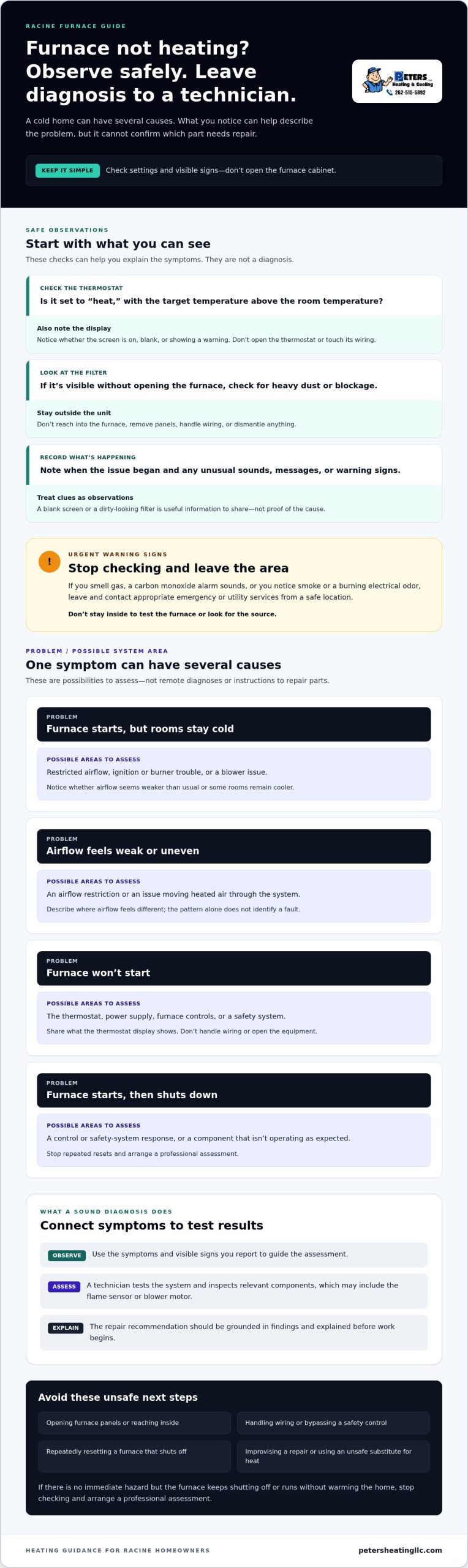
Losing heat during a Racine cold spell is stressful, but you don’t need to take the furnace apart to decide what to do next. A no-heat call may mean the furnace won’t start, shuts down before the home warms, or keeps running without providing enough heat. A few safe observations can help you describe the problem clearly, though they won’t identify the cause. Diagnosis is best left to a technician.
Limit your checks to settings and things you can see without opening the furnace cabinet. Don’t remove panels, handle wiring, or bypass a safety control. These steps can expose you to hazards or interfere with the system’s protective functions.
For general background before arranging furnace not heating repair Racine WI, this overview of how a furnace works explains the equipment at a high level. For troubleshooting, keep it simple: observe what’s happening, note what you find, and stop if anything seems unsafe.
What to check before arranging furnace repair
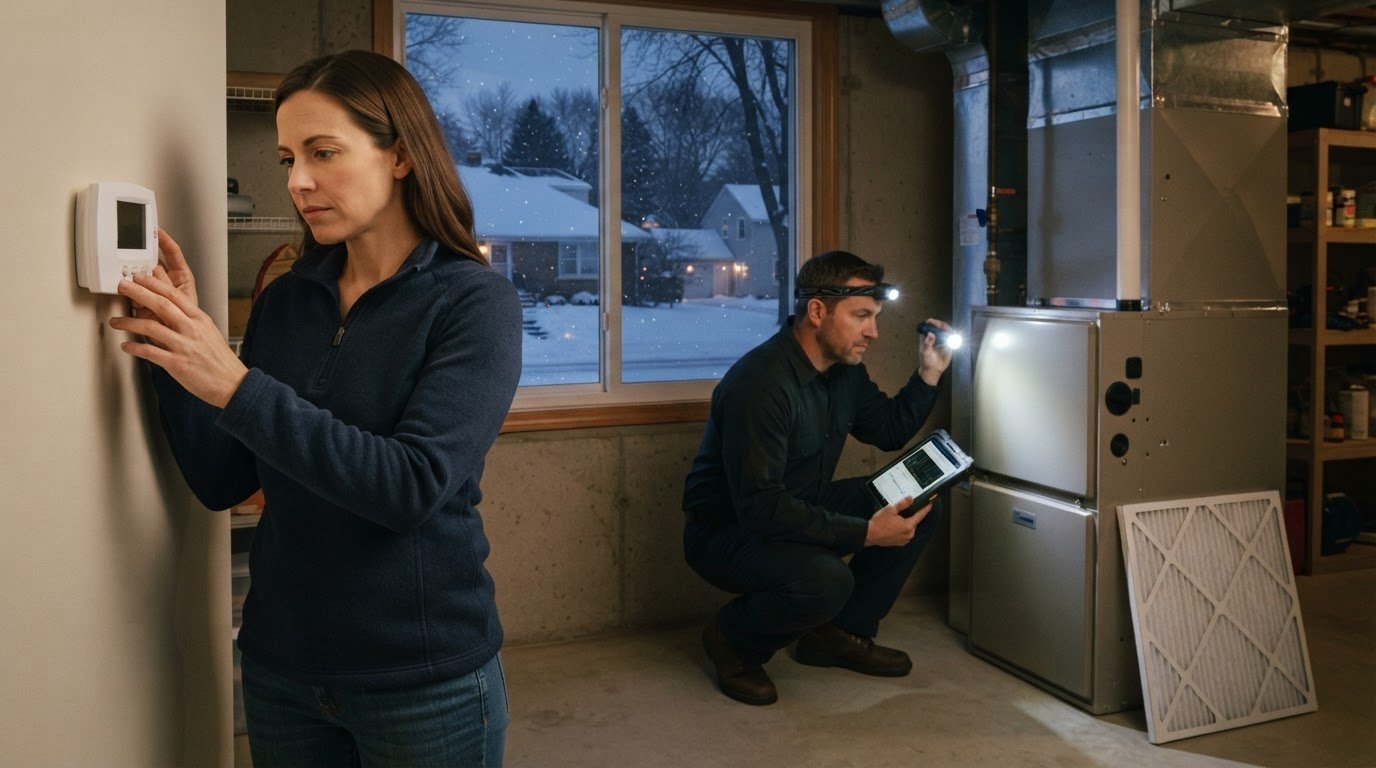
Start at the thermostat, then make a visual check of the filter if you can do so without removing a furnace panel or dismantling anything. These observations can help explain the symptoms, but they don’t confirm whether the furnace itself is at fault.
- Thermostat setting: Confirm it’s set to “heat” and that the target temperature is above the current room temperature.
- Display: Notice whether the screen is on, blank, or showing a warning. Don’t open the thermostat or touch its wiring.
- Filter: If it’s visible without opening the furnace, look for heavy dust or blockage. Don’t reach into the unit.
Note what you see, including the thermostat setting and any displayed message. A blank screen or dirty-looking filter is useful information to share, not a diagnosis. Don’t investigate inside the equipment.
When to stop checking and treat the situation as urgent
Some signs call for immediate attention rather than routine troubleshooting. If you smell gas, a carbon monoxide alarm sounds, or you notice smoke or a burning electrical odor, leave the area and contact appropriate emergency or utility services from a safe location. Don’t stay inside to test the furnace or find the source.
If none of those hazards is present, stop checking if the furnace repeatedly shuts off or keeps running without warming the home. Don’t keep resetting it, improvise a repair, or use an unsafe substitute for heat. Arrange a professional assessment and share your observations. This keeps you focused on safe next steps while leaving diagnosis and repair to a technician.
Why a Furnace Stops Heating: Symptoms and Likely System Areas
The same basic symptom, a cold home, can have several different causes. The issue might involve heat production, air movement, the thermostat, electrical power, or a control that stops operation for safety. Your observations help describe what’s happening, but they can’t confirm which part has failed.
A professional diagnosis identifies the source of a no-heat problem before a repair is recommended. The symptom-to-area guide below outlines possibilities, not a remote diagnosis.
Furnace starts, but rooms stay cold: Possible areas include restricted airflow, ignition or burner trouble, or a blower issue.
Airflow feels weak or uneven: Possible areas include an airflow restriction or a problem moving heated air through the system.
Furnace won’t start: Possible areas include the thermostat, power supply, furnace controls, or a safety system.
Furnace starts, then shuts down: Possible areas include a control or safety-system response, or a component that isn’t operating as expected.
Furnace runs but the home stays cold
If the furnace appears to run but the home doesn’t get more comfortable, the system may not be producing heat properly or delivering it through the house. Restricted airflow can limit circulation. Burner or ignition trouble may affect heat production, while a blower problem can interfere with moving warm air. These are areas for a technician to assess, not parts to adjust yourself.
Notice whether airflow seems weaker than usual or certain rooms remain cooler. Those clues help describe the pattern but don’t prove a specific fault. Uneven temperatures can have different explanations, and reaching inside to inspect burners or other components isn’t a safe next step.
Furnace will not start or repeatedly shuts off
A furnace that won’t start may involve the thermostat, power, controls, or a safety system. If it starts and then stops, there may be more than one possible cause. Proper testing is needed to understand what’s happening, so avoid repeated resets or attempts to bypass a control.
During an assessment, a technician may inspect components such as the flame sensor or blower motor, along with other parts relevant to the symptoms. The goal is to find what’s interrupting operation rather than assume one familiar part is responsible. That helps ground a repair recommendation in the actual condition of the system.
If these symptoms describe your home, furnace repair in Racine can begin with a professional assessment. For furnace not heating repair Racine WI, clear findings turn confusing symptoms into a practical next step.
What Professional Furnace Repair in Racine Should Diagnose
A useful diagnosis follows the evidence instead of jumping from a symptom to a presumed part failure. For furnace not heating repair Racine WI, the process should connect what you’ve noticed at home with what the heating system does during inspection. The thermostat, airflow, controls, and heating components can all be relevant.
A technician’s assessment should move through clear steps:
- Listen to your description. When the problem began, what the furnace does, and whether the symptoms change can help focus the inspection.
- Observe system operation. The technician checks how the equipment responds during its heating cycle.
- Test relevant areas. Checks should follow the symptoms and equipment rather than assume one part is responsible.
- Explain the findings. You should hear what was observed, what it means, and which repair options follow from the results.
The symptom is a starting point, not a conclusion. This comparison shows how an observation can guide testing without serving as a diagnosis:
| Symptom observed | System area assessed | Why testing matters |
|---|---|---|
| Thermostat calls for heat, but the furnace doesn’t respond | Thermostat, power, and controls | Helps distinguish a signal or power issue from a furnace-component problem. |
| Furnace runs, but rooms don’t warm evenly | Airflow and heating components | Shows whether the concern relates to producing heat, moving air, or both. |
| Furnace starts, then stops | Controls, safety systems, and affected components | Identifies what is interrupting the heating cycle instead of guessing from the shutdown alone. |
How a technician narrows down a no-heat problem
The technician confirms the issue you reported and observes the furnace’s operation. Component checks then follow the equipment and symptoms, with attention to the thermostat, airflow, controls, and relevant heating components. Safety checks are part of a careful assessment. This step-by-step approach helps distinguish a system-wide concern from one limited to a particular area.
How clear findings support a practical repair decision
Before discussing repairs, the technician should explain the findings in plain language. Ask what was tested, what the results indicate, and how the proposed work addresses the cause. Transparent pricing helps you understand the recommended work before deciding how to proceed. The recommendation should follow the diagnosis, not be promised in advance.
Diagnosis connects a furnace symptom to an evidence-based repair recommendation. If findings make replacement relevant, the Racine furnace installation homeowner guide can help you understand that separate decision. For a repair assessment in Racine, Peters Heating & Cooling’s furnace service is based on practical recommendations and clear pricing.
What Racine Homeowners Can Do While Waiting for Furnace Service
Once you’ve arranged furnace service, a few safe steps can make the visit more useful and help your household stay as comfortable as possible. Keep it simple: record what the furnace is doing, avoid repairs inside the unit, and use temporary heat only as its manufacturer directs.
Information to prepare for the service visit
A brief record can help the technician understand the problem and when it occurs. You don’t need to investigate inside the equipment. Note what you can observe from the thermostat and during normal use of the home, then share those details during the visit.
- Describe the operation. Record whether the furnace doesn’t respond, starts and stops, or keeps running without warming the home. Note when the issue began and whether it happens consistently.
- Write down visible clues. Record thermostat messages, indicator lights, unusual sounds, or odors. Don’t remove panels or touch internal parts to investigate.
- Recall recent changes. Note a recent filter change, power interruption, or other change around the time the heating problem started, if you know of one.
- Keep the work area accessible. Move stored items away from the furnace so the technician can reach it safely. Don’t place belongings against the unit or block nearby access.
These details don’t diagnose the cause, but they can focus the conversation and keep you from relying on memory during the visit.
Keeping the household safe and comfortable
Use temporary heat carefully. Follow the appliance manufacturer’s instructions, keep portable heaters away from combustible materials, and never use outdoor heating equipment indoors. Don’t use an oven or stovetop to heat the home. Avoid repeated furnace resets, panel removal, wiring, or improvised repairs. These actions can create hazards without identifying the underlying issue.
If you smell gas, hear a carbon monoxide alarm, or notice smoke, don’t wait for a routine service visit. Leave the area and contact appropriate emergency or utility services from a safe location. A burning electrical odor also means you should stop checking and seek help for the immediate hazard. For other symptoms, leave the equipment alone and share your notes with the technician.
After heat is restored, routine upkeep can help you keep track of basic home HVAC care. Peters Heating & Cooling’s residential HVAC maintenance checklist offers a useful reference for follow-up. If you need furnace not heating repair Racine WI, arrange an assessment with Peters Heating & Cooling and share your observations. Clear notes give the technician a practical starting point.
Arrange Furnace Not Heating Repair in Racine With Peters Heating & Cooling
A furnace that won’t heat your home is unsettling, but the next step is straightforward: arrange an assessment and describe what you’ve observed. Peters Heating & Cooling provides residential furnace repair in Racine and serves communities across Southeast Wisconsin, including Kenosha, Oak Creek, and Winthrop Harbor. The technician assesses the system and recommends work based on the findings, rather than assumptions made before inspection.
What to expect from Peters Heating & Cooling
Peters Heating & Cooling has served the region since 2009. Its licensed, insured, continuously trained technicians listen to your description and assess the furnace’s operation. The diagnosis informs the repair recommendation. The findings are explained in plain language, and transparent pricing for the proposed work is discussed before you decide how to proceed.
A no-heat symptom doesn’t automatically mean the furnace needs replacement. A careful assessment considers the specific issue and the condition of the system, then supports a practical recommendation. Clear explanations can help you understand the findings and proposed repair.
Before arranging a visit, gather a few details to describe the service concern:
- Symptoms: Is the furnace silent, cycling on and off, or running without warming the home?
- System type: Share what you know about your furnace, such as whether it’s gas or electric.
- Warning signs: Mention any displayed message, unusual sound, gas odor, carbon monoxide alarm, smoke, or burning electrical odor. If there’s an immediate hazard, leave the area and contact appropriate emergency or utility services from a safe location.
- Timing: Note when the problem started and whether anything changed around that time, if known.
You don’t need to identify the failed component. A clear description of what the system is doing gives the technician a useful starting point for an in-person assessment.
Request local furnace repair in Racine
When you request service, use simple, specific language. Explain, for example, that the furnace starts and stops, makes no sound when the thermostat calls for heat, or runs while the rooms remain cold. Include warning signs and details about the system that you know. These observations communicate the concern, while diagnosis and repair decisions follow an assessment of the equipment.
If you’re looking for furnace not heating repair Racine WI, Peters Heating & Cooling can help with an honest recommendation and a transparent discussion of the work. Request furnace repair from Peters Heating & Cooling.
Take the Next Step Toward Reliable Heat
You don’t have to solve a furnace problem on your own. After checking simple thermostat settings and noting the symptoms, a professional assessment can turn uncertainty into a clear plan. For furnace not heating repair Racine WI, share what you’ve observed and let a technician evaluate the system before recommending work.
Good service should leave you understanding what was found, what repair is proposed, and what it will cost before you decide how to proceed. A clear conversation makes it easier to choose your next step, even when the home is cold and the problem feels stressful.
Request furnace repair from Peters Heating & Cooling to take an informed step toward restoring comfort.
Frequently Asked Questions
Is a furnace that is not heating an emergency?
Gas odor, a carbon monoxide alarm, smoke, or an electrical burning smell calls for immediate safety action, not ordinary troubleshooting. Leave the area and contact appropriate emergency or utility services from a safe location. If the furnace simply isn’t heating, urgency depends on indoor conditions and household needs, especially during cold weather. Arrange a professional assessment and mention changes in indoor temperature or household circumstances when requesting service.
Can I reset my furnace if it stops heating?
A single reset may be appropriate only if there are no warning signs and the manufacturer’s instructions allow it. Follow the manual exactly, and don’t remove panels or try to reach internal controls. Repeated resets can hide a persistent fault or create additional risk. If the furnace shuts down again, displays an error, or produces a concerning odor, stop resetting it and arrange professional diagnosis.
What does a blinking light on my furnace mean?
A blinking light has no universal meaning because indicator patterns vary by furnace make and model. Note the pattern, then consult the equipment manual without removing access panels. For example, record whether the light blinks steadily or in a repeating sequence, if you can observe that safely. A technician can compare the pattern with model-specific information and system test results. Don’t treat the light alone as a confirmed diagnosis.
How long does furnace repair take?
Repair duration depends on the diagnosed fault, access to the equipment, and whether a needed part is available. A straightforward repair and a more involved component issue can require different amounts of work, so don’t assume a fixed appointment length or same-day completion. For furnace not heating repair Racine WI, Peters Heating & Cooling can explain the findings and expected work after assessing the system, before repair proceeds.
Why does my furnace turn on and then shut off?
A furnace that starts and stops may be responding to an airflow issue, a control or ignition concern, or a safety system, among other possibilities. The timing alone doesn’t identify the faulty part. Note whether shutdown happens shortly after startup or later in the heating cycle, and record any visible code. Arrange diagnosis rather than repeatedly restarting the furnace or adjusting internal components.
Can a furnace filter affect heating?
Yes, a heavily restricted filter can limit airflow and contribute to weak heating or unusual operation, but it isn’t the only possible cause. Check the filter only as directed by the furnace manual, and follow its guidance for replacement. If airflow remains weak after you address the filter according to those instructions, or the home still doesn’t warm, have a technician assess the wider system.
Is it safe to use a space heater while my furnace is being repaired?
A space heater can provide temporary warmth if you follow its instructions and keep it away from bedding, curtains, furniture, and other combustible materials. Place it on a stable surface, and don’t leave it operating unattended. Never use an outdoor heater, stove, or oven to heat your home. If a carbon monoxide alarm sounds or you notice smoke or gas odor, leave and seek immediate help rather than relying on a heater.