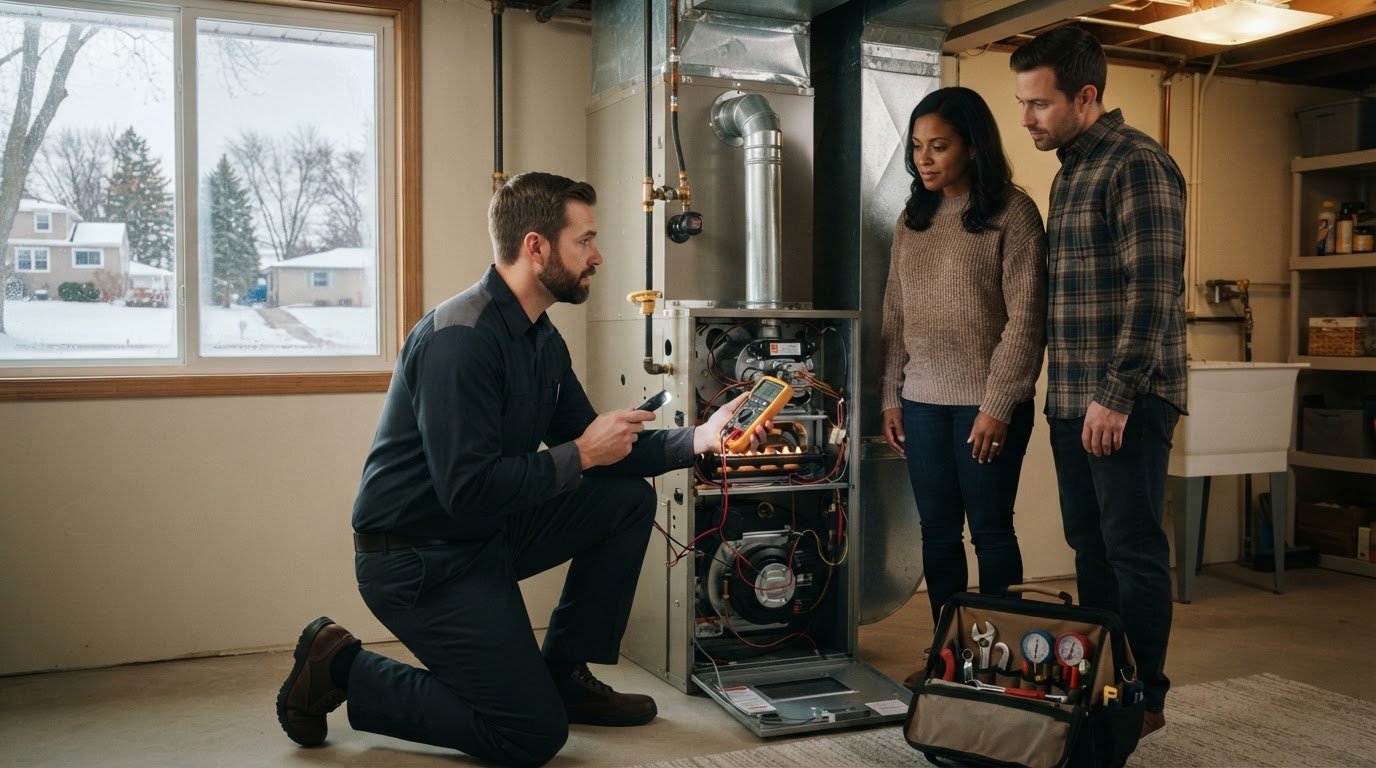
When your furnace stops working or heats unevenly, searching for a furnace repair specialist near me is a sensible first step. Before agreeing to a repair, you should understand what went wrong and how the proposed work addresses it.
A furnace problem can be unsettling, especially when the cause isn’t obvious. A careful specialist should explain the diagnosis, outline practical repair options, and discuss pricing before work proceeds. That gives you the information you need to make a decision about restoring dependable heat.
In this guide, you’ll learn what a specialist may check, what to expect during a repair visit, and how to prepare. Peters Heating & Cooling provides furnace repair for homeowners in Kenosha, Racine, Oak Creek, and Winthrop Harbor, as well as across Southeast Wisconsin and Northeast Illinois. Its licensed, insured, and continuously trained technicians offer straightforward recommendations and transparent pricing.
Key Takeaways
- A furnace symptom doesn’t automatically mean replacement. Recurring problems and uneven heat are reasons to seek a professional diagnosis.
- A furnace repair specialist near me can investigate the cause by reviewing symptoms, inspecting relevant components, and testing operation.
- Compare the diagnosed issue with the proposed work and your furnace’s overall condition before deciding how to proceed.
- Help make the repair visit productive by noting when symptoms started, thermostat settings, and any recent changes.
- Peters Heating & Cooling provides local furnace repair in Kenosha, Racine, Oak Creek, and Winthrop Harbor.
When to Call a Furnace Repair Specialist Near You
A furnace acting up doesn’t automatically mean it needs to be replaced. A brief interruption may have a simple explanation, such as a thermostat setting that was changed. If the problem returns, worsens, or affects your home’s comfort, a professional assessment can identify what’s happening and help you understand your options.
Consider arranging a repair assessment if you notice any of these signs:
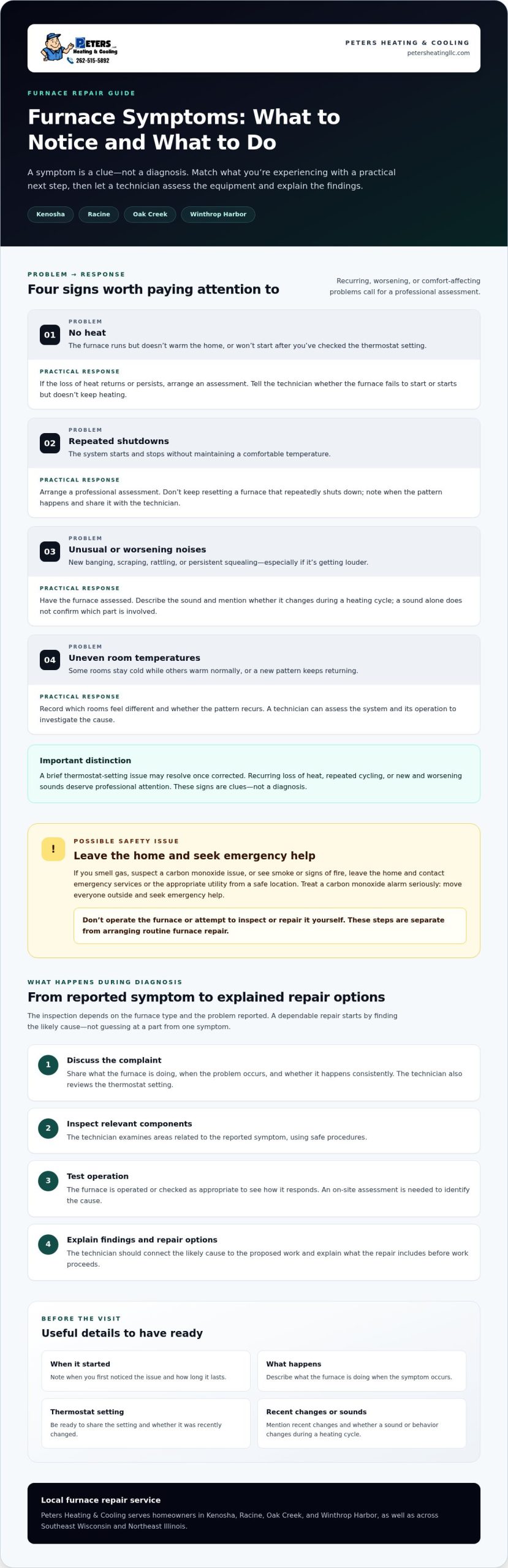
- No heat: The furnace runs but doesn’t warm the home, or it won’t start after you’ve checked the thermostat setting.
- Repeated shutdowns: The system starts and stops without maintaining a comfortable temperature.
- Unusual noises: New banging, scraping, rattling, or persistent squealing deserves attention, especially if it’s getting louder.
- Uneven room temperatures: Some rooms stay cold while others warm normally, or the pattern is new and recurring.
These symptoms are clues, not a diagnosis. A technician needs to assess the equipment and its operation to identify the cause. Furnace designs and components vary; this overview of furnace types and components provides general background, but it can’t establish what’s wrong with a particular system. Homeowners in the area can learn more about expert HVAC repair in Kenosha from Peters Heating & Cooling.
Which furnace symptoms deserve professional attention?
A thermostat setting issue may be brief and resolve once the setting is corrected. A recurring loss of heat is different. If the furnace repeatedly fails to warm the home, shuts down, or struggles to keep rooms comfortable, have it assessed. New or worsening sounds and repeated cycling also warrant attention. If you’re searching for a furnace repair specialist near me, note when the issue happens, how long it lasts, and whether it occurs consistently. Those details help the technician investigate the problem rather than guess from a symptom alone.
What should you do if you notice a possible safety issue?
Comfort problems and possible hazards call for different responses. If you smell gas, suspect a carbon monoxide issue, or see smoke or signs of fire, leave the home and contact emergency services or the appropriate utility from a safe location. Don’t operate the furnace or attempt to inspect or repair it yourself. Treat a carbon monoxide alarm seriously: move everyone outside and seek emergency help. These steps are separate from arranging routine furnace repair. For concerns that don’t suggest an immediate hazard, record what you’ve noticed and arrange an assessment. Don’t keep resetting a furnace that repeatedly shuts down.
What a Furnace Repair Specialist Checks During Diagnosis
A dependable repair starts with finding the likely cause, not guessing at a part based on one symptom. A technician gathers details, checks the relevant parts of the system, tests how it operates, and explains the results. The inspection depends on the furnace type and the problem you’ve reported. A no-heat complaint, for example, may call for different checks than unusual noises or inconsistent operation.
Furnace diagnosis means identifying the cause of a problem before choosing the corrective work. A symptom describes what you’re experiencing; diagnosis connects it to an appropriate next step.
- Discuss the complaint. The technician asks what the furnace is doing and when the problem occurs.
- Inspect relevant components. The technician examines areas related to the reported symptom, using safe procedures.
- Test operation. The furnace is operated or checked as appropriate to see how it responds.
- Explain the findings. The technician describes the likely cause and the repair options that address it.
How does a technician narrow down the cause?
Diagnosis begins with the details you provide and a review of the thermostat setting. Whether the furnace fails to start or starts but doesn’t keep heating can help focus the inspection. The technician then checks relevant components and tests the system safely. A symptom alone can’t confirm a failed part; an on-site assessment is needed to identify the cause.
Describe the pattern as clearly as you can: when you first noticed the issue, whether it happens every time, and what the furnace is doing when it occurs. Mention if a sound or behavior changes during a heating cycle. Your observations guide the assessment, but they don’t replace testing. A furnace repair specialist near me should be able to explain how the reported problem relates to the checks being performed, in language you can follow.
What happens after the inspection?
After the checks, the technician should summarize what they observed and explain the likely cause without relying on technical terms alone. The recommended work should connect directly to those findings. Before a repair proceeds, make sure you understand what the proposed work includes and how it is intended to address the problem.
A useful recommendation distinguishes what the technician found from what they propose to do about it. If more than one practical option applies, the explanation should clarify the differences without pressure. At Peters Heating & Cooling, technicians provide honest recommendations and transparent pricing, so the repair scope is clear before work proceeds. For local furnace repair support, the diagnostic conversation is a useful place to start.
How to Judge a Furnace Repair Recommendation Without Guesswork
A repair recommendation should connect three things: what you noticed, what the technician found, and what work is proposed. That connection helps you understand why a repair is being suggested instead of feeling pressured to approve work you don’t understand. Whether repair makes sense depends on the diagnosed condition and the furnace’s overall state, so no single rule can decide every situation.
Use this framework to follow the conversation. The examples are possibilities, not diagnoses: the same symptom can have different causes, and an on-site assessment determines what applies.
| Reported concern | Diagnostic finding | Proposed work | Homeowner decision |
|---|---|---|---|
| Furnace isn’t heating consistently | The technician identifies an issue affecting operation | Repair the identified issue and test operation | Confirm the finding and understand the repair scope |
| New or persistent noise | Inspection points to a component or operating concern | Address the cause identified during inspection | Ask how the work relates to the noise and what it includes |
| Repeated shutdowns | Testing helps narrow down why operation is interrupted | Correct the diagnosed cause, if repair is practical | Review the recommendation and pricing before authorizing work |
What makes a repair recommendation clear and useful?
A clear recommendation explains the finding in plain language, names the proposed work, and shows how it addresses the observed problem. Pricing should be explained before authorized work begins, so you can consider the scope and cost together. If you’re searching for a furnace repair specialist near me, look for a conversation that leaves room for questions, not pressure to decide before you understand the recommendation.
It’s reasonable to ask what the technician observed, what the repair includes, and whether the recommendation addresses the immediate issue or another concern as well. Peters Heating & Cooling emphasizes transparent pricing and practical recommendations, helping homeowners understand the proposed work before proceeding. A responsible recommendation is based on an assessment of the furnace and the identified cause.
When might a technician discuss replacement instead?
Replacement may come up if the diagnosed condition makes repair impractical. That conversation should be grounded in the current findings and the furnace’s overall state, not a generic formula or pressure to upgrade. If replacement is relevant, homeowners can review this Racine furnace installation homeowner guide for more context.
You don’t have to treat every recommendation as an automatic yes or no. Start with the evidence: the concern, the finding, and the proposed work. When those pieces make sense together and pricing is clear, you can decide with a better understanding of your options. Explore furnace repair with Peters Heating & Cooling for local help.
How to Prepare for a Local Furnace Repair Visit
A little preparation can make a repair visit more useful without requiring you to inspect or troubleshoot the furnace. Peters Heating & Cooling serves homeowners in Kenosha, Racine, Oak Creek, and Winthrop Harbor. A clear account of what you’ve noticed gives the technician a helpful starting point.
What details should you have ready?
Write down what the furnace is doing and when the problem began. A few notes on the pattern can be more useful than trying to remember every detail during the visit. For example, note whether the issue happens every time the furnace runs or only occasionally, and whether it affects the whole home or certain rooms.
- Describe the symptom: Note whether the furnace doesn’t start, stops unexpectedly, makes a new sound, or leaves rooms at different temperatures.
- Record the timing: Include when you first noticed the issue and whether it occurs during startup, while the furnace is running, or at other times.
- Share thermostat information: Note the current setting and whether adjusting it changes the behavior.
- Mention recent changes: Include changes in household routines, thermostat use, or anything else that seemed to happen around the same time.
- Make the area accessible: Move stored items or other obstructions away from the furnace so the technician can reach the equipment. Leave panels and internal parts alone.
These details give the visit a clear starting point, but you don’t need to work out the cause yourself. If you’re looking for a furnace repair specialist near me, having your notes ready can help you describe the issue and follow the technician’s explanation.
What should homeowners avoid doing before service?
Keep preparation on the safe side. Don’t remove furnace panels or attempt repairs involving electrical parts, gas connections, or internal components. Avoid repeatedly resetting the furnace if the same problem returns; note what happened instead. If you suspect a serious safety hazard, put safety ahead of preparing for a repair visit. Leave the area and contact emergency services or your utility provider from a safe location.
After the repair concern has been addressed, regular care can help you keep track of routine upkeep. The residential HVAC maintenance checklist is useful for ongoing maintenance, though it isn’t a substitute for professional diagnosis when the furnace is malfunctioning.
For local furnace repair, learn about residential furnace repair with Peters Heating & Cooling and share the notes you’ve gathered.
Get Local Furnace Repair from Peters Heating & Cooling
A furnace problem is easier to address when you have a local team that takes time to understand what’s happening before recommending work. Peters Heating & Cooling provides residential furnace repair across Southeast Wisconsin and Northeast Illinois, including Kenosha, Racine, Oak Creek, and Winthrop Harbor. Locally owned and operated since 2009, the company serves homeowners with practical repair guidance.
If you’ve been searching for a furnace repair specialist near me, proximity matters, but so does knowing what to expect. Peters technicians are licensed, insured, and continuously trained. They listen to your concern, assess the furnace, and explain the findings and recommended work in straightforward language.
What can homeowners expect from Peters Heating & Cooling?
The repair process starts with your account of the problem: what the furnace is doing, when the issue occurs, and whether it has changed. The technician uses those details to guide an assessment, then explains the findings and how the proposed repair relates to them. You can discuss the recommendation and understand its scope before deciding whether to authorize the work.
Transparent pricing is part of that discussion. A clear explanation of the proposed work and its price helps you make an informed choice. Recommendations should reflect the diagnosed condition and the furnace’s overall state, with repair presented as a practical option where appropriate. The goal is an understandable next step, not pressure to choose more work than the situation calls for.
How can you take the next step?
If your furnace isn’t heating reliably, is shutting down repeatedly, or has developed another persistent problem, share what you’ve noticed with the Peters team. Details such as when the issue began and whether it happens consistently can help you describe your concern. You don’t need to identify the cause yourself; the assessment establishes what’s happening and what work may address it.
Homeowners in Kenosha, Racine, Oak Creek, and Winthrop Harbor can turn to Peters Heating & Cooling for local furnace repair. The company’s focus on honest recommendations and clear pricing helps make the decision-making process straightforward, from describing the problem to reviewing the proposed work.
For dependable heat, start with a clear diagnosis and a conversation you can feel comfortable having. Contact Peters Heating & Cooling to discuss your furnace repair needs and next steps.
Take the Next Step Toward Reliable Heat
A furnace concern doesn’t have to leave you guessing about what to do next. Use the details you’ve noticed to start a practical conversation, then take time to understand the recommended work and decide what makes sense for your home. Finding a furnace repair specialist near me is about more than getting the system looked at. It’s also about understanding your options.
If the proposed repair raises questions about affordability, Peters Heating & Cooling also offers financing options. You can discuss the work and available options as part of making a decision that fits your situation. A clear description of the issue is a good place to begin.
When you’re ready to talk through a furnace problem, contact Peters Heating & Cooling for furnace repair. A clear conversation can help turn uncertainty into a plan for bringing dependable comfort back to your home.
Frequently Asked Questions
How quickly can a furnace repair specialist near me respond?
When you contact Peters Heating & Cooling, explain whether the furnace has stopped heating completely or is still operating inconsistently. The team serves homeowners in Kenosha, Racine, Oak Creek, and Winthrop Harbor. If you suspect an immediate safety hazard, leave the area and contact emergency services or your utility provider from a safe location.
Can a furnace repair specialist work on different types of furnaces?
Furnaces differ in design, fuel source, and controls, so the appropriate repair approach depends on the equipment and the reported problem. Peters Heating & Cooling provides furnace repair, with the assessment guided by the specific unit. If you know the furnace’s make or model, share it when describing the issue. You can find information in paperwork or on an exterior label, but don’t remove panels to look for details.
Why does my furnace make a new or unusual noise?
A new noise can come from different operating or component issues, and its sound alone can’t identify the cause. A brief rattle, repeated banging, or persistent squeal may each point to a different concern, so note when it occurs, such as at startup or during operation. If the sound is accompanied by smoke, a burning smell, or another suspected hazard, stop using the equipment and prioritize safety.
Can a furnace run if the thermostat is not working properly?
Yes, a furnace may run unpredictably, fail to start, or stop responding if the thermostat isn’t communicating correctly. A blank display or temperature reading that doesn’t match the room is useful information, but it doesn’t prove the thermostat is the cause. If the thermostat uses replaceable batteries and its instructions show how to change them safely, that basic step may help. Persistent trouble needs a professional assessment.
What information should I give a furnace repair specialist when scheduling service?
Share your location, the furnace symptom, when it began, and whether it’s getting worse or happening repeatedly. Mention unusual sounds, changes in heating, or any recent changes to the thermostat or home. If you know the furnace’s make and model, provide those details too, but don’t open the unit to find them. Clear information helps the repair team understand your concern before assessing the equipment.
Does furnace repair include checking the cause of repeated shutdowns?
Yes, a repair assessment can investigate why a furnace repeatedly stops operating. The technician considers the shutdown pattern and symptoms you’ve noticed, then assesses the equipment to identify a likely cause. Note whether the system stops soon after starting, runs for a while first, or behaves differently from one cycle to another. That context can help focus the diagnosis, but testing is needed to determine what’s wrong.
Is it safe to keep running a furnace that is not heating correctly?
It depends on the symptoms, and an online description can’t establish whether a particular furnace is safe to operate. If you smell gas, see smoke, or a carbon monoxide alarm sounds, leave the home and contact emergency services or your utility provider from a safe location. Don’t keep resetting a furnace that repeatedly shuts down. For a heating problem without an apparent hazard, arrange an assessment rather than attempting internal repairs.