
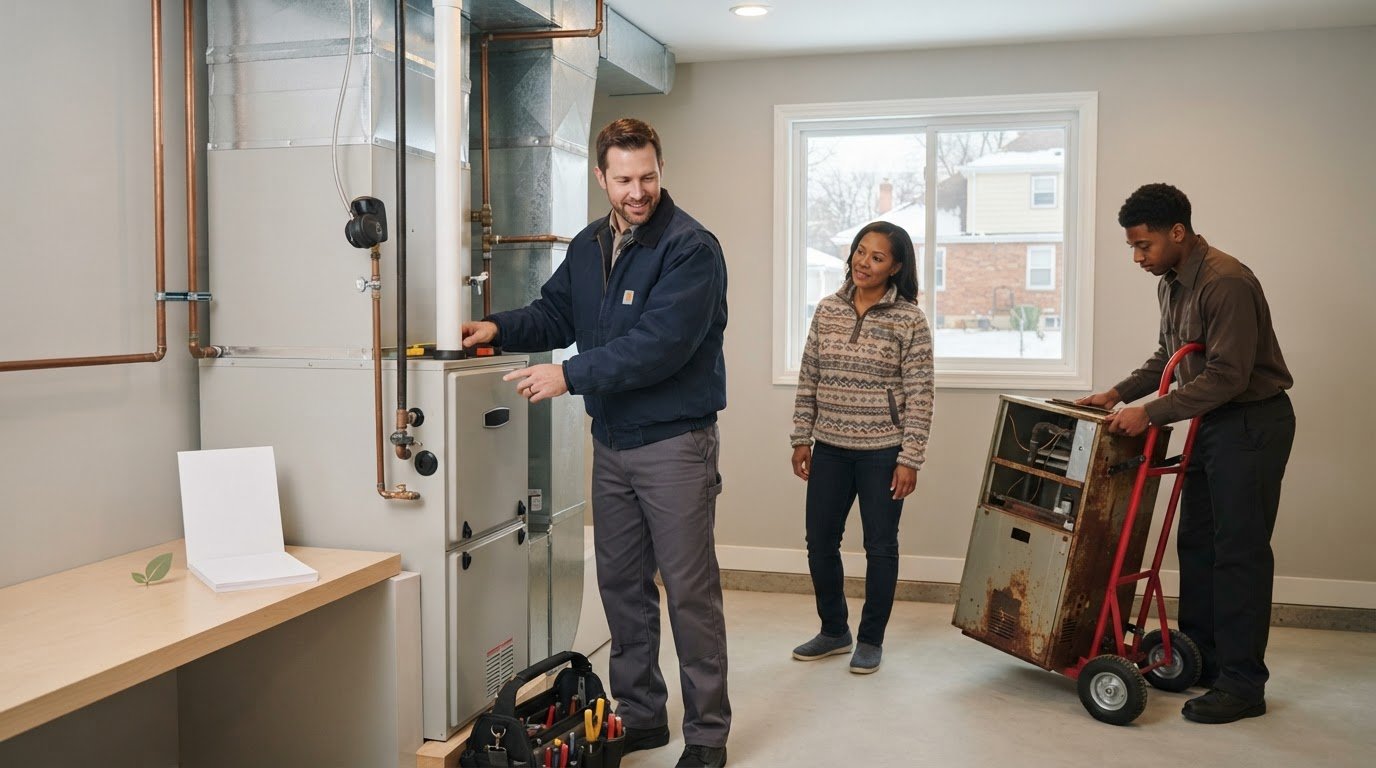
Furnace replacement has two practical parts: choosing equipment that fits your home and arranging safe removal of the old unit. For homeowners considering furnace replacement services in Racine, WI, rebates or other incentives depend on the specific program and eligible equipment. Plan disposal as part of the installation.
It’s reasonable to want clear answers before committing to a major home project, especially when safety and the old furnace’s final destination are involved. This guide explains how to assess potential incentives for qualifying equipment and what to consider when planning responsible collection and disposal. It also outlines the factors that shape a replacement, so you can approach the decision with a clearer picture of the work.
Key Takeaways
- Learn which home and installation details can influence a furnace replacement quote, so you can compare options more clearly.
- Understand how furnace fuel types and efficiency ratings affect comfort and operating considerations in Racine homes.
- See why proper sizing depends on the home, not simply the size of the existing furnace.
- Know what to clarify about estimates, financing, warranties, and safe removal of the old equipment.
- Use the guidance to decide whether furnace repair or installation is the practical next step for your home.
What factors affect furnace replacement prices in Racine?
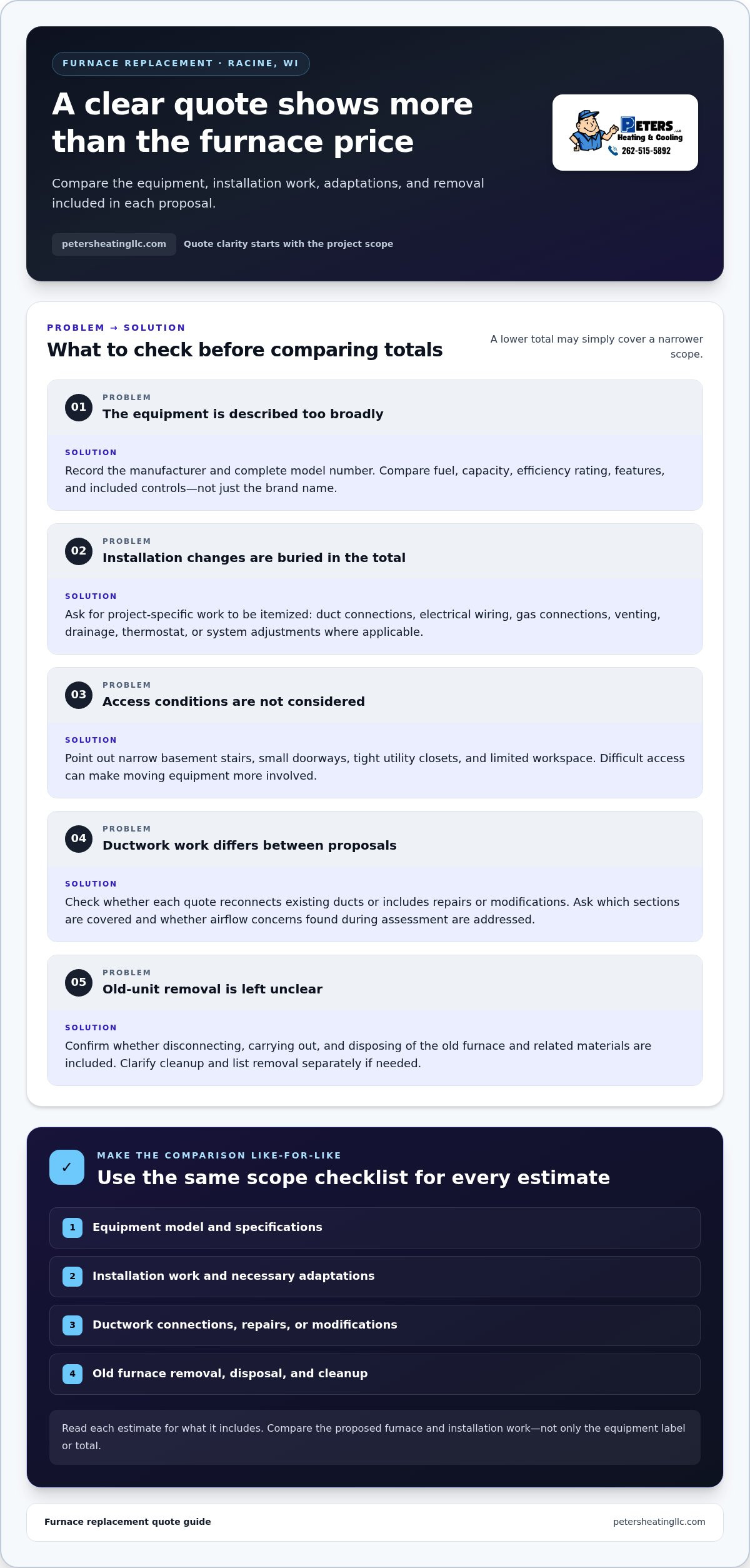
The cost depends on the home and project, so a written quote is the practical way to understand it. Equipment, installation work, and removal all affect the total. A useful estimate breaks down the scope rather than presenting an unexplained figure. For a Racine home, compare the proposed furnace and installation work, not just the equipment label. That makes it easier to see what each quote covers.
Start with the furnace itself. Fuel type, capacity, efficiency rating, and features all affect the choice. A gas furnace may need different connections and venting than an electric model. A higher-efficiency unit may also require compatible venting or drainage. The existing system matters: replacing a furnace within the current setup can involve different work from a project that requires changes.
Installation conditions can change the labor and materials involved. A narrow basement stairway, tight utility closet, or difficult access path can make moving equipment more involved. The installation may also require adapting duct connections, electrical wiring, gas connections, or venting for the selected model. Ask for these project-specific changes to be itemized in the estimate.
- Equipment: Compare fuel, capacity, efficiency, and included controls.
- Connections: Review any changes to ductwork, wiring, gas lines, venting, or drainage.
- Access: Note stairs, small doorways, and limited workspace around the furnace.
- Removal: Check whether taking away the old unit and related materials is included.
- Project scope: Identify any thermostat or system adjustments listed in the estimate.
Existing ductwork deserves careful attention. Leaks, poor connections, or mismatched supply and return paths can affect how the new furnace delivers heated air. One quote might include reconnecting existing ducts, while another includes repairs or modifications. Ask which sections are included and whether the proposed work addresses airflow concerns found during the assessment.
Removal is another part of the project to clarify. An old furnace may need to be disconnected, carried out, and handled with associated materials. The estimate should state whether removal and disposal are included, rather than leaving the task unclear. If installation requires changes to venting or connections, ask for those tasks to appear as separate items.
Before comparing estimates, check the same details in each: equipment model, installation work, necessary adaptations, removal, and cleanup. A lower total may reflect a narrower scope, not a better fit for the home. Note questions beside each estimate, such as whether duct changes or disposal are included. This helps Racine homeowners understand what they’re paying for and choose a scope that suits the house.
Which furnace brands and types do Racine HVAC contractors install?
Brand selection can vary with the equipment and the home’s existing setup. Rather than choosing by logo alone, compare the manufacturer, model, fuel, and features listed in each proposal. Two furnaces from different manufacturers may both use natural gas yet differ in controls, cabinet size, and venting needs. The model number gives a clearer basis for comparison than the brand name alone.
Ask for the manufacturer and complete model number before deciding. Review the product documentation for fuel compatibility, operating stages, blower type, and venting requirements. These details help distinguish models, including those from the same manufacturer. The installer can explain whether the proposed unit fits the home’s duct connections and available space. Keep the details with the estimate for an easier comparison.
Furnace type describes how a unit produces heat and delivers it through the home. Common residential options include natural-gas and electric furnaces. Gas models burn fuel to heat air, while electric models use heating elements. The right type depends on the home’s existing fuel connection, electrical setup, venting, and your priorities. Switching fuel types can involve additional work, so compare the full installation scope, not just the furnace.
Operating design is another point to examine. A single-stage furnace runs at one heat output. A two-stage model can operate at lower or higher output, while a modulating design adjusts heat in smaller increments. Blowers differ, too: a fixed-speed blower operates at set speeds, while a variable-speed blower can adjust airflow. Ask how each configuration relates to comfort, ductwork, and controls in your home.
- Manufacturer and model: Record the exact name and model number in the quote.
- Fuel: Compare gas and electric options against the home’s current connections.
- Heating stages: Identify whether the unit is single-stage, two-stage, or modulating.
- Blower: Note whether the proposed furnace uses fixed-speed or variable-speed airflow.
- Fit: Compare cabinet dimensions, venting needs, and duct connections with the installation space.
For a practical comparison, ask each contractor to describe the proposed equipment using those same categories. A manufacturer’s warranty terms and the installation scope are separate considerations, so read both. A familiar brand does not by itself show whether a particular model suits your home. The furnace installation information can help you understand the installation side of the decision, while model-level details make equipment choices easier to compare.
How do gas, electric, and high-efficiency furnaces compare for Racine homes?
Fuel type affects how a furnace produces heat, while efficiency describes how much fuel becomes usable heat. In a Racine home, compare existing energy connections, venting, ductwork, and expected use. A natural-gas furnace burns gas to heat air; an electric furnace uses heating elements. High efficiency is a rating category, not a separate fuel type. Many high-efficiency models are gas-fired, so compare fuel and efficiency separately.
A gas furnace may suit a home that already has a gas connection and compatible venting. Its proposal should identify the furnace, vent route, and any changes to existing connections. An electric furnace avoids combustion at the unit but relies on the home’s electrical service and heating elements. With either type, the duct system carries warmed air through the home. Compare installation requirements, not just equipment.
Efficiency ratings help show how much input energy becomes heat. AFUE, or annual fuel utilization efficiency, expresses this relationship as a percentage. A higher AFUE means a greater share of fuel is converted into usable heat under the rating method. Compare the AFUE figures on proposed gas models, but don’t treat the rating as a complete estimate of household energy use. The home, thermostat settings, weather, and system operation also affect use.
High-efficiency gas models may use sealed combustion and different venting arrangements than older furnaces. Some condensing models produce condensate that needs a suitable drain. A basement installation, for example, may require planning for both the vent route and condensate drainage. These requirements can affect the installation scope, so ask how each proposed model will connect to the home.
- Gas: Compare the existing gas connection, venting, and model-specific requirements.
- Electric: Review electrical capacity and the furnace’s heating-element configuration.
- High efficiency: Compare AFUE alongside venting, drainage, and installation needs.
- Operating costs: Consider local energy rates, household use, and thermostat habits together.
For a clear comparison, note the model and AFUE for each option, then list any required changes. A gas replacement using existing connections may have a different scope from a fuel conversion. An electric option may require electrical work. A high-efficiency model may need new venting or drainage. Each difference matters to the project plan.
Choose equipment that matches the home’s connections, heating needs, and installation conditions. Ask why a particular fuel type and efficiency level are recommended. The explanation should relate the selected model to practical details, such as the current vent, electrical service, and available drain. These points make competing furnace proposals easier to evaluate.
What furnace size and efficiency rating is appropriate for a Racine home
When investing in professional furnace replacement services Racine WI, the right furnace size depends on the home’s heating load, not the label on its old unit. An HVAC technician from Peters Heating & Cooling can use an ACCA Manual J load calculation to estimate heat loss. It considers floor area, insulation, windows, air leakage, and ceiling height. A renovated home with tighter windows, for example, may need a different capacity from its previous furnace. Simply copying the old model’s input rating can overlook important changes.
Room-by-room details matter, too. A large north-facing room with older windows can lose heat differently from an insulated interior room. A finished basement, addition, or closed-off space can also change how heat moves. The calculation should reflect the home as it is today. Share renovation details, persistent cold rooms, and thermostat settings during the assessment. These examples help explain comfort problems without guesswork.
An oversized furnace can reach the thermostat setting quickly, then shut down and restart more often. Short cycling can cause uneven temperatures and extra equipment wear. An undersized unit may struggle to maintain the set temperature in cold conditions. Proper sizing aims to meet the calculated load while working with the home’s ducts and controls. Capacity should follow the load calculation, not a simple square-foot rule.
Efficiency is a separate consideration. AFUE, or annual fuel utilization efficiency, expresses how much fuel becomes usable heat over a season. A higher AFUE indicates a greater share converted into heat under the rating method. Compare the AFUE for each proposed model, then consider fuel type, operating habits, and installation requirements. The rating alone doesn’t predict a household’s total energy use.
- Home details: Include insulation, windows, ceiling height, and air leakage.
- Comfort patterns: Identify rooms that stay cold or warm unevenly.
- Capacity: Match furnace output to the calculated heating load.
- Efficiency: Compare model-specific AFUE ratings alongside fuel and installation needs.
Ask about the load calculation’s assumptions and how they relate to the selected model. If an addition changed the home’s layout, confirm that its rooms are included in the assessment. In a two-story home, discuss temperature differences between floors and the duct system’s role. These details help explain why the recommended capacity may differ from the existing furnace.
Use the written proposal to compare the calculated load, furnace capacity, and AFUE rating together. A higher-rated model isn’t automatically the best fit if its capacity or installation requirements don’t suit the house. The practical choice balances correct sizing, the home’s heat-loss details, and the equipment’s rated efficiency.
Choosing the right heating equipment ensures your Racine property remains comfortable throughout the coldest winter months while operating at peak energy efficiency.
Do Racine furnace replacement services offer free estimates, financing, or warranties
Estimate fees, financing, and warranty terms differ by contractor and project. A written proposal helps you compare the actual scope instead of relying on a verbal figure. The price depends on the case and is given after a quote request; equipment, installation changes, access, and old-furnace removal affect the total. Review those details before comparing estimates for a Racine home.
“Free estimate” can mean different things. One contractor may provide a written replacement proposal without charge, while another may charge for a detailed assessment. Confirm in writing what the estimate includes, such as the equipment model, installation work, and disposal. A quote that excludes duct modifications isn’t directly comparable to one that includes them. Look for a clear breakdown of included and optional work.
Financing can help homeowners manage the timing of a replacement, but the terms matter. Review the payment schedule, interest or other charges, repayment period, and consequences of missed payments. Compare the total repayment amount, not only the monthly payment. A lower monthly amount, for example, can involve a longer repayment period. Keep the financing agreement separate from the installation proposal so each document’s terms remain clear.
Peters Heating & Cooling offers financing options for repairs and system replacements. Read the agreement before accepting it. Check whether financing covers the full project scope or only equipment, and note how changes to the installation work affect the amount financed. The signed proposal should identify the furnace and agreed work, while the financing documents explain repayment.
Warranty coverage can have separate parts. The furnace manufacturer may provide product coverage, while the installer may provide separate workmanship terms. Read both documents. Check which components are covered, how to submit a claim, and whether registration or maintenance is required. A parts warranty and a labor warranty, for example, may cover different expenses. Don’t assume one document explains every type of coverage.
- Estimate: Identify any assessment charge and list included work.
- Financing: Compare repayment terms and the total amount due.
- Warranty: Separate manufacturer coverage from installation workmanship terms.
- Scope: Confirm how disposal, duct changes, and added work appear in writing.
Before signing, match the estimate, financing agreement, and warranty documents. Confirm that each names the selected furnace and describes the same project. If the proposal changes, review how that affects the total and financing terms. For a written furnace installation proposal, request furnace installation details.
Peters Heating & Cooling: Furnace Repair
Peters Heating & Cooling can help you decide whether a furnace problem calls for repair or replacement. If the existing system has stopped heating properly, furnace repair may address the immediate issue. If replacement is the more practical path, furnace installation provides a new system suited to the home.
A clear evaluation helps you understand your options without pressure. Describe what the furnace is doing, including unusual noises, uneven heating, or repeated operating problems. Peters Heating & Cooling can explain the relevant repair or installation work and provide transparent pricing. The recommendation should reflect the equipment’s condition and your home’s heating needs.
For help with your furnace, contact Peters Heating & Cooling or visit petersheatingllc.com.
Make Your Next Heating Decision With Confidence
A replacement decision can start with a practical question: is the current furnace worth repairing, or is it time to plan for a new system? For homeowners comparing furnace replacement services in Racine, WI, gather details about comfort concerns, equipment problems, and project priorities. Include old-furnace removal in the conversation, so the plan covers what happens after the new system is installed.
Peters Heating & Cooling offers furnace repair when a system needs attention and furnace installation when replacement is the right path. The team also handles air conditioning repair and installation, so homeowners can discuss heating or cooling needs in one place. A straightforward conversation can clarify the work involved and the options to consider, without rushing the decision.
Contact Peters Heating & Cooling to discuss your furnace needs and take the next step at your own pace. A clear plan can make the way forward feel manageable.
Frequently Asked Questions
Which HVAC companies offer furnace replacement in Racine, WI?
For homeowners comparing furnace replacement services in Racine, WI, Peters Heating & Cooling provides furnace installation. Its furnace repair service can also help determine whether repair is a practical alternative. Share the current system’s symptoms and any recent changes to your home. That gives the conversation a useful starting point, whether you’re weighing replacement or trying to understand a furnace problem.
What is the average cost to replace a furnace in Racine, WI?
There isn’t one average price that accurately represents every home. The cost of furnace replacement services in Racine, WI, depends on the project, including equipment, installation work, access to the furnace, and old-unit removal. Review the written quote to see what’s included, rather than relying on a general figure that may not fit your home.
Are rebates or tax credits available for furnace replacement in Racine or Wisconsin?
Eligibility depends on the specific program, equipment, and installation conditions. A furnace’s efficiency label alone doesn’t establish that a rebate or tax credit applies. Before choosing equipment, note the exact model and planned installation date. Compare those details with the program’s requirements and application timing. Keep purchase and installation records together, since they may help document the project if an application requires supporting paperwork.
What should homeowners check when comparing furnace replacement contractors in Racine?
Review each written proposal for the furnace model, installation scope, old-unit removal, and necessary permits. Check that the documents distinguish manufacturer warranty coverage from installation workmanship terms. Also compare how proposed changes are recorded if the project scope shifts. A clear proposal makes it easier to understand responsibilities, documentation, and completed work for your Racine home.
How long does furnace replacement take, and what does the installation process involve?
Installation timing depends on the project. The work may involve removing the old furnace and adapting duct connections, wiring, gas lines, venting, or drainage to fit the new model.