
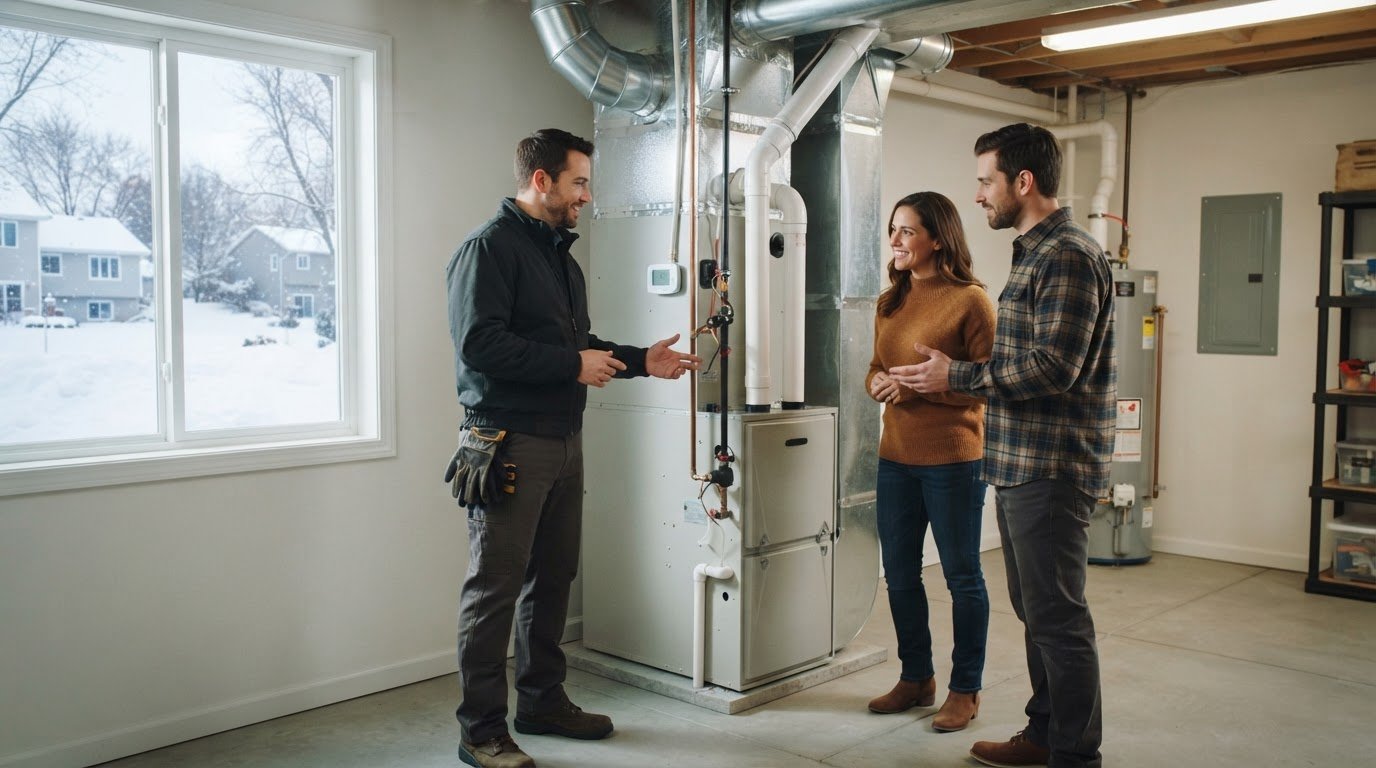
What if the furnace with the highest efficiency rating isn’t the best fit for your home? The rating matters, but so do your home’s heating needs, existing ductwork, and installation requirements. For dependable comfort through Oak Creek winters, high efficiency furnace installation Oak Creek WI should start with the house, not just the equipment.
It’s reasonable to want a furnace that uses energy wisely, suits your home, and can be installed with a clear plan. This guide explains how efficiency ratings relate to everyday comfort and why proper sizing and installation matter just as much. You’ll also learn what an assessment should consider, from your home’s layout to its existing heating system.
Peters Heating & Cooling provides furnace installation and project quotes shaped around the home and installation scope. As you read, you’ll get a clearer picture of what to discuss, what installation may involve, and how understanding the project details can make a major home upgrade easier to plan.
Key Takeaways
- Learn what AFUE tells you about seasonal fuel use, and why the highest rating isn’t automatically the right fit.
- See why a sound furnace recommendation considers your home’s layout, insulation, windows, and existing system, not square footage alone.
- Compare high-efficiency and standard-efficiency options by looking beyond the rating to home suitability and installation needs.
- Understand the steps involved in high efficiency furnace installation Oak Creek WI, from home assessment and written project scope to installation and system walkthrough.
- Find out how Peters Heating & Cooling’s licensed, insured, and continuously trained technicians help make recommendations and installation details clear.
High-Efficiency Furnace Installation in Oak Creek: What Efficiency Really Means
Oak Creek homeowners need dependable heat through Wisconsin’s cold season, but choosing a furnace by its efficiency rating alone can miss what matters most: how well the equipment fits the home. For high efficiency furnace installation Oak Creek WI, a rating is a useful starting point, not a promise that every household will use less energy or feel more comfortable. The right decision also depends on the house, the heating system, and how the furnace is installed.
What does a furnace AFUE rating tell you?
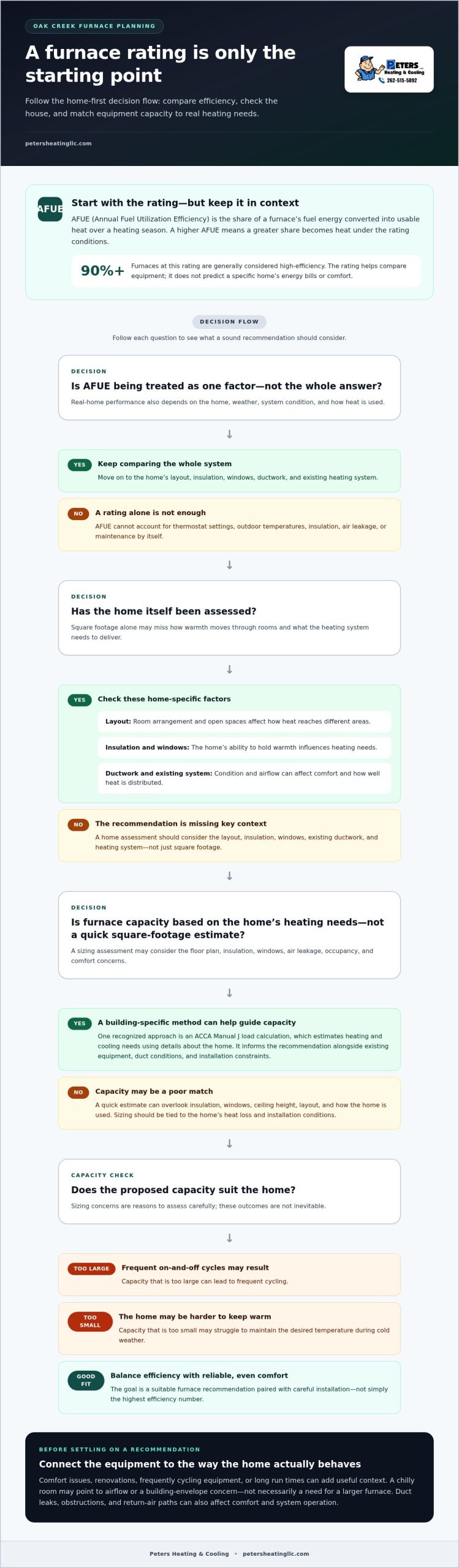
AFUE stands for Annual Fuel Utilization Efficiency. It describes how much of a furnace’s fuel energy becomes usable heat over a heating season, expressed as a percentage. A higher AFUE indicates that a greater share of the fuel is converted into heat under the rating conditions. In common usage, furnaces rated at 90% AFUE or higher are generally considered high-efficiency.
AFUE measures a furnace’s rated seasonal fuel-to-heat efficiency. Real-home performance also depends on the house, weather, system condition, and how the heat is used. The rating helps compare equipment on a consistent basis, but it can’t predict a specific home’s energy bills. Outdoor temperatures, thermostat settings, insulation, air leakage, and maintenance all affect how much heating energy a household uses.
For example, a household that keeps a warmer thermostat setting may use more energy than one that prefers cooler rooms, even with similar furnaces. A well-rated unit can also fall short of expectations if it’s poorly matched to the home or the distribution system. Treat AFUE as one part of the decision, alongside expected comfort and the installation details.
Some high-efficiency models use condensing technology to capture additional heat from exhaust. The high-efficiency condensing furnaces section provides background on how these systems work. Equipment type can affect installation needs, so consider the rating together with the home and project scope.
Why Oak Creek homes need more than a rating comparison
Homes in Oak Creek vary in size, layout, insulation, windows, and ductwork. Those differences shape how heat moves through rooms and what the heating system needs to deliver. Square footage alone doesn’t show whether a back bedroom stays cool, whether a home has been updated, or whether existing ducts can distribute heat evenly.
A careful assessment considers the whole picture:
- Home layout: Room arrangement and open spaces affect how heat reaches different areas.
- Insulation and windows: The home’s ability to hold warmth influences its heating needs.
- Existing ductwork and system: Condition and airflow can affect comfort and how well the furnace serves the home.
These details turn a rating comparison into a practical recommendation. The goal isn’t simply to select the highest number, but to weigh efficiency alongside reliable heat, even comfort, and a suitable installation plan.
How Furnace Sizing and Installation Affect Efficiency in Oak Creek
A furnace can have a strong efficiency rating and still be a poor match for a particular home. Its heating capacity needs to suit the home’s heat loss and the way warmth moves through its rooms. Choosing by square footage alone can overlook differences in insulation, windows, ceiling height, layout, and how the home is used.
Correct sizing and careful installation are necessary for a furnace to perform as intended. Capacity that’s too large may lead to frequent on-and-off cycles, while a unit that’s too small may struggle to maintain the desired temperature during cold weather. These outcomes aren’t inevitable, but they’re reasons to base a recommendation on an assessment rather than a quick estimate.
How does a contractor determine the right furnace size?
Peters Heating & Cooling’s sizing assessment starts with details about the home and its current heating system. A technician may consider the floor plan, insulation, windows, air leakage, occupancy, and the comfort issues residents experience. For example, a persistently chilly room can point to an airflow or building-envelope concern, not necessarily a need for a larger furnace.
One recognized approach is an ACCA Manual J load calculation. It estimates a home’s heating and cooling needs using building-specific information, rather than relying only on a broad square-footage rule. The result helps guide equipment capacity, but it’s one part of a practical recommendation. Existing equipment, duct conditions, and installation constraints also matter.
Share useful observations during the assessment: which rooms feel uncomfortable, whether the home has been renovated, and whether the existing furnace cycles frequently or runs for long periods. These details connect the calculation to how the home is actually used. A well-supported recommendation should make sense for both the home’s needs and the installation conditions.
What existing home systems can affect furnace performance?
The furnace is only one part of the heating system. Ducts carry warm air to living spaces, while return-air paths allow air to circulate back. Leaks, obstructions, or airflow problems can contribute to uneven comfort and may affect how the system operates. An assessment can identify whether duct condition or airflow deserves attention without assuming there’s a problem before examining the system.
Space around the existing equipment matters, too. The selected furnace must fit the available installation area, and its venting and electrical needs depend on the equipment and site conditions. Some high-efficiency equipment uses a different venting arrangement than an older furnace, so the venting route and any needed adjustments should be part of the project plan.
Controls also shape day-to-day operation. The thermostat and furnace need to work together appropriately, and a technician can consider existing controls alongside the equipment recommendation. For high efficiency furnace installation Oak Creek WI, a thorough assessment ties these details together before installation so the equipment choice and planned work are clear.
For a home-specific furnace recommendation, Peters Heating & Cooling’s residential furnace installation service connects equipment selection with the conditions in your home.
High-Efficiency Furnace or Standard-Efficiency Replacement: How to Compare
Is the added efficiency of a high-efficiency furnace a good fit for your home and priorities? It’s a fair question. A higher AFUE rating means more of the fuel’s energy is converted into usable heat under rating conditions, but it doesn’t automatically make that furnace the right choice for every household. The home’s heating needs, expected use, existing setup, and installation scope all belong in the comparison.
Use the table as a starting point for weighing options. The current federal minimum AFUE for a new residential gas furnace is 80%; furnaces rated at 90% AFUE or higher are generally considered high-efficiency.
| Comparison point | Standard-efficiency | High-efficiency |
|---|---|---|
| Efficiency rating | Typically closer to the current 80% minimum for residential gas furnaces. | Generally 90% AFUE or higher. |
| Home suitability | May suit a household whose priorities and existing setup align with this option. | May suit a household prioritizing a higher rated fuel-use efficiency, provided the equipment fits the home. |
| Installation considerations | Existing venting and equipment location still need assessment. | Condensing models may require different venting and condensate drainage arrangements. |
| Questions to weigh | Does the recommendation match the home’s heating needs and project priorities? | Do the equipment and installation requirements make sense for the home and its expected use? |
When might a higher-efficiency furnace fit a household?
Consider how the home is used, how much heating it typically needs, the condition of the current furnace, and how long you expect to live there. These details can guide a discussion about efficiency and installation scope, but they can’t guarantee a particular bill reduction or financial outcome.
For example, a household planning to stay in its home and focused on a higher efficiency rating may choose a high-efficiency option. Another household with different plans or installation priorities may reasonably select a standard-efficiency replacement. The right comparison is specific to the home, not a contest to choose the highest rating.
Which questions help compare furnace recommendations?
Ask how the home’s layout, insulation, windows, occupancy, and existing system informed the recommended capacity and efficiency level. Then review the written quote for the full scope: equipment, labor, and necessary permits. Clear details make it easier to compare options and understand what the planned work includes.
- What home conditions support the recommended furnace capacity?
- What installation changes are included for venting or condensate drainage, if needed?
- Does the written scope clearly cover equipment, labor, and necessary permits?
For another perspective on replacement decisions, see this Racine high-efficiency furnace installation guide. For high efficiency furnace installation Oak Creek WI, a sound choice balances rated efficiency with the household’s needs and a clearly explained project scope.
What to Expect During a Furnace Installation in Oak Creek
A clear installation plan makes a major home project easier to understand. For high efficiency furnace installation Oak Creek WI, the work usually moves through practical steps: assessing the home, explaining a recommendation, documenting the scope, installing the equipment, and walking through the completed system. The exact work depends on the home and the furnace selected, so there isn’t one timeline or project plan for every household.
How does the assessment and project quote work?
The process begins with the existing furnace and the home it serves. A technician reviews the equipment, home layout, ductwork, available installation space, and household comfort priorities. That context shapes a recommendation around the project rather than treating equipment selection as a one-size-fits-all decision.
After reviewing the findings, Peters Heating & Cooling provides a written project quote. It covers equipment, labor, and necessary permits, with the scope based on the home and selected equipment. Reviewing the written scope gives you a practical opportunity to understand what work is planned before installation begins.
What happens on installation day and at handoff?
Once the project is planned, the existing furnace is removed and the replacement is installed. The work may involve connecting the new equipment to the home’s heating system and addressing installation details tied to the selected furnace. Requirements can vary, so the scope and conditions at the home guide the work rather than a fixed project duration.
After installation, the system is tested and the homeowner is shown the completed setup. A walkthrough is a useful time to learn the basic operating controls, understand relevant equipment details, and get answers about the work completed. If something in the new system differs from the old one, a clear explanation helps you feel prepared to use it.
Keep the project quote and any equipment information together after installation. These details help you understand what was installed and provide useful context for future service. Regular care also matters after installation; the residential HVAC maintenance checklist offers practical reminders for ongoing system upkeep.
With the assessment, quote, installation, and walkthrough laid out, you can approach the project with a clearer sense of what to expect. Discuss your furnace installation project with Peters Heating & Cooling to plan a replacement around your home and its installation needs.
Plan Your High-Efficiency Furnace Installation with Peters Heating & Cooling
A good replacement decision follows a clear path: understand what an efficiency rating tells you, assess the home, compare the recommended equipment and project scope, then plan the installation. That keeps the focus on dependable comfort and a suitable fit, not on choosing a furnace by one number alone. For high efficiency furnace installation Oak Creek WI, Peters Heating & Cooling brings a straightforward approach to each project.
How Peters Heating & Cooling approaches furnace replacement
Peters Heating & Cooling has served Southeast Wisconsin, including Oak Creek, since 2009. Its licensed, insured, and continuously trained technicians consider the home’s conditions and comfort needs when making recommendations. The aim is to explain why an option fits the project, so homeowners can make an informed choice without pressure to select equipment that doesn’t suit their priorities.
Project details matter, too. A written installation quote covers equipment, labor, and necessary permits, with the scope based on the home and equipment selected. Clear details help you understand what the work includes and what the recommendation is based on. Financing options are available for homeowners considering a furnace project; the right choice still starts with understanding the equipment and installation needs.
What to prepare before discussing your Oak Creek project
You don’t need to arrive with technical answers. A few observations can make the project conversation more useful and help the team understand what matters in your home. Gather whatever information is easy to find, and note any concerns you’ve noticed during the heating season.
- Current furnace: Note its approximate age and gather any equipment paperwork or service records you have.
- Comfort concerns: Identify rooms that feel warmer or cooler than others, or changes in comfort over time.
- System behavior: Describe unusual sounds, frequent cycling, or other changes you’ve observed without trying to diagnose the cause.
- Household routines: Mention schedule or occupancy changes that affect how and when you heat the home.
These details give the conversation a practical starting point. The assessment can connect your observations with the home’s layout, existing equipment, and installation conditions. If you have a question about efficiency, sizing, or what a quote includes, raise it before deciding. A clear explanation should help you understand the recommendation and compare the project scope with your priorities.
Whether you’re replacing an aging furnace or planning ahead, you can take the next step at your own pace. Plan your furnace installation with Peters Heating & Cooling and discuss a project-specific quote for your Oak Creek home.
Take the Next Step Toward a Better-Fitting Furnace
A furnace decision doesn’t need to begin with a model or a rating. Start with what you want your home to feel like: steady warmth in the rooms you use most, a system that fits your household’s routines, and a project scope you understand before work begins. Those priorities give the installation conversation a useful focus.
If you’re considering high efficiency furnace installation Oak Creek WI, bring your comfort concerns and questions into the planning process. Discuss how your home’s conditions shape equipment recommendations and what the proposed work involves. The aim is a considered choice that makes sense for your home, not pressure to choose the highest rating or the most extensive project.
When you’re ready to explore options, discuss your high-efficiency furnace installation in Oak Creek with Peters Heating & Cooling. A clear conversation is a practical first step toward planning a replacement with confidence and preparing your home for dependable comfort.
Frequently Asked Questions
How long does high-efficiency furnace installation take?
Installation time depends on the home, selected equipment, and work required at the site. A straightforward replacement may differ from a project that needs changes to venting, electrical connections, or ductwork. Before work begins, review the planned sequence and scope so you know what the project involves. For high efficiency furnace installation Oak Creek WI, the details of your home matter more than a one-size-fits-all time estimate.
Can a high-efficiency furnace use my existing ductwork?
It may be possible, but existing ducts need to suit the replacement system and support appropriate airflow. For instance, if one room has consistently felt cooler than the rest of the house, mention that during the assessment; the cause may relate to airflow or another home condition. Ducts aren’t automatically suitable or unsuitable based on their age alone. Their condition and layout help determine whether duct-related work belongs in the project.
Does a high-efficiency furnace need different venting?
Venting requirements depend on the specific furnace and its installation instructions. Some high-efficiency condensing furnaces use PVC vent pipes, so a replacement may need a different arrangement from the existing furnace. That doesn’t mean every new unit requires the same changes. The site assessment should account for the chosen equipment and available venting route, and the written scope should describe applicable venting work before installation starts.
Will a new furnace work with my existing thermostat?
It depends on the thermostat, the selected furnace, and how the system controls are configured. Have the thermostat’s make and model available if you can find it, along with any equipment paperwork. That information helps the installation team review compatibility during planning. Don’t assume an existing thermostat will operate every function of a replacement furnace; if a control change is needed, its place in the project should be clear before work begins.
Are financing options available for furnace installation?
Yes, Peters Heating & Cooling offers financing options. Terms and eligibility depend on the financing arrangement, so review the details as part of planning rather than assuming a particular payment or approval. Consider financing alongside the written project scope and your household’s budget. The equipment recommendation should still reflect the home’s heating needs, with financing as one part of the decision rather than a factor determining furnace size or efficiency.
What should I do before the furnace installer arrives?
Make the route to the furnace and the immediate work area accessible. Move stored items that could obstruct access, and keep any equipment paperwork or notes about comfort concerns nearby. If you’ve noticed unusual operation, write down what happened and when rather than trying to troubleshoot the equipment yourself. Leave furnace components connected and in place; installation work should be handled by the technicians. The project plan can guide any additional preparation for your home.