A system that won’t start or blows warm air is showing a symptom, not necessarily revealing its cause. An HVAC system heats or cools indoor air, then uses a blower and ductwork to circulate it through the home. This HVAC system troubleshooting guide explains how the system works and what a professional checks when startup problems, unusual noises, warm air, or weak airflow disrupt comfort.
It’s understandable to want a clear explanation before deciding what to do next. A sound diagnosis starts with the symptoms and narrows down which part of the system may be responsible. You’ll learn what the heating and cooling components do, what common signs can indicate, and when a repair needs professional attention. That way, you can describe the problem and understand the next steps without opening equipment or guessing at the cause.
Key Takeaways
- Understand how heating, cooling, and airflow work together so you can describe a problem more clearly.
- Learn which thermostat and power issues a technician checks when a system won’t start.
- Use unusual sounds and changes in airflow as clues to help pinpoint where a problem may be coming from.
- Know when routine HVAC maintenance or professional repair is the practical next step.
What Is an HVAC System and What Does It Do?
Heating, ventilation, and air conditioning equipment work together to manage indoor temperatures and circulate air. Understanding the main components helps a technician trace cooling symptoms to their cause.
Identify Basic HVAC Components
Ask the technician to identify the indoor air handler or furnace, blower, filter, ductwork, thermostat, and outdoor condenser. In cooling mode, refrigerant carries heat from indoor air through the system to the outdoor unit, while the blower circulates cooled air through the ducts. The evaporator coil absorbs heat indoors; the condenser coil releases it outside. Avoid opening equipment to inspect internal components.
Understand Heating and Cooling Operation
Describe which rooms feel too warm or cold and when the change occurs. During heating, the system warms air and a blower sends it through the ducts. During cooling, refrigerant carries heat outdoors before the blower distributes cooled air. If temperatures vary between rooms, a technician can assess airflow, ductwork, and adjustable dampers that help balance air delivery.
- Request a symptom-based diagnosis. A technician considers the thermostat setting, operating mode, airflow, and temperature differences before testing components. In extreme heat or cold, they also consider outdoor conditions and how consistently the system runs.
- Ask about maintenance timing and cost. Professional HVAC maintenance is recommended annually. Its cost depends on the system’s condition, the work required, and the maintenance scope.
- Leave hazardous checks to a professional. Electrical components can cause shock, gas equipment can create safety risks, and refrigerant requires proper handling. Don’t open the system or attempt internal repairs.
- Request cooling checks when performance drops. A technician can assess the thermostat, airflow, evaporator and condenser coils, and refrigerant-related symptoms. Dirty evaporator coils can reduce cooling, lengthen operating cycles, and contribute to ice buildup.
How HVAC technicians diagnose a system that will not start
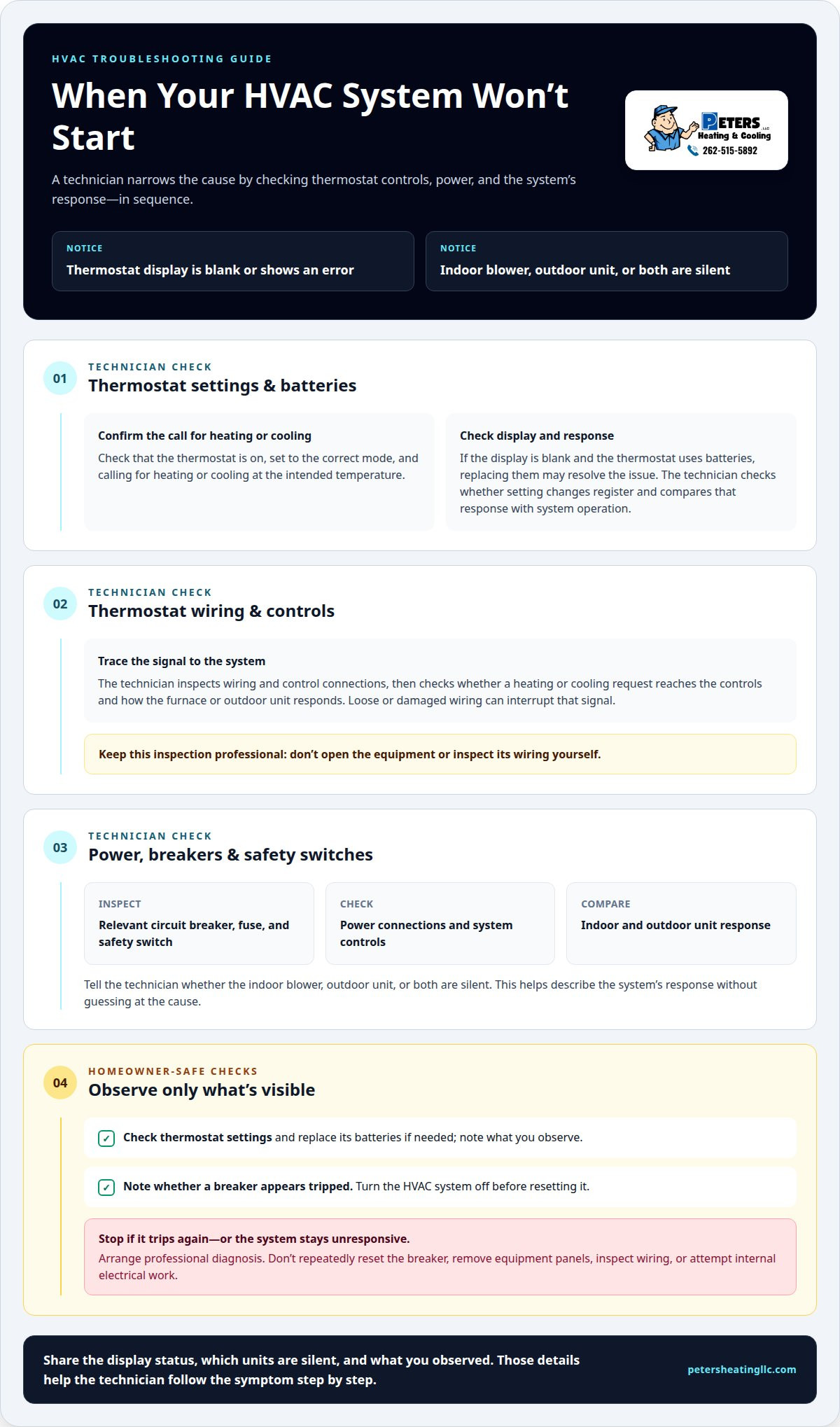
To diagnose a system that won’t start, a technician checks the thermostat controls, power, and system response in sequence.
-
How HVAC technicians assess thermostat settings and batteries
Tell the technician whether the thermostat display is blank or shows an error. They’ll confirm it’s on, set to the correct mode, and calling for heating or cooling at the intended temperature. If it uses batteries, replacing them may resolve a blank display. A technician also checks whether the thermostat responds to setting changes, then compares that response with the system’s operation.
-
How HVAC technicians inspect thermostat wiring and controls
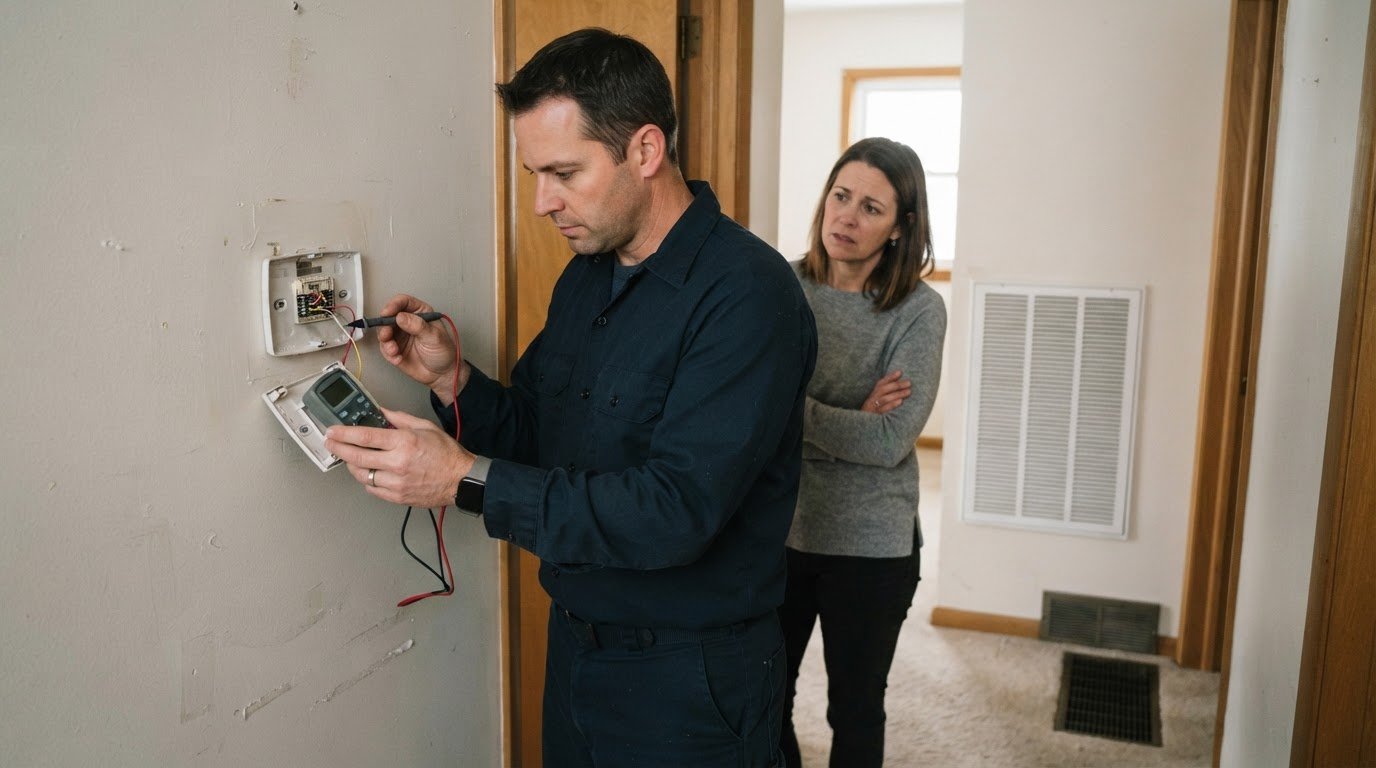
Ask the technician to inspect thermostat wiring and control connections rather than opening the equipment yourself. Loose or damaged wiring can interrupt the signal between the thermostat and HVAC system. The technician checks whether a heating or cooling request reaches the controls, then observes how the furnace or outdoor unit responds. This helps distinguish a control fault from another problem affecting the evaporator or airflow through the ductwork.
-
How HVAC technicians check AC power and breakers
Describe whether the indoor blower, outdoor unit, or both are silent. A technician checks the relevant circuit breaker, fuse, and safety switch, then inspects power connections and system controls. If a breaker has tripped, turn the HVAC system off before resetting it. If it trips again or the system remains unresponsive, arrange professional diagnosis rather than repeatedly resetting the breaker or attempting internal electrical work.
-
Identify Safe Homeowner Checks
Check only visible thermostat settings and replace its batteries if needed; report what you observe. Homeowners can also note whether a breaker appears tripped, but should switch the HVAC system off before resetting it. Don’t inspect wiring, remove equipment panels, or handle internal electrical components. If these simple checks don’t restore operation, share the symptoms with a technician. Recurring issues may call for HVAC preventative maintenance.
Unusual HVAC noises
Note where a sound comes from and when it occurs, such as at startup or during cooling. These details help an HVAC technician connect a noise with a component or operating condition.
-
Identify Banging, Rattling, Squealing, and Hissing
Record the sound and whether it comes from the indoor unit, ductwork, or outdoor AC unit. Banging can indicate a loose or broken part, such as a blower wheel or motor. Rattling may come from loose screws, panels, or ductwork. A high-pitched squeal can point to a failing blower motor or worn fan belt.
Tell an HVAC technician promptly if you hear a hiss. It may indicate a refrigerant leak or expansion valve problem that needs professional inspection. Don’t open the equipment to look for the source. Also mention any unusual smell, when you first noticed it, and whether it occurs with a particular sound or operating mode. This context helps the technician assess the system safely.
-
How HVAC technicians diagnose noise and vibration
Tell the technician whether vibration starts with the blower, cooling cycle, or outdoor unit. They can inspect for loose components and debris, then compare the sound with the system’s operation. A rattling panel, for example, differs from a bang that occurs as the blower starts. Avoid touching fan blades or reaching inside the unit while it’s running.
Describe the sound clearly: a steady rattle, a brief bang at startup, or a squeal that continues during operation. If it persists, arrange a professional inspection rather than repeatedly restarting the AC unit. A hissing sound deserves prompt attention because a refrigerant issue or expansion valve may be involved. Share any related odor, visible debris, or vibration location, but don’t attempt internal repairs.
How HVAC technicians diagnose warm air and weak airflow
Warm air and weak airflow can have the same cause, such as a clogged filter. A technician checks airflow and cooling components before recommending a repair.
-
How HVAC technicians assess air filters and restricted airflow
Describe when airflow weakened and which rooms feel warm. The technician checks the air filter for dirt and restricted passage, then assesses whether the blower can move air through the system. A clogged filter can make equipment work harder and may contribute to overheating. Filter replacement intervals vary, but filters are generally replaced every 1-3 months, especially during heavy use.
The technician turns off the HVAC system before removing a filter for inspection. They also check that the replacement fits properly, since a poor fit can let dust bypass the filter. Share when the filter was last changed and whether system performance has changed. These details help distinguish a filter restriction from a separate cooling or ductwork problem.
-
How HVAC technicians diagnose weak airflow
Point out whether weak airflow affects one room or the whole home. A technician compares supply and return airflow, checks for blocked vents, and assesses whether the blower is moving air as expected. Poor airflow in one room can point to a local obstruction or duct issue. Reduced airflow throughout the home suggests a system-wide restriction.
If airflow is weak and cooling is poor, the technician also examines the evaporator coil. Dirt can interfere with heat transfer, while a frozen coil can restrict airflow. Restricted airflow, clogged filters, and low refrigerant can contribute to coil freezing. A technician identifies the cause before restarting cooling instead of treating ice as the underlying fault.
-
How HVAC technicians diagnose duct restrictions
Tell the technician which rooms have uneven temperatures and whether the change is new. They inspect accessible duct runs for obstructions, damage, leaks, and poor connections. Leaky or poorly insulated ducts can let conditioned air escape before it reaches a room. The technician may also assess return-air paths and dampers when heating or cooling varies between spaces.
Once the cause is identified, the technician can explain whether the issue involves the air filter, evaporator coil, ductwork, or another cooling component. For persistent warm air or poor airflow, schedule air conditioning repair with Peters Heating & Cooling for a professional diagnosis.
Peters Heating & Cooling: HVAC Preventative Maintenance
Peters Heating & Cooling provides preventative HVAC maintenance to help address wear and potential issues before they disrupt heating or cooling. A maintenance visit is a practical next step when you want a professional to inspect and clean system components, or when recurring symptoms need attention beyond basic checks.
If your system already has a problem, Peters Heating & Cooling also handles furnace and air conditioning repairs. A technician can assess the symptoms, identify the affected components, and explain the necessary repair. If an older system needs replacement rather than repair, furnace installation is also available.
Share what you’ve noticed, such as when the system stops, which rooms feel uncomfortable, or what sounds have changed. These details help focus the conversation on the problem you need solved. Contact Peters Heating & Cooling to discuss maintenance or a heating and cooling concern.
Make Your Next HVAC Decision With Confidence
An HVAC system troubleshooting guide is most useful when it helps you understand the diagnosis and choose a sensible next step. Ask the technician to explain which part is causing the problem, how the proposed work addresses it, and whether repair or replacement makes sense for your system. A clear explanation helps you weigh the recommendation against your equipment’s condition and household comfort needs, rather than making a decision based on one symptom alone.
Keep the diagnosis and details of completed work with your home records. That information can give future service conversations useful context and help you track recurring concerns. If you’re ready to discuss your system’s needs, contact Peters Heating & Cooling. A thoughtful next step can make it easier to move forward with a clearer plan for home comfort.
Frequently Asked Questions
How do HVAC technicians diagnose a system that won’t turn on?
A technician traces the system’s response from the thermostat to its heating or cooling equipment. This HVAC system troubleshooting guide can help explain why they check error codes, control signals, power, and safety switches. Tell the technician whether the indoor blower or outdoor unit makes a sound and whether the thermostat display is blank. Those details help distinguish a control issue from a power interruption.
Why is my HVAC system blowing warm or cold air?
The air may feel wrong because the system is in the wrong operating mode, airflow is restricted, or a heating or cooling component isn’t working correctly. For example, warm air from an air conditioner differs from cool air during a furnace cycle. Note the thermostat mode, which rooms are affected, and whether the air changed suddenly. A technician uses those details to focus the diagnosis.
How do HVAC technicians diagnose airflow problems and weak vents?
Technicians compare airflow between rooms and look for patterns that point to a restriction or delivery problem. If one bedroom has weak airflow while nearby rooms feel normal, they may focus on that room’s vent and duct run. If several rooms are affected, they can assess central airflow and return-air paths. Reporting which vents feel weak helps narrow the inspection.
What causes unusual HVAC noises, odors, or leaks?
Loose parts or debris can cause rattling or banging, while a hiss may indicate a refrigerant-related issue. A musty odor or standing water near an indoor AC unit can signal a drainage problem. Note where the odor or sound occurs and whether you see water near the equipment. A technician can use these observations to distinguish drainage concerns from mechanical or cooling issues.
How do HVAC technicians diagnose a clogged HVAC air filter or condensate drain?
An HVAC system troubleshooting guide can explain the checks a technician makes, including inspecting the filter for dirt and the condensate pan and drain line for blockage or debris. They also look for standing water or nearby water damage, which can point to a drainage issue. Describe any musty smell or water you’ve noticed, and avoid opening equipment. Homeowners in Kenosha, Racine, Oak Creek, or Winthrop Harbor can contact Peters Heating & Cooling for professional HVAC repair when problems persist.
How to troubleshoot HVAC systems in extreme heat or cold
In extreme heat or cold, note which rooms are uncomfortable and how consistently the system runs; a technician can consider outdoor conditions during diagnosis. If the AC struggles on a very hot day, raise the thermostat a few degrees and wait an hour. In cold weather, keep doors and windows closed to help retain heated air.