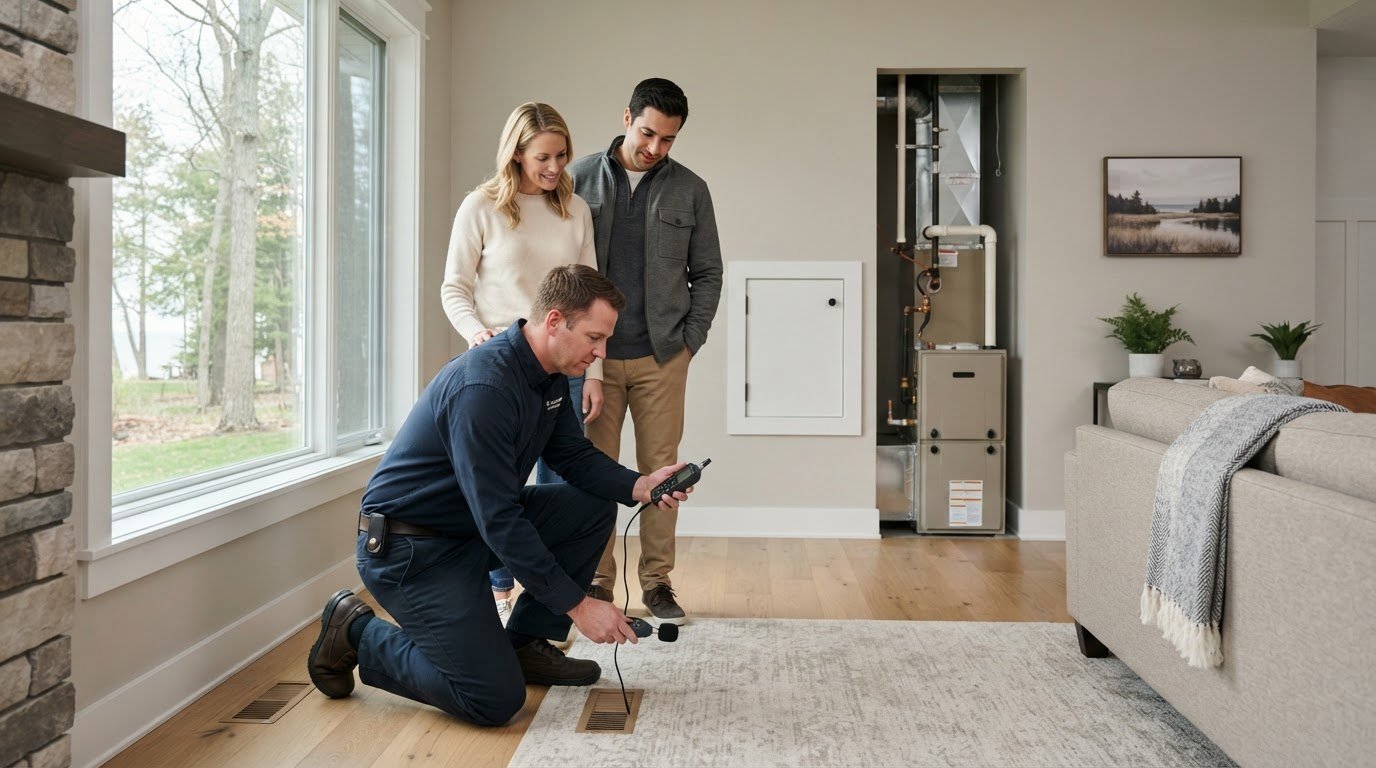
A standard home inspection checks whether the heating and air-conditioning systems operate and whether the filters are clean. An HVAC inspection for home buyers looks more closely at system performance and components. Cost depends on the home, the systems involved, and the scope of the assessment. Larger homes or properties with multiple systems may need a broader inspection.
It’s reasonable to want a clear picture before committing to a home. A standard inspection can flag visible concerns, while a focused air-conditioning assessment can evaluate how well the system cools and identify issues that may need attention.
This guide explains what a standard home inspection covers, what an air-conditioning assessment may examine, and how inspection scope affects cost. You’ll also learn where a focused HVAC evaluation can add useful detail, helping you understand the system’s condition as you consider your next steps.
Key Takeaways
- A standard home inspection checks whether heating and air-conditioning systems operate, but a focused evaluation can provide a closer look at their performance and components.
- An air-conditioning check may include running the system before measuring vent temperatures, along with looking at filters, airflow, and equipment condition.
- Inspection scope affects cost: the home’s size and the number of heating and cooling systems can shape how much evaluation is needed.
- Use the inspection findings to identify concerns that may call for further HVAC diagnosis, repair, or replacement before you decide on next steps.
Air-conditioning inspection components
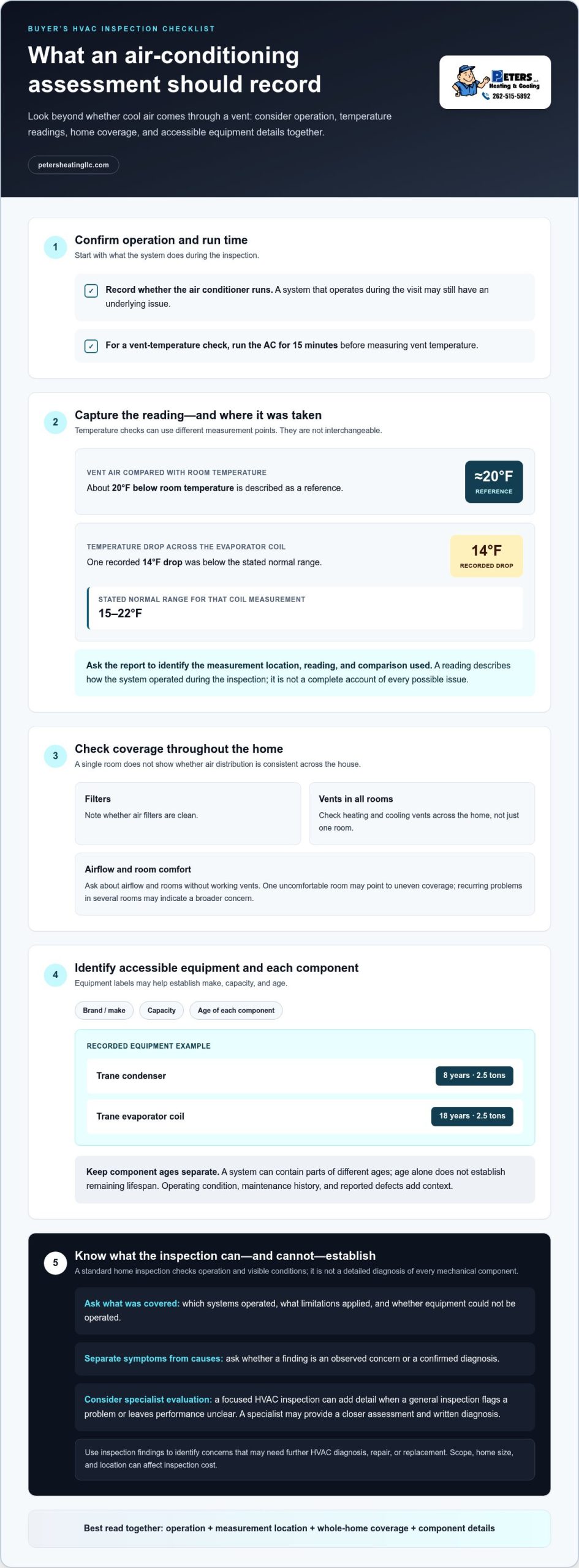
An HVAC inspection for home buyers should look beyond whether cool air comes through a vent. The system is run, its airflow and temperature are assessed, and accessible equipment is examined. Specialized air conditioning technicians like MountainKlima emphasize the importance of thorough technical diagnostics rather than simple visual checks. During an air-temperature check, the technician runs the air conditioner for 15 minutes before measuring vent temperature. That reading helps describe how the system operates during the inspection. Consider it alongside other findings, not as a complete account of every possible issue.
Temperature comparisons can be reported in different ways. One check compares vent air with room temperature, with about 20°F below room temperature described as a reference. Another measures the temperature drop across the evaporator coil. A 14-degree drop was below the stated normal range of 15 to 22 degrees. These measurements use different points in the system, so they shouldn’t be treated as interchangeable. Ask what locations the report’s readings describe.
The inspection can also record visible equipment details and system coverage. A buyer’s checklist should include clean air filters and heating and cooling vents in all rooms. Equipment labels may help identify the make, capacity, and age. For example, one inspection recorded an 8-year-old, 2.5-ton Trane condenser and an 18-year-old, 2.5-ton Trane evaporator coil. Those details distinguish the age of separate components, rather than assigning one age to the entire system.
- Operation: Record whether the air conditioner runs during the inspection.
- Temperature: Note the measurement location, reading, and comparison used.
- Coverage: Check filters and vents across the home, not just one room.
- Equipment: Capture accessible labels, including brand, capacity, and component age.
Capacity estimates also need context. Home size can be one consideration when estimating cooling capacity, but it does not by itself establish the right system size. That example shows how home size can inform a rough estimate, but the number alone doesn’t establish whether a system suits a particular house. An HVAC inspection for home buyers is most useful when measured performance, room coverage, and equipment information are considered together.
HVAC systems in a buyer’s home inspection
A buyer’s inspection checks whether the heating and cooling systems operate and notes visible concerns that may need closer evaluation.
Questions for the HVAC Inspector
Ask what the inspection covered, which systems operated, and whether any findings need a specialist diagnosis. Those answers clarify what the report establishes before you rely on it. Ask about gas odors, airflow, filters, and vents in each room. Also ask the inspector to explain any limitations, such as equipment that couldn’t be operated, and to distinguish observed symptoms from a confirmed cause.
Problems to Look for Before Closing
Look for systems that don’t operate, gas odors near heating or cooling equipment, dirty filters, and rooms without working vents. One uncomfortable room may point to uneven coverage, while recurring problems in several rooms may indicate a broader concern. Review each finding before closing. An inspection report can help identify issues to discuss and inform purchase negotiations.
System Age and Remaining Lifespan
Check accessible equipment labels and the inspection report for the age of each separate component. One inspection recorded a 21-year-old Trane furnace, an 8-year-old condenser, and an 18-year-old evaporator coil. These examples show why one system may contain parts of different ages. Age alone doesn’t establish remaining lifespan; operating condition, maintenance history, and reported defects help explain the system’s likely needs.
When to Get a Specialist Inspection
A specialist HVAC inspection is useful when a general inspection flags a problem or leaves system performance unclear. General home inspectors aren’t required to have HVAC expertise or tools, so a specialist can assess the system more closely and provide a written diagnosis. Findings may support a request for repairs or a lower purchase price. Scope, home size, and location affect cost.
State and local requirements and inspection costs can differ with location and inspection scope. If the report identifies a repair issue, air-conditioning repair may be a practical next step after you understand the finding.
Pre-purchase home inspection scope
A pre-purchase inspection assesses the home’s visible condition and checks whether major systems operate. It includes an evaluation of heating and air conditioning, but it isn’t a detailed diagnosis of every mechanical component. Its purpose is to document observable conditions and identify concerns that may need further attention before purchase.
For HVAC, a standard checklist includes whether heating and cooling operate, whether filters are clean, and whether vents appear in each room. Inspectors may also note a gas odor near the heating or cooling equipment. These observations help buyers understand basic operation and spot signs that warrant follow-up. A system that runs during the visit can still have an underlying issue a general inspection doesn’t identify.
A professional home inspection in the United States typically takes 2-4 hours, and buyers typically receive the report within 48 hours. The report organizes observations across the property, not only HVAC. Buyers can use it to distinguish ordinary maintenance notes from reported defects, then focus any further evaluation on the areas that matter to their decision.
- Heating and cooling: Record whether each system operates and note visible concerns.
- Air distribution: Check that vents are present in rooms throughout the home.
- Filters and odor: Note filter condition and any gas odor around equipment.
- Report follow-up: Identify findings that need a closer assessment before closing.
Mortgage appraisals have a different purpose from a buyer’s home inspection. FHA appraisals assess visible hazards and defects, including a malfunctioning HVAC system, and FHA minimum property standards emphasize structural integrity, safety, and security. For homes built before 1978, FHA appraisers check for cracking, peeling, or chipping lead paint. VA minimum property requirements include primary systems and components such as roofing, plumbing, heating, and access to clean water. These appraisal checks don’t replace a detailed assessment of equipment condition.
Read the home inspection report as a record of visible findings, not a guarantee of future performance. For example, a note that the furnace operated provides a useful snapshot, while a written finding about a defect identifies a reason to investigate further. Distinguishing these types of information helps buyers decide what needs attention before purchase.
How is an HVAC inspection different from a standard home inspection?
A standard home inspection surveys the property, while an HVAC inspection focuses on heating and cooling equipment. That difference matters because general home inspectors aren’t required to have HVAC expertise or tools. A standard report can identify visible concerns, but it may not explain the system’s underlying condition.
Think of the standard inspection as a broad review. It checks whether major systems operate and records observable issues, such as a furnace that won’t run. A focused HVAC assessment examines the heating and cooling system more closely, helping clarify reported symptoms and potential repair needs. The two evaluations serve different purposes, so one doesn’t automatically replace the other.
Use the standard report to identify questions, then decide whether a finding needs further evaluation. For example, “air conditioner didn’t operate” describes an observation, but doesn’t explain the cause or work required. A specialist’s written assessment can provide more detail for planning repairs or discussing findings during a purchase.
- Standard inspection: Broad review of visible property conditions and basic system operation.
- HVAC inspection: Focused evaluation of heating and cooling equipment and reported concerns.
- Report wording: Separate observed symptoms from a diagnosis of their cause.
- Next step: Use specific findings to decide whether additional assessment is useful.
For buyers, the distinction helps set realistic expectations. A home inspection can show that a system operated during the visit, but that snapshot doesn’t establish its full condition. A focused evaluation is especially useful when the report notes unusual operation, visible damage, or a comfort concern. Clear findings help buyers understand what needs attention without treating every observation as proof of major failure.
If a reported cooling problem points to a repair need, request air-conditioning repair as a practical next step.
Peters Heating & Cooling: Furnace Repair
Peters Heating & Cooling helps homeowners address heating and cooling problems identified during a home inspection. If the report notes a furnace that won’t operate or needs repair, furnace repair can address the issue. For air-conditioning concerns, air-conditioning repair can resolve system problems, while installation is an option when replacement is needed.
Inspection findings can clarify the next step. Share the reported symptoms and any written diagnosis when discussing the problem, so the repair need is clear. If a system is beyond repair, installation may be more suitable. The right service depends on the equipment and the issue identified.
For help with a furnace or air-conditioning concern noted in your inspection, contact Peters Heating & Cooling.
Turn inspection findings into a clear next step
A home purchase brings enough decisions without leaving heating or cooling concerns unresolved. Use the inspection report to decide what needs attention, then focus on the issue affecting the home’s comfort and operation. A careful HVAC inspection for home buyers can inform that decision, but its value comes from acting on specific findings rather than treating every note as the same problem.
For a furnace concern, Peters Heating & Cooling offers Furnace Repair and Furnace Installation. For cooling problems, Air Conditioning Repair can address system issues. Matching the service to the reported condition keeps the response practical and relevant to the home.
Bring the inspection findings into your next conversation and focus on the question that matters most: what should be addressed before or after the move? Contact Peters Heating & Cooling to discuss a heating or cooling concern. A clear next step can help you move forward with greater confidence.
Frequently Asked Questions
How Much Does an HVAC Inspection Cost?
Scope matters: assessing several pieces of equipment takes more work than evaluating one system. Buyers in Kenosha or Racine can compare the inspection scope with the home’s equipment to understand the estimate.
What does an HVAC inspection include when buying a home?
An HVAC inspection assesses whether heating and cooling equipment operates and may evaluate ducts, filters, and related components. For example, the inspector may document a dirty filter, a room without a vent, or unusual system operation. The report records observations, while a specialist assessment can investigate a suspected cause. This distinction helps buyers interpret findings without treating every noted concern as a confirmed diagnosis.
How much does a pre-purchase HVAC inspection cost in the United States?
This is the cost of an HVAC-focused inspection, separate from a general home inspection. Buyers in Oak Creek or Winthrop Harbor can consider the number of systems and the requested scope when budgeting.
What are the risks of buying a home with an old or failing HVAC system?
An old or failing HVAC system may not operate properly and could need further diagnosis, repair, or replacement. Components can be different ages, and age alone doesn’t establish remaining lifespan. Review operating condition, maintenance history, and reported defects.
How do HVAC inspection requirements and costs vary by state or locality?
State and local requirements and inspection costs can vary by location and scope. For example, in warm coastal climates where air conditioning runs nearly year-round, regional specialists such as ultraairswfl.com illustrate how local heat and humidity levels shape inspection priorities and overall equipment demands.