
The lowest per-square-foot estimate isn’t always the most useful figure for a commercial HVAC budget. HVAC preventative maintenance cost depends on more than floor area: the number, size, age, and condition of the systems, as well as the work included, all affect the estimate. A square-foot figure can help compare buildings, but consider it alongside the equipment being maintained.
It’s reasonable to want a clear annual budget before maintenance is due. This article explains how to estimate one, how commercial costs are measured per square foot, and why one building’s needs may differ from another’s.
Service scope and equipment condition also shape the budget. Understanding these factors helps you assess an estimate and plan for routine maintenance without treating a single figure as the whole story.
Key Takeaways
- Estimate annual contract costs by considering the equipment, its condition, and the maintenance coverage included.
- Build a more useful budget by accounting for each system’s replacement value and setting aside room for unplanned repairs.
- Use cost per square foot as a comparison tool, then consider whether it reflects the equipment and service scope in your building.
- Compare a maintenance plan with separate seasonal visits by weighing visit frequency, included tasks, and any added contract benefits.
How Much Does Commercial HVAC Preventative Maintenance Cost?
Commercial contract costs depend on the equipment, coverage, and visit schedule, so one estimate won’t fit every building. Commercial maintenance contracts commonly schedule quarterly visits, while some smaller systems may need maintenance twice a year.
Annual Contract Expenses
An annual contract bundles planned inspections and maintenance into a recurring service arrangement. For commercial properties seeking streamlined oversight, providers such as Atlas South Technical Service deliver planned facilities management through a single contract. Its budgeting value comes from predictability, while the equipment count, system complexity, and included tasks determine the scope. A contract covering several rooftop units differs from one covering a single system. Review what each visit includes, such as filter or coil service, and whether repairs are billed separately.
Equipment-Specific Maintenance Costs
Equipment-specific costs reflect the type and complexity of each system. A commercial rooftop unit, split system, boiler, or chiller requires different inspection points and maintenance tasks. For example, a chiller inspection involves different components from a rooftop unit visit, and comprehensive service providers such as Prodigy Mechanical tailor maintenance routines to each facility’s specific commercial heating and gas equipment. Listing each asset separately shows which systems drive the budget and prevents a single building-wide estimate from obscuring important differences.
Factors That Shape Service Costs
Service costs vary with system age, condition, accessibility, and the work required at each visit. A technician may inspect air handlers, clean coils, replace filters, or check refrigerant levels. Emergency work can cost more than scheduled visits, while repairs and replacement parts may fall outside routine coverage. Whether missed maintenance affects a warranty or insurance coverage depends on the specific written terms.
Plans Versus Seasonal Tune-Ups
A maintenance plan groups scheduled service under an ongoing agreement, while seasonal tune-ups are booked and billed separately. The better fit depends on the number of systems, the included work, and how often each asset needs service. Compare the total annual scope, not just the visit count. A plan may also include reporting or repair discounts, so account for those terms in your comparison.
Annual maintenance budget estimation
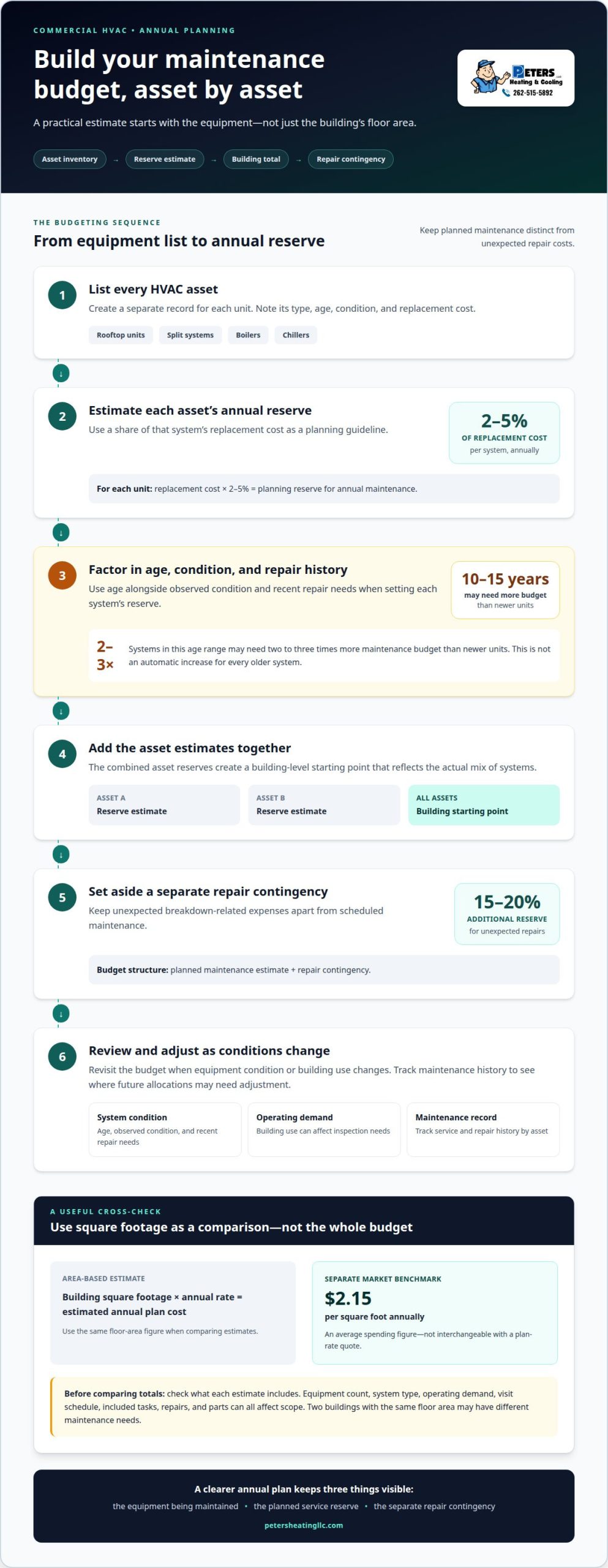
Build an annual HVAC budget asset by asset, rather than applying one figure to the whole building. A common planning guideline is to set aside 2-5% of each system’s replacement cost for annual maintenance. This method ties the reserve to equipment value and helps facility managers compare older and newer assets.
For each unit, record its type, age, condition, and replacement cost. Then use the 2-5% range to estimate its annual maintenance reserve. Add the asset estimates together for a building-level starting point. This gives more context than floor area alone, especially when a facility combines rooftop units, split systems, boilers, or chillers.
Age can change the calculation. HVAC systems aged 10-15 years may need 2-3 times more maintenance budget than newer units. That doesn’t mean every older system will require the same increase. Use age alongside observed condition and recent repair needs when assigning each asset’s reserve.
Keep planned maintenance separate from an unplanned-repair contingency. A practical approach is to add 15-20% to the maintenance estimate for unexpected repairs. This reserve helps distinguish scheduled work from breakdown-related expenses, making the annual plan easier to review and adjust.
Review the budget when equipment condition or building use changes. Higher operating demand can affect inspection needs, while dirty coils or neglected filters can reduce system performance and increase energy use. Consistent maintenance supports efforts to extend equipment service life, but it doesn’t eliminate the need to budget for repairs. Tracking each asset’s maintenance history shows where the budget is working and where future allocations may need adjustment.
Commercial HVAC maintenance cost per square foot
Commercial HVAC maintenance plans are often priced by building area, giving facility managers a quick way to estimate annual spending. These ranges offer a starting point, not a substitute for considering the HVAC systems in the building.
The calculation is straightforward: multiply the building’s square footage by the annual rate. Use the same floor-area figure across estimates to make comparisons clearer.
A separate market benchmark puts average commercial-building HVAC maintenance spending at $2.15 per square foot annually. That figure is much higher than the stated plan-rate ranges, so don’t treat the measures as interchangeable. A plan price is tied to a coverage tier; an average spending figure describes broader maintenance expenditure. Check what each estimate counts before using it for a budget comparison.
Area alone can hide important differences. Two 20,000-square-foot buildings may have different equipment counts, system types, operating demands, or maintenance scopes. A building with several rooftop units and a chiller, for example, may require different service work than one with fewer, simpler systems. Compare the per-square-foot estimate alongside the equipment list and included tasks.
Use the rate as a screening tool, then compare it with the actual maintenance scope. An estimate that includes only routine visits may not cover repairs or parts. Another estimate may have a higher per-square-foot figure because it includes broader coverage. Keeping floor area, equipment, and coverage visible makes annual estimates more useful for planning.
Are HVAC maintenance plans cheaper than paying for seasonal tune-ups separately?
A maintenance plan may cost less overall when its annual fee covers the visits and tasks a building already needs. Separate seasonal tune-ups may suit a facility with fewer systems or a narrower service scope. Compare the full year, not one appointment: include each scheduled visit, the equipment covered, and any separately billed work. Commercial maintenance schedules commonly use quarterly visits, while some smaller systems may need service twice a year.
For a fair comparison, write down the same scope for both options. Count planned visits, list covered equipment, and note whether filters, coils, inspections, or system reporting are included. Then compare that complete plan with the cost of booking equivalent seasonal visits separately. A lower starting figure may not cover the same work if it includes fewer systems or maintenance tasks.
Timing also affects the budget. Scheduled HVAC labor costs 30-50% less than emergency labor rates, so planned maintenance can help avoid relying on urgent service for routine needs. That difference doesn’t mean a plan prevents every breakdown. It does show why comparing only the contract fee with separate tune-up charges can miss the cost of unplanned work.
Consider a building with several rooftop units and split systems. If each needs spring and fall attention, separate appointments can mean coordinating multiple visits and invoices. A plan may simplify scheduling, while separate tune-ups may work better when equipment needs differ or the facility wants a limited scope. Compare annual visit frequency, covered tasks, and repair terms, not just the plan’s label.
For planned service tailored to the building’s equipment and schedule, arrange HVAC preventative maintenance.
Peters Heating & Cooling: HVAC Preventative Maintenance
Peters Heating & Cooling provides HVAC preventative maintenance for residential and light-commercial properties in the Kenosha and Racine area, including Oak Creek and Winthrop Harbor. For a light-commercial building, planned service can address routine system needs before seasonal demand increases. It’s a practical option when budgeting maintenance, managing aging equipment, or arranging recurring care for heating and cooling systems.
Peters Heating & Cooling provides honest recommendations and transparent pricing. Since maintenance needs depend on the equipment and its condition, recommendations should fit the building rather than add unnecessary work. If an inspection identifies a problem, furnace repair or air conditioning repair may also be appropriate.
For maintenance suited to your property, contact Peters Heating & Cooling to discuss your HVAC needs.
Make Your Next Maintenance Decision With Confidence
A useful HVAC preventative maintenance cost estimate should support a decision, not become a number you revisit without context. Use the budget to set priorities for equipment condition, service coverage, and timing. This gives facility managers a clearer basis for planning and connects maintenance decisions to the building’s operating needs.
The next step is to turn those priorities into a maintenance scope that fits your property. Peters Heating & Cooling provides HVAC preventative maintenance and can address furnace or air-conditioning repairs when needed. If your equipment needs a larger change, furnace installation is also available.
Share what you’re planning for your building and contact Peters Heating & Cooling to discuss the next step. A clear plan starts with a straightforward conversation, and you can move forward with a maintenance approach that makes sense for your property.
Frequently Asked Questions
Do HVAC maintenance plans vary by region?
Yes, regional climate and heating or cooling demands can shape a plan’s focus. Plans in northern states typically include a fall furnace tune-up, while southern plans may emphasize heat pumps and air handlers in spring and fall. Hot-humid climates can have HVAC maintenance costs 20-35% higher than temperate regions. For buildings around Kenosha, Racine, Oak Creek, and Winthrop Harbor, local seasonal conditions help inform service timing.
What is included in a typical HVAC maintenance plan?
A typical plan may set scheduled service visits and specify which equipment and tasks are covered. Commercial contracts often include quarterly visits or one visit per season, and some may add priority service, repair discounts, or system reporting. These benefits vary by contract. For example, a facility manager can use system reports to track recurring issues across multiple units and plan maintenance more clearly.
How much does HVAC preventative maintenance cost per visit in the U.S.?
The range reflects differences in equipment, building access, and included work. A visit covering multiple systems may require more inspection and maintenance than a single-unit appointment. Treat this as a market estimate, not a price for Peters Heating & Cooling’s service.
What is the average annual cost of an HVAC maintenance plan?
One market-price sample places plans between $2,700 and $7,100 per year, with a median of about $4,300. These figures cover different contract scopes, so compare equipment covered and included service before using a market range to plan your building’s budget.
What is included in a standard HVAC preventative maintenance visit?
A commercial visit may include inspecting air handlers, rooftop units, boilers, or chillers; cleaning or replacing filters and coils; and checking refrigerant levels. The actual tasks depend on the equipment being serviced. For example, a building with a chiller and rooftop units needs inspection work suited to both system types. The visit scope helps explain what a maintenance agreement covers.
How do HVAC maintenance costs vary by system type, size, and age?
System type affects which components a technician inspects, while larger capacity and more complex equipment can require a broader service scope. A basic rooftop unit and a commercial chiller don’t involve identical maintenance tasks. Age matters, too: systems aged 10-15 years may need 2-3 times more maintenance budget than newer units. Equipment condition and repair history add useful context.