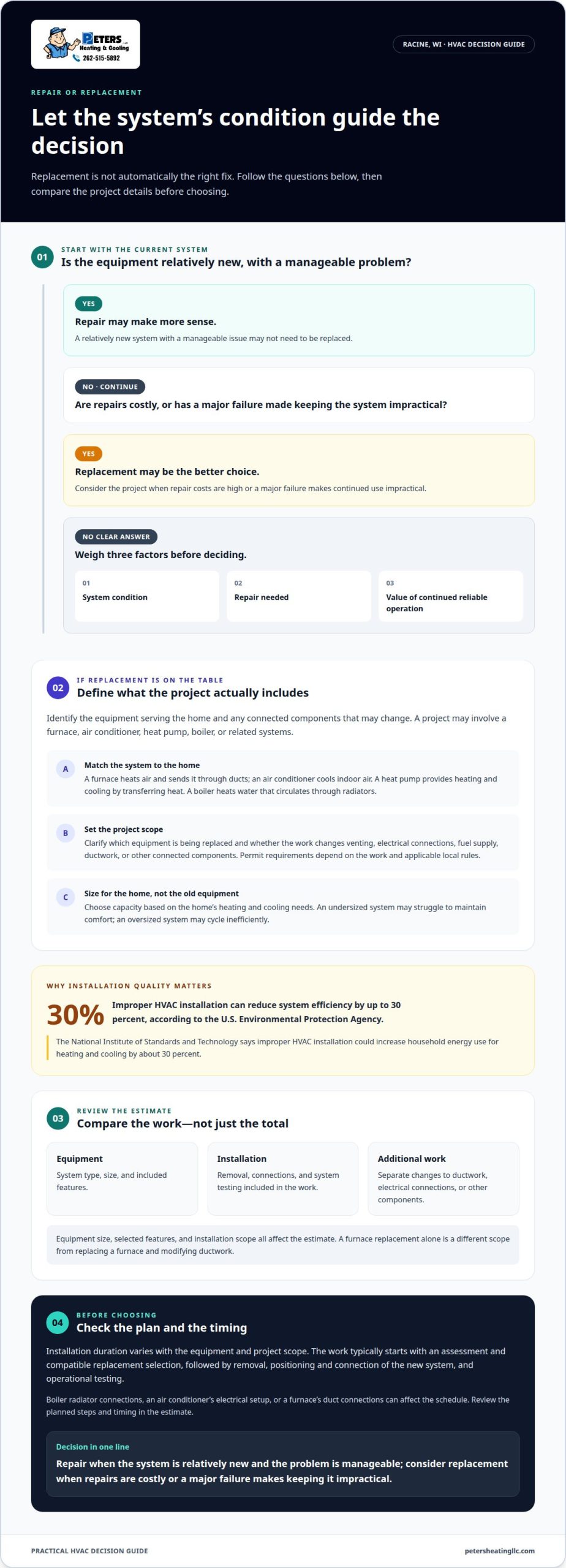
HVAC system replacement in Racine, WI, isn’t automatically the right fix. When the equipment is relatively new and the problem is manageable, repair may make more sense. Replacement may be the better choice when repairs are costly or a major failure makes keeping the system impractical.
It’s understandable to want a clear answer before committing to either option. This guide explains how to weigh repair against replacement, what affects an estimate, and how system size, features, and installation quality shape the decision. You’ll also learn what to compare when reviewing system brands and what to consider when exploring financing. The goal is a practical way to assess your options and choose a solution that fits your home and comfort needs, without treating replacement as the answer to every HVAC problem.
Key Takeaways
- Compare repair and replacement by weighing the system’s condition, the repair needed, and the value of continued reliable operation.
- Installation quality matters: the U.S. Environmental Protection Agency says improper installation can reduce HVAC system efficiency by up to 30 percent.
- Understand how equipment size and features affect an estimate, and what to compare when considering financing options.
- Choose system capacity and efficiency based on your home’s heating and cooling needs, not a guess based on the equipment already installed.
HVAC installation and replacement
Replacement starts with identifying which equipment serves your home and what needs to change. The project may involve a furnace, air conditioner, heat pump, boiler, or connected components.
Furnace, AC, Heat Pump, and Boiler Options
A furnace heats air and sends it through ducts, while an air conditioner cools indoor air. A heat pump provides heating and cooling by transferring heat, while a boiler heats water that circulates through radiators. Replacing a furnace and AC may mean replacing separate systems; a boiler project centers on the boiler and hydronic distribution. Compare how each option fits your home’s existing equipment.
Permits and Local Code Requirements
In Racine, permit requirements depend on the replacement work and applicable local rules. A like-for-like equipment change can involve different work from a project that also changes venting, electrical connections, fuel supply, or ductwork. These details determine which requirements apply. Define the project scope, including the equipment being replaced and any connected systems being altered, so the requirements for that specific work can be addressed.
Home Sizing and Efficiency Choices
System size should match the home’s heating and cooling needs, not simply the capacity of the old equipment. A system that is too small may struggle to maintain comfort; an oversized system may cycle inefficiently. Compare efficiency information across suitable options, then weigh operating needs against upfront features. The U.S. Environmental Protection Agency says improper installation can reduce HVAC system efficiency by up to 30 percent. The National Institute of Standards and Technology says improper HVAC installation could increase household energy use for heating and cooling by about 30 percent.
Replacement Steps and Timing
There isn’t one installation duration that applies to every home, because the work depends on the equipment and project scope. The process typically begins with an assessment of the existing equipment and selection of a compatible replacement. Installers then remove the old unit, position and connect the new system, and test its operation. Work on a boiler’s radiator connections, an air conditioner’s electrical setup, or a furnace’s duct connections can affect the schedule. Review the planned steps and timing in the project estimate.
Financing for energy-efficient systems
Financing can make an efficient replacement easier to plan by spreading payments over time. Compare the full repayment terms with the system’s upfront cost and expected operating needs. A lower monthly payment may involve a longer repayment period, so weigh both the payment and the total amount owed before choosing.
Start with a written estimate that identifies the proposed equipment, installation scope, and any changes to connected components. Then review the financing terms separately from the equipment recommendation. This makes it easier to judge whether a payment option fits your budget without confusing the financing choice with the system’s performance or suitability.
- Monthly payment: Check whether the amount fits your household budget alongside existing expenses.
- Total repayment: Compare the total amount due over the full term, including any stated fees.
- Payment conditions: Review the term, required upfront payment, and rules for paying early.
Efficiency choices can affect both the project estimate and future energy use. A variable-speed furnace costs more upfront but uses less energy to operate. A heat pump is another option, with suitability depending on your home’s heating and cooling requirements. First compare systems that meet those needs, then decide whether financing makes your preferred option manageable.
Keep the estimate and financing details together. Match each payment option to the exact equipment and work it covers, such as furnace installation, air-conditioning installation, or changes to duct connections. If the scope changes, revisit the equipment and financing comparison. Technicians assess the system requirements, while you choose the payment structure that fits your household’s plans.
The estimate depends on the specific project. Equipment size, features, and installation scope all affect it. Financing terms and system performance are separate considerations, so compare each on its own. A clear side-by-side review helps you choose an efficient system and a manageable payment approach without relying on a promised reduction in energy bills.
HVAC estimates and costs in Racine
The cost of a new HVAC system depends on the unit’s size and features. A furnace estimate can change with equipment selection and installation scope, while an air conditioner or boiler estimate reflects its own system requirements. The estimate is specific to the project: equipment size, selected features, and the work needed for installation all affect the total.
Read the estimate as a project breakdown, not just a purchase total. Look for the equipment being installed, the work included, and any planned changes to connected components. For example, replacing a furnace alone differs from replacing a furnace and modifying ductwork. A clear scope helps you understand what each line covers and compare options on equal terms.
- Equipment: Identify the system type, size, and features included in the proposed purchase.
- Installation: Note whether the estimate includes removal, connections, and system testing.
- Additional work: Separate any changes to ductwork, electrical connections, or other components.
Features can affect upfront costs and operating needs. A variable-speed furnace costs more upfront but uses less energy to operate. Weigh that tradeoff alongside the equipment’s features and your home’s heating requirements, rather than judging options by the initial total alone. Review how each proposed option differs in scope to understand what accounts for the estimate.
Treat estimates for Racine homes as project-specific documents. A generic figure from Kenosha may describe a different home, equipment choice, or installation scope. Before deciding, match each estimate to the same system type and requested work. This makes differences easier to interpret without assuming that different totals reflect equipment quality alone.
What HVAC system size and efficiency rating is best for a home in Racine’s climate?
There isn’t one system size or efficiency rating that suits every Racine home. The right choice depends on the building’s heating and cooling needs, the equipment type, and how well the system can serve each room. A larger unit isn’t automatically better, and a rating alone can’t tell you whether the equipment is properly matched to your home.
System sizing should account for the home itself, not just the existing furnace or air conditioner. Factors include the floor plan, insulation, windows, air leakage, and duct layout. For example, a home with additions or rooms that stay uncomfortable may need a different assessment from a home with a simple, consistent layout. The goal is equipment that meets the home’s needs without relying on an oversized replacement.
Efficiency ratings help compare equipment of the same type. Review the rating alongside the proposed system size and features. A higher rating may come with a higher upfront cost, so consider both the purchase and expected operation. For a variable-speed furnace, weigh its higher upfront cost against its lower energy use during operation. Compare options against your home’s heating demands and proposed equipment, rather than choosing by rating alone.
Use these steps to make the comparison practical:
- Identify the rooms and comfort concerns the new system must address.
- Compare proposed equipment sizes and efficiency ratings for the same system type.
- Review how the home’s layout and ducts affect the recommended setup.
- Consider upfront features alongside expected operating needs.
Ask for the sizing rationale to be explained in plain language, including how the home’s layout and existing distribution system shaped the recommendation. Explore furnace and air-conditioning installation options to take the next step toward a system matched to your home.
Peters Heating & Cooling: HVAC Preventative Maintenance
Peters Heating & Cooling provides preventative HVAC maintenance for heating and cooling equipment. Schedule maintenance for routine system care or to address performance concerns before deciding on a larger project. A maintenance visit can help clarify whether a developing issue calls for repair or whether replacement is worth considering.
If a furnace or air conditioner isn’t working properly, furnace repair or air-conditioning repair may resolve the problem without replacing the whole system. If replacement is the practical next step, furnace installation can provide a path forward. The right service depends on the equipment’s condition and the issue at hand.
For maintenance, a repair concern, or guidance on furnace installation, contact Peters Heating & Cooling.
Choose a Clear Next Step for Your Home
A replacement decision is also a chance to plan for the comfort you want from your home over time. Consider which rooms feel less comfortable, how you use heating and cooling, and what matters most in your next system. These priorities can help turn an estimate into a practical decision, rather than one based on equipment features alone.
For HVAC system replacement in Racine, WI, Peters Heating & Cooling can help you choose the next step, whether that means furnace repair, air-conditioning repair, or furnace installation. The right path depends on your equipment and the work your home needs.
Bring your questions and priorities to the conversation. Contact Peters Heating & Cooling to discuss your home’s HVAC needs and decide how to move forward with confidence.
Frequently Asked Questions
Should I repair or replace my equipment?
Repair is often practical when equipment is relatively new and the fault is limited. Replacement deserves consideration when problems recur, performance declines, or a major repair is needed. Peters Heating & Cooling evaluates age, condition, efficiency, and repair history. As a general reference, a furnace typically lasts 15-20 years, while an air conditioner typically lasts 10-15 years.
How much does HVAC system replacement cost in Racine, WI?
There isn’t one set cost for HVAC system replacement in Racine, WI. The estimate depends on the project, including equipment size and features and the installation work required. A project quote can account for equipment, labor, removal of old units, and necessary permits, showing what the proposed work includes without relying on a generic price range.
What factors affect the cost of replacing a furnace and air conditioner in Racine?
The main cost factors are the equipment selected and the work needed to install it. Replacing a furnace and air conditioner involves two units; changing ductwork or other connections adds different work to the project scope. Equipment size and features also affect the estimate, as can removal, labor, and necessary permits. Compare estimates only after matching the equipment and included work.
Which HVAC replacement contractors serve Racine, WI, and how do their reviews compare?
Peters Heating & Cooling serves homeowners in Racine, Kenosha, Oak Creek, and Winthrop Harbor. The business has 30+ reviews on its site and 34 Google reviews; those counts don’t establish a direct comparison with every contractor. Review the comments as well as the volume, looking for useful details about communication, installation work, and how customer concerns were handled.
Are rebates, tax credits, or financing available for HVAC replacement in Racine, WI?
Financing options are available for HVAC repairs and system replacements. Rebates and tax credits are separate incentives, and eligibility can depend on the equipment and program requirements. Keep potential incentives separate from financing terms: financing describes payment arrangements, while an incentive may affect project costs only when its specific requirements are met. Don’t build a purchase budget around an incentive before its terms are established.
When should homeowners replace rather than repair an HVAC system?
Consider replacement when failures recur, comfort or performance suffers, or a major repair makes continued use less practical. Equipment age is one factor, not the only one. If an aging system needs repair, for example, compare its condition and repair history with the scope of a replacement project. That comparison can help show whether another repair addresses the problem or merely postpones a larger decision.