
The new AC unit installation cost in Kenosha, WI depends on more than the equipment price. System size and efficiency, materials, labor, and the work needed to fit the unit all affect the total. National averages can provide context, but they are not a local estimate.
It’s reasonable to want a clear number before planning a replacement. This guide explains how equipment, materials, and installation labor contribute to HVAC costs, and how Kenosha estimates compare with national figures. You’ll also see why two homes can need different work, even when both are replacing central air. Understanding those factors makes it easier to read an estimate and see what the project includes.
Key Takeaways
- Compare efficiency ratings alongside equipment cost: a higher SEER2 rating can require more upfront investment but may lower monthly utility bills.
- Look beyond the unit itself. Parts, materials, labor, and any installation changes all shape the project total.
- Installation complexity matters: existing ductwork and the home’s setup can affect the work involved and how labor contributes to the estimate.
- Use national averages as context, not as a Kenosha quote. The article explains what to look for when interpreting a local estimate.
How Much Does HVAC Replacement Cost?
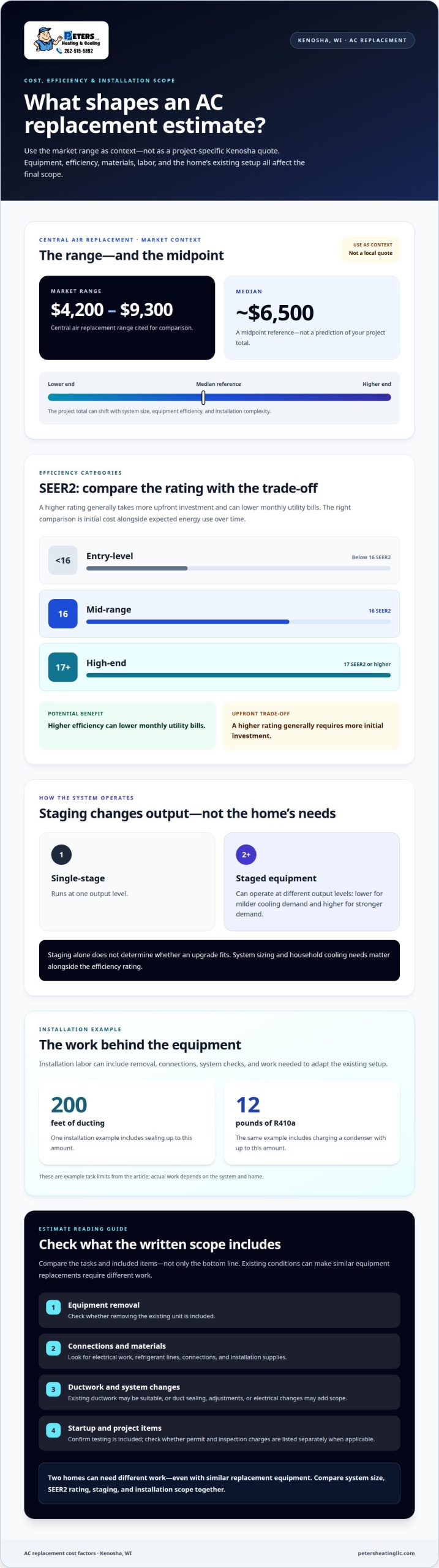
For homeowners comparing the new AC unit installation cost in Kenosha, WI, the market range for central air replacement is $4,200 to $9,300, with a median near $6,500. Treat that as a comparison point, not a project-specific estimate. Equipment type, efficiency, system size, and installation complexity can change the total. A home with suitable existing equipment connections may need different work from one requiring system changes.
SEER2 ratings help compare the cooling energy efficiency of air-conditioning equipment. The market categories describe entry-level systems as below 16 SEER2, mid-range systems at 16 SEER2, and high-end systems at 17 SEER2 or higher. A higher rating generally requires a larger upfront investment but can lower monthly utility bills. The practical comparison is the added initial cost against expected energy use over time, not the rating alone.
Staging describes how a system adjusts its output to meet cooling needs. A single-stage unit runs at one output, while staged equipment can operate at different levels. Lower output can suit milder cooling demand; higher output can meet stronger demand. Staging affects how the system operates, but it doesn’t determine whether an upgrade suits your home. System sizing and household cooling needs matter alongside the efficiency rating.
- Compare ratings: A 16 SEER2 system sits in the mid-range category; 17 SEER2 or higher is high-end.
- Weigh the trade-off: Higher energy efficiency can mean more upfront spending and lower monthly utility bills.
- Consider operation: Staged equipment offers different output levels, while single-stage equipment runs at one level.
For a Kenosha estimate, these details explain why two replacement projects can differ even with similar equipment. Compare the proposed system’s size, SEER2 rating, staging, and installation scope together. A higher rating is not automatically the right choice; the best fit depends on the home’s cooling needs and how the equipment will operate there.
Equipment, materials, and labor cost breakdown
A replacement estimate combines equipment, installation materials, and labor. System type and capacity affect the work and components required.
System Type and Equipment Capacity
System type identifies how the HVAC system provides cooling, while capacity describes how much heating or cooling it can deliver. These are national market ranges, not Kenosha quotes. Central air, a heat pump, and ductless equipment have different components and installation needs. Larger homes generally need more powerful equipment, which can change the unit and materials required. A furnace is a separate heating system, so replacing one doesn’t automatically mean replacing central air.
Permits for AC Installation
Whether an AC installation requires a permit in Kenosha depends on the work and applicable local requirements. Look for permit and inspection charges as separate estimate items. This makes it easier to distinguish administrative costs from equipment, electrical work, and installation supplies.
Supplies, Labor, and Low Bids
Materials can include electrical components, refrigerant lines, connections, and other supplies needed to install the equipment. The exact list depends on the existing setup. A standard replacement may reuse suitable components, while electrical changes or ductwork can add to the project scope. This is why the equipment price alone doesn’t represent the full project cost.
A low bid can leave important work unclear if it omits materials, electrical changes, permits, or inspection costs. Compare the written scope, not only the bottom line. Check that equipment, supplies, labor, and required project items are accounted for consistently. A clear air conditioning installation estimate helps show what the proposed work covers.
Labor and installation complexity
Labor covers removing old equipment, connecting the replacement, and testing the system. Existing conditions can make a central air project straightforward or add electrical and ductwork tasks.
Basic Installation Labor
Basic installation labor covers preparing the site, setting equipment, making connections, and checking system operation. These tasks matter because the estimate should account for the work required to put the equipment into service, not just delivery and placement. One installation example includes sealing up to 200 feet of ducting and charging a condenser with up to 12 pounds of R410a refrigerant. Actual tasks depend on the system and home.
Installation Labor Costs
Labor’s share of the total depends on time, project scope, and the skills each task requires. Installation may involve electrical connections, refrigerant lines, duct adjustments, and startup checks. As highlighted by industry resources like Contractor Stack, extra work on existing systems can increase labor even when the replacement equipment is similar. Compare estimates by checking which tasks each includes, rather than judging the labor line alone.
Installation complexity often comes from the differences between the old setup and the replacement. A central air system may use existing ductwork, while a ductless system needs indoor units and refrigerant connections in selected rooms. Electrical changes, difficult equipment access, or duct sealing can add work. These details help explain why homes with similar equipment can have different installation scopes.
- Equipment removal: Note whether taking out the existing unit is included.
- Connections: Check that electrical and refrigerant-line work appears in the scope.
- Air distribution: Look for duct sealing or adjustments where applicable.
- Startup: Confirm the estimate includes system testing after installation.
A clear estimate connects each labor task to the work needed in your home. If an item such as duct sealing or an electrical change is included, its purpose should be clear. That detail makes project costs easier to compare and helps ensure essential work is accounted for.
National average air conditioning installation cost
National figures offer context, but local project scope determines the estimate. To compare the new AC unit installation cost in Kenosha, WI, review the equipment, ductwork, and installation work included.
Central AC Replacement Price Range
The market range for central air conditioner replacement is $4,200 to $9,300, with a median near $6,500. This aggregate reflects market offers, not a specific contractor’s quote. A broader U.S. average helps frame these figures, but the selected system, home, and installation scope influence the total. Heating equipment and heat pumps have different replacement costs.
Ductwork Condition and Modifications
Ductwork carries cooled air through the home, so its condition can affect installation scope and system performance. Damaged or poorly sealed ducts can reduce efficiency and contribute to uneven indoor temperatures. List duct repairs or changes as distinct estimate items.
High-Efficiency Central AC Installation Costs
High-efficiency central AC uses equipment with a higher efficiency rating, which can raise the upfront investment while lowering monthly utility bills. The market replacement range of $4,200 to $9,300 provides context for Kenosha, but it isn’t a dedicated price for high-efficiency equipment. The final estimate depends on the system and installation scope. Compare ratings and included work together, rather than treating a higher rating as the only measure of value.
Air conditioners typically last 15 to 20 years. As a system approaches 15 years, homeowners can weigh replacement against repeated repairs and consider whether ductwork also needs attention. A well-scoped estimate makes those choices easier to compare.
Plan a central AC replacement with Peters Heating & Cooling to keep your equipment and ductwork needs in view.
Peters Heating & Cooling: Furnace Repair
Peters Heating & Cooling can help when an air conditioner needs repair or replacement is the more practical option. Air Conditioning Repair addresses operating problems, while Air Conditioning Installation supports homeowners planning a new system. If your furnace also needs attention, Furnace Repair and Furnace Installation address those separate heating needs.
Use the cost factors covered above to guide your questions: equipment type, efficiency rating, ductwork, electrical work, and labor scope. A clear estimate shows what work is included and why it suits your home. If your cooling system is failing or due for replacement, Peters Heating & Cooling can help you consider the appropriate service.
Contact Peters Heating & Cooling or visit petersheatingllc.com to discuss your HVAC needs.
Make Your Next Cooling Decision With Confidence
The cost of installing a new AC unit in Kenosha, WI is most useful when considered alongside your household’s needs. Note which rooms are uncomfortable, when the problem occurs, and whether the current system has needed repeated attention. These details help focus a practical conversation about repair or replacement, without treating the equipment rating as the only measure of value.
Your project’s price depends on the home, the selected system, and the work involved, and is provided after a quote request. Peters Heating & Cooling offers Air Conditioning Repair and Furnace Installation, so you can discuss the issue affecting your home and the right next step. A clear understanding of your priorities can make that conversation more focused and help you weigh comfort alongside the proposed work.
Contact Peters Heating & Cooling to discuss your home’s HVAC needs and plan your next step with confidence.
Frequently Asked Questions
How much does it cost to install central air?
On the market, central air conditioner replacement with equipment and standard installation typically ranges from $4,200 to $9,300, with a median near $6,500. This is a broad comparison, not a contractor’s quote. The total changes with the selected system, the home’s existing setup, and installation work. Compare estimates using the same scope, including removal, connections, and any ductwork changes.
What is the average cost to install a new central AC unit in Kenosha, WI?
Kenosha project costs depend on the home and installation scope, so a national average is only a reference, not a local quote. For the new AC unit installation cost in Kenosha, WI, consider the equipment selected, existing ductwork, electrical work, and required installation tasks. A project estimate turns those factors into a specific cost. Review the scope carefully when assessing the total.
How much does AC installation cost by system size and home square footage in Kenosha?
System capacity and home size are related, but square footage alone doesn’t determine the right AC size. Published examples pair a 1.5-ton central air unit with a home of about 900 square feet and a 2-ton unit with about 1,200 square feet. These are reference examples, not sizing rules. Layout, insulation, windows, and sun exposure also affect the home’s cooling load and equipment needs.
What are typical labor and equipment costs for AC installation in southeastern Wisconsin?
The total includes AC equipment, installation materials, and labor; estimates may group these items differently. In southeastern Wisconsin, compare the included work as well as the total. Check whether the scope covers removing the old unit, necessary connections, ductwork tasks, and startup testing. A clear breakdown helps explain differences between estimates without treating equipment cost as the entire project expense.
What additional costs can arise from replacing ductwork, electrical wiring, or a thermostat?
Additional work may be needed if existing ducts require repair or replacement, electrical changes are necessary for the selected equipment, or the thermostat must be changed to suit the new setup. Each item affects the scope differently. Duct repairs address air distribution, while electrical work supports the equipment connections. Review these as separate estimate items to see exactly what work is included.
What rebates or tax credits are available for new AC installation in Wisconsin?
The Internal Revenue Service says a home energy audit may qualify for a tax credit of up to $150. That credit is for an eligible audit, not a general credit for buying a new AC unit. Don’t assume it applies to installation costs. For any rebate or incentive, read its eligibility terms carefully, including which equipment and project expenses qualify.