
What if the furnace itself is only part of what separates one quote from another? New furnace installation costs reflect the full project, not just the equipment, so a lower total may cover a different scope of work. Before deciding what’s necessary and what’s optional, look for a clear breakdown of what each proposal includes.
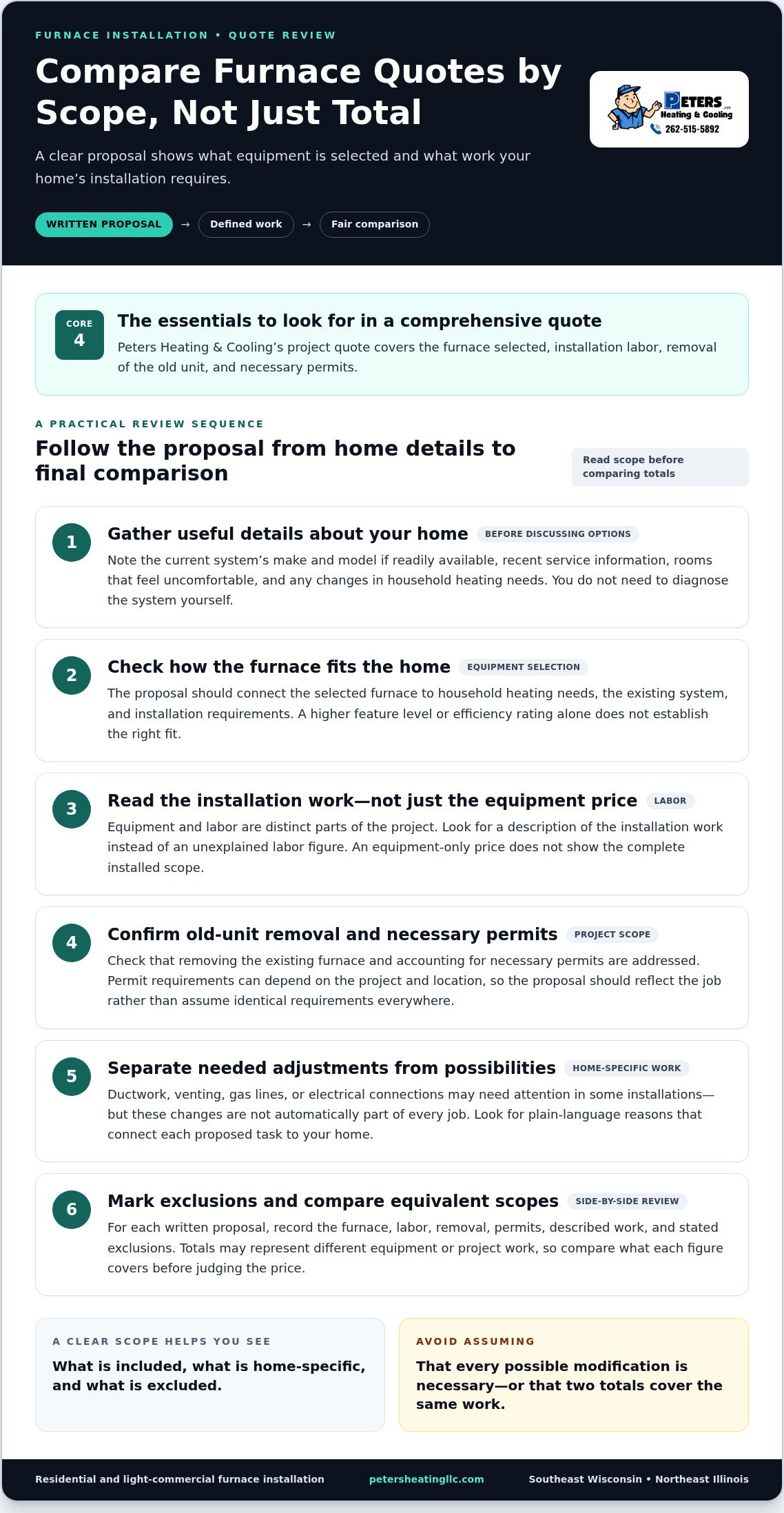
A complete quote from Peters Heating & Cooling covers the furnace, labor, removal of the old unit, and necessary permits. The final scope can also depend on the furnace selected and the installation requirements in your home. Understanding those details makes it easier to compare proposals and see what the price represents.
This guide explains what a furnace installation quote should cover, why project totals vary, and how to compare written proposals fairly. You’ll find practical ways to prepare for a conversation about your home, your comfort concerns, and the work involved.
Key Takeaways
- New furnace installation costs depend on the equipment selected and the work your home requires, not one universal price.
- Review each written proposal by scope, including labor, removal, permits, and any stated exclusions.
- Details about your current system and household comfort concerns can help shape a suitable installation plan.
- Peters Heating & Cooling provides residential and light-commercial furnace installation in Southeast Wisconsin and Northeast Illinois, with comprehensive project quotes.
What Does a New Furnace Installation Quote Include?
A single headline figure can’t tell you what’s being installed, what work the home needs, or which parts of the project are included. Two proposals may differ because they describe different equipment or installation scopes, not simply because one furnace costs more.
A furnace installation quote covers the equipment and the project-specific work needed to remove the old unit and install the new one. A comprehensive quote from Peters Heating & Cooling includes:
- The furnace selected for the project
- Labor for the installation
- Removal of the old unit
- Necessary permits
Look for a description of the work, not just a number beside the equipment. A furnace is part of a home’s heating system, and replacing it means planning for both the equipment and the work involved in fitting it into the home. A clear scope is more useful for budgeting and comparing proposals than an equipment-only price.
Equipment and labor: separate parts of the project
Equipment selection and installation labor are distinct parts of a quote. The equipment is the furnace chosen for the home; labor covers the work required to install it. Because the work can vary with the project scope, an equipment price alone doesn’t show the complete installed cost.
Check that the proposal describes the installation work instead of leaving labor as an unexplained figure. This helps you understand what the project covers and how the equipment and work fit together. New furnace installation costs are easier to assess when both parts are visible.
Removal and permits: what the installation scope covers
Replacing a furnace includes taking the old unit out of the project area. Old-unit removal is part of Peters Heating & Cooling’s installation project scope, along with necessary permits.
Permit requirements can depend on the project and location. A quote should account for the permits necessary for that job, rather than assuming the same requirements apply everywhere. Check that removal and permits are addressed, then note any stated exclusions. That gives you a clearer picture of what the project covers from start to finish.
Before deciding, read the scope as carefully as the total. Check that the equipment, labor, old-unit removal, and necessary permits are addressed. A clear breakdown makes it easier to understand what you’re paying for and whether the proposal reflects the work your home needs.
Which Factors Change New Furnace Installation Costs?
There isn’t one price that describes every furnace replacement. The final quote reflects the equipment selected and the work required for that particular home. A straightforward replacement and a project that needs additional adjustments can have different scopes, even when both involve installing a furnace.
An accurate quote depends on the home and the agreed installation scope. Reviewing the existing setup helps identify what can be used and what work the replacement requires. The result should be a proposal shaped by the home, not a generic figure based on the furnace alone.
How home conditions and existing equipment affect scope
The existing furnace and surrounding setup provide useful context for planning a replacement. Access to the work area and the condition of connected systems may affect the project. Ductwork, venting, gas lines, or electrical connections may need attention in some installations, but those changes aren’t automatically part of every job.
A home-specific review can distinguish relevant work from assumptions. The proposal should explain whether the current setup supports the planned replacement or whether a particular adjustment is needed. Look for plain-language descriptions that connect each proposed task to the work at your home, rather than treating every possible modification as necessary.
Why furnace selection should fit the home
Equipment selection also affects the project. Household heating needs, the existing system, and installation requirements all help determine which furnace is suitable. A higher feature level or efficiency rating alone doesn’t establish the right fit; the equipment should make sense for the home and the agreed scope.
Compare options by considering suitability as well as efficiency. Peters Heating & Cooling’s high-efficiency furnace installation guide offers more context for thinking through that choice. Sears Home Services also provides a New Furnace Installation Costs guide. Use general information as context, while keeping your own home’s installation scope at the center of the decision.
Before discussing equipment, gather practical details: the current system’s make and model if readily available, recent service information, rooms that feel uncomfortable, and changes in household heating needs. You don’t need to diagnose the system yourself. These notes help explain what matters to your household and give the installation discussion a useful starting point.
New furnace installation costs can reflect how the selected equipment fits the project as a whole. A proposal should connect the furnace choice to the home’s needs and describe any work that affects installation. Peters Heating & Cooling develops furnace installation scopes for homes in Southeast Wisconsin and Northeast Illinois.
How to Compare Furnace Installation Quotes Fairly
A proposal’s total is useful only when you know what it covers. Quotes may describe different equipment, labor, or project work, so their totals may not represent equivalent jobs. A clear breakdown makes it easier to compare the scope behind each figure.
Use a written comparison to organize the details. Record what each proposal says instead of filling gaps with assumptions.
| Quote component | What to compare |
|---|---|
| Equipment | What furnace is included and how it fits the recommended replacement |
| Labor | What installation work is described |
| Old-unit removal | Whether removal of the existing furnace is included |
| Necessary permits | Whether the quote accounts for permits needed for the project |
| Stated exclusions | Any work or components the proposal says are outside its scope |
This side-by-side view can show why totals differ. One proposal may include removal while another excludes it, or the installation work may not match. Those differences don’t automatically make one quote better; they show where the scopes need closer review before you decide.
A simple checklist for reviewing each proposal
Read each proposal once for the total, then again for the details. Check whether equipment, labor, removal, and necessary permits are addressed. Look for plain wording that describes included work and any stated exclusions. Compare like with like: don’t assume proposals include the same equipment, features, or tasks simply because both recommend replacing a furnace.
If an item isn’t described, mark it as unclear in your comparison rather than assuming it’s included. This keeps your notes grounded in the written scope and makes important differences easier to identify.
Questions a clear quote should answer
Check whether the proposal explains the work planned for your home, identifies the included project components, and connects the equipment choice to the installation plan. A useful explanation describes how the proposed scope supports the replacement without relying on vague assurances.
New furnace installation costs are easier to evaluate when you compare scope, not just totals. Keep the proposals together and mark each component as included, excluded, or not described. That record helps you see whether differences reflect equipment or project work, and what each quote covers.
How to Plan for a New Furnace Installation in Your Home
A little preparation can make a furnace replacement easier to plan. Start with your household’s needs, then use the written project scope to understand the work and organize your budget. You don’t need to diagnose the existing equipment. Useful notes and clear questions can help shape a practical conversation about the replacement.
- Identify your needs. Note comfort concerns, such as rooms that feel consistently too warm or too cool, and any changes in how your household uses the home.
- Review the scope. Read the proposal for the planned equipment and installation work, including what’s included and any stated exclusions.
- Plan your budget. Use the written scope as the basis for understanding the project total, rather than relying on an equipment-only figure.
- Arrange the project. Once you understand the plan, coordinate installation details and prepare for the work area to be accessible.
Prepare useful information before discussing replacement
If it’s easy to find, gather the current furnace’s make, model, or other identifying details. Recent service records can also provide useful background. Don’t take equipment apart or troubleshoot it yourself. Instead, write down comfort concerns, questions about the proposed work, and changes in your household’s heating needs.
Bring those notes to the project discussion. Consider how the proposed equipment suits your household, what installation work is planned, and which parts of the scope are included. Sharing your expectations keeps the conversation focused on your home and the work being considered.
Build a realistic project budget
Base your budget on the written project scope. Consider equipment and installation work together, and make sure the proposal gives you a clear picture of the planned project. New furnace installation costs are easier to plan for when you can distinguish included work from stated exclusions.
Financing options are available through Peters Heating & Cooling. Consider them alongside the project scope and your household budget. After installation, regular care can help you stay organized about the system’s ongoing needs. The residential HVAC maintenance checklist offers practical guidance for that next stage.
The Peters Heating & Cooling website includes information about furnace installation and project planning.
Get a Clear Furnace Installation Quote from Peters Heating & Cooling
Understanding new furnace installation costs starts with knowing what the project includes and why that scope fits your home. Peters Heating & Cooling provides residential and light-commercial furnace installation and replacement in Southeast Wisconsin and Northeast Illinois. The team prepares comprehensive quotes based on the equipment and work required for each project.
Local furnace replacement for Southeast Wisconsin and Northeast Illinois
Homeowners and light-commercial customers in Kenosha, Racine, Oak Creek, and Winthrop Harbor can work with a local team. Each installation plan reflects the home or building, its existing setup, and the agreed replacement scope. The quote describes the planned work rather than treating every installation as the same job.
Peters Heating & Cooling’s comprehensive installation quotes include:
- Furnace equipment
- Installation labor
- Removal of the old unit
- Necessary permits
These details give you a clearer view of the project. Transparent pricing goes hand in hand with a scope that explains what’s included, so you can understand how the project components fit together. Installation work is carried out by licensed and insured technicians who receive ongoing training.
Take the next step with a transparent project scope
As you consider a replacement, bring your household’s comfort concerns and questions about the work into the discussion. A clear scope connects those needs to the proposed equipment and installation plan, while showing what the quote covers. Peters Heating & Cooling provides comprehensive installation quotes, and financing options are available to support project planning.
Don’t decide based on a headline total alone. Review the scope, understand the proposed work, and choose a plan that makes sense for your property. A well-explained quote gives you a practical starting point and helps set clear expectations for the installation.
For a project-specific discussion, explore furnace installation with Peters Heating & Cooling. The team can help you consider your home or light-commercial space and outline a clear installation scope.
Move Forward with a Plan That Fits Your Home
A furnace replacement is a chance to make a thoughtful decision about comfort, equipment, and the work your home needs. Rather than trying to predict new furnace installation costs from a single figure, use the project scope to understand the recommendation and decide whether it aligns with your priorities and budget.
Start by learning what a home-specific project can involve. Peters Heating & Cooling focuses installation discussions on your needs and the work planned for your home. Financing options are available as you consider how to plan for the project.
Explore furnace installation with Peters Heating & Cooling to discuss a clear installation scope for your home.
Frequently Asked Questions
How much does a new furnace installation cost?
There isn’t one figure that accurately describes every replacement. New furnace installation costs depend on the equipment and the work a specific home requires. For a project in Kenosha, Racine, Oak Creek, or Winthrop Harbor, review the written quote to understand the scope and plan your budget. Peters Heating & Cooling’s comprehensive quotes account for equipment, labor, old-unit removal, and necessary permits.
Can I finance a new furnace installation?
Yes, financing options are available through Peters Heating & Cooling. Consider the written installation scope and project total alongside your household budget when planning how to pay for the work.
Does a new furnace installation require replacing the air conditioner too?
No, replacing a furnace doesn’t automatically mean replacing the air conditioner. The furnace provides heat, while the air conditioner serves a separate cooling function. If you’re considering both projects, make sure each part of the proposed work is described so you can understand the purpose and scope of the heating and cooling plans.
Can a new furnace use existing ductwork?
It may be possible to keep existing ductwork, depending on the home and installation plan. The ducts may suit the proposed replacement, or the assessment may identify an issue that affects the work. Don’t assume duct modifications are always necessary or never needed. The project description should explain whether duct-related work is included and why.
What should I do before furnace installers arrive?
Make the work area accessible before the scheduled installation. Move stored items away from the furnace and clear a path from the entrance to the work area. Keep children and pets away from the active workspace. Leave equipment work to the installation technicians rather than attempting adjustments yourself.
Will a higher-efficiency furnace always lower my heating bills?
No, a higher-efficiency rating doesn’t guarantee a particular reduction in heating bills. Actual energy use also depends on home conditions, equipment selection, and household heating habits. Compare equipment based on how it fits your home, and treat any bill expectations as estimates rather than promised savings.