
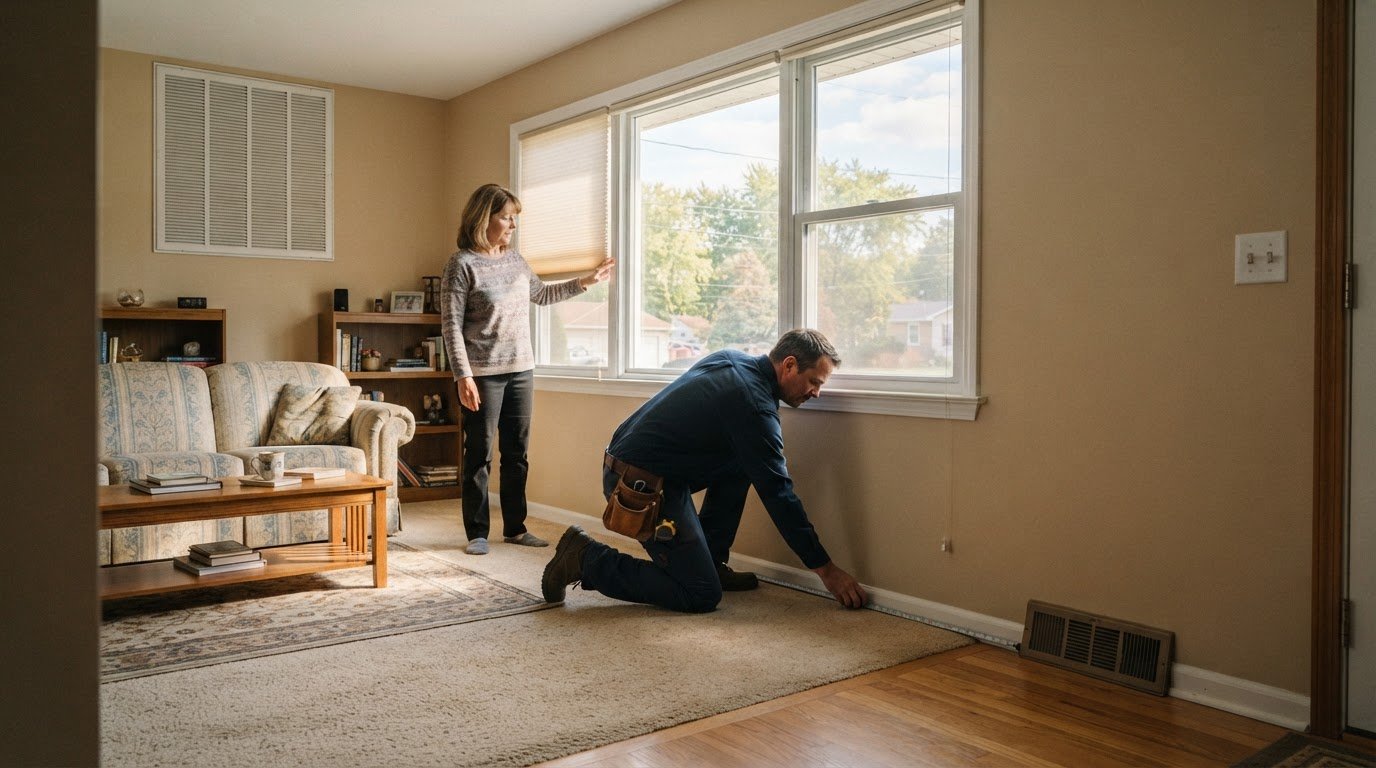
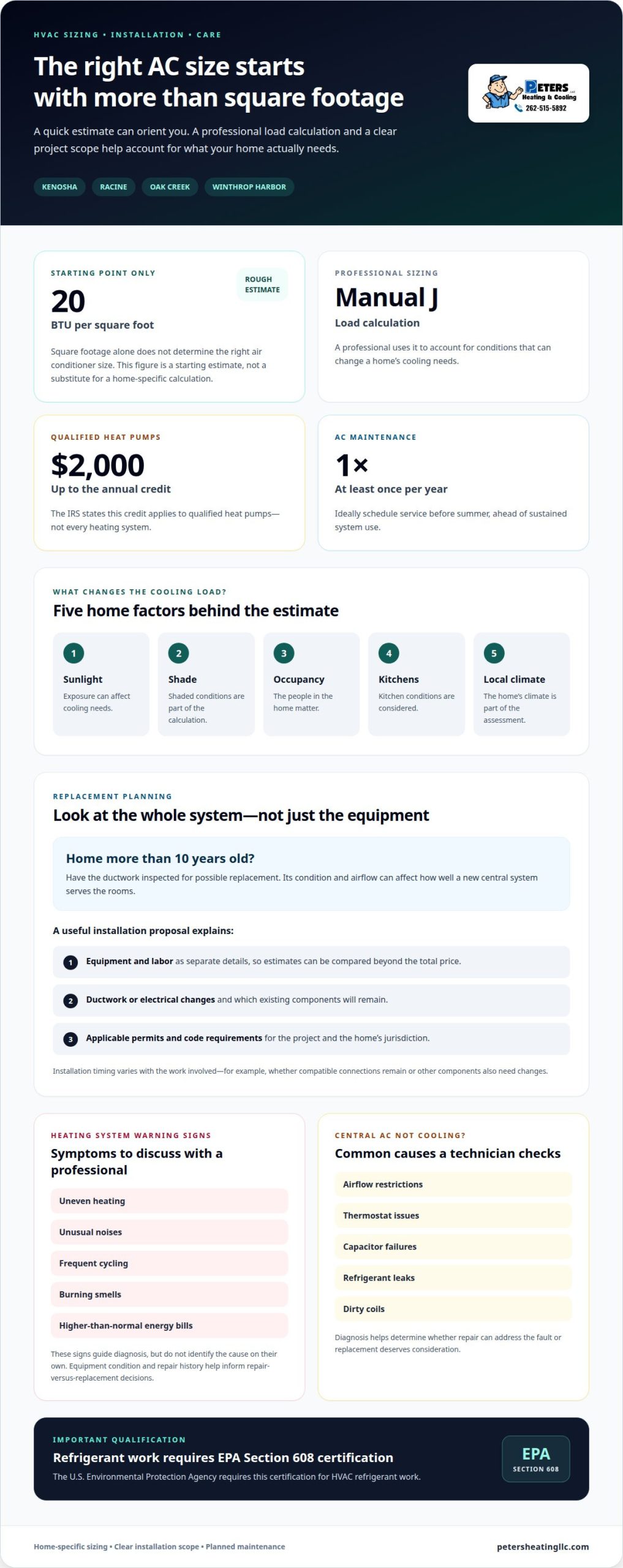
The right air conditioner size isn’t determined by square footage alone. About 20 BTU per square foot is a starting point, but a professional uses a Manual J load calculation to account for factors such as sunlight, shade, occupancy, kitchens, and local climate. That helps match the system to the home instead of relying on a rough estimate.
It’s reasonable to want clear answers before committing to a new system. This guide explains how HVAC sizing works, what to consider when comparing installation proposals, and how replacing a system differs from repair and preventative maintenance. You’ll also learn how heating and cooling options fit your home, so you can weigh comfort, equipment condition, and household needs with confidence.
Key Takeaways
- Learn which home and room conditions can change an air conditioner’s size beyond square footage alone.
- See what factors shape a decision between repairing an existing system and planning a replacement.
- Understand what a central AC installation involves and which details can affect how well the system works.
- Compare HVAC professionals by the practical signs of sound workmanship, appropriate credentials, and ongoing maintenance support.
Heating installation, replacement, repair, and maintenance
For homes in Kenosha, Racine, Oak Creek, and Winthrop Harbor, heating and cooling decisions start with the equipment’s condition and the comfort problem. A professional assessment helps distinguish repair needs from replacement planning.
Heating System Installation and Repairs
Furnace installation involves choosing equipment for the home and connecting it to the heating system. For a repair, a technician diagnoses symptoms such as uneven heating, unusual noises, frequent cycling, burning smells, or higher-than-normal energy bills. These signs need attention but do not identify the cause on their own. A professional assessment can determine whether repair or replacement better suits the system’s condition.
Warranty and Maintenance Requirements
HVAC installation warranty coverage and maintenance requirements depend on the equipment’s documentation. Keep the warranty information and recommended service instructions after installation, then follow the stated maintenance schedule and retain service records. The Internal Revenue Service states that the annual credit is up to $2,000 for qualified heat pumps. This applies to qualified heat pumps, not every heating system.
For central AC that stops cooling, a professional checks for common causes such as airflow restrictions, thermostat issues, capacitor failures, refrigerant leaks, or dirty coils. Diagnosis helps determine whether Air Conditioning Repair can address the fault or whether replacement deserves consideration. HVAC refrigerant work requires EPA Section 608 certification, according to the U.S. Environmental Protection Agency.
Preventative maintenance can identify developing issues before the next period of heavy use. A professional can inspect heating and cooling equipment, assess operation, and recommend care based on the system’s condition. For AC, schedule maintenance at least once per year, ideally before summer, so the system is assessed ahead of sustained running. Regular service also gives homeowners a chance to discuss changes in comfort or equipment performance.
Heating installation, replacement, repair, and maintenance
For homeowners considering a new HVAC system installation near me, the first step is matching the work to the home’s heating and cooling needs. In Kenosha, Racine, Oak Creek, and Winthrop Harbor, a professional assessment helps distinguish a repair from replacement planning. It also gives the technician a chance to consider how the existing equipment serves the home.
Heating System Installation and Repairs
Furnace installation involves choosing equipment for the home and connecting it to the heating system. During a repair assessment, symptoms such as uneven heating, unusual noises, frequent cycling, burning smells, or higher-than-normal energy bills help guide the diagnosis. These signs do not identify the cause by themselves. A professional considers the equipment’s condition and repair history to recommend an appropriate next step.
Warranty and Maintenance Requirements
Warranty coverage and maintenance requirements depend on the equipment’s documentation. Keep the warranty information and recommended service instructions after installation, follow the stated schedule, and retain service records. According to the Internal Revenue Service, the annual credit is up to $2,000 for qualified heat pumps. This applies to qualified heat pumps, not every heating system.
For central AC that stops cooling, a technician can investigate airflow restrictions, thermostat issues, capacitor failures, refrigerant leaks, and dirty coils. Diagnosis helps determine whether repair can address the fault or replacement deserves consideration. HVAC refrigerant work requires EPA Section 608 certification, according to the U.S. Environmental Protection Agency.
As you plan a new HVAC system installation near me, include maintenance in the decision, not just equipment selection. A professional can assess heating and cooling performance and identify developing issues. Schedule AC maintenance at least once per year, ideally before summer, to prepare the system for seasonal use and discuss any changes in comfort or operation.
Central air conditioning installation or replacement
Central AC installation or replacement means planning for the equipment, connections, and airflow as one project. For homeowners looking for a new HVAC system installation near me in Kenosha, Racine, Oak Creek, or Winthrop Harbor, the home’s existing setup helps determine the project scope.
Installation and Replacement Costs
The price depends on the equipment and the work required at the home; it is provided after a quote request. A useful proposal separates equipment and labor, then describes any changes to ductwork or electrical connections. Comparing those details helps homeowners understand why estimates differ, rather than focusing only on the total. For new HVAC system installation near me, the scope should explain what is being replaced and what existing components remain.
Before replacement, the professional assesses the current equipment and its connections. Ductwork in a home more than 10 years old should be inspected for possible replacement. Its condition and airflow can affect how well a new central system serves the rooms.
Permits and Code Requirements
Installation, modification, and replacement work must account for the applicable local permit and code requirements. The project plan should identify the work involved, including equipment connections and any ductwork or electrical changes. Requirements can vary by location, so the installation scope needs to reflect the home’s jurisdiction rather than assume one process applies everywhere.
A clear written scope gives homeowners a practical way to understand the planned work. It should describe the equipment, changes to existing systems, and how the installation will meet applicable requirements.
Installation Timeline
There is no single timeline for every installation. Replacing equipment while retaining compatible connections involves different work from a project that also changes ductwork or other components. Access to the equipment and removal of the old system also affect the schedule. The project plan should connect timing to the actual scope.
After installation, the professional sets up and tests the system, including its airflow. Filter care continues after the work: replace AC filters at least every 3 months. Keeping filters changed helps prevent restricted airflow and supports steady cooling and temperature control.
Comparing HVAC professionals by ratings, hires, and licensing
Grand Prairie homeowners give heating and air conditioning service professionals an average rating of 4.6 out of 5. Ratings can help show patterns in customer experience, but they don’t explain the full installation plan. For a fair comparison, look at the written scope, system sizing method, ductwork review, and how the professional explains the work.
A clear proposal connects equipment to the home’s needs. It should describe the recommended heating and cooling system, installation or replacement tasks, and any ductwork or insulation concerns that could affect indoor comfort. It should also explain what the work includes and how the finished system will be checked. Those details make proposals easier to compare than a single total or general promise.
Questions that clarify the scope include:
- How will the system’s size and setup suit this home?
- Does the proposal include an assessment of ductwork and airflow?
- What work is included, and what could change the project scope?
- How will the installation be tested before completion?
These answers help homeowners assess whether a recommendation addresses cooling, heating, energy bills, and the home’s actual conditions. For example, a comfort problem may relate to ductwork or insulation, not just equipment. A sound explanation connects the proposed work to the issue it is meant to solve.
Credentials matter, too. HVAC technicians may need a license or certification, according to the U.S. Bureau of Labor Statistics. Refrigerant work has a specific requirement: EPA Section 608 certification. Clear communication about who performs the work and what the project covers helps establish accountability.
Use ratings as one signal, then assess the installation plan, technical explanation, and stated qualifications together. If your system needs a professional assessment of heating or cooling performance, schedule HVAC service to discuss the work needed for your home.
Peters Heating & Cooling: HVAC Preventative Maintenance
Peters Heating & Cooling provides preventative HVAC maintenance to help homeowners keep heating and cooling equipment in good condition. Schedule a visit before seasonal use or when you want a professional to identify issues that may affect operation.
If the furnace or air conditioner already has a problem, repair may be the more direct next step. Peters Heating & Cooling also provides furnace repair, air conditioning repair, and furnace installation when an existing system needs service or replacement. The right option depends on the equipment’s condition and the problem it needs to solve.
For a practical next step, contact Peters Heating & Cooling to discuss maintenance, repair, or furnace installation for your home.
Take the Next Step Toward Reliable Home Comfort
Planning a new HVAC system installation near your home is an opportunity to make a considered choice for the way you live. Think about which rooms need better comfort, how your household uses heating and cooling, and whether the current system needs repair or replacement. Sharing those priorities helps focus the conversation on practical options for your home.
Peters Heating & Cooling provides furnace repair, air conditioning repair, and furnace installation. The right starting point depends on your equipment and what you need it to do. A straightforward discussion can clarify whether the next step is servicing the existing system or planning for new equipment.
You don’t have to settle every detail before reaching out. Contact Peters Heating & Cooling to discuss your heating or cooling needs and take a clear next step toward a more comfortable home.
Frequently Asked Questions
How does a professional determine what size air conditioner I need?
A professional evaluates the home’s cooling needs rather than choosing equipment based on floor area alone. Room layout and how spaces connect can affect whether cooling reaches the places you use most. For example, an addition with different exposure may have different needs from an interior room. The assessment helps match equipment to the home’s overall cooling demand and airflow.
How does a professional choose the right HVAC system size for my home?
A professional considers the home’s heating and cooling needs together, then matches equipment and airflow to those needs. A home with rooms that serve different purposes may need a different plan from one with a simple, open layout. The system type matters too: a furnace provides heating, while a heat pump provides both heating and cooling. The goal is a setup suited to the whole home.
Best HVAC installation companies near me reviews and ratings
Grand Prairie heating and air conditioning service professionals have an average rating of 4.6 out of 5. Compare written scopes, sizing methods, ductwork assessments, credentials, and explanations of how the installation will be tested.