What if the part that failed isn’t what caused your heating or cooling problem? A system that keeps shutting off, blows lukewarm air, or leaves one room uncomfortable can make it tempting to guess at the fix. Expert HVAC diagnostics should connect the symptoms you notice to verified findings before a repair is recommended.
It’s reasonable to want a clear explanation before approving work, especially when the same issue keeps returning. A careful diagnostic visit helps narrow down what’s happening and gives you a chance to understand your options without pressure or guesswork.
This homeowner’s checklist explains what a thorough visit may look into, what details to share about your system and its symptoms, and what access may help the technician assess it. You’ll also learn what to ask about the findings and how to weigh practical next steps, whether you’re in Kenosha, Racine, Oak Creek, or Winthrop Harbor.
Key Takeaways
- Expert HVAC diagnostics should connect your symptoms to findings that help explain the problem, not just name a possible failed part.
- Note when symptoms occur, which rooms are affected, and any recent changes so you can give the technician useful context.
- Ask how the findings relate to your symptoms and whether more than one condition may be contributing.
- Record thermostat settings and make relevant areas accessible before the visit, but don’t open equipment or alter wiring.
- Review the recommended next steps and their reasoning before authorizing work. A repair discussion doesn’t automatically mean replacement is needed.
What Expert HVAC Diagnostics Can Reveal About a System Problem
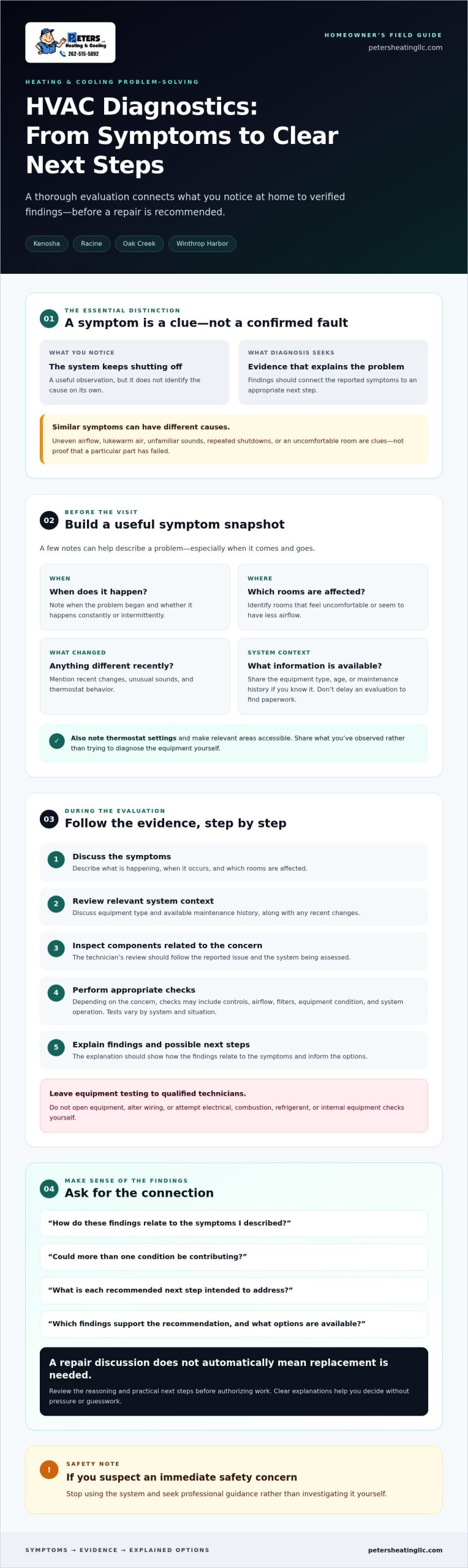
Expert HVAC diagnostics are a systematic process for investigating why a heating or cooling system isn’t performing as expected. The goal is to connect what you notice at home with evidence about the system, then use those findings to guide practical next steps.
A symptom is a useful clue, but it isn’t the same as a confirmed equipment fault. Uneven airflow, for example, describes what you feel in a room. It doesn’t identify the cause by itself. Heating, ventilation, and air conditioning systems bring together components that work in coordination, as outlined in this overview of HVAC systems. A comfort problem may relate to controls, airflow, equipment, or another system condition. Similar symptoms can have different causes, so an online checklist can’t confirm what’s happening in a particular home.
Symptoms are clues, not a complete diagnosis
Pay attention to what the system is doing and when. It may turn on and off repeatedly, move less air than usual, make an unfamiliar sound, or leave certain rooms uncomfortable. These observations help a technician understand the concern, but they don’t prove that a specific part has failed. Avoid opening equipment or attempting to inspect internal components yourself. A careful evaluation helps distinguish a reported symptom from a verified finding.
When to request professional HVAC diagnostics
Consider arranging an evaluation if a problem keeps returning, comfort is declining, or the system shuts down for no clear reason. Share what you’ve noticed and how often it happens. If you suspect an immediate safety concern, stop using the system and seek professional guidance rather than investigating it yourself.
Sometimes the concern is about air quality, not how the equipment operates. If you’re noticing stale or uncomfortable indoor air, Peters Heating & Cooling’s indoor air quality solutions guide offers related information.
Once the cause is better understood, the findings should help explain which options make sense. A repair recommendation should be tied to what was observed. A system problem doesn’t automatically mean replacement is needed. Ask the technician to explain how the findings relate to your symptoms and what the proposed next step is intended to address. Clear answers help you decide what to authorize without guessing.
The Expert HVAC Diagnostics Checklist: From First Questions to System Checks
A careful evaluation follows the evidence rather than a fixed script. The diagnostic path depends on the equipment, the symptoms you report, and what the technician observes. Expert HVAC diagnostics generally move from conversation to system review, appropriate checks, and an explanation of the findings. Not every visit will involve the same checks or tests.
What the technician may ask before testing
Share when the problem began and whether it happens constantly or comes and goes. Mention recent changes, unusual sounds, thermostat behavior, and which rooms feel affected. If you know the equipment’s age or maintenance history, that context may help, but don’t delay an evaluation to find paperwork. A simple timeline or a few notes can make an intermittent issue easier to describe.
What a careful system evaluation may include
Depending on the concern, a technician may review the controls, airflow, filters, equipment condition, and system operation. Air circulation can affect how comfortable a room feels. This air handler homeowner guide explains how an air handler relates to moving air through a home. Specific checks vary by system and situation, so ask what a test is meant to confirm. Electrical, combustion, refrigerant, and internal equipment testing should be left to qualified technicians. Don’t open equipment or attempt these checks yourself.
In brief, a diagnostic process typically follows this sequence:
- Discuss the symptoms and when they occur.
- Review relevant system context, such as equipment type and available maintenance history.
- Inspect components related to the reported concern.
- Perform appropriate tests based on the equipment and observed conditions.
- Explain the findings and how they inform possible next steps.
This sequence gives you a useful way to follow the visit without expecting every system to be assessed identically. If a problem keeps returning, you can contact Peters Heating & Cooling about HVAC diagnostics and share what you’ve observed. Before authorizing work, ask which findings support the recommendation and what options are available.
How to Tell Whether HVAC Findings Explain the Root Cause
A recommendation is easier to evaluate when the technician explains the connection between your concern, what they found, and what they propose doing next. If the system shuts off unexpectedly, for example, ask what observation supports the explanation and how the recommended work is expected to address that behavior. Replacing a part based only on a symptom isn’t the same as verifying why the symptom is occurring.
A repair recommendation should connect specific diagnostic findings to the reported problem and explain how the proposed work addresses it.
Sometimes the findings point to more than one contributing condition. A confirmed issue may explain part of the problem, while another factor could also affect performance. If a fault happens only occasionally, it may not be present during the visit. Additional testing or observation may be appropriate when the evidence isn’t conclusive. A clear explanation should distinguish what’s confirmed from what still needs to be checked.
Questions homeowners can ask about diagnostic results
You don’t need technical knowledge to ask for a clear explanation. Try questions such as:
- Which finding supports that conclusion?
- What other possible causes did you consider?
- What is the recommended repair expected to address?
- Is anything still uncertain, or would additional testing help?
Ask for answers in plain language before approving work. A technician should be able to describe what was observed and why it matters without leaving you to guess at the connection.
What clear, honest recommendations should include
A useful recommendation separates confirmed findings from possibilities that haven’t been verified. It should explain the proposed repair, the problem it is meant to address, and any relevant trade-offs or remaining uncertainty. If the system has multiple contributing conditions, ask which one the proposed work addresses and whether another issue would remain.
You should have room to consider options without unsupported urgency or pressure. If the explanation doesn’t connect the evidence to the recommendation, ask for clarification before deciding. When you’re ready to explore local repair service, see expert HVAC repair in Kenosha.
A Homeowner’s Preparation Checklist for an HVAC Diagnostic Visit
A few notes and a clear path to the thermostat or relevant indoor equipment can help the technician focus on your concern. You don’t need to diagnose the system yourself. Share what you’ve observed, make accessible areas available where safe and practical, and leave equipment checks to a professional.
Information to have ready for the technician
Before the visit, jot down when the issue occurs, how often it happens, and which rooms are affected. Note the thermostat settings and any unusual behavior, such as the system stopping unexpectedly. If you know about recent repairs, maintenance, or changes to the home, mention them. Equipment age or model details can be useful if readily available, but don’t move or open equipment to find them.
- Symptoms: Describe what you notice and when it happens.
- Thermostat: Record the displayed settings and any unusual behavior.
- System history: Share known repairs, maintenance, or recent changes.
- Access: Keep the thermostat and relevant indoor equipment easy to reach, if safe and practical.
What not to do before professional testing
Preparation should make the visit safer, not involve troubleshooting inside the equipment. Don’t bypass safety switches, remove panels, or attempt electrical or refrigerant work. If a problem returns after a reset, avoid repeatedly resetting the system. Tell the technician what happened and when. If conditions suggest immediate danger, leave the area and contact the appropriate emergency authority.
The scope of expert HVAC diagnostics depends on the system, reported symptoms, and what the technician finds. Different problems may call for different checks, so there’s no fixed visit length or guaranteed outcome to plan around. Your notes provide context, but the technician determines what evaluation is appropriate.
Peters Heating & Cooling serves residential and light-commercial customers in Southeast Wisconsin and Northeast Illinois, including Kenosha, Racine, Oak Creek, and Winthrop Harbor. If recurring symptoms are disrupting your comfort, contact the team about HVAC diagnostics and share what you’ve observed.
What Happens After Expert HVAC Diagnostics?
Once the findings are explained, the next step is a conversation about what they mean for your system. The technician should outline appropriate options, explain what each is intended to address, and answer your questions. You can then decide whether to authorize the proposed work. A diagnosis gives you information for making a decision; it doesn’t automatically commit you to a repair or replacement.
Choosing a next step that fits the findings
Compare the problem identified with the work being proposed. Ask how the repair is expected to affect system operation and whether anything would remain unresolved. Depending on the findings, the next step might be monitoring a condition, arranging maintenance, completing a repair, or doing further testing. The technician should explain why an option fits your situation rather than rely on a universal rule about when to repair or replace.
A repair recommendation and a replacement discussion are different. Replacing a system isn’t automatically necessary because one component or function has a problem. If replacement is raised, ask what findings support considering it and whether repair is also an appropriate option. Before approving work, request transparent pricing and a clear description of what’s included so you can weigh the recommendation with a full understanding of the proposed scope.
When a local HVAC professional can help
If you need help interpreting findings or arranging heating and cooling service, Peters Heating & Cooling serves residential and light-commercial customers in Southeast Wisconsin and Northeast Illinois. Confirm service availability for your location. The company’s technicians are licensed, insured, and continuously trained, and its approach emphasizes honest recommendations and transparent pricing. A plain-language explanation can help you decide what makes sense for your system without feeling rushed.
For follow-up on a diagnostic finding, ask what work is recommended, what it includes, and how it relates to the issue you reported. Then take the time you need to consider the options. If you’d like to discuss your heating or cooling concern with the local team, contact Peters Heating & Cooling.
Make Your Next HVAC Decision With Confidence
A persistent heating or cooling issue doesn’t have to remain a guessing game. Expert HVAC diagnostics should connect your reported symptoms to clear findings. A good explanation helps you understand which options address the problem and what each involves. Sharing when symptoms occur and asking how the evidence supports a recommendation can help you make an informed decision.
Before approving work, make sure you understand the proposed scope and pricing. Repair may be appropriate, and a system problem doesn’t automatically mean replacement is necessary. The right next step depends on the findings and your equipment’s condition.
Peters Heating & Cooling is locally owned and operated, serving residential and light-commercial customers in Southeast Wisconsin and Northeast Illinois. Its technicians are licensed, insured, and continuously trained. If symptoms persist, contact Peters Heating & Cooling about your HVAC concerns to discuss what you’ve observed and possible next steps.
Frequently Asked Questions
What does an HVAC diagnostic include?
An HVAC diagnostic generally includes a discussion of the symptoms, a review of relevant system information, and an evaluation of conditions related to the reported problem. The technician may perform checks or tests based on the equipment and what they observe, then explain the findings and possible next steps. Expert HVAC diagnostics focus on understanding the cause, not just naming a symptom. The exact scope varies with the system and concern.
How long does an HVAC diagnostic take?
There isn’t one set time for every HVAC diagnostic. The visit may depend on the type of equipment, the symptoms, whether the problem is happening during the evaluation, and what checks are needed to clarify the cause. A recurring or intermittent issue may call for additional observation or testing. Ask the service provider what to expect for your specific concern, and don’t assume every visit follows the same schedule.
Can I diagnose an HVAC problem myself?
You can safely gather useful observations, such as when the system acts up, what the thermostat displays, and which rooms feel affected. That information can help a technician, but it can’t confirm an internal equipment fault. Don’t remove panels, handle wiring or refrigerant, or bypass safety controls. Leave testing that involves electrical, combustion, refrigerant, or internal components to a qualified technician. If you suspect immediate danger, leave the area and seek appropriate help.
Why does my HVAC system keep having the same problem?
A recurring symptom can mean the original cause wasn’t fully identified, the condition returns intermittently, or more than one factor is affecting operation. The same behavior can also have different possible explanations, so a repeated shutdown or comfort problem doesn’t point to one certain fault. Note when it happens and what changes, if anything, before it recurs. Share that pattern with a technician and ask how the findings explain the repeat issue.
What should I ask an HVAC technician after a diagnosis?
Ask which specific findings support the conclusion and how they relate to the symptom you reported. You can also ask what the proposed work is expected to address, whether other causes were considered, and what remains uncertain. Before approving work, request a plain-language explanation of the scope and transparent pricing. These questions help you understand the recommendation and compare it with the problem at home without needing to interpret technical terms on your own.
Is an HVAC diagnostic the same as routine maintenance?
No. A diagnostic evaluation investigates a particular concern, such as unusual operation or declining comfort, to help determine its cause. Routine maintenance is planned care intended to check and maintain system operation rather than respond only to a reported fault. The work involved depends on the service and equipment. If you’re unsure which visit fits your situation, explain the symptoms and ask the provider whether diagnostics, maintenance, or both may be appropriate.
When should I call an HVAC professional for diagnostics?
Consider professional diagnostics if a heating or cooling issue keeps returning, comfort declines, or the system shuts down without a clear explanation. Describe what you’ve observed and how often it occurs. If conditions suggest immediate danger, leave the area and contact the appropriate emergency authority. Peters Heating & Cooling serves residential and light-commercial customers in Southeast Wisconsin and Northeast Illinois, including Kenosha, Racine, Oak Creek, and Winthrop Harbor. Confirm service availability for your location.