
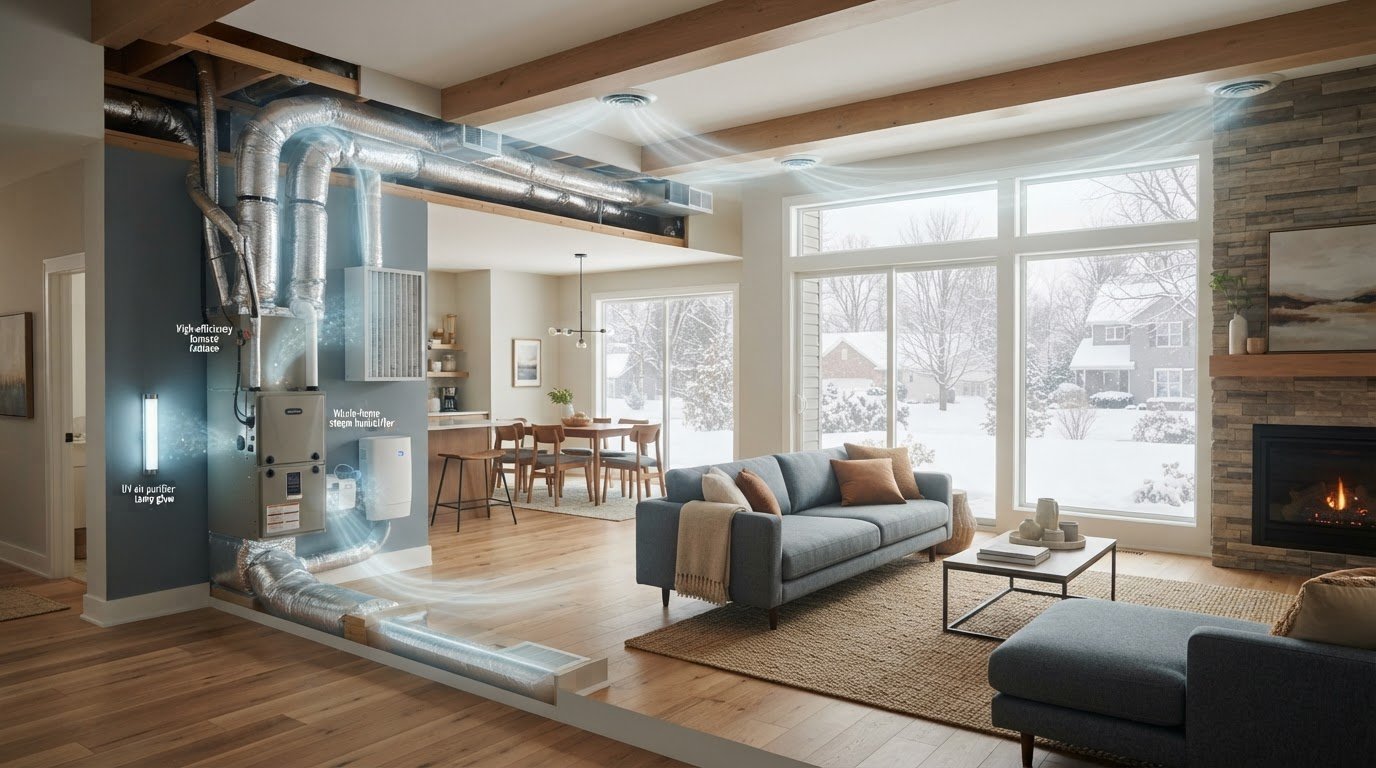
Placing another portable purifier in the corner won’t fix the root cause of a perpetually dusty living room or a scratchy morning throat. To achieve genuine, lasting respiratory relief, whole-home indoor air quality solutions must treat air where it actually circulates: right inside your central furnace and ductwork system.
If you’re battling painful static shocks, dry sinuses during cold Midwest winters, and stubborn dust that settles back onto furniture right after you clean, you aren’t imagining things. Modern weatherproofing keeps winter chill outside, but it also seals in pet dander, airborne irritants, and uncomfortably dry, stale air with your family.
You don’t need complicated gadgets or room-by-room band-aids to breathe comfortably. This practical guide outlines the primary sources of household contamination, clarifies the distinct roles of filtration, purification, and humidity control, and helps you identify the right HVAC-integrated upgrades to protect your home’s air for the long haul.
Key Takeaways
- Learn why modern energy-efficient insulation traps airborne irritants inside, and how central ventilation restores healthy airflow.
- Compare single-room units with central equipment to discover why integrated indoor air quality solutions deliver superior whole-house protection.
- Find out how maintaining indoor relative humidity between 30% and 50% eliminates winter static shock, dry sinuses, and irritated airways.
- Use a sensible evaluation method to match your specific household symptoms with the proper ductwork and blower capacity.
- See how seasonal HVAC preventative maintenance keeps internal coils and blower assemblies from quietly recirculating dust.
What Are Indoor Air Quality Solutions and Why Do Homes Need Them?
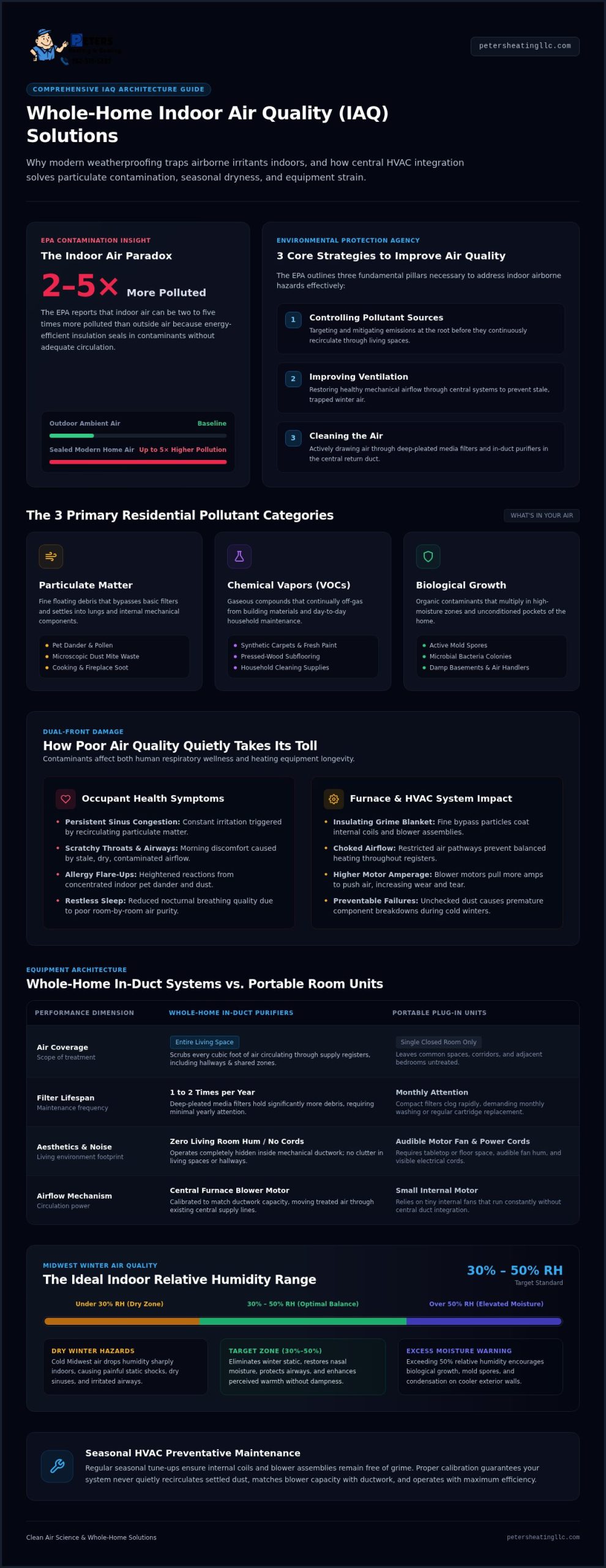
At their core, indoor air quality solutions represent mechanical systems built directly into your heating and cooling equipment to systematically capture airborne contaminants and balance humidity levels. Modern building practices do an exceptional job of sealing houses to reduce energy loss, but that tight envelope also traps stale air indoors. The Environmental Protection Agency (EPA) reports that indoor air can be two to five times more polluted than outside air. Understanding indoor air quality (IAQ) starts with recognizing that without active whole-home filtration and proper moisture control, every pollutant generated inside your living space continues to recirculate.
The Most Common Airborne Pollutants in Residential Homes
Most residential contaminants fall into three distinct categories:
- Particulate matter: Fine debris like pet dander, pollen, microscopic dust mite waste, and soot from cooking or fireplaces that continuously float through living areas.
- Chemical vapors (VOCs): Vapors that off-gas from synthetic carpets, fresh paint, pressed-wood subflooring, and everyday household cleaning supplies.
- Biological growth: Mold spores and bacteria that flourish in dark, unconditioned basements or damp spots near neglected central air handlers.
How Poor Air Quality Affects Daily Health and Heating Systems
Living with polluted air takes a quiet toll on both your family and your mechanical equipment. For occupants, dirty air shows up as scratchy throats, persistent sinus congestion, allergy flare-ups, and restless sleep. When fine particles bypass basic furnace filters, they do not just enter your lungs; they settle directly onto your furnace blower assembly and internal coils.
A buildup of grime acts like an insulating blanket on mechanical components. It chokes airflow, forces the blower motor to pull more amps, and triggers preventable component failures. Installing the right indoor air quality solutions protects your family’s respiratory health while keeping your heating equipment operating smoothly through demanding Midwest winters.
Whole-Home Air Purifiers vs. Portable Room Units: Which Works Better?
Many homeowners start tackling dust and stuffy rooms by buying portable plug-in purifiers. While a tabletop filter can help in a single closed bedroom, it rarely solves problems across the rest of the house. The EPA highlights three basic strategies to improve indoor air quality: controlling pollutant sources, improving ventilation, and cleaning the air. Central systems accomplish this cleaning far more effectively because they treat air as it moves through your home’s central circulation path. When evaluating whole-house indoor air quality solutions, in-duct equipment provides comprehensive protection that standalone units simply cannot match.
How Central In-Duct Air Purifiers Operate
A whole-home air purifier mounts directly into the return air ductwork, right before air enters your furnace or air handler. Whenever your thermostat calls for heating, cooling, or continuous fan operation, air gets drawn through deep-pleated media filters or specialized purification cells. These filters trap microscopic particles, capturing dust, pollen, and pet dander before conditioned air returns to your bedrooms and living spaces. Because the purifier operates inside your mechanical equipment, you get clean air without machine hum in your living room or cords cluttering your hallways.
Comparing Coverage, Maintenance, and System Longevity
The real difference between these systems comes down to maintenance habits, whole-house coverage, and mechanical efficiency:
- Coverage: Portable cleaners only filter air within a single room, leaving hallways and common areas untreated. A central system scrubs every cubic foot of air circulating through your supply registers.
- Filter lifespan: Small room filters clog quickly and usually require monthly washing or replacement. Whole-home media filters hold significantly more debris, needing attention only once or twice a year.
- Airflow balance: Standalone units rely on tiny internal fans that run constantly. Whole-home units use your central blower motor, but they must be calibrated properly to avoid resistance.
Restricting airflow with an incorrectly sized filter can strain your blower motor and cause uneven heating. If your current furnace struggles to push steady air through your registers, having an experienced technician assess your setup is the smartest first move. Homeowners seeking dependable heating care should consider HVAC repair in Kenosha WI to resolve airflow bottlenecks and ensure any new filtration upgrade runs safely and efficiently.
Why Humidity Control Is Essential for Midwest Indoor Air Quality
Midwest winters bring prolonged sub-freezing temperatures that strip outdoor air of its moisture. When your furnace pulls in this cold air and warms it up, indoor relative humidity levels frequently plummet below 20%. For reference, health guidelines recommend maintaining indoor moisture between 30% and 50%. When planning effective indoor air quality solutions, humidity management is just as vital as capturing dust. Without adequate moisture, dry air pulls hydration from everything it touches, causing separating hardwood floorboards, peeling wallpaper, and painful static shocks at the doorway.
The Health and Comfort Hazards of Overly Dry Winter Air
Low indoor moisture levels impact your body just as aggressively as your woodwork. Overly dry air parches your nasal passages, throat, and bronchial tubes. When your mucous membranes dry out, your respiratory tract loses its natural defense mechanism against airborne seasonal viruses. This leads to chronic morning sore throats, nosebleeds, and aggravated sinus pain.
Moisture also directly alters how warm you feel. Dry air accelerates moisture evaporation from your skin, making a 70-degree room feel chilly. By restoring relative humidity to a steady 35% or 40%, the air holds warmth far better. You can set the thermostat a couple of degrees lower, staying comfortable while keeping winter heating bills in check.
How Central Humidifiers Integrate with Your Furnace
Unlike portable humidifiers that require daily refilling and constant scrubbing to prevent mineral scum, central humidifiers operate automatically. These units install cleanly onto your supply or return plenum, drawing from a small dedicated water feed. When your heating cycle begins, the unit introduces measured water vapor directly into the warm airstream, distributing balanced humidity evenly through every register. Homeowners who want to understand exactly how this technology works inside their forced-air system can explore the mechanics of an HVAC ductwork humidifier, including the differences between bypass, fan-powered, and steam models.
Digital humidistats track outdoor temperatures and automatically dial back output on freezing nights to keep window glass free of condensation. As outlined in the EPA guidelines for authoritative indoor air quality solutions, active air cleaning and moisture control work best together. If your current heating system is aging or unreliable, pairing whole-home moisture control with a high-efficiency furnace installation in Racine ensures your home stays warm, efficient, and comfortable through every freeze.
How to Choose the Right Indoor Air Quality Solutions for Your Home
Choosing the right mechanical upgrades shouldn’t involve guesswork or expensive trial-and-error. Instead of buying standalone gadgets that clutter rooms, take a methodical approach to select the right indoor air quality solutions for your layout:
- Identify your main symptoms: Note whether your family struggles with heavy pet dander, persistent cooking odors, excessive dust, or dry sinuses.
- Inspect the system baseline: Have an HVAC technician evaluate your duct sizing, return air capacity, and blower motor strength.
- Select targeted hardware: Match your verified concerns with dedicated central equipment, such as high-efficiency air purifiers or whole-home humidifiers.
- Set a maintenance routine: Plan a reliable schedule for seasonal filter changes so conditioned air continues moving freely across heat exchangers.
Assessing Furnace Compatibility and Static Pressure
Before upgrading your filtration, an experienced technician must measure static pressure, which represents the resistance your furnace blower meets when pushing air through ductwork. Forcing air through an overly restrictive filter on an undersized return can suffocate the system, causing heat exchangers to overheat or blower motors to fail prematurely. Proper installation often requires fabricating custom sheet-metal transitions. This ensures your new filter cabinet seals tightly against dust bypass while allowing your system to breathe freely.
Matching Solutions to Specific Household Air Concerns
Every home presents a unique combination of comfort and health priorities:
- Homes with shedding pets: Deep-pleated media air purifiers capture fine dander and hair before particles can settle into carpets or coat your air conditioner’s indoor coil.
- Winter static shock and dry sinuses: Central whole-home humidifiers restore balanced moisture to heated supply air, keeping indoor relative humidity in a comfortable, healthy range.
- Musty basement drafts and sudden dust spikes: A thorough ductwork evaluation identifies leaky joints in unconditioned spaces that pull attic or crawlspace dust directly into the airstream.
If you want straight answers about which upgrades make sense for your home, schedule an in-home evaluation with Peters Heating & Cooling for honest, craftsman-level advice without high-pressure sales pitches.
Maintaining Healthy Air with Professional HVAC Care and Seasonal Tune-Ups
Even the most advanced air cleaners cannot compensate for neglected mechanical equipment. Whole-home indoor air quality solutions depend entirely on your central furnace and blower fan to circulate air across filtration media. When an evaporator coil becomes caked with grime or a blower wheel collects layers of pet hair, system efficiency plummets. Instead of purifying your living space, neglected components turn into internal reservoirs for dust and allergens that blow right back into your rooms.
Essential Tasks Included in Professional Air Quality Inspections
Routine HVAC preventative maintenance tackles hidden buildup before it compromises your breathing air or causes an unexpected heating breakdown. During a seasonal inspection, a technician handles several critical checkpoints:
- Blower wheel and housing cleaning: Removing accumulated lint and dust from curved fan blades ensures the motor moves sufficient air volume without drawing excess amperage.
- Humidifier component service: Technicians inspect water feed lines, test solenoid valves, and replace calcified evaporative water panels so moisture distributes cleanly. Reviewing how a properly installed HVAC ductwork humidifier should be maintained helps homeowners understand what to expect during these service visits.
- Duct and return airflow verification: Checking return air drops confirms that stale air gets pulled out of upper bedrooms and basements efficiently.
- Electrical and safety testing: Inspecting limit switches, contactors, and wiring ensures your furnace and air cleaner run safely under peak winter loads.
Partnering with Peters Heating & Cooling for Honest Home Comfort
Achieving clean, balanced air should never require navigating high-pressure sales pitches or buying equipment you don’t actually need. As local technicians serving Kenosha, Racine, and nearby neighborhoods since 2009, Don and Mike believe in straight talk and honest craftsmanship. We evaluate your furnace, duct dimensions, and blower capacity to recommend only the sensible indoor air quality solutions that solve your specific comfort problems.
Whether you need a seasonal furnace tune-up, an evaporative pad swap, or an evaluation of your central ductwork, our team provides reliable, transparent service. Schedule a comprehensive system evaluation with Peters Heating & Cooling today to keep your home comfortable, energy-efficient, and easy to breathe in all year round.
Breathe Cleaner, Balanced Air in Every Room
Creating a healthier, more comfortable home doesn’t require complicated gadgets or noisy portable units scattered across every bedroom. Genuine respiratory wellness comes from treating air directly where it circulates. When your central heating system pairs high-efficiency filtration with reliable humidity control, you eliminate static shocks, soothe dry winter sinuses, and stop recirculating dust before it settles.
Serving Kenosha, Racine, and surrounding communities with honest local craftsmanship since 2009, our licensed and insured technicians prioritize practical results over pushy sales tactics. We inspect ductwork integrity, blower performance, and seasonal moisture levels to recommend sensible upgrades tailored to your home’s layout. Breathe easier with honest indoor air quality solutions from Peters Heating & Cooling by reaching out to our team today. You and your family deserve steady comfort and fresh, clean air throughout every season.
Frequently Asked Questions
How do whole-home indoor air quality solutions differ from standard 1-inch furnace filters?
Standard 1-inch filters exist primarily to protect furnace equipment from large debris, while whole-home indoor air quality solutions actively clean your living space. Deep-pleated media filters provide significantly more surface area, capturing microscopic dander, pollen, and airborne smoke particles down to sub-micron sizes. Instead of merely stopping coarse dust from clogging the blower motor, whole-home systems filter every cubic foot of air circulating through your home without restricting airflow.
Can improving indoor air quality help lower monthly heating and cooling bills?
Yes, properly balanced indoor air quality solutions reduce strain on your HVAC equipment and lower energy consumption. Adding a central humidifier maintains moisture between 30% and 50%, making rooms feel warmer at lower thermostat settings during freezing Wisconsin and Illinois winters. Clean air also prevents dirt buildup on evaporator coils and blower fans, ensuring your heating and cooling equipment runs at peak efficiency rather than burning extra fuel.
How often do whole-house air purifier filters and humidifier pads need replacement?
Whole-house air purifier media filters typically need replacement once or twice per year, depending on household pet levels and runtime. Central humidifier evaporative water panels should be changed once per heating season to clear out mineral deposits and hard water scale. Because central media filters are several inches thick, they hold dramatically more particulate matter than flimsy 1-inch filters, eliminating the chore of monthly filter changes.
Will installing a high-efficiency air purifier restrict my furnace airflow?
Not when the system is sized and installed correctly by a licensed technician. While dense filters can cause static pressure issues in poorly designed returns, deep 4- to 5-inch pleated media filters actually allow excellent airflow because their accordion design provides vast surface area. During our preventative maintenance and installation visits in Kenosha and Racine, we test duct static pressure to verify your blower motor moves air freely without overheating.
What are the most common signs that my home has poor indoor air quality?
Persistent morning dry throat, frequent static shocks, recurring sinus headaches, and visible dust floating in sunlight are the clearest indicators. You might also notice lingering cooking odors, stuffy bedrooms with closed doors, or family members experiencing flare-ups of seasonal allergies indoors. If dusting furniture feels like a continuous, unwinnable chore across your living areas, your central system is likely failing to capture fine recirculating particles.
Do whole-home humidifiers require a dedicated water line connection?
Yes, central humidifiers require a direct water feed line tapped into your household plumbing supply. Our HVAC technicians install a small copper or plastic line fitted with an automatic solenoid valve directly onto your ductwork. When the humidistat senses low indoor moisture levels during a heating cycle, the valve opens automatically to hydrate the evaporative pad, requiring zero daily refilling or heavy water tank lifting.
Can indoor air quality solutions eliminate pet dander and persistent cooking odors?
Yes, combining deep-pleated media filtration with activated carbon or central purification effectively captures pet dander and neutralizes lingering odors. High-efficiency filters pull fine dander, hair, and biological particles straight out of the airstream before they settle into furniture or carpet fibers. Specialized purification media absorbs volatile organic compounds and persistent cooking grease smells, keeping air fresh throughout your entire floor plan rather than masking scents with sprays.