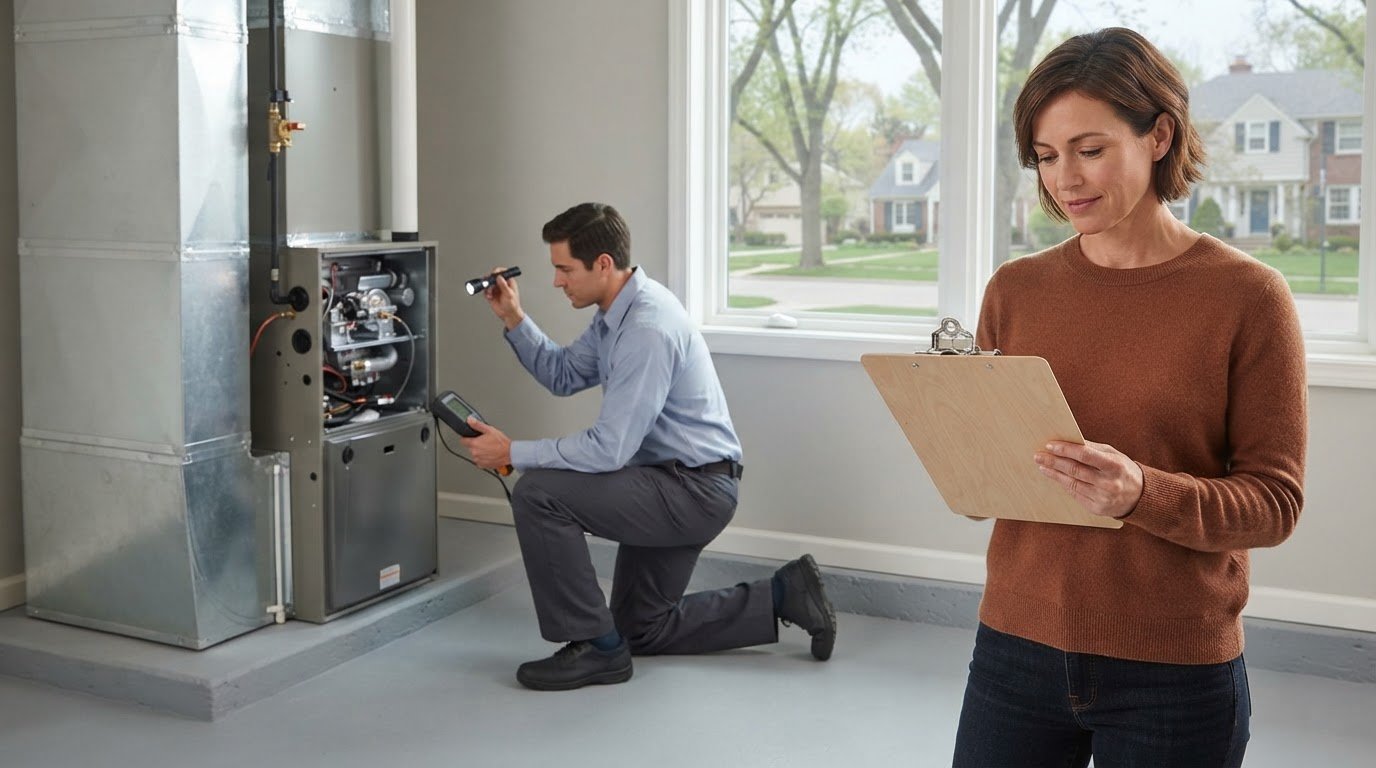
What if a tune-up is less about approving repairs and more about getting a clear picture of how your system is running? It’s reasonable to wonder which residential HVAC maintenance tasks you can handle yourself, how often equipment needs attention, and whether a technician’s recommendations are necessary. Good maintenance should be a system-specific check, with findings explained plainly, not a promise that every home needs repairs.
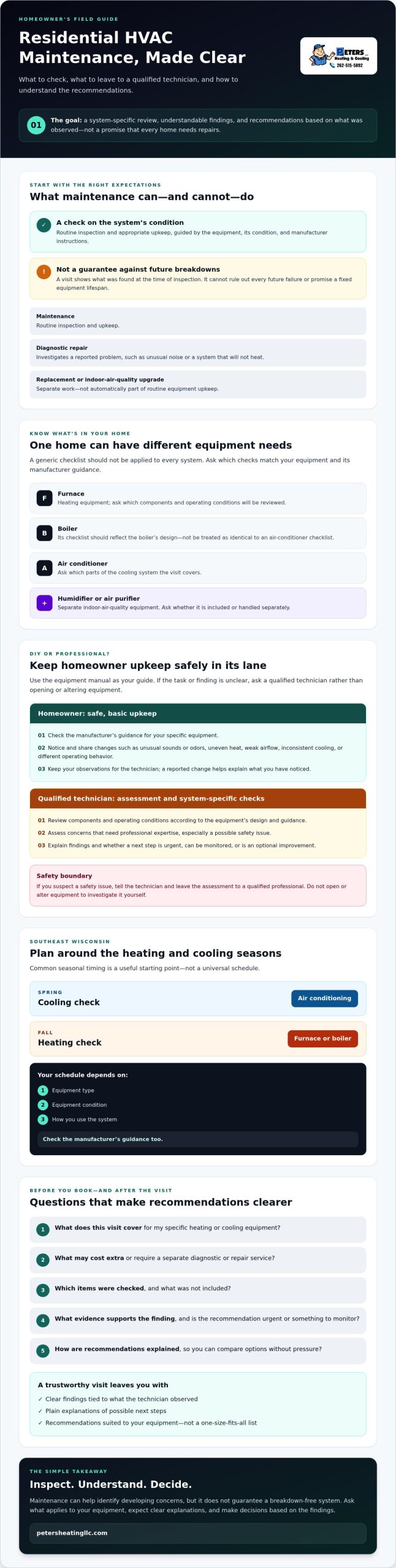
This checklist covers basic tasks you can handle safely and signs that a qualified technician should take over. In Southeast Wisconsin, homeowners commonly plan a cooling check in spring and a heating check in fall. The right schedule depends on your equipment, its condition, and how you use it, so check the manufacturer’s guidance too.
We’ll walk through homeowner tasks, explain what calls for professional expertise, and share practical questions to ask before choosing a local provider. You’ll have a clearer sense of what to inspect, when to plan service, and how to look for honest recommendations without feeling pressured into work your system may not need.
Key Takeaways
- Use the residential HVAC maintenance checklist to separate simple homeowner upkeep from tasks that call for a qualified technician.
- Maintenance can help identify developing concerns, but it can’t guarantee a breakdown-free system or a fixed equipment lifespan.
- Check your equipment manual and ask which inspection items apply to your specific heating or cooling system.
- Before booking, clarify what the visit covers, what may cost extra, and how the provider will explain any findings.
- Compare providers by qualifications, communication, and clear recommendations so you can make informed decisions without pressure.
What Residential HVAC Maintenance Does and What It Cannot Promise
Residential HVAC maintenance is routine inspection and upkeep for a home’s heating and cooling equipment, not a repair or a guarantee against future breakdowns. Its purpose is to review the system’s condition and perform appropriate upkeep based on the equipment and its guidance. Heating, ventilation, and air conditioning (HVAC) systems help manage indoor temperature and air, but the specific equipment and components vary from home to home.
Maintenance differs from diagnostic repair, which investigates a reported problem such as unusual noise or a system that won’t heat. Replacement involves installing new equipment. An indoor-air-quality upgrade, such as adding a humidifier or air purifier, addresses a separate need and is not automatically part of routine equipment upkeep.
Which home systems belong on an HVAC maintenance checklist?
A homeowner’s checklist may include a furnace, air conditioner, or boiler, but those systems don’t all receive the same checks. The appropriate scope depends on equipment type, condition, and manufacturer instructions. A boiler checklist, for example, shouldn’t be treated as identical to an air-conditioner checklist.
Humidifiers and air purifiers are separate indoor-air-quality equipment. If your home has either, ask whether it should be considered during the visit and whether that work is included or handled separately. Don’t assume a general maintenance appointment covers every piece of equipment in your home.
Why maintenance is not a promise of zero repairs
An inspection provides a picture of the system at the time it’s checked. Findings may support continued monitoring, an adjustment, a repair recommendation, or no further action. Maintenance can help identify developing concerns, but it can’t rule out every future failure or promise that equipment will last for a particular number of years.
A system that heats or cools normally can still merit routine attention. That doesn’t mean a problem has been found. It means the equipment can be reviewed before the next season of use. If a technician recommends additional work, ask what was checked, what evidence supports the finding, and whether the recommendation is urgent or can be monitored. A clear explanation helps you distinguish an observed concern from an optional improvement and decide what makes sense for your home.
For residential HVAC maintenance, the useful outcome is informed care: a system-specific review, understandable findings, and recommendations grounded in what the technician observed. A visit should not be presented as proof that repairs are always needed or as a guarantee that none will be.
Residential HVAC Maintenance Checklist: What a Professional Visit May Cover
A useful checklist starts with the equipment in your home, not a one-size-fits-all promise. A furnace, boiler, and air conditioner have different components and operating needs, so appropriate checks depend on system type, condition, and manufacturer guidance. Treat the items below as questions to discuss with a provider, not guaranteed inclusions in every residential HVAC maintenance visit.
Before work begins, ask what the visit covers and what would count as a separate diagnostic or repair service. Afterward, request clear findings, recommended next steps, and an explanation of anything that wasn’t checked. The Air Conditioning Contractors of America publishes ACCA’s residential maintenance standards, which homeowners can use as a reference when asking providers how they structure maintenance.
Heating equipment: questions to ask during a maintenance visit
For a furnace or boiler, ask which components and operating conditions the technician plans to review and how the findings will be documented. The checklist should follow the equipment’s design and manufacturer instructions, rather than a generic list applied to different systems.
Share any changes you’ve noticed, such as unusual sounds or odors, uneven heat, or different operating behavior. If a concern involves a possible safety issue, tell the technician and leave the assessment to a qualified professional. Don’t open or alter equipment to investigate it yourself.
Cooling equipment: checks and findings to clarify
For an air conditioner, ask which parts of the system the maintenance visit covers and whether a reported issue would require a separate repair. Mention weak airflow, inconsistent cooling, or unusual operation. Those details help the technician understand what you’ve observed, but they don’t establish a diagnosis on their own.
The right maintenance scope depends on your system’s type and condition, so confirm what applies before work begins. A clear answer helps you understand the difference between routine upkeep and additional work. If you’re purchasing a home and want to understand the cooling system’s condition before closing, an AC tune up Kenosha WI home buyers arrange can help assess operating condition and maintenance needs as part of your due diligence.
- Before: Note changes in sound, airflow, comfort, or operation, and have the equipment information available if you can.
- During: Ask what’s being checked and whether any concern is part of maintenance or needs separate diagnosis.
- After: Request the findings, next steps, and reasons for any recommendation, including whether monitoring is an option.
For safety-related concerns or work that requires opening, wiring, or altering equipment, stop and ask a qualified technician to assess it. To clarify what a visit may cover, you can ask about a residential HVAC maintenance visit from Peters Heating & Cooling.
DIY or Professional HVAC Maintenance? Compare the Tasks and Risks
A system that seems to work normally may still benefit from a professional inspection. Routine care gives a technician an opportunity to assess equipment even when there’s no obvious symptom. That doesn’t mean a problem will be found or that repairs are automatically needed. Homeowners can handle a few basic tasks, but inspection and repair involve different skills and risks.
| Task category | Examples | Boundary to keep in mind |
|---|---|---|
| Homeowner upkeep | Keep the area around equipment clear; check and replace an accessible filter as directed. | Follow your equipment manual, including the correct filter size and replacement schedule. |
| Professional inspection | Have a qualified technician assess system condition and investigate recurring or unusual operation. | Ask what the inspection covers and what the findings mean for your equipment. |
| Repair work | Address a confirmed fault or performance problem. | Clarify the diagnosis, proposed work, and whether it’s separate from maintenance. |
Which HVAC upkeep can homeowners handle safely?
Keep accessible areas around heating and cooling equipment free of stored items and debris. If your system has an accessible filter, check it according to the manual and use the specified size and replacement guidance. Instructions vary by equipment, so don’t rely on a generic schedule when your manufacturer provides one.
Stop if a task requires opening equipment, handling wiring, or altering a component. Don’t clean internal parts or bypass protective devices. These steps can create safety risks or damage equipment, so leave them to a qualified technician.
When should a homeowner call an HVAC technician?
Ask for a professional assessment if a performance concern keeps returning, operation changes unexpectedly, or you suspect a fault. A technician can inspect and diagnose parts of the system that aren’t appropriate for routine homeowner upkeep. Peters Heating & Cooling’s technicians are licensed and insured, and the company emphasizes clear explanations of findings and recommendations.
If a finding points toward repair, ask what evidence supports the diagnosis and whether the proposed work is maintenance, repair, or a separate replacement discussion. For more context, see this HVAC repair guide for Kenosha homeowners. With residential HVAC maintenance, the goal is an informed decision, not doing more work than the system’s condition calls for.
When to Schedule Residential HVAC Maintenance in Southeast Wisconsin
Seasonal planning can help you think ahead about your home’s heating and cooling equipment, but it isn’t a mandatory schedule or a promise that an appointment will be available at a particular time. Homeowners in Kenosha, Racine, Oak Creek, and Winthrop Harbor can use seasonal changes as a reminder to review their equipment’s needs and plan a conversation with a technician.
How to plan heating and cooling checks around the seasons
Consider asking about heating equipment before you expect sustained cold-weather use and cooling equipment before warm weather arrives. Planning ahead gives you time to discuss the right scope for your system instead of waiting until you’re relying on it heavily. It doesn’t guarantee seasonal availability, so ask the provider about current scheduling. For a detailed breakdown of what to check and when, the seasonal HVAC maintenance guide covers both homeowner tasks and what a professional tune-up may include before each season.
Before you call, jot down unusual operation, comfort changes, and any recent service history. Those details can help a technician understand what you want reviewed and distinguish a routine check from a concern that may need separate attention, even if the system seems to be working.
What changes the right maintenance timing for a home?
There isn’t one timing rule that fits every household. Check the equipment manual, then ask a technician how the system’s age, condition, and your household’s usage affect the appropriate interval. Findings from prior service may also help shape the next visit. A furnace, boiler, and air conditioner have different components, so checks and timing may vary by equipment type.
If your concern is specifically about filtration or humidity, treat that as a related but distinct indoor-air-quality question. The indoor air quality solutions guide can help you explore those topics without assuming they’re automatically part of heating or cooling maintenance.
Keep a simple record of service dates, findings, and follow-up recommendations. This gives you useful context for future discussions and helps you ask whether a suggested visit is based on manufacturer guidance, the system’s condition, or a concern you’ve noticed.
To plan a visit around your equipment and its use, ask Peters Heating & Cooling about residential HVAC maintenance and confirm what the visit includes and what scheduling is currently available.
How to Choose a Residential HVAC Maintenance Provider You Can Trust
A trustworthy provider should be able to explain the planned work before the visit and the findings afterward. Compare more than the headline quote. Look for a clear scope, qualified technicians, straightforward communication, and documentation you can refer to later. Ask about honest recommendations and transparent pricing rather than taking them for granted before speaking with a provider.
Questions to ask before booking an HVAC maintenance visit
Use these questions to understand what you’re agreeing to and how recommendations will be handled:
- Which equipment will be checked? Name your furnace, boiler, or air conditioner, and confirm which systems the visit covers.
- What does the quoted visit include? Ask what is part of the maintenance scope and what may be billed separately, such as additional diagnosis or repair work.
- Who will perform the work? Confirm the technician’s licensing and insurance. Peters Heating & Cooling states that its technicians are licensed and insured.
- How will findings be shared? Ask whether you’ll receive written notes or another clear explanation of what was inspected and what the technician found.
- What happens if more work is recommended? Request the reason for the recommendation and an explanation before approving additional work. An inspection finding doesn’t automatically mean a repair is necessary.
A provider who answers these questions clearly helps you compare visits by their actual scope, rather than relying on a vague promise of a “tune-up.” You should be able to understand what is included, what is not, and which choices are yours to make.
A practical next step for local homeowners
Before contacting a provider, gather the equipment type and any available model information. Note recent service history, unusual operation, and comfort concerns. This gives the technician useful context and helps you ask focused questions about residential HVAC maintenance.
Peters Heating & Cooling provides residential HVAC preventative maintenance in Southeast Wisconsin and Northeast Illinois, including the Kenosha area. The company also serves Racine, Oak Creek, and Winthrop Harbor. Confirm current coverage and appointment availability when you inquire. If maintenance findings raise a separate question about replacing an older furnace, the high-efficiency furnace installation guide may help you understand what to discuss next. A replacement recommendation should be explained as a distinct decision, not treated as an automatic result of maintenance.
For a straightforward conversation about your equipment and the scope of a visit, ask Peters Heating & Cooling about residential HVAC maintenance.
Make Your Next HVAC Checkup a Clear, Informed Choice
Good residential HVAC maintenance starts with understanding what your equipment needs. Use the manufacturer’s guidance and your system’s condition to plan care, and keep basic homeowner upkeep separate from inspection or repair work. A professional visit can provide useful findings, but it can’t promise that a system will never need repairs.
Before booking, confirm which equipment the visit covers, what’s included, and how recommendations will be explained. Ask what additional work would involve before approving it. Clear answers make it easier to decide what’s right for your home.
Peters Heating & Cooling offers residential HVAC preventative maintenance. Its technicians are licensed, insured, and continuously trained, and the company emphasizes transparent pricing and honest recommendations. For a clear conversation about your equipment and a potential maintenance visit, ask Peters Heating & Cooling about residential HVAC maintenance.
A little preparation can help you approach the visit with confidence. Keep your service history handy, share any concerns, and ask questions until the next steps are clear.
Frequently Asked Questions
How often should residential HVAC maintenance be performed?
There’s no single schedule that fits every home. Follow the equipment manual and consider system type, condition, age, and how often it runs. In Southeast Wisconsin, a practical plan is to discuss a heating check before sustained cold weather and a cooling check before warm weather. That seasonal rhythm can guide residential HVAC maintenance, but it doesn’t replace manufacturer guidance or advice based on your equipment.
What does a residential HVAC maintenance visit include?
The scope depends on the equipment and the provider’s quoted service. A visit may involve reviewing the system’s condition and operation, but don’t assume the same checks apply to a furnace, boiler, and air conditioner, or that every task is included. Before booking, ask which equipment will be covered, what the visit includes, and how findings and recommended next steps will be shared.
Can I perform HVAC maintenance myself?
Yes. Homeowners can handle basic upkeep, such as keeping accessible areas around equipment clear and checking an accessible filter. Use the filter size, schedule, and instructions specified for your system. Don’t open equipment, handle wiring, clean internal components, or bypass protective devices. If a task goes beyond the manual’s homeowner guidance or you’re unsure how to proceed, stop and ask a qualified technician.
Is professional HVAC maintenance worth it if my system is working?
A system that appears to work normally can still receive a routine professional inspection. The visit offers an opportunity to review its condition and explain any findings. Maintenance can’t guarantee that breakdowns won’t happen, and it doesn’t mean repairs are automatically needed. Ask what was checked and what evidence supports any recommendation. The outcome may be monitoring, suggested work, or no further action.
When should I schedule furnace and air conditioner maintenance in Wisconsin?
Consider discussing furnace maintenance before the heating season and air conditioner maintenance before warm weather, so you can plan ahead of heavier use. This is a planning guide, not a required schedule or a guarantee of appointment availability. Homeowners in Kenosha, Racine, Oak Creek, and Winthrop Harbor can check their equipment manuals and ask a technician how system condition, age, and use affect timing. The seasonal HVAC maintenance checklist can also help you understand what to review before each season and which tasks are appropriate for homeowners versus licensed technicians.
What should I ask an HVAC company before booking a maintenance visit?
Ask which equipment the visit covers, what the quoted service includes, and what may be billed separately. Confirm the technician’s licensing and insurance, and ask how findings will be shared. If additional work is recommended, request a clear explanation before approving it. You can also ask whether the recommendation is for routine upkeep, a repair, or a separate replacement discussion. Clear answers help you compare providers fairly.
Does HVAC maintenance include repairs?
Not necessarily. Maintenance and repair are different types of service, so ask the provider what the quoted visit covers and whether diagnosis or repair work would be handled separately. An inspection may identify a concern, but that doesn’t mean every finding requires repair. Ask what was observed, why additional work is recommended, and what the next steps are before deciding how to proceed.