
Last Updated: October 26, 2026
Quick Summary
Your house is so dusty because of a source you haven’t found yet, not your cleaning routine. Common sources of house dust include a clogged air filter, leaky ductwork, dirty return vents, pets, textiles, foot traffic, open windows, and remodeling debris. Check return vents, supply vents, window sills, bedroom surfaces, and basement or attic gaps to find the pattern.
- Dust collects where air slows down and settles, so follow airflow rather than furniture when diagnosing.
- A filter that is too small or too restrictive for your system can make dust worse.
- Sealing duct leaks at joints, boots, and connections is the highest-impact fix most homeowners skip.
- If dust reappears on a test shelf within 48 hours, focus on filtration and duct sealing.
- Black residue around supply vents or a furnace flue can point to a combustion problem, so stop using the system and call a professional.
Table of Contents
- Why Is My House So Dusty? Start With a Room-by-Room Diagnosis
- The 8 Most Common Sources of Household Dust Buildup
- Why Is My House So Dusty When the AC Is Running?
- Does Cleaning Air Ducts Reduce Dust?
- How to Reduce Dust in the House: A Prioritized Prevention Plan
- Choosing the Best Air Purifier for Dust
- When to Call an HVAC Professional About Dust
- Schedule an HVAC Inspection to Track Down the Dust
- Frequently Asked Questions
Why Is My House So Dusty? Start With a Room-by-Room Diagnosis
If you keep asking why is my house so dusty no matter how often you clean, the answer usually isn’t your cleaning routine. It’s a source you haven’t found yet. Dust is a mix of skin cells, fabric fibers, pollen, dirt, and particles pulled through your HVAC system.
Here’s the uncomfortable truth most guides skip: dust doesn’t appear evenly. It collects where air slows down and settles. That means your diagnosis should follow airflow, not furniture.
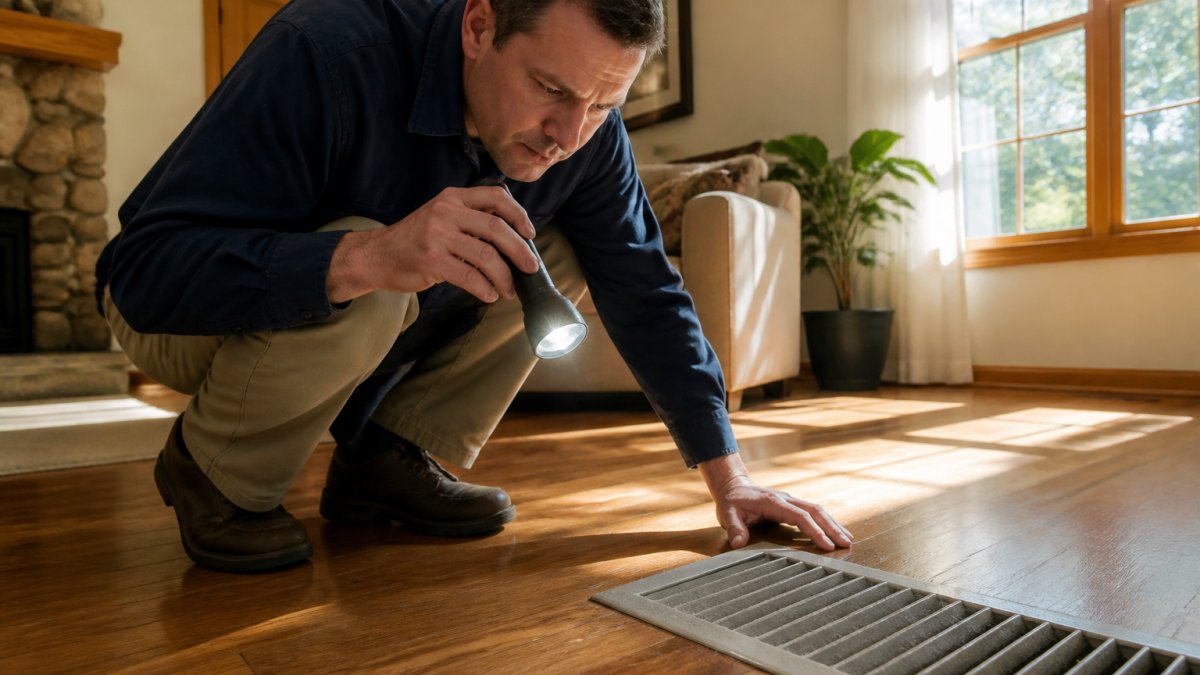
Walk through your home with a flashlight and check these spots in order:
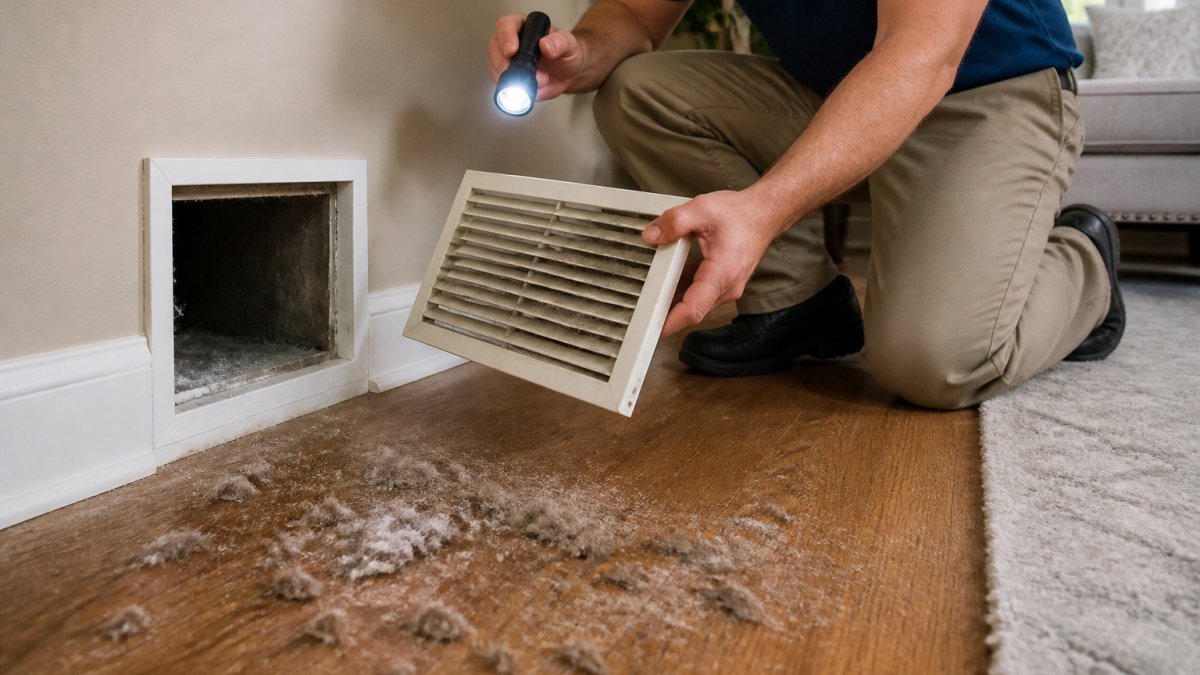
- Return vents and grilles. Look for gray fuzz or a dark ring around the frame.
- Supply vents. Hold a tissue near the vent while the system runs. Weak airflow points to a clogged filter or duct problem.
- Window sills and tracks. Gritty residue here suggests outdoor air is getting in.
- Bedroom surfaces. Fine, lint-like dust near bedding points to textiles.
- Basement and attic access points. Dust streaks around gaps suggest air leaks.
Write down what you find in each room. Patterns will emerge fast.
How to Tell Ordinary Dust From Insulation, Soot, or Other Concerning Particles
Not all dust is harmless house dust, and the difference matters. Ordinary dust is gray, light, and builds up gradually. Insulation fibers tend to be pink, yellow, or white and feel scratchy.
Watch out: black residue around supply vents or a furnace flue can point to a combustion problem. Stop using the system and call a professional rather than cleaning it yourself.
The 8 Most Common Sources of Household Dust Buildup
Most dust problems trace back to a short list of culprits. But a list alone won’t tell you which one is active in your home. Use the table below as a diagnostic map: each source has a telltale sign, a typical location, and a first fix you can test before spending money.
| Source | Telltale Sign | Where to Look First | First Test or Fix |
|---|---|---|---|
| Clogged or low-quality air filter | Gray, matted filter; dust returns within days of cleaning | Air handler or return grille | Hold filter to light; replace if you can’t see through it |
| Leaky ductwork | Dust streaks at joints; dustier after system runs | Attic, crawlspace, basement runs | Seal accessible joints with mastic or foil tape |
| Dirty return vents | Dark ring or fuzz on grille | Central return and bedroom returns | Vacuum grille and wipe slats |
| Pets and dander | Lint-like dust near pet bedding and upholstery | Bedrooms, sofa, carpet edges | Wash pet bedding weekly; vacuum with HEPA |
| Textiles (bedding, carpet, curtains) | Fine fiber dust on horizontal surfaces | Bedroom nightstands, window sills | Wash bedding weekly; vacuum carpets on schedule |
| Foot traffic | Gritty dust near entry doors | Entryways and mudrooms | Add mat at every door; remove shoes indoors |
| Open windows and outdoor air | Gritty residue on sills and tracks | Window sills, doors | Keep windows closed on high-pollen days |
| Construction or remodeling dust | White or colored fine powder; recent work | Renovated rooms, HVAC returns | Isolate work area; change filter after work |
Air Filters, Leaky Ductwork, and Return Vents
Your air filter is the front line, but filter fit and rating matter as much as condition. A filter that is too small for the slot lets air bypass it entirely.
Leaky ductwork is the source most homeowners miss. A small gap in a duct running through an attic or crawlspace pulls in unfiltered air and pushes it straight into your rooms.
Return vents matter too. A dusty return grille means dust is cycling back through the system. Vacuum the grille and wipe the slats every few weeks.
Pets, Textiles, Foot Traffic, and Open Windows
Pet dander and shedding fur settle into carpets and upholstery. Wash pet bedding often and vacuum with a HEPA filter.
Textiles shed constantly. Bedding, curtains, and carpet fibers make up a large share of household dust. Wash bedding weekly and vacuum carpets on a schedule.
Foot traffic brings dirt in from outside. A mat at every entry door cuts this down more than most people expect.
Open windows let in pollen and outdoor particles. On high-pollen days, keep windows closed and rely on your HVAC system’s filtration.
If you want to isolate the source fast, tackle the first three sources in the table before buying any gadget. They account for the majority of mechanical dust problems in most homes.
Why Is My House So Dusty When the AC Is Running?
If your house gets dustier when the AC runs, the system is likely distributing dust rather than removing it. Three things cause this: a clogged filter, dirty ducts, or a blower pushing air through a dusty air handler.
The air handler is the unit that circulates air through your home. If it sits in a damp basement or dusty closet, it can pull particles into the airstream.
Start with the filter. If it’s gray and matted, replace it. If dust returns within days, the problem is upstream in the ducts or the air handler.
Does Cleaning Air Ducts Reduce Dust?
Duct cleaning helps only when the ducts are actually dirty. If a professional inspection shows heavy buildup, sealing leaks, or debris from remodeling, cleaning can reduce dust. If the ducts are clean, cleaning them won’t fix a dust problem caused by a bad filter or leaky returns.
The honest answer: duct cleaning is not a cure-all. Fix filtration and leaks first. Then decide whether cleaning is worth it based on what an inspection finds.
How to Reduce Dust in the House: A Prioritized Prevention Plan
Reducing house dust works best as a priority list, not a weekend marathon. Start with the fixes that stop dust at the source, then move to cleaning. The sequence below is ordered by impact per dollar and effort, so you can stop as soon as dust levels drop.
- Replace the air filter with the correct size and a MERV rating suited to your system. A filter that is too small or too restrictive can make dust worse.
- Seal duct leaks at joints, boots, and connections. This is the highest-impact fix most homeowners skip.
- Clean return and supply vents every few weeks. A dusty return grille recirculates dust.
- Vacuum with a HEPA filter at least weekly in high-traffic areas.
- Dust with a microfiber cloth so particles are captured, not pushed around.
- Wash bedding weekly and vacuum upholstery monthly.
- Add entry mats and remove shoes indoors.
- Run a dehumidifier if indoor humidity stays high.
We recommend tackling the first three before buying any gadget. Residential HVAC maintenance: a practical checklist for homeowners covers filters, vents, and seasonal upkeep in more detail.
Weekly and Monthly Checks That Show Whether It’s Working
You can measure progress without special tools. The key is to track the same spot on a schedule and compare results. Do these checks:
| Check | How Often | What It Tells You |
|---|---|---|
| Inspect air filter | Monthly | Clogging speed = dust load |
| Wipe one test shelf | Weekly | Dust return rate |
| Vacuum return grille | Every 2 weeks | Recirculating dust |
| Check humidity level | Monthly | Mold and dust mite risk |
| Inspect duct joints | Seasonally | Leaks pulling in air |
If dust returns to your test shelf within a few days, the source is still active. If it takes a week or more, you have likely addressed the main source. Seasonal HVAC maintenance: what to check and when gives you a full schedule to follow.
A simple test: clean one shelf and note the date. Check it daily. If dust reappears within 48 hours, focus on filtration and duct sealing before cleaning more often.
Choosing the Best Air Purifier for Dust
The best air purifier for dust is one with a true HEPA filter and a clean air delivery rate matched to your room size. HEPA filters capture fine particles, including dust, pollen, and pet dander (the EPA).
Match the unit’s rating to the square footage of the room. A small unit in a large room won’t keep up. Place it where dust collects most, usually the bedroom.
An air purifier helps, but it works alongside filtration and leak repair. It won’t fix a clogged filter or leaky ducts.
When to Call an HVAC Professional About Dust
Call a professional when dust returns fast after cleaning, when you see soot or insulation fibers, or when airflow from vents feels weak. These point to problems beyond surface cleaning, like duct leaks, a failing blower, or a combustion issue.
A technician can inspect the air handler, test duct sealing, and check filter sizing. Expert HVAC diagnostics: a homeowner’s checklist for finding the root cause shows what to expect and what questions to ask.
Schedule an HVAC Inspection to Track Down the Dust
Persistent dust usually has a mechanical cause, and finding it saves you from endless cleaning. Our licensed technicians inspect filters, ducts, and the air handler to locate the source. We prioritize repair over replacement and give you clear pricing before any work starts.
We’re BBB accredited with an A+ rating, and our team is licensed and insured. Contact Peters Heating & Cooling to schedule an inspection and get to the bottom of your dust problem.
Frequently Asked Questions
Can a dirty HVAC filter make a house dusty?
Yes. A clogged filter stops catching airborne particles, so dust that would normally be trapped gets pushed back through your supply vents and settles on surfaces. Check the filter monthly during heavy heating and cooling seasons and replace it every 1 to 3 months, or sooner if you have pets or live near a construction site. If a fresh filter still leaves rooms dusty within days, the problem is likely ductwork or airflow, not the filter itself.
Will cleaning my air ducts make my house less dusty?
It can help, but only when the ducts are actually the source. Sealed, clean ductwork does not generate house dust. If ducts have gaps at joints, disconnected runs, or debris from a remodel, cleaning plus sealing reduces the dust blown into rooms. Ask a technician to check for leaky ductwork and return vent problems first. Cleaning alone will not fix dust coming from pets, textiles, or outdoor air.
Do air purifiers really get rid of dust?
A portable air purifier with a true HEPA filter captures airborne particles, including dust, pollen, and pet dander, which lowers what settles on surfaces over time. It works best in one room and cannot clean dust already sitting on furniture. Match the unit’s clean air delivery rate to the room size, run it continuously on a low setting, and keep the pre-filter clean. Pair it with source control for real results.
Why does my house get dusty so quickly after cleaning?
Fast re-dusting usually means an active source is still running: a clogged filter, leaky ductwork, a running ceiling fan, or dry indoor air that keeps particles suspended. Dry air and high humidity both make dust settle or circulate differently. Vacuum with a HEPA machine and wipe with a microfiber cloth rather than dry dusting, which just moves particles into the air. If dust returns within two days, have your HVAC system checked.
If dust keeps coming back no matter how much you clean, the source is likely in your HVAC system. Peters Heating & Cooling offers honest recommendations, clear pricing, and repair-first service. Get started with Peters Heating & Cooling and breathe easier in a cleaner home.