
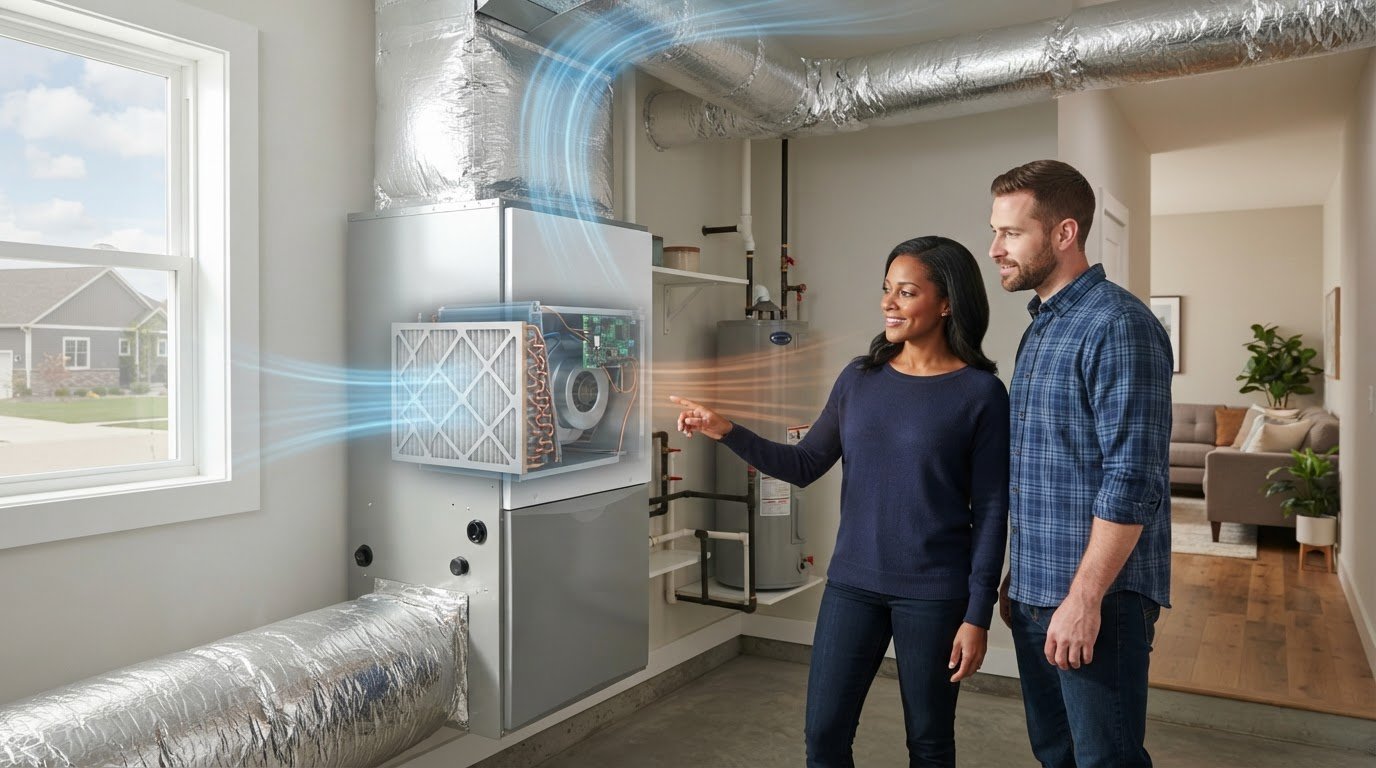
If you’ve wondered “what is a air handler,” you’re not alone. HVAC terms can make it hard to tell whether an air handler is just another name for a furnace or a separate part of your system. In many homes, the equipment that sends warm or cool air through the ducts is not the equipment that creates the heat or cooling.
It’s a fair question, especially when some rooms feel comfortable while others don’t. An air handler circulates conditioned air through your ductwork, but unlike a furnace, it doesn’t generate heat. Knowing the difference can help you identify what equipment your home has and ask clearer questions before considering a repair or replacement.
This guide explains what an air handler does, how it works with an air conditioner or heat pump, and how to tell whether your system uses one. You’ll also find simple maintenance steps that support airflow and indoor air quality, plus common issues that can affect comfort. The goal is to make the equipment easier to understand so you can make informed decisions about your home.
Key Takeaways
- Learn what an air handler does by following how its main parts move air and support heat exchange.
- Recognize airflow changes and unusual sounds that may signal a problem worth checking.
- Understand why correct air handler sizing and matching with the outdoor unit matter for home comfort.
- See how efficiency ratings can help you compare HVAC system options.
- Know what to ask during a service visit so you understand the diagnosis before considering repairs or replacement.
What Is a Air Handler? The Basics of Indoor Circulation
If you’re asking “what is a air handler,” think of it as the indoor part of an HVAC system that moves conditioned air through your home. It draws air back through return ducts, pushes it across heating or cooling components, then sends it through supply ducts and vents. The lungs comparison is useful: an air handler takes in room air and circulates it back out, but it doesn’t create heat or cooling on its own.
In a split system, the air handler commonly works with an outdoor air conditioner or heat pump. The outdoor unit and indoor coil handle heat exchange, while the air handler’s blower moves air across the coil and through the ductwork. With a heat pump, the outdoor unit gathers heat from outside during heating and releases indoor heat outdoors during cooling. The indoor air handler distributes the conditioned air. This setup is useful to understand in the Midwest, where one system may provide both heating and cooling.
An air handler is different from a furnace. A furnace generates heat, while an air handler circulates air. In a furnace-based system, the blower is usually built into the furnace, so you may not have a separate air handler. The broader Air handling unit (AHU) overview describes the equipment and its role in an HVAC system.
Where Is Your Air Handler Located?
Look in a basement, attic, or dedicated utility closet. The unit is often a large metal cabinet that may resemble a furnace, but appearance alone doesn’t tell you what it does. Look for ductwork connected to the cabinet and an indoor evaporator coil nearby. Don’t remove access panels. If you’re unsure which equipment you have, a technician can identify the system.
The Role of the Air Handler in Year-Round Comfort
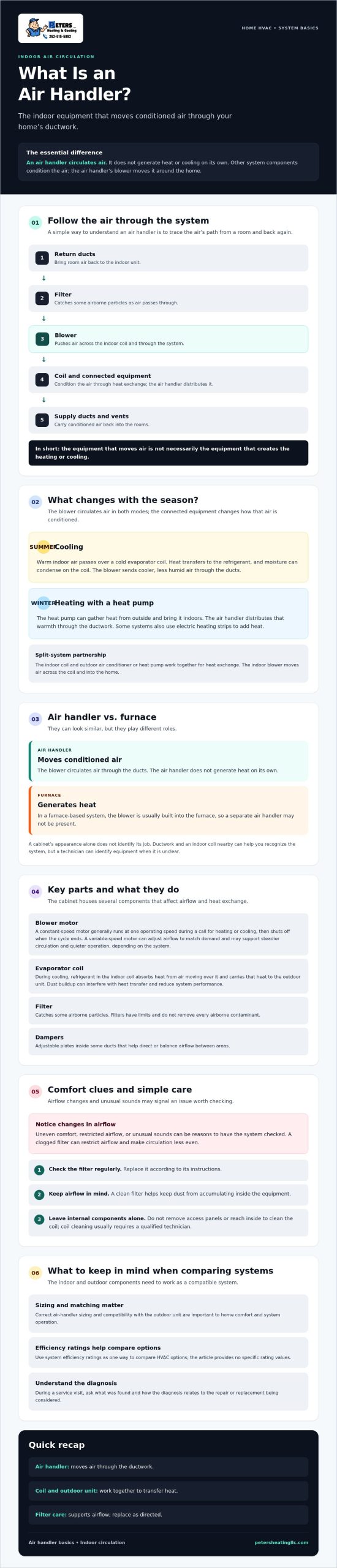
In summer, the blower moves warm indoor air across a cold evaporator coil. Heat transfers from the air to the refrigerant, and moisture can condense on the coil. The system then circulates cooler, less humid air through the vents. In winter, a heat pump supplies warmth that the air handler distributes. Some systems also use electric heating strips to add heat.
Household air filtration often begins at the air handler. As air returns to the system, it passes through a filter that can catch some airborne particles. Check the filter regularly and replace it according to its instructions. A clogged filter can restrict airflow and make it harder for the system to circulate air evenly. The heating or cooling equipment conditions the air, and the blower moves it through the home. Without a working blower, conditioned air can’t circulate through the ducts.
The Internal Anatomy: How an Air Handler Works
To understand “what is a air handler” beyond its cabinet, follow the air through it. Return ducts bring room air into the unit. A filter catches some airborne particles, then a blower pushes the air across a coil and into supply ducts. The coil changes the air’s temperature, and the blower carries that conditioned air to your rooms. Fans, filters, coils, and dampers all play roles in an heating, ventilating and air conditioning system (HVAC).
The Blower Motor: Constant vs. Variable Speed
A constant-speed motor generally runs at one operating speed when the system calls for heating or cooling, then shuts off when the cycle ends. Variable-speed motors can adjust airflow to match demand. Depending on the system, that can support steadier circulation and quieter operation. Longer, lower-speed cooling cycles may also help with moisture removal, but results depend on the equipment and home. If you live in Kenosha, ask whether a variable-speed option fits your system and comfort needs rather than assuming it’s automatically the right upgrade.
Evaporator Coils and the Outdoor Unit
During cooling, refrigerant circulating through the indoor evaporator coil absorbs heat from the air passing over it. The refrigerant carries that heat to the outdoor unit, where it’s released outside. The blower then moves the cooled air through the ducts. In a heat pump system, the cycle can reverse to bring heat indoors during colder weather.
Because the indoor coil and outdoor equipment work together, they need to be compatible. Dust buildup on the coil can interfere with heat transfer and reduce system performance. Coil cleaning usually requires access to internal components, so leave it to a qualified technician rather than reaching inside the cabinet.
Filters, Dampers, and Airflow Control
The filter is a practical part of your home’s indoor air quality solutions. Check it regularly and replace it as directed. A clogged filter can restrict airflow, while a clean filter helps keep dust from accumulating inside the equipment. Filters have limits, though. They don’t remove every airborne contaminant.
Dampers are adjustable plates inside some ducts that help direct or balance airflow between areas. Mixing boxes, where present, can combine air streams before distribution. If one room stays stuffy while another gets plenty of airflow, blocked vents, duct conditions, or damper settings may be part of the problem. A professional inspection can help identify the cause before you consider equipment changes. Peters Heating & Cooling provides residential HVAC repair and installation in Kenosha and Racine. Learn about HVAC service.
Air Handler vs. Furnace: What Is the Difference?
The difference comes down to what each part does. A furnace generates heat, while an air handler primarily moves air through your home. Many furnaces burn natural gas or oil and use a heat exchanger to warm the air. Electric furnaces use heating elements instead. An air handler’s blower runs on electricity, but the heat it circulates may come from a heat pump or electric heating strips.
That distinction helps answer “what is a air handler” in practical terms: it’s usually the indoor unit paired with an outdoor heat pump or air conditioner. The outdoor equipment and indoor coil handle heat exchange, while the air handler’s blower moves air through the ducts. In a conventional furnace and air conditioner setup, the furnace often contains the blower that circulates cooled air in summer. Homeowners may call that blower an air handler, but it isn’t necessarily a separate unit.
Can You Have Both a Furnace and an Air Handler?
Some homes use a dual-fuel system, pairing a heat pump with a gas furnace. The heat pump provides heating in suitable conditions and cooling in summer; the furnace can provide heat when the system switches to it. The furnace’s blower circulates air through the same ductwork, so the home may not have a separate air handler cabinet. The right arrangement depends on the equipment already installed and the home’s heating needs, not simply whether it’s in Racine or Kenosha.
Choosing Between the Two for a New Installation
Start with your home’s existing setup. Natural gas availability, electrical service, duct condition, and how you want the system to heat and cool all matter. A heat pump paired with an air handler can provide both heating and cooling, but performance depends on proper equipment selection and installation. SEER2 measures cooling efficiency; a rating alone doesn’t show whether a system is the right fit for your home.
Before considering a change, have the ductwork and existing equipment assessed. Poor airflow or uneven temperatures may come from duct issues, system matching, or a repairable component, not necessarily the need for a new unit. A careful diagnosis can clarify your options and help you compare them without assuming replacement is the only answer.
Troubleshooting: Signs Your Air Handler Needs Service
Once you know “what is a air handler,” changes in airflow, sound, or system performance are easier to notice. These signs don’t automatically mean the unit needs replacement. Start with simple, safe checks, then arrange a professional diagnosis if the problem persists. Using expert HVAC diagnostics can help connect the symptoms you notice to verified findings before a repair is recommended.
- Weak airflow: Check whether the filter is dirty and make sure supply and return vents aren’t blocked. If airflow stays weak, the cause could involve the blower, ductwork, or another system component.
- Unusual noises: Squealing may point to a motor or moving-part issue; rattling or thumping can come from a loose component. Note when the noise happens, and don’t open the equipment cabinet.
- Ice on the coil: A frozen coil can result from restricted airflow, such as a clogged filter, or a refrigerant problem. Turn off cooling and arrange service. Don’t chip away the ice.
- Higher energy use: A system that struggles to move air or reach the thermostat setting may run longer than usual. Compare your usage with your own past bills, while remembering that weather and other household changes can also affect energy use.
Keep the Filter Clear
A clogged filter restricts the air moving through the system, making the blower work harder and potentially contributing to overheating or damage. Check the filter regularly and follow its replacement instructions. Homes with pets may need more frequent checks because fur and dander can collect on the filter faster. There isn’t one schedule that fits every home, so use the filter’s condition and manufacturer’s guidance to decide when to replace it.
Dry winter air can also affect comfort. An HVAC ductwork humidifier adds moisture to circulating air. It’s a separate comfort consideration, not a fix for weak airflow or a noisy blower.
Know When to Call a Professional
Take electrical or burning odors seriously. Turn the system off if you can do so safely, and arrange professional service rather than continuing to run it. Water around the unit can indicate a condensate drainage problem during cooling. Don’t ignore pooling or try to reach into the equipment to clear internal components.
Make a note of what you observed, such as which rooms have weak airflow, when a noise starts, or whether ice or water appears. That information can help a technician trace the underlying cause instead of treating only a symptom. Peters Heating & Cooling provides residential HVAC repair in Kenosha and Racine, with licensed technicians. Request air handler service if the issue continues or you notice a safety concern.
Selecting and Servicing Your Air Handler in the Kenosha Area
A well-matched air handler supports steady airflow, but a bigger unit isn’t automatically better. If it’s too large or too small for the home and outdoor equipment, you may have uneven comfort or inefficient operation. In Kenosha, Racine, Oak Creek, and Winthrop Harbor, system selection needs to account for heating-season demands as well as humid summer weather near Lake Michigan. The right setup depends on the home, ductwork, and equipment working together.
If you searched “what is a air handler,” the next useful question is whether yours is sized and matched properly. A qualified HVAC professional can assess the existing system and explain the findings before recommending a repair or replacement.
Professional Installation and Sizing
Ask how the contractor will determine the system size and check that the air handler works with the outdoor unit. A load calculation can help estimate a home’s heating and cooling needs, while an airflow review checks whether the ducts can handle the system’s required air volume, measured in cubic feet per minute (CFM). Don’t assume a new motor or larger unit will solve uneven temperatures without checking these factors first.
Efficiency labels offer another comparison point. SEER2 indicates seasonal cooling efficiency, while HSPF2 measures seasonal heating efficiency for heat pumps. Higher ratings can indicate greater efficiency under standardized testing, but they don’t guarantee lower bills in every home. For new residential air conditioning systems in the Northern States, 13.4 SEER2 is identified as the minimum. Compare ratings alongside system compatibility, sizing, and your home’s needs.
Seasonal Maintenance and Local Comfort
Regular maintenance can help uncover airflow restrictions, dirty components, or developing equipment problems. The precise checks depend on the system, so ask what a maintenance visit includes rather than assuming every tune-up covers the same work. You can also check your air filter as directed and keep supply and return vents clear. If rooms remain uneven or the system struggles during humid summer weather, note when it happens and share that information with the technician.
Peters Heating & Cooling provides HVAC preventative maintenance and residential heating and cooling service in Kenosha, Racine, Oak Creek, and Winthrop Harbor. Its licensed technicians can assess the system and explain repair or replacement options based on the diagnosis. Ask what was checked and why a particular option is recommended. Schedule HVAC service with Peters.
Make Your Next HVAC Decision With Confidence
An air handler circulates conditioned air, while a furnace or heat pump provides the heat. Understanding that difference can help you identify your system, notice changes in airflow, and ask informed questions before approving repairs or considering replacement. Proper sizing, clear filters, and compatible equipment all contribute to reliable comfort.
If you’re still wondering “what is a air handler,” or your system isn’t keeping rooms comfortable, a clear diagnosis is a sensible next step. Peters Heating & Cooling provides residential and light commercial heating and cooling service, with licensed and insured technicians and transparent pricing. Ask what they find and why a repair or installation option makes sense for your home.
Contact Peters Heating & Cooling about air handler service or installation in Kenosha, Racine, Oak Creek, or Winthrop Harbor.
Frequently Asked Questions
Do I need an air handler if I have a furnace?
Usually, you don’t need a separate air handler because many furnaces contain a blower that circulates air through the ducts. If you’re asking “what is a air handler,” it’s the indoor equipment that moves conditioned air, not necessarily a separate cabinet in every system. In a furnace and air conditioner setup, the furnace blower may also circulate cooled air. A technician can identify your system by checking the equipment and how it connects to the indoor coil and ductwork.
How long does a typical residential air handler last?
A residential air handler typically lasts about 12 to 15 years, though its actual service life depends on factors such as maintenance, usage, and operating conditions. Keep filters clear and pay attention to changes in airflow, noise, or comfort. Age alone doesn’t mean the unit needs replacement. If problems arise, a professional diagnosis can help determine whether a repair is practical or the equipment is nearing the end of its useful life.
What is the average cost to replace an air handler blower motor?
There isn’t one reliable price that applies to every blower motor replacement, and the motor’s price alone doesn’t reflect the full repair. The total depends on the air handler model, motor type, parts availability, and the work required to diagnose and complete the repair. Ask for an itemized estimate that explains the problem and proposed fix. A technician should confirm whether the motor has failed before recommending replacement.
Can an air handler work with any brand of outdoor AC unit?
No, you shouldn’t assume that an air handler will work properly with any outdoor air conditioner. The indoor and outdoor equipment need to be compatible in capacity and system design, and the controls and components must work together. A mismatched pair can affect comfort and performance. Before replacing either unit, have a technician check both model numbers and confirm which combinations are approved for use together.
Why is my air handler leaking water onto the floor?
A common cause is a clogged or obstructed condensate drain, which can prevent water collected during cooling from draining away. A frozen indoor coil can also leak as it thaws. Turn off cooling if you see water pooling, and don’t open the equipment cabinet or try to reach internal parts. If water is near electrical components, avoid touching the unit and arrange professional service to identify the source.
Is an air handler the same thing as a fan coil?
Not exactly, although both contain a fan and coil and move air across the coil to provide heating or cooling. “Air handler” usually refers to indoor equipment that circulates air through a ducted HVAC system. “Fan coil” can describe a different type of indoor unit, often serving a specific area. The terms may be used loosely, so check the equipment label and system design to identify what’s installed in your home.
How often should I have my air handler professionally inspected?
Arrange professional HVAC maintenance at least once a year, and follow the equipment manufacturer’s maintenance guidance. Regular checks can help identify dirty components, restricted airflow, or developing issues before they affect comfort. In Kenosha, Racine, Oak Creek, and Winthrop Harbor, Peters Heating & Cooling offers HVAC preventative maintenance. Its licensed, insured, and continuously trained technicians can inspect your system and explain any findings before recommending work.