
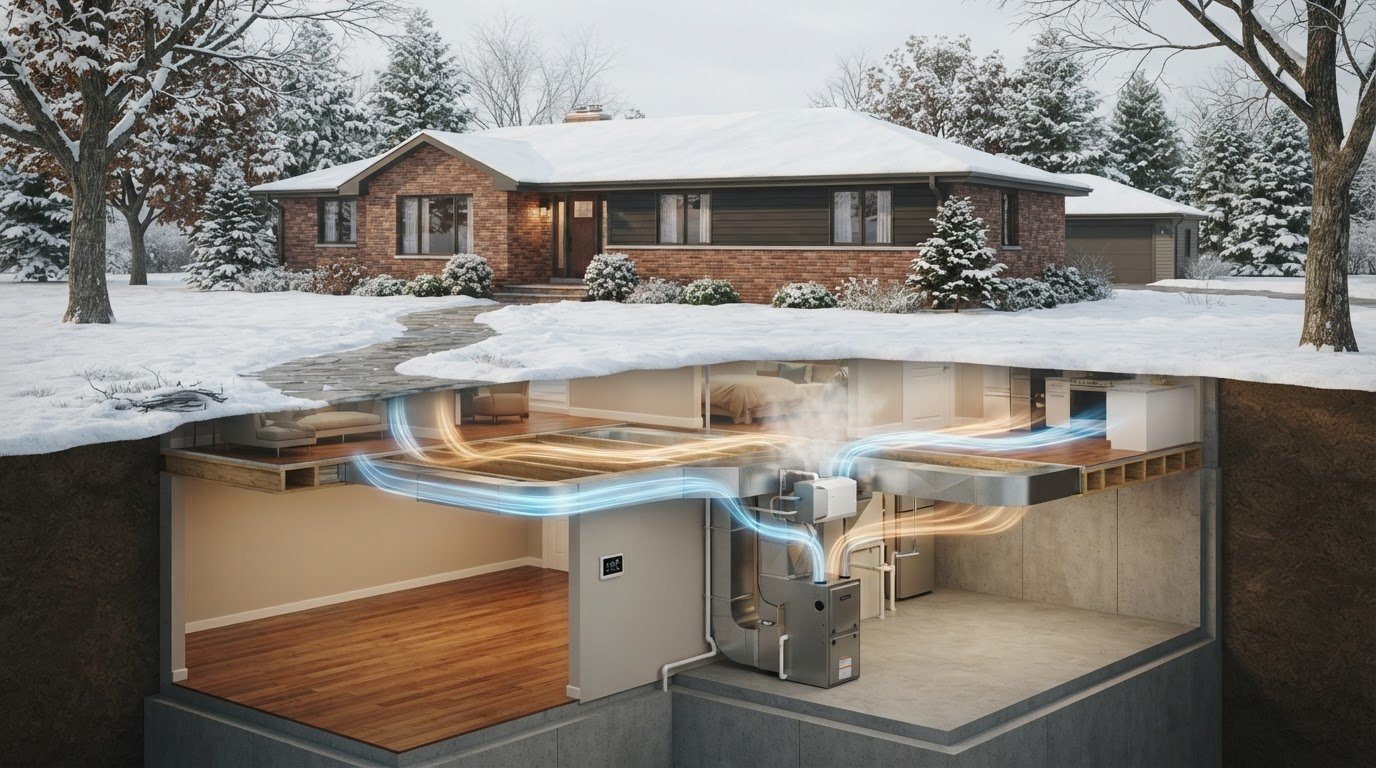
Standalone misting units will never solve whole-house winter dryness. True comfort relies on airflow dynamics inside your forced-air system, which is where an HVAC ductwork humidifier comes in. If you’re waking up with a dry throat, irritated sinuses, and cracked skin, you already know how harsh winter heating can be. Constantly hauling water jugs to refill tabletop humidifiers is messy, exhausting, and rarely solves the problem. Yet, it’s completely normal to feel cautious about cutting into sheet metal, especially when moisture leaks or mold are on your mind.
You can protect your home’s air and your ductwork at the same time. This guide shows you how an HVAC ductwork humidifier integrates with your furnace to maintain a balanced 35% to 45% relative humidity automatically. We’ll explore the mechanical differences between bypass, fan-powered, and steam models, explain proper placement on your supply or return ducts, and review the straightforward craftsmanship that keeps your system clean and leak-free all season long.
Key Takeaways
- Discover how an HVAC ductwork humidifier distributes comfortable, balanced moisture through your existing heating vents rather than isolating mist to a single room.
- Compare the mechanical differences, operational limits, and space requirements of bypass, fan-powered, and steam humidification units.
- Learn why mounting on the supply versus the return plenum directly impacts evaporation efficiency and home airflow balance.
- Follow straightforward sizing calculations and humidistat setup rules to keep indoor relative humidity steadily between 35% and 45% all winter.
- Understand the precise sheet metal cutting, water line connections, and drain grading required to ensure leak-free, long-term system performance.
What Is an HVAC Ductwork Humidifier and How Does It Work?
An HVAC ductwork humidifier is a whole-home system mounted directly onto your furnace supply or return sheet metal plenums. While portable mist units only humidify the immediate space around an electrical outlet, a duct-mounted unit introduces water vapor directly into conditioned airflow. Your central thermostat or digital humidistat monitors indoor levels and calls for humidity automatically. The system treats every square foot through your existing supply registers, permanently eliminating messy daily refills. For homeowners seeking balanced living spaces, it integrates seamlessly alongside existing indoor air quality solutions to establish steady, reliable air conditions across the winter heating season.
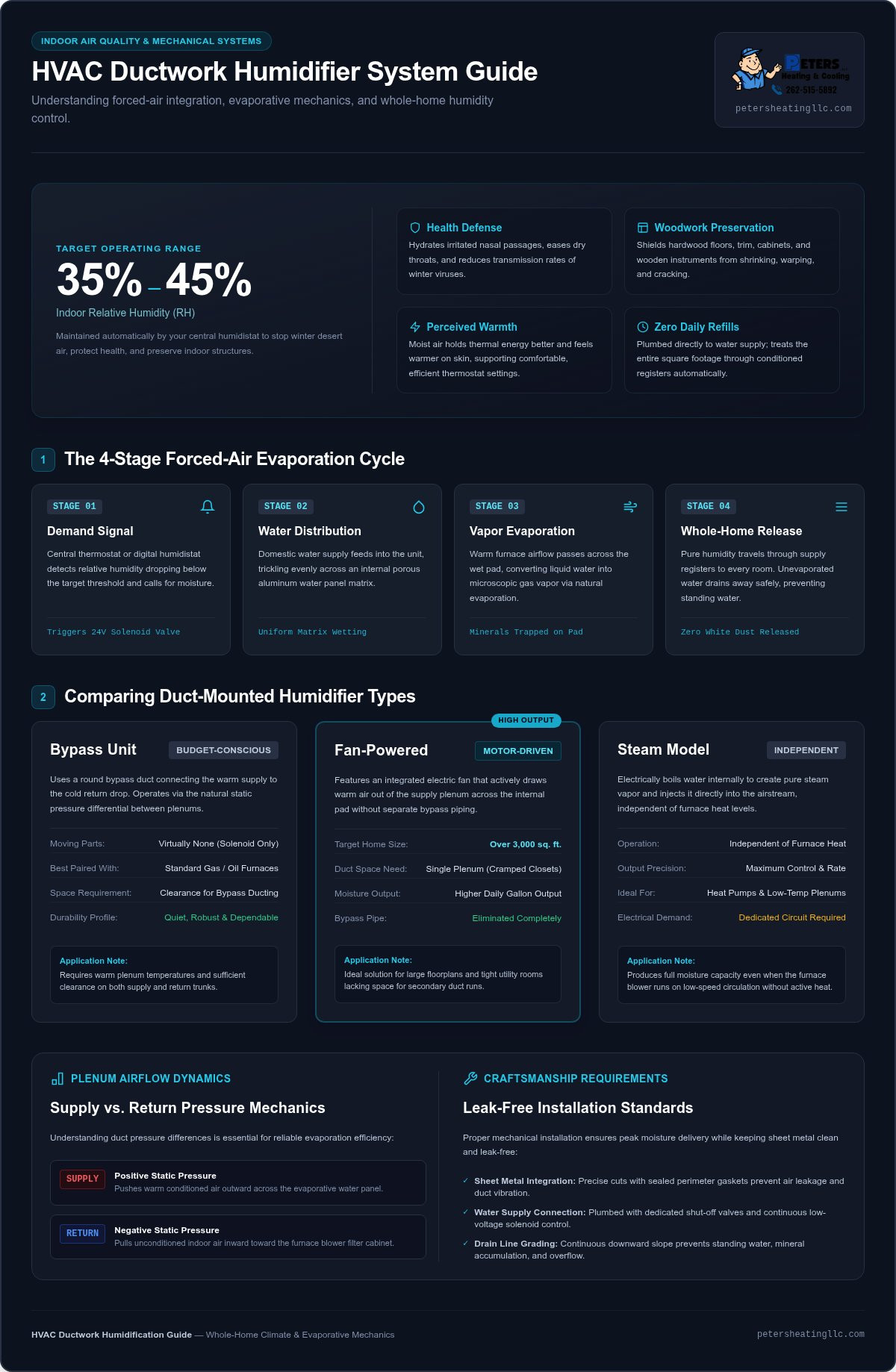
To understand the mechanics of what is an HVAC ductwork humidifier, consider the pressure dynamics inside your ductwork. The system relies on static pressure differences between the supply and return ducts. When your blower runs, the supply plenum sits under positive pressure, pushing air outward, while the return plenum sits under negative pressure, pulling air inward. Whole-house units use this natural pressure drop or an internal fan to draw warm air across an evaporative surface, picking up moisture and distributing it evenly before air reaches your living areas.
The Evaporation Process Inside Forced-Air Systems
When the humidistat signals a drop in moisture, it opens a low-voltage water solenoid valve connected to your domestic water supply. Water trickles across an internal evaporative pad, often called an aluminum water panel. Warm air circulating through the furnace passes over this porous matrix, turning liquid water into pure, microscopic vapor through natural evaporation. Because water evaporates as a gas, heavy minerals stay trapped directly on the pad rather than blowing into your rooms as fine white dust. Any unevaporated water flows safely out through an external drain line.
Key Home Comfort and Health Benefits
Balanced indoor moisture transforms winter living by addressing several seasonal frustrations at once:
- Targeted Relative Humidity: Keeps indoor levels reliably between 35% and 45%, stopping the dry desert air created by heated winter drafts.
- Health Defense: Hydrates irritated nasal passages, relieves scratchy throats, and decreases the airborne transmission rates of common winter viruses.
- Woodwork Preservation: Shields expensive hardwood floors, door frames, cabinetry, and wooden musical instruments from shrinking, warping, and cracking.
- Heating Efficiency: Moist air holds thermal energy better and feels warmer on skin, allowing you to turn down the thermostat without losing comfort.
Comparing Duct-Mounted Humidifier Types: Bypass, Fan-Powered, and Steam
Mechanical rooms come in all shapes and sizes, and no single system fits every basement or utility closet. Choosing the right HVAC ductwork humidifier comes down to three practical factors: available duct space, furnace heating cycles, and your home’s total square footage. Evaluating water consumption, electrical capacity, and equipment style before cutting into sheet metal prevents performance bottlenecks later. Striking a healthier level of humidity means choosing an evaporation style that matches how your heating equipment operates.
Bypass Humidifiers: Simple and Budget-Conscious
Bypass units connect your warm air supply plenum to the cold air return drop using a round section of rigid or flexible ducting. When the furnace blower kicks on, the natural pressure differential between ducts pushes air across the moist internal water panel. Because bypass models have virtually no moving parts besides a small water solenoid valve, they are quiet, durable, and mechanically dependable. They perform best on standard gas or oil furnaces that generate warm plenum temperatures, provided you have enough physical clearance on both duct trunks to fit the bypass pipe.
Fan-Powered Humidifiers: High Output for Larger Homes
Fan-powered humidifiers eliminate the need for bypass piping by using an internal electric fan. This motor actively draws warm air out of the supply plenum, pushes it through the internal evaporative pad, and returns moisture directly into the circulating air stream. These units deliver higher moisture output per day, making them ideal for homes over 3,000 square feet. They are also a lifesaver in cramped utility rooms where supply and return ducts sit too far apart or face obstruction from structural beams.
Steam Humidifiers: Maximum Precision and Heat Pump Compatibility
Steam systems operate differently than evaporative pads. They electrically boil water inside an internal canister to inject pure steam directly into the airflow. Because they don’t depend on scorching furnace heat to evaporate moisture, they pair exceptionally well with modern heat pump systems that run at lower supply air temperatures. Steam units conserve water by minimizing drainage waste, though they require a dedicated 120V or 240V electrical circuit and periodic canister replacements. If you are weighing configurations for your home, talking with the team at Peters Heating & Cooling can help clarify what fits your layout and equipment best.
Supply vs. Return Plenum: Where Does a Duct Humidifier Belong?
Mounting location dictates how well your HVAC ductwork humidifier performs. The supply plenum contains hot, dry air straight off the furnace heat exchanger, while the return duct collects cooler ambient air from your living spaces. Placing equipment on the wrong side can limit evaporation rates, disrupt airflow balance, or send water droplets into delicate electrical controls. Solid sheet metal craftsmanship ensures the cutout remains rigid and properly sealed, preventing annoying air whistling and maintaining design static pressure throughout your forced-air system.
Mounting on the Supply Plenum
Positioning your unit on the warm supply side yields the highest evaporation rate. Hot air absorbs moisture rapidly, allowing evaporative panels to run at their maximum rated capacity. Space constraints often dictate whether this works. Technicians must maintain safe clearances around the central air conditioning evaporator coil to prevent air turbulence. Proper physical separation also guarantees that saturated air cannot condense onto control boards or internal wiring cabinets.
Mounting on the Return Duct
Installing on the cold air return trunk offers a clean setup for fan-powered units. For bypass systems mounted here, the bypass pipe connects across to the warm supply plenum to draw thermal energy over the pad. One critical rule governs this location: moisture discharge must always sit downstream of your furnace air filter.
- Filter Protection: Water mist upstream of a high-MERV filter will soak the pleated media.
- Airflow Hazards: Saturated filters collapse or choke off airflow, causing furnace high-limit switches to trip.
- Mold Prevention: Keeping wet air away from trapped dust on the filter prevents microbial growth inside the blower cabinet.
Airflow Balancing and Damper Management
Bypass duct installations create a permanent cross-connection between supply and return trunks, making seasonal management essential. Every bypass pipe includes an integrated butterfly damper. Homeowners must keep this damper open in winter to allow humidification, then close it entirely before starting summer cooling. Leaving it open during hot months robs chilled air from your cooling registers, forcing cold air straight back into the furnace and lowering air conditioner efficiency. Certified technicians always measure external static pressure across both plenums during installation to confirm the bypass cutout has not compromised overall duct velocity.
Sizing, Humidistat Calibration, and Seasonal Maintenance Guidelines
Dialing in your HVAC ductwork humidifier takes more than just bolting a metal box onto a duct. Proper performance requires matching the unit’s evaporation rate to your home’s structural shell, calibrating humidity targets against frigid weather, and following a consistent seasonal upkeep routine. Pairing these checks with your annual heating inspection or a high-efficiency furnace installation in Racine ensures your forced-air equipment delivers steady, comfortable warmth without pushing moisture into places it doesn’t belong.
Step 1: Calculate Gallons Per Day (GPD) Requirements
Sizing is determined by square footage and building tightness. A drafty, older house with loose window seals loses moisture rapidly through air infiltration, frequently demanding 12 to 17 gallons per day (GPD) of humidification capacity. By contrast, a modern home built with continuous vapor barriers and spray-foam insulation typically requires only 6 to 10 GPD. Undersizing a unit leaves indoor air persistently dry, while an oversized unit that runs without proper controls risks creating excessive moisture inside ductwork runs.
Step 2: Dialing in Digital vs. Manual Humidistats
Midwest winters bring dramatic temperature swings, and outdoor conditions dictate how much moisture your indoor air can safely hold. When outdoor air drops near zero degrees Fahrenheit, window glass turns freezing cold. If indoor humidity stays too high, water pools on sills and wall corners. Adjust your settings using these field-tested guidelines:
- Mild Winter (Above 20°F): Maintain 35% to 40% relative humidity for maximum skin and sinus comfort.
- Cold Snaps (0°F to 20°F): Lower the target to roughly 30% to stop window sweating.
- Sub-Zero Arctic Blasts (Below 0°F): Dial back to 20% to 25% until temperatures recover.
Digital humidistats with outdoor temperature sensors automate this entire balancing act, raising or lowering indoor humidity targets in real time as weather shifts.
Step 3: End-of-Season Shutdown and Annual Water Panel Replacement
Evaporative pads collect mineral buildup over months of steady evaporation. Before autumn heating begins, pull the housing cover and discard the crusty aluminum water panel, installing a fresh replacement so air passes through without restriction. Inspect the clear plastic drain line for algae growth, mineral scaling, or kinks that could cause water backing up. When spring arrives, close the manual bypass damper tightly and shut off the small brass water shutoff valve. If you’d like a technician to inspect your humidification system and verify static pressure readings, schedule an HVAC preventative maintenance visit with our team today.
Professional Duct Integration: Why Proper Mechanical Installation Matters
Mounting equipment directly into sheet metal involves far more than basic hand tools. Integrating an HVAC ductwork humidifier requires precise duct cutting, secure water lines, code-compliant low-voltage wiring, and continuous static pressure checks. Rough or misaligned DIY cuts can weaken plenum walls, causing air leaks that decrease furnace output and drive up monthly heating bills. Homeowners relying on dependable heating during freezing conditions benefit from proper craftsmanship that safeguards furnace performance alongside proven HVAC repair in Kenosha WI.
Plumbing, Wiring, and Static Pressure Integrity
Clean mechanical integration relies on careful attention to four structural connection points:
- Water Supply Lines: Tapping into existing domestic copper or PEX tubing requires dedicated brass shutoff valves rather than piercing saddle valves that degrade over time.
- Drain Line Pitch: Condensate lines need a continuous downward pitch toward a floor drain or condensate pump to eliminate standing water hazards.
- Interlock Wiring: Technicians wire the humidistat directly to the furnace control board so the water solenoid opens only when the main blower actively moves air, preventing moisture from pooling inside dormant ductwork.
- Mastic Duct Sealing: Applying professional mastic paste and foil tape around new sheet metal collars seals cutouts against conditioned air loss.
Local Climate Demands Across Southeast Wisconsin and Northern Illinois
Bitter winter winds coming off Lake Michigan strip moisture from ambient air rapidly. Communities across Kenosha, Racine, Oak Creek, and Winthrop Harbor face months of single-digit temperatures that drive interior humidity down below desert levels. This dry air pulls moisture from hardwood trim, antique cabinets, and tongue-and-groove flooring in regional vintage homes. Proper duct humidification provides a continuous thermal buffer, preserving original woodwork while relieving strain on the furnace heat exchanger.
Straightforward Service from Peters Heating & Cooling
Serving homeowners across Southeast Wisconsin and Northern Illinois since 2009, Peters Heating & Cooling approaches every project with honest, neighborly guidance. Our licensed, continuously trained technicians measure your furnace plenum, evaluate your home’s square footage, and check water hardness before suggesting equipment. We believe in clear, flat-rate pricing without high-pressure sales or unneeded hardware add-ons. Every system is tested for airflow balance, clean shutoff, and safe drainage. Ready to resolve dry winter air across your home? Contact Our Local Team to schedule your whole-home humidifier consultation.
Restore Steady Winter Comfort to Your Living Space
Living through a Midwest winter doesn’t mean enduring cracked skin, persistent static shocks, and dry sinuses. Integrating a reliable HVAC ductwork humidifier into your forced-air system delivers balanced, continuous moisture to every room without the clutter of portable tabletop tanks. By matching the right unit style to your floor plan and ensuring precise sheet metal integration, you protect both your family’s daily wellness and your home’s valuable interior woodwork.
Since 2009, Peters Heating & Cooling has served homeowners throughout Southeast Wisconsin and Northeast Illinois with honest recommendations and transparent, flat-rate pricing. Our licensed technicians take pride in clean mechanical craftsmanship, ensuring every plenum connection remains airtight and properly balanced. When you’re ready to put an end to harsh winter air, Schedule Honest Whole-Home Humidifier Service with Peters Heating & Cooling. We’ll help you enjoy warm, comfortable, and properly balanced indoor air all season long.
Frequently Asked Questions
Can an HVAC ductwork humidifier cause mold to grow inside my air ducts?
No, an HVAC ductwork humidifier will not cause mold growth when properly sized, installed, and calibrated. Mold requires standing liquid water and organic dust to develop. Whole-home units introduce pure water vapor directly into warm airflow rather than liquid spray. As long as your technician wires the system to cycle only while the furnace blower moves air, ducts stay completely dry.
What is the main difference between a bypass and a fan-powered duct humidifier?
A bypass humidifier relies on your furnace blower and a connecting pipe between supply and return ducts to move air across the water pad. A fan-powered unit features its own internal electric fan to actively pull air through the pad. Fan-powered models fit tighter mechanical spaces without extra ducting and produce higher daily output for larger homes.
How often do I need to replace the water panel or pad in my duct humidifier?
You should replace the evaporative water panel once per heating season under normal conditions. In areas like Racine and Kenosha where municipal or well water has heavy mineral content, checking the pad mid-winter is smart practice. If scale buildup hardens the aluminum mesh before spring, swapping in a fresh panel restores proper airflow immediately.
Can a whole-house duct humidifier work if I have a heat pump instead of a furnace?
Yes, but equipment choice matters. Heat pumps supply air at lower discharge temperatures than traditional gas furnaces, which slows natural evaporative absorption. While fan-powered units can function on heat pump systems, electric steam humidifiers are the most reliable option because they boil water independently and do not rely on high plenum heat.
Why do my windows sweat or show condensation when my duct humidifier is running?
Window condensation occurs when your indoor relative humidity setting is too high for freezing outdoor weather. Cold glass chills adjacent indoor air down to its dew point, causing vapor to liquefy on the glass. When outdoor temperatures drop toward zero degrees, manually dial back your humidistat or use an outdoor temperature sensor to lower indoor targets automatically.
Does an HVAC ductwork humidifier waste a lot of household water?
Standard flow-through evaporative humidifiers use only what is required to keep the internal pad saturated while air circulates. Excess water simply rinses away mineral deposits through the drain tube. If conserving water is your primary mechanical goal, a steam unit generates pure vapor on demand and drains only during periodic flush cycles, minimizing run-off.
Can I install a whole-house duct humidifier myself, or do I need an HVAC professional?
Professional installation is strongly advised. Integrating an HVAC ductwork humidifier requires cutting structural sheet metal, tapping into domestic water piping, ensuring pitch on drain tubing, and wiring low-voltage safety controls into your furnace control board. Licensed technicians ensure the cutout does not compromise static pressure or void existing equipment warranties.