Table of Contents
- HVAC Repair Service Near Me: What Actually Happens When You Call
- Common HVAC Problems Homeowners Face
- Emergency HVAC Repair: What Counts and How to Get Help Fast
- HVAC Repair Cost: What Drives the Bill
- Repair or Replace? A Decision Framework
- How to Choose an HVAC Contractor
- Maintenance That Prevents the Next HVAC Repair
- Conclusion
- Frequently Asked Questions
Last Updated: October 20, 2026
HVAC Repair Service Near Me: What Actually Happens When You Call
Searching for an hvac repair service near me usually happens at the worst possible moment: the furnace quits on a January night or the AC dies during a July heat wave.
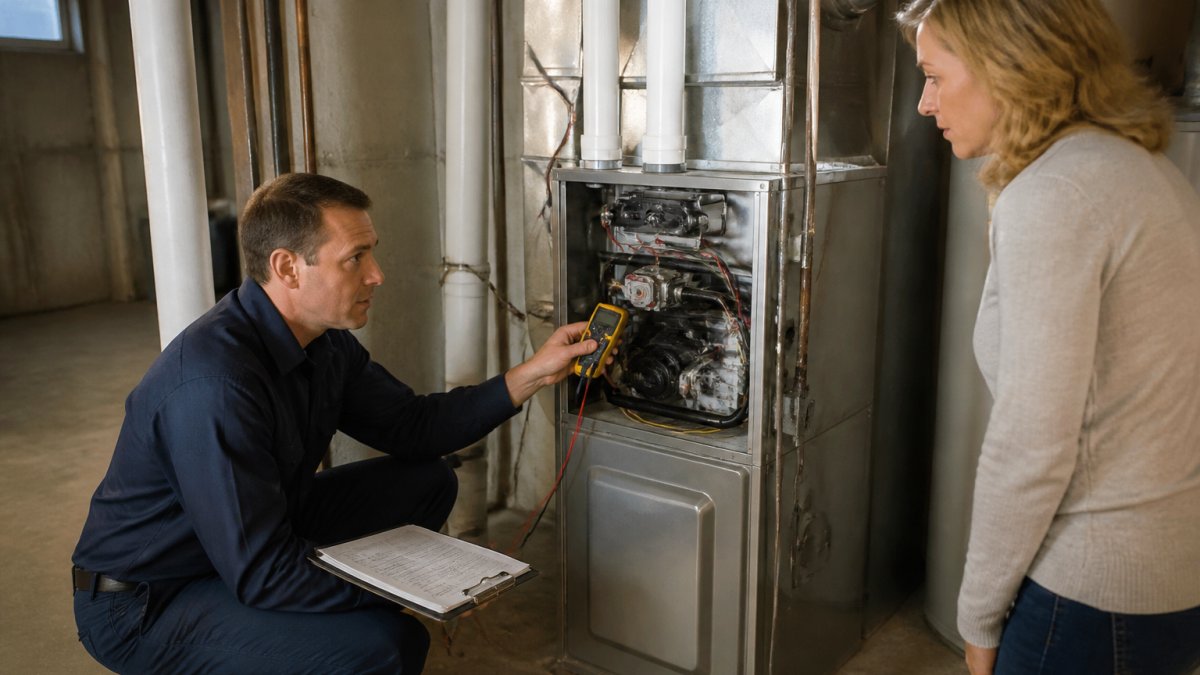
At Peters Heating & Cooling, we run these calls across Southeast Wisconsin and Northeast Illinois, and the homeowners who get the fastest, fairest outcomes know what the visit involves before the truck pulls in.
Below, we walk through the full service call, the problems we see most, what drives the bill, and how to decide between repair and replacement.
What Happens During a Service Visit
A standard service call follows five stages. Knowing them keeps you in control of the process and the price.
- Intake call: You describe the symptoms. A good dispatcher asks follow-up questions to gauge urgency and route the right technician.
- Diagnostic: The technician tests the system, checks refrigerant or combustion, and traces the fault to a component.
- Written quote: You get a price for the repair before any work begins. Ask for it in writing.
- Repair: Many fixes happen on the spot. Parts availability determines the rest.
If a company cannot explain these steps when you call, that is your first red flag.
Common HVAC Problems Homeowners Face
Most service calls trace back to a handful of repeat offenders. The U.S. Department of Energy guide to home heating and cooling notes that regular maintenance is the single most effective way to avoid premature system failure.
The usual suspects:
- Dirty filters choking airflow and straining the blower
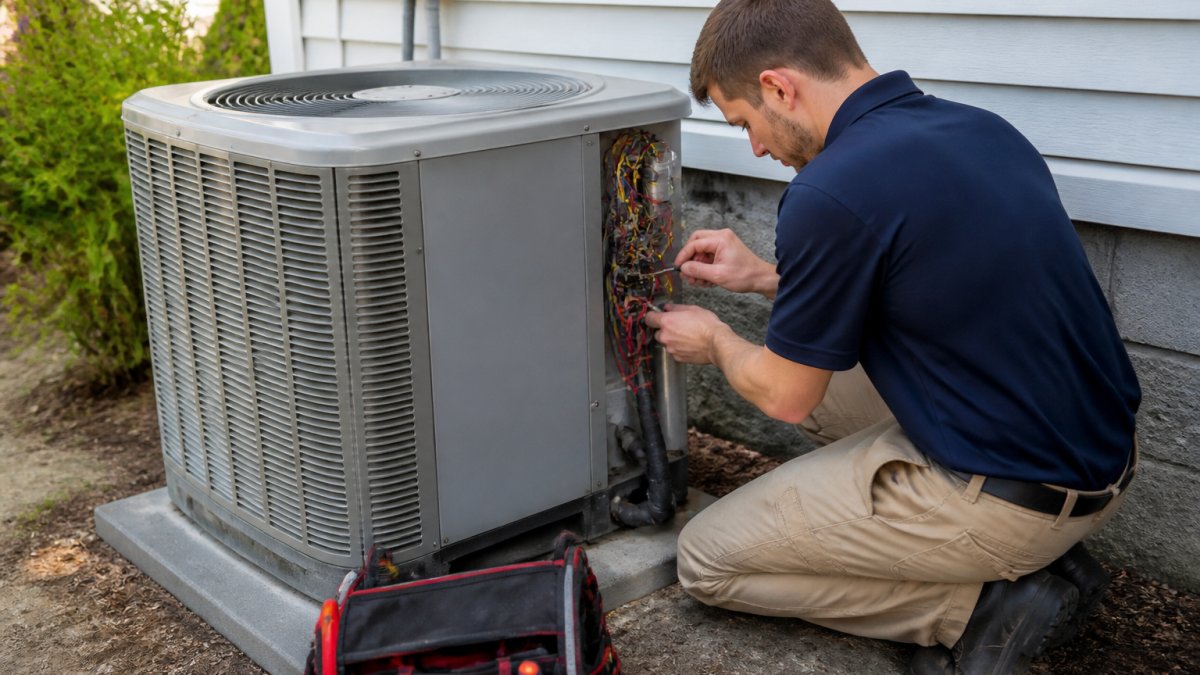
- Failed capacitors or contactors stopping the outdoor unit
- Low refrigerant from a slow leak
- Ignition or flame sensor faults on gas furnaces
Some of these you can check yourself. Others need a meter and a license.
Safe Troubleshooting You Can Do First
Before you call anyone, run this checklist. It is safe, takes minutes, and sometimes saves the service fee.
- Confirm the thermostat is set to heat or cool and the batteries are fresh
- Replace the air filter if it looks gray or clogged
- Check the circuit breaker for the indoor and outdoor units
- Verify the furnace switch and the outdoor disconnect are on
If the system still will not run after these steps, stop. Do not open panels, bypass safety switches, or add refrigerant yourself.
Never bypass a safety switch or jumper a pressure control to force the system on. You risk carbon monoxide exposure, electrical shock, or a compressor failure that turns a small repair into a full replacement.
When to Stop Troubleshooting and Call a Technician
Some symptoms are not DIY territory. Call a professional immediately for any of the following:
- A gas smell near the furnace or water heater
- Yellow or flickering burner flames instead of steady blue
- Burning smells or scorched wiring
- Repeated breaker trips when the system starts
These point to combustion, electrical, or refrigerant problems that require licensed hands. Guessing is how small issues become dangerous ones.
Emergency HVAC Repair: What Counts and How to Get Help Fast
True emergencies cannot wait until morning: no heat in freezing temperatures, no cooling during a heat advisory, gas leaks, carbon monoxide alarms, or water pouring from the system.
When you need emergency HVAC repair, call a local company that advertises after-hours availability.
Availability varies by company and season; when demand spikes during extreme weather, wait times stretch. Companies that publish clear response expectations and 24/7 availability are worth keeping in your contacts before you need them.
Save a local HVAC company’s number in your phone before winter and summer arrive. The worst time to research contractors is at 11 p.m. with no heat and a house full of family.
HVAC Repair Cost: What Drives the Bill
Most guides wave at “hourly rates” and stop. Here is the transparent breakdown: what you actually pay for, and how the bill is assembled.
The four line items on every repair bill
- Diagnostic or service-call fee: A flat charge to send a technician and find the fault. Many companies credit all or part of it toward the repair if you approve the work. Ask whether the fee is waived, credited, or kept regardless.
- Labor: Billed either as a flat rate per job or as an hourly rate with a minimum (often a one-hour minimum). Flat-rate pricing is increasingly common because it quotes the whole job up front instead of running a clock.
- Parts: Marked up from wholesale. Ask whether the part is OEM or aftermarket and whether it carries a manufacturer warranty separate from the company’s labor warranty.
- Surcharges: After-hours, weekend, and holiday premiums. These are usually a flat add-on or a multiplier on labor, and they should be disclosed before dispatch, not on the invoice.
Typical cost ranges by problem
These are common U.S. residential ranges, not quotes. Your number depends on system size, part availability, and local labor.
| Repair | Typical parts + labor range | What drives the spread |
|---|---|---|
| Capacitor or contactor replacement | $150-$400 | Part is cheap; labor and diagnostic dominate |
| Blower motor replacement | $450-$900 | Motor type (PSC vs. ECM) and access |
| Ignition or flame sensor service | $150-$350 | Sensor is inexpensive; board faults cost more |
| Condensate drain clearing | $100-$250 | Access and whether a safety switch tripped |
| Refrigerant leak search and recharge | $300-$1,200+ | Leak location, refrigerant type, and whether the leak is sealed |
| Compressor replacement | $1,200-$2,500+ | Compressor cost, refrigerant, and warranty status |
| Heat exchanger replacement | $1,500-$3,500+ | Whether the furnace can be repaired safely or must be isolated |
Diagnostic fees commonly run $75-$150, and after-hours premiums add $75-$200 or more. Treat every figure as a planning range and get the written quote before work starts.
The repair-versus-replace math
A widely used rule of thumb: if the repair costs more than half of what a new system would cost and the equipment is older than about 10-12 years, weigh replacement.
Ask for the quote broken into parts, labor, and any surcharge. A single lump-sum number hides the part markup and makes it hard to compare two contractors fairly.
Because pricing depends on your specific system and fault, we quote every repair in writing before work starts. You can review current service pricing on our website. Ask any contractor for the same transparency: a written quote before the wrench comes out is a reasonable expectation, not a special favor.
Repair or Replace? A Decision Framework
Use this framework when a repair quote arrives. It removes the emotion from a stressful decision.
| Situation | Recommendation | Why |
|---|---|---|
| System under 10 years, single failed part | Repair | Remaining life justifies the fix |
| Repair cost above half of replacement | Weigh replacement | Money may be better spent on new equipment |
| System over 15 years, second major failure | Lean replace | Reliability drops, efficiency lags |
| Refrigerant leak on older equipment | Compare carefully | Older refrigerants get harder to source |
| Safety issue (heat exchanger, gas) | Replace or isolate now | Safety outweighs cost |
The honest rule: repair when the equipment has real life left, replace when it does not. Any company that skips this analysis and jumps straight to a new-system pitch is giving you a sales script, not advice.
How to Choose an HVAC Contractor
Choosing an HVAC contractor comes down to verification, not salesmanship. Here is how to actually check each claim, what to ask on the phone, and how to compare two quotes without getting played.
The verification checklist
- License: Ask for the license number and verify it with your state or local licensing board. Licensing rules vary by jurisdiction; a legitimate company will give you the number without hesitation.
- Insurance: Request a certificate of insurance showing general liability and workers’ compensation. If a technician is injured on your property and the company is uninsured, the exposure can land on you.
- Written estimate: Insist on a written quote that separates parts, labor, and any diagnostic or after-hours fee. Verbal estimates are not comparable.
- Warranty terms: Ask two questions: How long is the labor warranty, and is the part covered by the manufacturer separately? Get both in writing.
- Reviews: Read the most recent local reviews, not the all-time star average. Look for patterns in complaints (late arrivals, surprise charges, repeat visits) rather than one bad review.
Questions to ask before you book
- Is the diagnostic fee credited toward the repair if I approve the work?
- Do you charge a flat rate or hourly, and is there a minimum?
- What is the after-hours or weekend surcharge?
- Will the technician show me the failed part and explain the diagnosis?
- Do you repair first, or does the visit include a replacement pitch?
- What is the labor warranty on this repair?
A company that answers these plainly on the phone is usually the same company that quotes plainly in person.
How to compare two quotes
Put both quotes side by side and compare the same four things: the diagnosed fault, the part (OEM vs. aftermarket), the labor warranty, and the total including any fee or surcharge.
At Peters Heating & Cooling, our technicians are licensed, insured, and continuously trained, and we are BBB Accredited with an A+ Rating. Customers like Jacob Richmond put it plainly: “Don & his son are absolutely top notch guys with honor & integrity.” That reputation is the whole point of vetting.
The best contractor is the one who shows you the failed part, quotes the repair in writing, and explains why repair beats replacement for your situation. Everything else is marketing.
Maintenance That Prevents the Next HVAC Repair
Preventive maintenance is cheaper than emergency service, every time. A spring AC tune-up and a fall furnace check catch worn parts before they fail in extreme weather.
A maintenance plan typically covers filter changes, coil cleaning, electrical checks, and refrigerant level verification.
Book maintenance in the shoulder seasons, before the rush, for faster scheduling and a system that is ready when the weather turns.
Conclusion
The next time your system fails, you will know what a service visit involves, which problems you can safely check, and when to call a professional.
That is where Peters Heating & Cooling comes in. We offer fast local response, clear pricing with no surprises, and honest recommendations that prioritize repair over replacement.
Schedule an appointment with Peters Heating & Cooling and get your home comfortable again, without the guesswork.
Frequently Asked Questions
How do I find a reliable HVAC repair service near me?
Start with licensed, insured contractors who carry local reviews and a verifiable accreditation, such as a Better Business Bureau rating. Ask whether technicians are continuously trained, whether pricing is quoted before work begins, and whether the company prioritizes repair over replacement. Read recent Google reviews for patterns, not single complaints. Confirm the contractor serves your specific area and handles your equipment type, including heat pumps near the lake where salt-laden air speeds corrosion. A short phone call asking about diagnostic fees and same-day availability tells you a lot about how the company operates.
What does HVAC repair cost, and what affects the bill?
HVAC repair cost depends on the problem, the part, the system type, and labor time. Common drivers include diagnostic fees, hourly rates, refrigerant, blower motors, compressors, control boards, and after-hours emergency HVAC repair premiums. A clogged drain line costs far less than a failed compressor. Ask for a written quote before approving work, confirm whether the diagnostic fee applies to the repair, and ask about financing if the fix is large. Peters Heating & Cooling publishes current pricing on its website so you know the numbers before the truck arrives.
When should I call a professional instead of troubleshooting myself?
Stop and call a technician if you smell gas, see scorch marks, hear grinding or banging from the outdoor unit, notice water pooling near the furnace, or if the system trips the breaker repeatedly. These point to electrical, refrigerant, or combustion issues that require licensed hands. Safe homeowner checks are limited to the thermostat batteries, air filter, breaker, and condensate drain. Anything involving refrigerant lines, gas valves, or the control board is a job for an HVAC technician, not a weekend project.
What should I ask before approving an HVAC repair?
Ask four things: what failed and why, whether the part is under warranty, what the total cost will be including labor and diagnostic fees, and whether repair makes sense versus replacement given the system’s age. Request the quote in writing. A trustworthy contractor explains the failure in plain language and does not pressure you toward a new system when a repair will do. Peters Heating & Cooling builds its reputation on honest recommendations and clear pricing with no surprises, which is exactly what you should expect from any contractor you hire.