
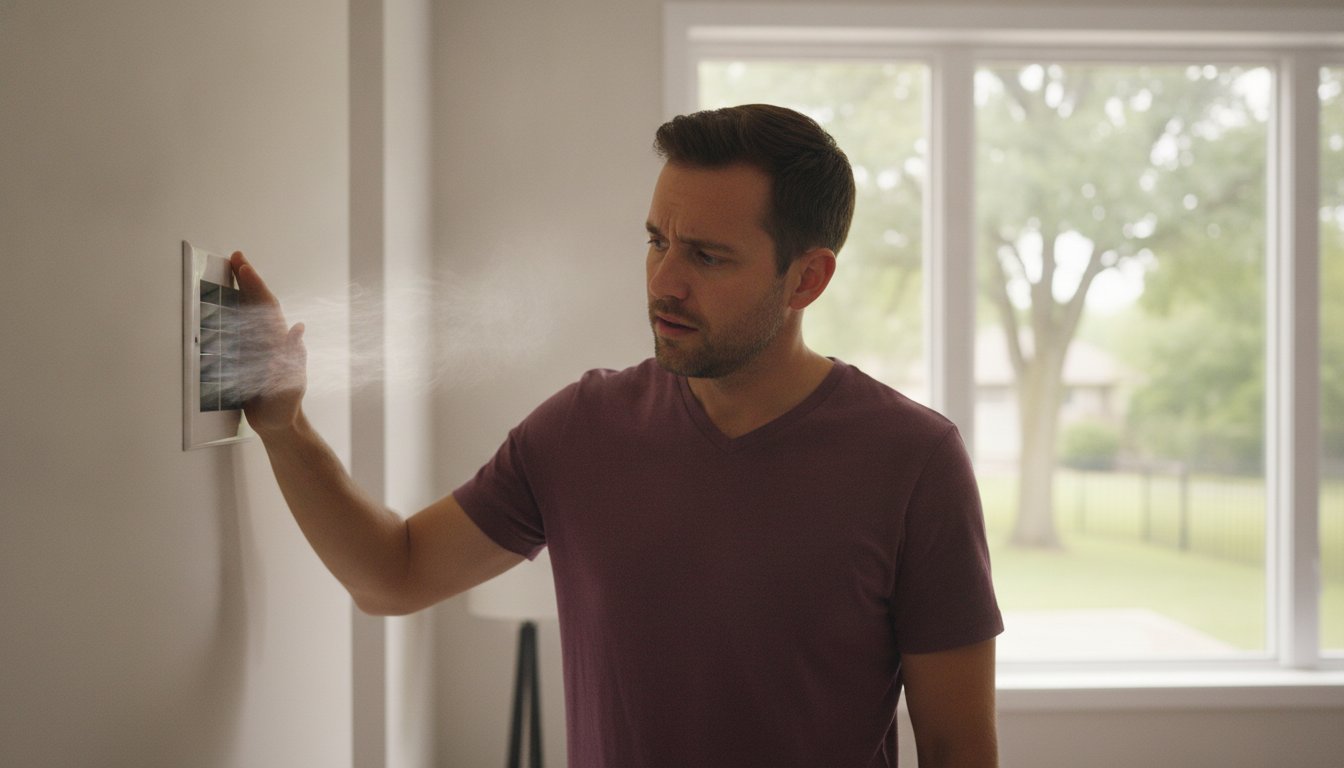
Imagine coming home on a humid afternoon in Southeast Wisconsin, expecting a cool sanctuary, only to find your air conditioner blowing warm air instead of the crisp relief you need. It’s a frustrating moment that immediately sparks worries about expensive system replacements or complex mechanical failures. Most homeowners feel a mix of confusion and stress when the temperature inside starts climbing, especially when the thermostat says one thing but the vents are doing another.
We believe in providing practical advice that puts your comfort and peace of mind first. This troubleshooting guide will help you clear the confusion by identifying the most common reasons for system failures. You’ll learn which simple fixes you can handle yourself, like checking basic thermostat settings or air filters, before you ever need to call for professional help. We’ll also explain the “how” and “why” behind more technical issues, such as the impact of the 2026 refrigerant standards on older units. By the end of this article, you’ll have a clear path to restoring cold air and the confidence to know when a local expert is truly required to get your home back to a comfortable temperature.
Key Takeaways
- Check your thermostat settings first; switching from “On” to “Auto” might be the simplest way to stop your air conditioner blowing warm air.
- Learn how common local debris like grass clippings can block your outdoor unit and how to safely clear it to restore proper heat transfer.
- Understand that refrigerant isn’t a fuel that runs out, so a low level always signals a leak that requires professional attention.
- Identify the clear boundary between safe homeowner maintenance and complex repairs that involve high-voltage electricity or pressurized systems.
- Discover how honest, local advice helps you avoid unnecessary costs by focusing on practical solutions instead of high-pressure sales tactics.
Start with the Basics: Immediate Checks for Warm Air
Kenosha summers can be unforgiving. Discovering your air conditioner blowing warm air when the humidity is high is a major stressor for any homeowner. We understand the panic that sets in as the indoor temperature starts to climb. Before assuming you need a total system replacement, it’s best to walk through a few basic checks. Many cooling problems stem from simple electrical or setting errors that don’t require technical expertise to spot. Gaining a basic understanding of How Air Conditioners Work can help you identify exactly where the cooling cycle has been interrupted.
The Thermostat Setting Trap
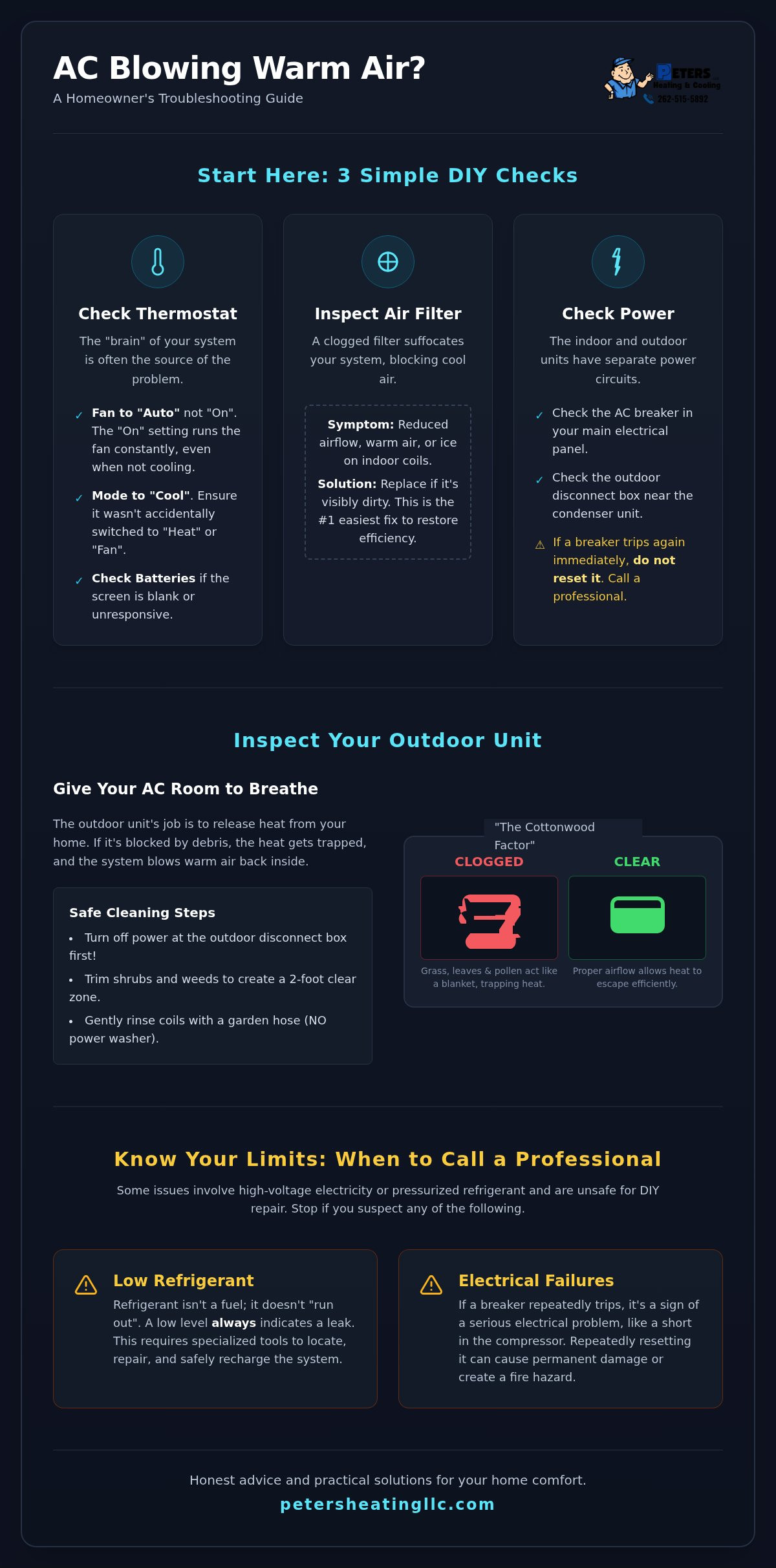
The thermostat is the brain of your HVAC system, and it’s often the first place things go wrong. It’s easy to bump a switch or forget to change batteries during a busy week. You should verify three specific things on your interface:
- The “On” vs. “Auto” Mistake: If your fan is set to “On,” it runs constantly. When the cooling cycle ends, the fan keeps pushing uncooled air through your vents. Switch it to “Auto” so the fan only blows when the AC is actively chilling the air.
- Mode Selection: Ensure the system is firmly set to “Cool.” It sounds simple, but in households with multiple people, settings are often adjusted accidentally.
- Power Check: If the screen is blank or flickering, fresh batteries might solve the problem immediately. A thermostat without power can’t tell the outdoor unit to start running.
Power Supply and Breaker Issues
Your air conditioner relies on two different electrical circuits. The indoor unit might have power while the outdoor condenser does not. This happens frequently during a Racine heatwave when the local electrical grid and your home’s panel are under heavy load. If the outdoor unit loses power, the indoor fan will still blow, but the air won’t be cold.
Visit your main electrical panel and look for the breaker labeled for the AC. If it’s moved to the middle position, flip it off completely before turning it back on. You should also check the outdoor disconnect box located near the condenser unit. If the breaker trips again immediately after you reset it, stop. Repeatedly resetting a tripped breaker can lead to a damaged compressor or electrical hazards. At that point, it’s a safety feature telling you there’s a deeper issue.
Don’t ignore the air filter during this initial check. A thick layer of dust restricts airflow, which is the lifeblood of your system. Without enough air moving over the internal coils, the system can’t remove heat from your home effectively. This often leads to the air conditioner blowing warm air or the indoor coils freezing over. Replacing a dirty filter is a quick fix that restores efficiency and protects your equipment from unnecessary strain.
Inspecting the Outdoor Condenser Unit
Your outdoor condenser unit has a difficult job. It acts as the exit point for all the heat pulled from your living spaces. If this unit can’t breathe, the heat has nowhere to go, which results in your air conditioner blowing warm air. In Southeast Wisconsin, we face a specific challenge known as the “Cottonwood Factor.” During late spring and early summer, cottonwood seeds and pollen can coat your condenser coils in a thick, felt-like layer. This debris acts as insulation, trapping heat inside the system and forcing it to work much harder than intended. Before you begin any inspection, ensure the power is off at the outdoor disconnect box to avoid contact with high-voltage electrical components.
Clearing Debris and Obstructions
Maintaining a clear zone around your unit is one of the most effective ways to prevent cooling failures. We recommend keeping at least a two-foot clearance on all sides of the condenser. This means trimming back shrubs, pulling tall weeds, and ensuring grass clippings aren’t blown directly into the unit during yard work. You can safely clean the exterior by using a garden hose with a gentle spray to rinse away dust and pollen. However, never use a power washer. The high pressure will flatten the delicate aluminum fins, permanently restricting airflow. If the buildup is deep inside the unit, it may be time for a professional air conditioning repair or a thorough cleaning to prevent a total system shutdown.
The Impact of Clogged Coils on Cooling
The physics of heat exchange is straightforward. Your system uses refrigerant to carry heat from your rooms to the outdoor coils. The fan then pulls outside air across these coils to whisk that heat away. When dirt or cottonwood seeds clog these fins, the unit essentially begins to suffocate. Because the heat cannot escape, the refrigerant remains warm as it cycles back into your home. This process doesn’t just result in uncomfortable indoor temperatures; it also puts immense strain on your compressor. A dirty coil can significantly increase your monthly energy bills because the motor must run longer and work harder to achieve even a slight drop in temperature. Keeping these coils clean is a simple step that protects your investment and ensures your home stays a reliable sanctuary from the summer heat.
Mechanical Failures and Refrigerant Issues
When basic troubleshooting and cleaning don’t solve the problem, the issue typically lies within the internal mechanical components. Your cooling system relies on a complex cycle of pressure and temperature changes. At the center of this process is the compressor, which acts as the heart of the entire unit. It pumps refrigerant through the system to move heat from inside your home to the outdoors. If this component fails or the chemical balance is off, you will quickly notice your air conditioner blowing warm air. Understanding these internal parts helps you identify when a repair is necessary to protect the longevity of your equipment.
A frequent point of confusion for homeowners is how refrigerant actually works. Many people believe it’s a fuel that the system consumes over time, much like gasoline in a car. In reality, an air conditioner is a closed-loop system. The refrigerant is a specialized chemical that should stay at the same level for the life of the unit. It simply changes states between liquid and gas to transfer heat. If your system is low on refrigerant, it’s not because it “used it up”; it’s because there is a physical leak in the copper lines or the coils.
Identifying Refrigerant Leaks
Detecting a leak early can save your compressor from a total failure. If you hear a distinct hissing or bubbling sound near the indoor or outdoor units, it’s a sign that pressurized gas is escaping. Another common symptom is the presence of ice on the refrigerant lines or the indoor evaporator coil. When refrigerant levels drop, the pressure in the system falls, causing the coil to become too cold and freeze the moisture in the air. This ice creates a barrier that prevents heat transfer, resulting in warm air at the vents. Because of environmental regulations and the 2026 shift toward low-GWP refrigerants, only licensed technicians should handle these chemicals to ensure safety and legal compliance.
Compressor and Capacitor Failures
Sometimes the problem is electrical rather than chemical. Most outdoor units use a start capacitor, which functions like a small battery to give the compressor the initial surge of power it needs to turn on. If this capacitor fails, the compressor won’t start, even if the rest of the system is receiving power. You might hear a faint humming sound as the motor tries to turn over but fails. These are high-voltage components that store electricity even when the power is off. Diagnosing a failed capacitor or a struggling compressor requires professional meters and specialized training to avoid injury and ensure the repair is performed with precision.
When to Call a Professional for AC Repair
Knowing where your expertise ends and professional skill begins is essential for your safety and the health of your HVAC system. While clearing debris or changing a filter is a great way to help, most internal issues require specialized tools and training. A professional diagnostic doesn’t just address the symptom; it finds the root cause. This prevents you from paying for the same repair twice. For residents in Kenosha and Winthrop Harbor, having a licensed technician look at the system ensures that complex electrical and chemical balances are handled with precision.
High-Voltage and Chemical Handling
The outdoor unit contains high-voltage electrical cabinets and capacitors that store a significant charge even after the power is turned off. Attempting to navigate these components without proper training can lead to serious injury. Additionally, environmental regulations strictly govern the handling of refrigerants. Licensed professionals use recovery machines to ensure these chemicals don’t escape into the atmosphere. You should avoid DIY refrigerant “recharge” kits found at hardware stores. These kits often contain sealants that can clog internal valves and cause more damage than the original leak. Proper air conditioning repair requires measuring the exact weight of the charge to ensure the system operates within its design limits.
Avoiding Further System Damage
If you notice your air conditioner blowing warm air, the most helpful thing you can do is turn the system off at the thermostat. Continuing to run a malfunctioning unit forces the compressor to operate under extreme heat and pressure. This often leads to a total motor burnout, which is a much more expensive failure than a simple capacitor or fan motor replacement. We often see homeowners try to “push through” a heatwave with a failing unit, only to find they need a full system replacement by the end of the week.
Adopting a “fix it now” mentality protects your long-term HVAC health and keeps your indoor environment safe. If your troubleshooting steps haven’t restored the cooling, it’s time to reach out for an honest assessment. A local expert who understands our specific climate challenges can provide a clear path forward without unnecessary drama or high-pressure sales tactics. Taking action early is the best way to ensure your home remains a reliable sanctuary during the peak of summer.
The Peters Heating & Cooling Approach to AC Service
When your air conditioner blowing warm air has you feeling stressed, you need more than just a quick fix; you need a partner who values your long-term comfort. We built our business on the foundation of honest recommendations. This means we never push for a full system replacement if a reliable repair can extend the life of your current unit. Our team provides a no-nonsense experience that prioritizes technical precision over sales quotas. We use transparent, flat-rate diagnostic fees so you know exactly what to expect before the work begins. This grounded approach helps alleviate the anxiety of home maintenance by keeping you informed at every step.
Our Diagnostic and Repair Process
Mike and Don lead a team of licensed technicians who approach every service call with a systematic mindset. We don’t guess what’s wrong. We test the electrical components, measure refrigerant pressures, and inspect the airflow to find the specific failure point. Our commitment to craftsmanship ensures that once we identify why your air conditioner blowing warm air is happening, the solution we provide is built to last. We present you with clear repair options and explain the “how” and “why” behind each one. This approach empowers you to make the best decision for your home and budget without feeling rushed or pressured. We focus on the quality of the work because we know our reputation depends on the reliability of your system.
Proudly Serving SE Wisconsin and NE Illinois
We aren’t just technicians; we’re your neighbors. Peters Heating & Cooling has been a local family-owned and operated business serving the region since 2009. We understand the specific climate demands of Kenosha, Racine, and Oak Creek because we live here too. This local knowledge allows us to anticipate common regional issues, such as the cottonwood buildup that often plagues outdoor units in our area, and provide practical advice that works for our community. Our roots are deep, and we take our ethical responsibility to our customers seriously.
You deserve to work with a team that has a personal stake in your safety and satisfaction. We pride ourselves on being the straight-shooting experts you can count on when your HVAC system fails. If your DIY troubleshooting didn’t solve the problem, let us handle the technical details with the integrity you expect from a local partner. You can Schedule an AC Service Call today to get your home back to the cool sanctuary it’s supposed to be.
Restore Your Home’s Comfort Today
Troubleshooting an air conditioner blowing warm air is a process of elimination that starts with simple checks and ends with professional precision. By verifying your thermostat settings and keeping your outdoor unit clear of local debris like cottonwood seeds, you can often solve minor issues yourself. However, when the problem involves complex electrical components or refrigerant leaks, prioritizing safety and a correct diagnostic is the best way to protect your system from further damage.
Since 2009, we’ve provided Kenosha and Racine residents with honest, local service that puts craftsmanship over high-pressure sales. Our licensed and insured technicians are here to offer a no-nonsense assessment of your HVAC needs. We focus on finding the most practical solution to restore your home’s sanctuary without unnecessary drama. If your cooling hasn’t returned to normal, we invite you to Schedule Your Honest AC Diagnostic with Peters Heating & Cooling. You don’t have to settle for an uncomfortable home; let a neighbor who cares help you get back to total comfort.
Frequently Asked Questions
Why is my AC running but not cooling the house?
If your system runs without cooling, the indoor fan is likely operating while the outdoor compressor is not. This often happens because of a tripped circuit breaker or a failed start capacitor. It results in your air conditioner blowing warm air because the heat isn’t being removed from the refrigerant. Checking the outdoor unit for power is a good first step before calling a licensed technician for a thorough diagnostic.
How often should I change my air filter to prevent warm air issues?
You should check your air filter every 30 days and replace it at least every 90 days. In Kenosha households with pets or high activity, monthly changes are better for maintaining proper airflow. A clogged filter restricts the air moving over your evaporator coils. This restriction can cause the system to overheat or freeze, eventually leading to a total cooling failure and uncomfortable indoor temperatures during the summer.
Can a dirty outdoor unit cause my AC to blow warm air?
Yes, a dirty outdoor condenser unit is a primary cause of cooling failures in Southeast Wisconsin. Dirt, grass clippings, and cottonwood seeds act as insulation on the coils. This prevents the system from releasing heat to the outside air. When the heat has nowhere to go, it cycles back into your home. Regularly rinsing the unit with a garden hose helps maintain the efficiency needed for our local climate.
Is it normal for an AC unit to freeze up in the summer?
It is never normal for an air conditioner to develop ice, even during a humid Racine heatwave. Freezing usually indicates restricted airflow from a dirty filter or a low refrigerant level. When ice forms on the coils, it blocks the heat exchange process entirely. If you see ice, turn the system off immediately to allow it to thaw. Running a frozen unit can cause permanent damage to your compressor.
What should I do if my AC breaker keeps tripping?
If your breaker trips more than once, you should leave it off and call for a professional inspection. A tripping breaker is a safety mechanism designed to prevent electrical fires or motor damage. It usually signals that the compressor is drawing too much power or there is a short circuit in the wiring. Repeatedly resetting the breaker can lead to an expensive system failure that could have been avoided with a simple repair.
How can I tell if my AC is low on refrigerant?
Common signs of low refrigerant include a hissing sound near the lines, ice buildup on the outdoor pipes, and your air conditioner blowing warm air. Since AC systems are closed loops, low refrigerant always means there is a leak that needs to be found and repaired. Our technicians use specialized tools to locate these leaks and ensure your system is recharged according to the specific weight requirements for your unit.
Will a smart thermostat help if my AC is blowing warm air?
A smart thermostat provides better control and scheduling, but it won’t fix a mechanical failure like a broken fan motor or a clogged coil. It can help you monitor your system’s performance and alert you if the temperature rises unexpectedly. If your cooling has already failed, the thermostat isn’t the solution. You’ll still need a technical diagnostic to find the root cause of the failure in the cooling cycle.
What is the most common cause of AC failure in Kenosha?
In the Kenosha and Racine area, the most common cause of failure is a combination of neglected maintenance and environmental debris. The heavy presence of cottonwood seeds in early summer quickly clogs outdoor units, leading to overheated compressors. We also see many failures caused by aging capacitors that struggle during the first major heatwave of the year. Regular preventative maintenance is the most effective way to catch these small issues early.