
Last Updated: October 23, 2026
Quick Summary
The best furnace brands for Wisconsin winters are the ones local technicians can service quickly, since parts availability matters as much as equipment quality in January. Carrier, Trane, Lennox, and American Standard sit in the premium tier, while Rheem, Goodman, Bryant, and Amana offer mid-range value. A well-installed mid-range two-stage furnace routinely outperforms a poorly commissioned premium unit.
- Ask contractors how fast they can source a replacement control board or blower motor for the brand they quote.
- Two-stage and modulating gas valves paired with variable-speed blowers run longer at lower output, which cold-climate homes need.
- Size furnaces with a room-by-room load calculation, not square footage rules of thumb, to avoid short cycling.
- The jump from 80% to 95%+ AFUE cuts fuel use per unit of heat by roughly 15 percentage points of efficiency.
- Ask each contractor for the load calculation, model number and AFUE, itemized scope, and written warranty terms.
Table of Contents
- What Makes a Furnace Right for Wisconsin Winters
- The Most Reliable Furnace Brands for Severe Cold
- High-Efficiency Furnaces for Cold Climates: AFUE and Beyond
- Furnace Sizing for Cold Climates: Why Bigger Isn’t Better
- Furnace Installation Cost: What Drives the Price in Southeast Wisconsin
- Cold-Weather Comfort: Heat Pumps, Dual-Fuel, and Indoor Air
- Choosing the Best Furnace Brands for Wisconsin Winters: A Decision Framework
- Frequently Asked Questions
What Makes a Furnace Right for Wisconsin Winters
A furnace built for a Wisconsin winter must hold steady heat through weeks of subzero nights, not just a cold snap. The best furnace brands for Wisconsin winters earn that title by combining high-efficiency combustion, durable heat exchangers, and controls that keep output matched to demand rather than cycling on and off.
Cold-Climate Demands: Load, Run Time, and Recovery
Cold-climate performance is the ability of a furnace to maintain indoor temperature without constant cycling when outdoor air stays below freezing for days. Long run times matter more than peak output.
That is the lens to use when comparing brands. Efficiency ratings tell you how much fuel becomes heat. They do not tell you how the unit behaves at 5 degrees below zero.
The Most Reliable Furnace Brands for Severe Cold
Reliability in severe cold comes from proven heat exchanger designs, widely available parts, and contractor familiarity with the brand. We rank brands on those practical factors, not marketing claims.
Brand-by-Brand Snapshot: Strengths and Trade-offs
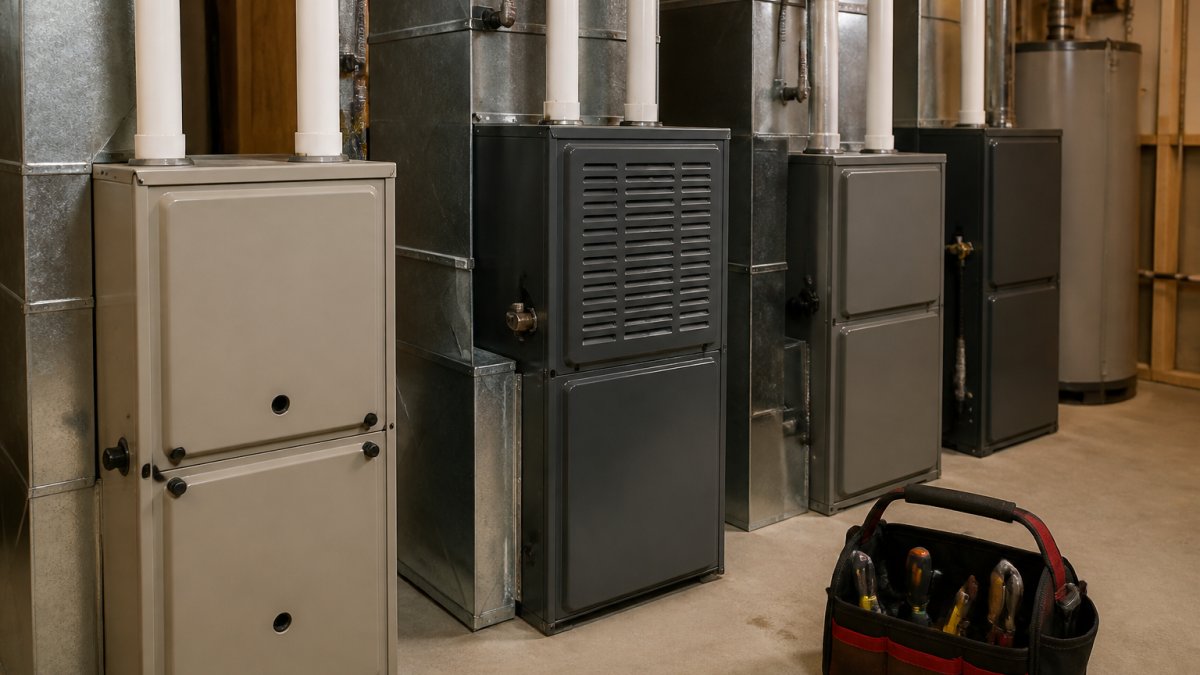
The brands most often quoted for cold-climate replacements fall into three practical tiers. The names below are the ones technicians in this region see most often on service calls, which matters when you need a control board on a Friday night in January.
| Brand | Tier | Typical Strength | Trade-off to Weigh |
|---|---|---|---|
| Carrier | Premium | Broad dealer network, modulating and variable-speed models, strong parts distribution | Higher installed cost; premium features require an authorized dealer to service |
| Trane | Premium | Durable heat exchangers, strong reputation for long service life, good cold-weather controls | Higher upfront price; some proprietary parts |
| Lennox | Premium | High-AFUE condensing models, variable-speed blowers, quiet operation | Premium pricing; service tied to Lennox dealers |
| American Standard | Premium | Shares Trane engineering with a slightly different dealer base | Similar premium pricing |
| Rheem | Mid-range | Wide parts availability, solid two-stage and modulating options, good value | Fewer top-end efficiency models than premium brands |
| Goodman | Mid-range / budget | Very wide parts availability, lower upfront cost, common in replacement work | Shorter standard warranty terms on some models; reputation varies by installer |
| Bryant | Mid-range | Carrier-family engineering at a slightly lower price point | Dealer network narrower than Carrier’s |
| Amana | Mid-range | Strong warranty packages on select models | Warranty value depends on registered installation |
A common mistake is chasing the cheapest nameplate price. In practice, installation quality and correct sizing change comfort and operating costs more than the badge on the cabinet.
What Actually Separates Brands in a Cold Climate
Four factors separate brands when the outdoor temperature stays below zero for days:
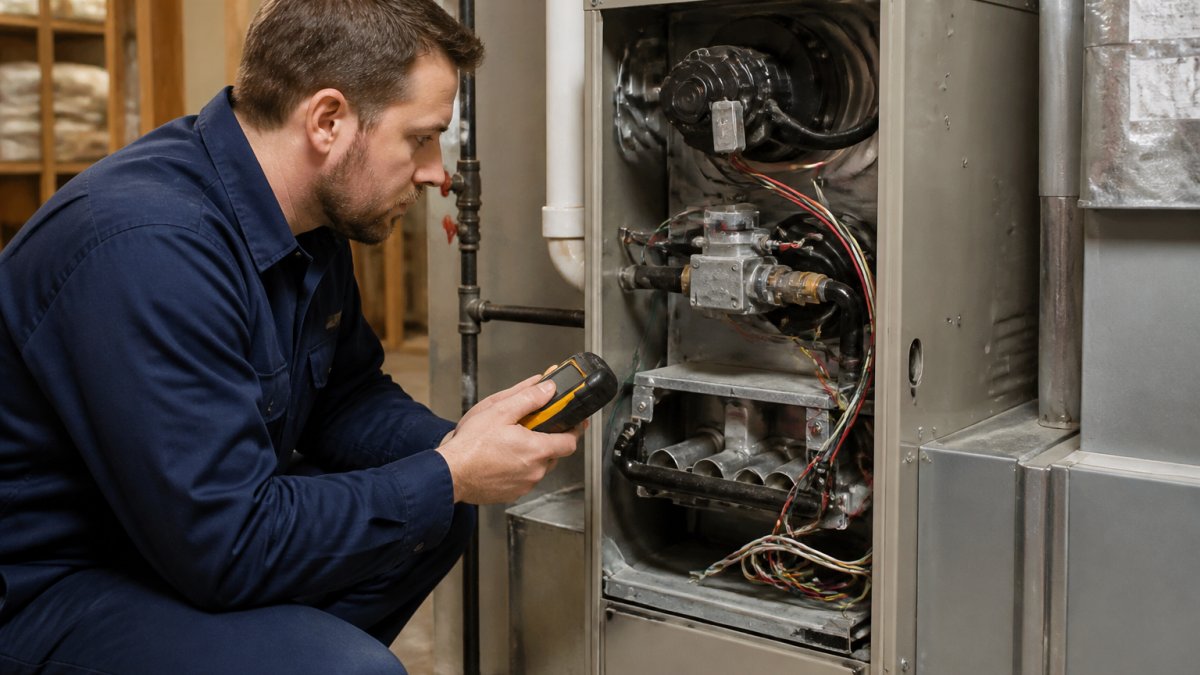
- Heat exchanger material and design. Stainless steel primary and secondary heat exchangers are the norm on condensing units; the design and thickness matter more than the marketing name. A failed heat exchanger is the most expensive repair a furnace can need, and it is the part most worth understanding before you sign.
- Parts availability. Ask how fast a replacement control board, inducer motor, or blower motor can be sourced. National distributors stock common brands; less common brands can mean days of waiting in a cold snap.
- Staging and blower type. Two-stage and modulating gas valves paired with variable-speed blowers run longer at lower output, which is exactly what a cold-climate house needs. Single-stage units are cheaper but cycle more.
Ask any contractor how fast they can get a replacement control board or blower motor for the brand they are quoting. In a cold climate, that answer matters more than a spec sheet.
A Note on Brand vs. Installer
The installer matters more than the brand on the cabinet. A correctly sized, properly commissioned mid-tier furnace with sealed ducts and a verified refrigerant charge (on heat pump systems) will outperform a premium brand installed with shortcuts. When you compare quotes, compare the commissioning checklist and the load calculation, not just the equipment model number.
High-Efficiency Furnaces for Cold Climates: AFUE and Beyond
High-efficiency furnaces for cold climates are condensing units rated at 90% AFUE or higher, and the rating is the starting point, not the finish line. AFUE, or annual fuel use efficiency, measures how much of the fuel’s energy becomes usable heat over a typical year.
The U.S. Department of Energy guide to furnace efficiency explains how AFUE is calculated and why the rating assumes typical usage patterns. Beyond the number, look at blower design and staging.
Furnace Sizing for Cold Climates: Why Bigger Isn’t Better
Furnace sizing for cold climates should be based on a room-by-room load calculation, not square footage rules of thumb. An oversized furnace heats the house too fast, then shuts off, leaving cold spots and uneven temperatures.
A proper load calculation accounts for insulation, window area, air leakage, and design temperature for the local climate. The ACCA Manual J load calculation standard is the industry reference contractors use to size equipment correctly.
Skipping the load calculation is a common installation mistake. An oversized furnace short cycles, wears out faster, and never delivers the comfort the homeowner paid for.
Furnace Installation Cost: What Drives the Price in Southeast Wisconsin
Furnace installation cost depends on equipment tier, efficiency level, venting changes, ductwork modifications, and whether the job includes a new thermostat or air quality work. A straight swap of a like-for-like unit costs less than a conversion to a high-efficiency condensing furnace that needs new venting and drainage.
Because pricing varies by home and scope, we quote each job after an on-site assessment. You can review current service and installation pricing on our website, and we walk through every line before work begins.
What Drives the Price
Most replacement quotes break down into five buckets. Understanding them lets you compare bids apples to apples instead of comparing a single bottom-line number.
- Equipment tier and efficiency. An 80% AFUE single-stage furnace sits at the low end of the installed-cost range; a 96%+ AFUE two-stage or modulating condensing unit sits at the high end. The equipment itself is typically the largest single line item.
- Venting. An 80% furnace vents through a metal flue, often reusing existing chimney or B-vent. A condensing furnace vents through PVC and needs a condensate drain, which can add meaningful labor and material cost if the route is long or the basement is finished.
- Ductwork. Sealing and balancing existing ducts, adding return air, or correcting undersized trunks adds cost but is often the highest-return work in an older home. Ductwork problems are a common reason a new furnace underperforms.
Efficiency Tier and Payback
The jump from an 80% to a 95%+ AFUE furnace reduces the fuel used per unit of heat delivered by roughly 15 percentage points of efficiency. Whether that pays back depends on your current gas rate, how much you heat, and how long you plan to stay. In a cold-climate house with a long heating season, the higher-efficiency unit usually closes the gap faster than it would in a mild climate, but the venting and condensate work can offset some of the savings.
Rebates, Incentives, and Financing
Utility and manufacturer rebates change frequently, and the amounts depend on the efficiency tier and the program. Before you sign, ask the contractor which current utility rebates and manufacturer promotions apply to the model being quoted, and get the rebate paperwork in writing. Federal tax credits for high-efficiency equipment have also changed in recent years, so confirm current eligibility rather than assuming last year’s rules apply.
A quote that does not itemize venting, ductwork, permit, and commissioning is not comparable to one that does. The lowest bottom line is often the bid with the most excluded scope.
How to Compare Bids
Ask each contractor for the same four things: the load calculation, the model number and AFUE, an itemized scope covering venting and ductwork, and the warranty terms in writing. When bids are structured the same way, the real differences in equipment and workmanship become visible.
Cold-Weather Comfort: Heat Pumps, Dual-Fuel, and Indoor Air
Cold-weather comfort increasingly involves heat pumps and dual-fuel setups, where a heat pump handles milder weather and a furnace takes over in deep cold. That combination can lower heating costs in moderate stretches while keeping reliable heat output when temperatures drop.
Indoor air matters too. Sealing a house tight for winter traps dust and moisture, so filtration and humidity control belong in the conversation. The U.S. EPA guidance on indoor air quality covers the basics of ventilation and filtration for a healthier home.
Choosing the Best Furnace Brands for Wisconsin Winters: A Decision Framework
Choosing the best furnace brands for Wisconsin winters comes down to matching equipment to your home, your budget, and local service support. Use this checklist before you sign a quote:
- A room-by-room load calculation is included
- The AFUE rating fits your goals and venting setup
- Parts are available locally and quickly
- Warranty coverage is explained in writing
At Peters Heating & Cooling, we prioritize honest recommendations and repair over replacement when repair makes sense. Our technicians are licensed, insured, and continuously trained, and we are Better Business Bureau Accredited with an A+ rating.
Frequently Asked Questions
What is the most reliable brand of furnace for a Wisconsin winter?
Reliability in a Wisconsin winter comes down to parts availability, contractor support, and how well the unit handles long run times. Brands with strong dealer networks and widely stocked parts tend to get repaired faster when something fails in January. Ask your HVAC contractor which furnace brands they service most often and can get parts for locally. A well-installed mid-range furnace from a supported brand often outperforms a premium unit installed poorly.
Is a high-efficiency furnace worth it in a cold climate?
A 95% or 96% AFUE furnace typically makes sense in a cold climate because the unit runs far more hours per year than in a mild region, so each point of efficiency compounds. The catch is installation quality: high-efficiency units need proper venting and condensate management. If your contractor cuts corners on the install, the savings shrink. Compare the upfront premium against your annual heating costs and expected lifespan before deciding.
How do I choose the right furnace size for my home?
Proper furnace sizing for cold climates starts with a room-by-room load calculation, not a rule of thumb based on square footage. An oversized furnace short-cycles, which wears parts faster and leaves temperature swings. An undersized one runs constantly and never catches up on the coldest nights. Ask your contractor for a written load calculation before signing, and match the blower and ductwork to the unit.
What drives furnace installation cost in Southeast Wisconsin?
Furnace installation cost depends on the unit’s efficiency tier, whether ductwork or venting needs modification, electrical and gas line work, permit requirements, and whether you are replacing a similar system or converting fuel types. High-efficiency condensing furnaces often need new PVC venting and a condensate drain. Get a written quote that itemizes equipment, labor, permits, and any ductwork changes so you can compare bids fairly.
A Wisconsin winter does not forgive a poorly chosen or poorly installed furnace. If you are weighing brands, sizing, or a heat pump and furnace combination, get a load calculation and an honest quote before the first hard freeze. Peters Heating & Cooling offers clear pricing with no surprises, financing options, and expert workmanship across Southeast Wisconsin and Northeast Illinois. Schedule an appointment and walk into winter with heat you can count on.